Wiggle guide
Hip Mobility Stretches: A Gentle 7-Minute Routine
Try five hip mobility stretches in a gentle 7-minute routine, with a fast decision guide for front, outer, inner, and rotating hip stiffness.
hip mobility stretches
Stiff hips can turn the first step after sitting, a squat warm-up, or getting down to the floor into a negotiation. The tempting fix is to find one dramatic stretch and push harder. That often misses the real problem: hips move in several directions, and the stretch that helps the front of your hip is not the same one that explores rotation or the inner thigh.
Use this fast rule: match the movement to the location, keep the sensation mild, and reassess after one round. The routine below takes seven minutes and gives you a useful next step without turning mobility into a flexibility test.
What are hip mobility stretches?
Hip mobility stretches are controlled movements that explore how the hip bends, extends, rotates, and moves side to side. A balanced routine uses more than one position, stays within a comfortable range, and includes enough control that you can breathe normally instead of forcing an end position.
Hip mobility is your ability to move the hip through useful ranges with control. Flexibility is part of that picture, but mobility also depends on coordination and strength. That is why endless passive stretching is not always the answer when hips repeatedly feel stuck.
If you are unsure which direction is limited, begin with Wiggle's gentle hip mobility test. Use the result as a clue, not a diagnosis or a reason to force the tighter side. When the inner thighs are the clear target, the supported frog stretch gives you a floor-based option with easier modifications. Before a round, golfers can use the pre-round hip mobility warm-up to build from walking to controlled turns.
Which hip mobility stretch should you choose?
Choose the stretch that matches where the restriction shows up. Front-of-hip stiffness usually calls for a supported hip flexor position; difficulty crossing an ankle over the opposite thigh points toward external rotation; an awkward inward knee movement suggests internal rotation deserves gentle practice.
| What you notice | Start with | Avoid | | --- | --- | --- | | Front of hip feels shortened after sitting | Supported hip flexor stretch | Arching the lower back to create range | | Figure-four position feels blocked | Seated figure-four | Pressing the knee downward | | Knee struggles to move inward | Seated internal rotation | Twisting the spine to compensate | | Inner thigh feels restricted | Small side-lunge shift | Dropping into the deepest lunge | | Every direction feels stiff | Easy walk plus small rotations | Starting cold with a long static hold |
For a deeper explanation of rotation, compare the hip internal rotation stretches and hip external rotation stretches guides. When the missing direction is the thigh moving behind the body after sitting, use the hip extension stretches routine. You do not need to make both sides identical; you need a range you can control comfortably.
What is the best 7-minute hip mobility routine?
The best short routine warms you up, explores rotation, opens the front and outer hip, then adds a small side-to-side movement. Use mild tension, move slowly, and finish feeling more comfortable rather than exhausted. If you only have four minutes before activity, use the hip circle warm-up instead.
| Movement | Time | Main purpose | | --- | ---: | --- | | Easy walk or march | 60 sec | Warm up and change position | | Seated hip rotations | 90 sec | Explore inward and outward rotation | | Supported hip flexor stretch | 60 sec | Open the front of each hip | | Seated figure-four | 60 sec | Explore the glute and outer hip | | Small side-lunge shifts | 90 sec | Move the inner thighs gently | | Relaxed walk and reassess | 60 sec | Notice whether daily movement feels easier |
From Wiggle
Recommended moves
How do you perform each movement safely?
Keep each movement smaller than your maximum range. Mayo Clinic advises warming up before stretching, moving smoothly rather than bouncing, and avoiding pain. Those simple rules matter more than reaching a textbook shape.
- Seated hip rotations: Sit on a stable chair with both feet grounded. Move one knee inward and outward a few inches without twisting your trunk.
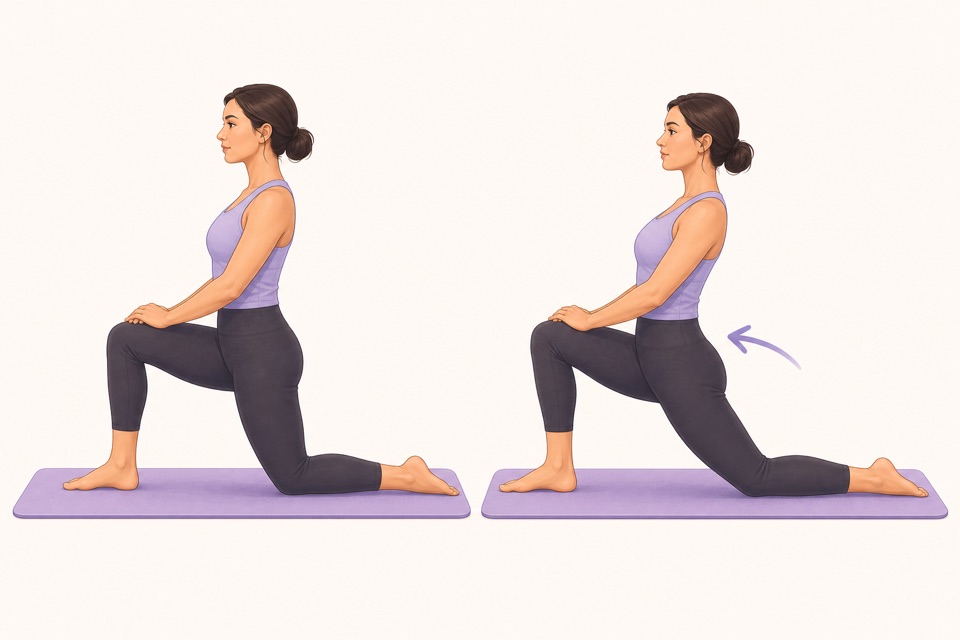
- Supported hip flexor stretch: Use a short split stance or kneel on padding. Gently tuck the pelvis, then shift forward only until the front hip feels mild tension.
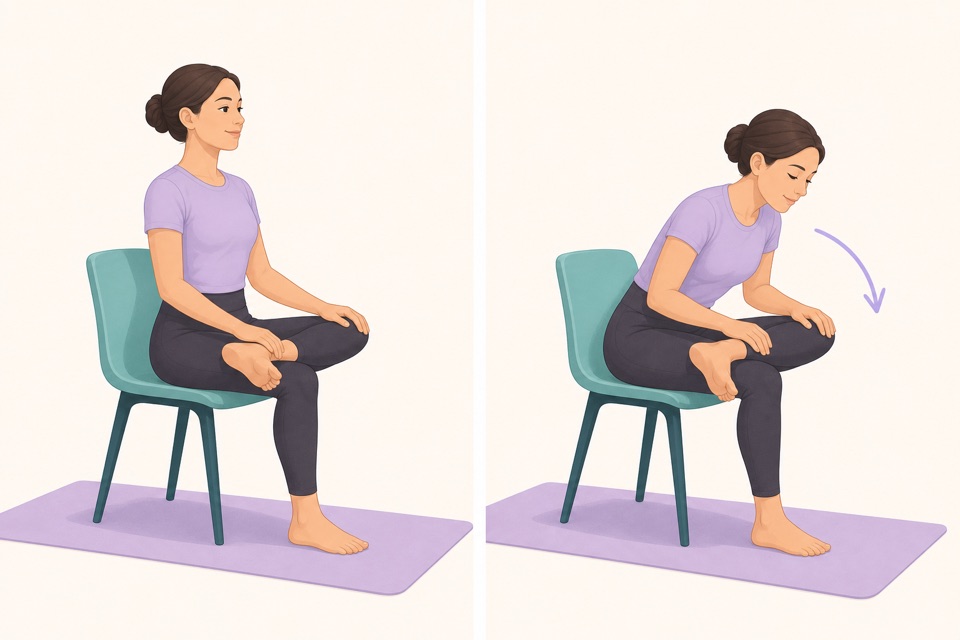
- Seated figure-four: Rest one ankle across the opposite thigh. Sit tall; do not push the raised knee.
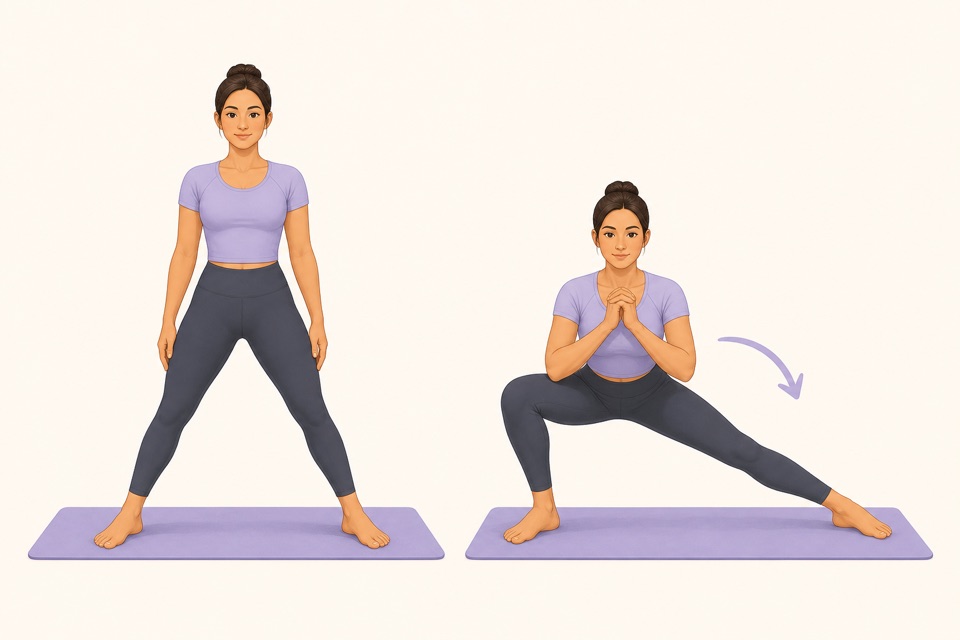
- Side-lunge shifts: Stand wide with support nearby. Bend one knee slightly and shift toward that side while the other leg stays comfortable.
- Reassessment walk: Walk normally for a minute. Notice ease, not maximum range.
If the front of the hip is clearly the limiting area, use the more focused hip flexor stretches guide. If floor positions are comfortable and you want to combine both rotation directions, progress to the 90/90 hip stretch.
Cyclists can use the dedicated hip mobility for cyclists routine to separate a dynamic pre-ride warm-up from a gentler post-ride reset.
Why do hips still feel tight after stretching?
Hips may still feel tight because the sensation is not always caused by one short muscle. Long sitting, repeated training, limited movement variety, stress, fatigue, and reduced strength can all change how movement feels. More stretch intensity is not automatically more useful.
Try these adjustments before doing longer holds:
- Stand or walk briefly every 30 to 60 minutes on sitting-heavy days.
- Rotate between front, outer, inner, and rotational movements.
- Add comfortable strengthening instead of relying only on passive stretches.
- Repeat a short routine three to five times per week.
- Track whether walking, stairs, or getting up feels easier—not just how deep a pose looks.
Federal physical activity guidance recommends both aerobic and muscle-strengthening activity for adults. Mobility can support that broader habit, but it should not replace normal movement and appropriate strength work.
When should you skip hip mobility stretches?
Skip the routine and seek qualified advice when symptoms are new, severe, persistent, connected to an injury or operation, or medically concerning. Stop immediately for sharp or worsening pain, numbness, tingling, weakness, locking, giving way, or symptoms traveling down the leg.
Normal stretching should feel like mild tension that remains easy to breathe through. It should not require gritting your teeth, bouncing, or forcing one side to match the other. If you have a diagnosed condition or recent procedure, follow the plan provided by your clinician.
How can Wiggle make hip mobility easier to repeat?
Wiggle turns hip mobility into a guided sequence with timers, side changes, and a clear stopping point. That removes the daily friction of choosing movements and guessing how long to hold them.
Start with the seven-minute routine, note the movement that helped most, then build a calmer follow-up inside Wiggle. For sitting-heavy days, pair it with stretches for tight hips. The goal is not a heroic session today; it is a routine easy enough to open again tomorrow.
If your mobility work needs to fit around runs, use the hip mobility for runners guide for a simple before-run versus after-run decision rule.
If your next session is outdoors, use hip mobility for hikers for a trail-specific warm-up with separate uphill and downhill choices.
Sources
Why we keep it gentle
These guides are written for everyday stiffness and habit-building. They are grounded in mainstream guidance on flexibility, movement, and when to seek medical help.
- Stretching: Focus on flexibilityMayo Clinic
- Physical Activity Guidelines for AmericansU.S. Department of Health and Human Services
- Exercise and Physical FitnessMedlinePlus
FAQ
Questions people ask
What are the best hip mobility stretches?
The best hip mobility stretches cover several directions: a supported hip flexor stretch for the front of the hip, seated hip rotations for internal and external rotation, a seated figure-four for the outer hip, and a small side-lunge shift for the inner thigh. Choose the movement that matches where you feel restricted rather than forcing every stretch.
How long should a hip mobility routine take?
A useful hip mobility routine can take 6 to 8 minutes. Start with one minute of easy walking, spend about a minute on each movement, and finish with another short walk. Short sessions repeated several times per week are easier to sustain than occasional aggressive sessions.
Should I stretch or strengthen tight hips?
You may benefit from both. Stretching can help you explore a comfortable range, while strength helps you control movement in that range. If stiffness keeps returning, pair gentle mobility with appropriate strengthening and ask a qualified professional for guidance when symptoms are persistent or concerning.
Why do my hips still feel tight after stretching?
The sensation of tightness does not always mean a muscle simply needs a longer stretch. Long periods in one position, training load, limited movement variety, stress, and weakness can all contribute. Change position often, use several gentle movements, and avoid repeatedly forcing the single tightest spot.
When should I stop hip mobility stretches?
Stop if a stretch causes sharp or worsening pain, numbness, tingling, weakness, locking, giving way, or symptoms that travel down the leg. Seek qualified medical advice for new, persistent, injury-related, or medically concerning symptoms.