Shin Box Exercise: Beginner Form and 5-Minute Routine
Learn the shin box exercise with hand support, easier modifications, form fixes, slow switches, and a gentle five-minute hip routine.
shin box exercise
The shin box looks simple until you sit down and discover that one knee floats, your torso leans, or switching sides feels like wrestling the floor. Forcing both knees down is the wrong fix. The fastest useful version is to raise your seat, lean back onto your hands, and make the switch smaller.
Use this decision rule: support first, range second, repetitions last. If you can breathe and move without a pinch, do four slow switches per side. If not, hold one comfortable side for a few breaths and stop there.
What is the shin box exercise?
The shin box exercise is a seated hip-rotation drill in which both knees are bent and rest toward one side. A static shin box hold introduces the position; shin box switches move the knees from side to side. The goal is comfortable, controlled rotation—not pushing the knees flat or copying a perfect 90-degree shape.
The shin box exercise is a supported seated movement that combines rotation at both hips: the front leg turns outward while the back leg turns inward. It is closely related to the 90/90 hip stretch, but switches emphasize moving between sides rather than staying in one stretch.
How do beginners do the shin box exercise?
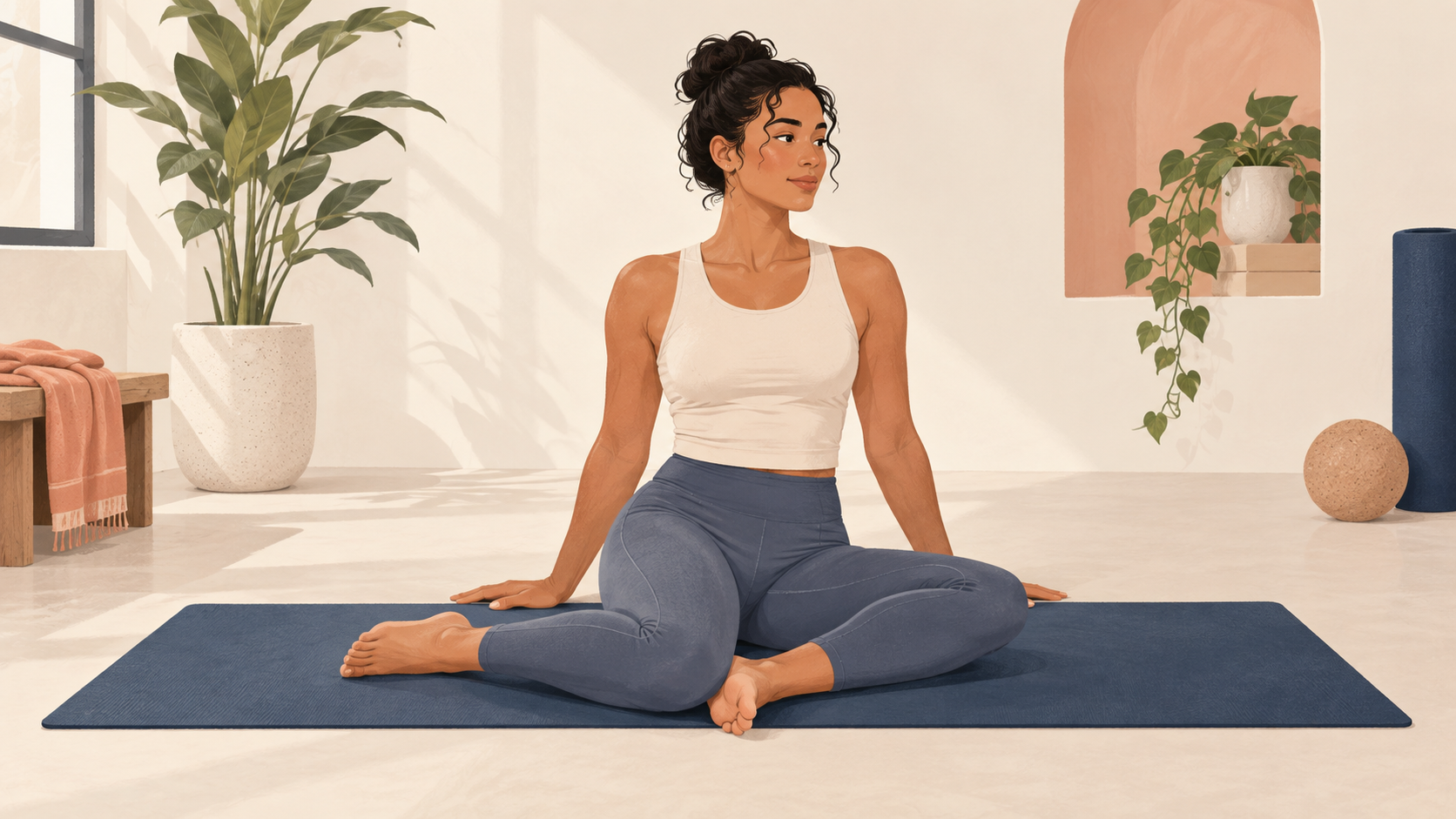
Sit on a folded towel, place both feet wider than hip-width, and put your hands behind you. Let both knees move gently toward one side, pause, return through the middle, and repeat to the other side. Keep the range small enough that you can move slowly without pressing either knee down.
Sit on a folded towel or firm cushion.
Bend your knees and place your feet slightly wider than your hips.
Lean back onto your hands so your torso can relax.
Let both knees drift toward the right in a comfortable range.
Pause for one easy breath; do not push the knees down.
Bring both knees through the middle, then drift left.
Complete four controlled switches per side.
If the moving version is confusing, set up one side at a time. Arrange the front shin where it feels comfortable, let the back leg fold naturally, and hold for two breaths. Switch by using your hands to help reposition your legs.
Which shin box modification should you choose?
Choose the easiest version that lets you breathe normally and keeps the movement free of sharp pain or pinching. A higher seat reduces how much hip rotation the floor position demands. Hand support reduces the effort needed to sit upright. A one-sided hold is easier to control than continuous switches.
| What happens | Start with | Avoid for now |
| --- | --- | --- |
| You roll onto one sit bone | Sit on a folded towel and use both hands | Forcing both hips flat |
| One knee stays high | Let it float or support it with a cushion | Pressing the knee down |
| Switching feels jerky | Pause in the middle after every rep | Fast side-to-side swinging |
| The back hip pinches | Move the back foot farther away or reduce the angle | Leaning deeper into the pinch |
| The floor is uncomfortable | Use a firm chair for seated knee rotations | Enduring numb feet or knee pressure |
Warm up with easy walking, practice the supported position, perform only a few slow switches, and finish by standing up and walking again. This sequence prevents the floor drill from becoming an endurance test and quickly shows whether the movement left you feeling better, unchanged, or irritated.
| Time | Movement | Simple cue |
| --- | --- | --- |
| 0:00–1:00 | Easy walking or marching | Get warm before stretching |
| 1:00–2:00 | Supported right shin box hold | Sit high and breathe |
| 2:00–3:00 | Supported left shin box hold | Keep the range comfortable |
| 3:00–4:00 | Four slow switches per side | Pause through the middle |
| 4:00–5:00 | Stand and walk | Notice, do not grade, the difference |
Set these five one-minute blocks in Wiggle so the drill has a clear beginning and end. If the holds feel fine but the switches do not, repeat the holds instead of forcing the progression.
What muscles and movements does the shin box use?
The shin box asks the hips to rotate in opposite directions while the trunk balances over the pelvis. You may feel mild work or stretching around the glutes, outer hip, inner thigh, or deep hip muscles. The exact sensation varies, and a stronger stretch does not automatically mean a better repetition.
This is a mobility drill, not a diagnosis or a test of whether your hips are “good.” Hip shape, limb proportions, past activity, and current comfort can all change how the position looks. Mayo Clinic recommends smooth movement without bouncing and advises against stretching into pain; use the same standard here.
Why does one shin box side feel harder?
One direction can feel less coordinated or offer less comfortable rotation than the other. Use the easier side to learn the movement, then give the stiffer side a smaller range and more support. Do not add extra repetitions simply to make both sides look identical in one session.
A useful check is whether you can keep breathing and return to the middle without momentum. If the difficult side makes you brace, hold your breath, or drop quickly, shorten the motion. For a broader routine that does not focus on one position, try these hip mobility stretches.
When should you stop the shin box exercise?
Stop for sharp or worsening pain, a deep joint pinch, catching, locking, numbness, tingling, weakness, or symptoms traveling down the leg. Do not push a knee toward the floor. Seek qualified care for new, persistent, injury-related, or medically concerning symptoms, especially when they affect walking or everyday activity.
Mild muscular effort is different from joint pain. A smaller range, higher seat, or chair-based alternative should make the movement more manageable; if it does not, choose another exercise. The HHS physical activity guidelines emphasize that activity can be accumulated gradually, so there is no need to win the full floor position today.
How often should you practice shin box switches?
Practice a small, comfortable dose two or three times per week or include it in a varied mobility routine. Four slow switches per side is enough to learn from. Increase range or repetitions only when the movement remains smooth and you feel normal afterward.
MedlinePlus describes fitness as a mix of activities. Treat the shin box as one option alongside walking, appropriate strength work, and other comfortable movements—not as a mandatory daily cure for tight hips.
Sources
Why we keep it gentle
These guides are written for everyday stiffness and habit-building. They are grounded in mainstream guidance on flexibility, movement, and when to seek medical help.
The shin box exercise is a seated hip-rotation drill with both knees bent and resting toward one side. You can hold the position, switch the knees from side to side, or add a controlled lift. Beginners should use their hands behind them, sit on a cushion, and work only within a comfortable range.
Is the shin box the same as the 90/90 stretch?
They use a similar seated leg position, but the intent can differ. A 90/90 stretch usually emphasizes holding or leaning into one side. Shin box switches move both knees between sides to practice active hip rotation. Start with the supported position before turning it into a flowing drill.
How many shin box switches should a beginner do?
Begin with four slow switches per side. Pause after each switch, keep both sit bones as heavy as comfortably possible, and use your hands for support. One or two rounds is enough. Stop when the movement becomes rushed, the knees are forced down, or you feel pain.
Why can I not sit upright in the shin box position?
The floor position may ask for more hip rotation than you comfortably have today, and body proportions also affect it. Sit on a folded towel, move the feet farther away, lean back onto your hands, or practice one side at a time. Upright posture is not a test you need to pass.
When should I stop the shin box exercise?
Stop for sharp pain, a deep pinch, catching, locking, numbness, tingling, weakness, or symptoms that travel down the leg. Do not press a knee toward the floor. Ask a qualified clinician for guidance if symptoms are new, persistent, injury-related, or affect normal walking and daily activity.