Wiggle guide
Hip Internal Rotation Stretches: A Gentle 6-Minute Reset
Hip internal rotation stretches for tight hips, sitting-heavy days, and uneven 90/90 mobility, with beginner options and clear stop signs.
hip internal rotation stretches
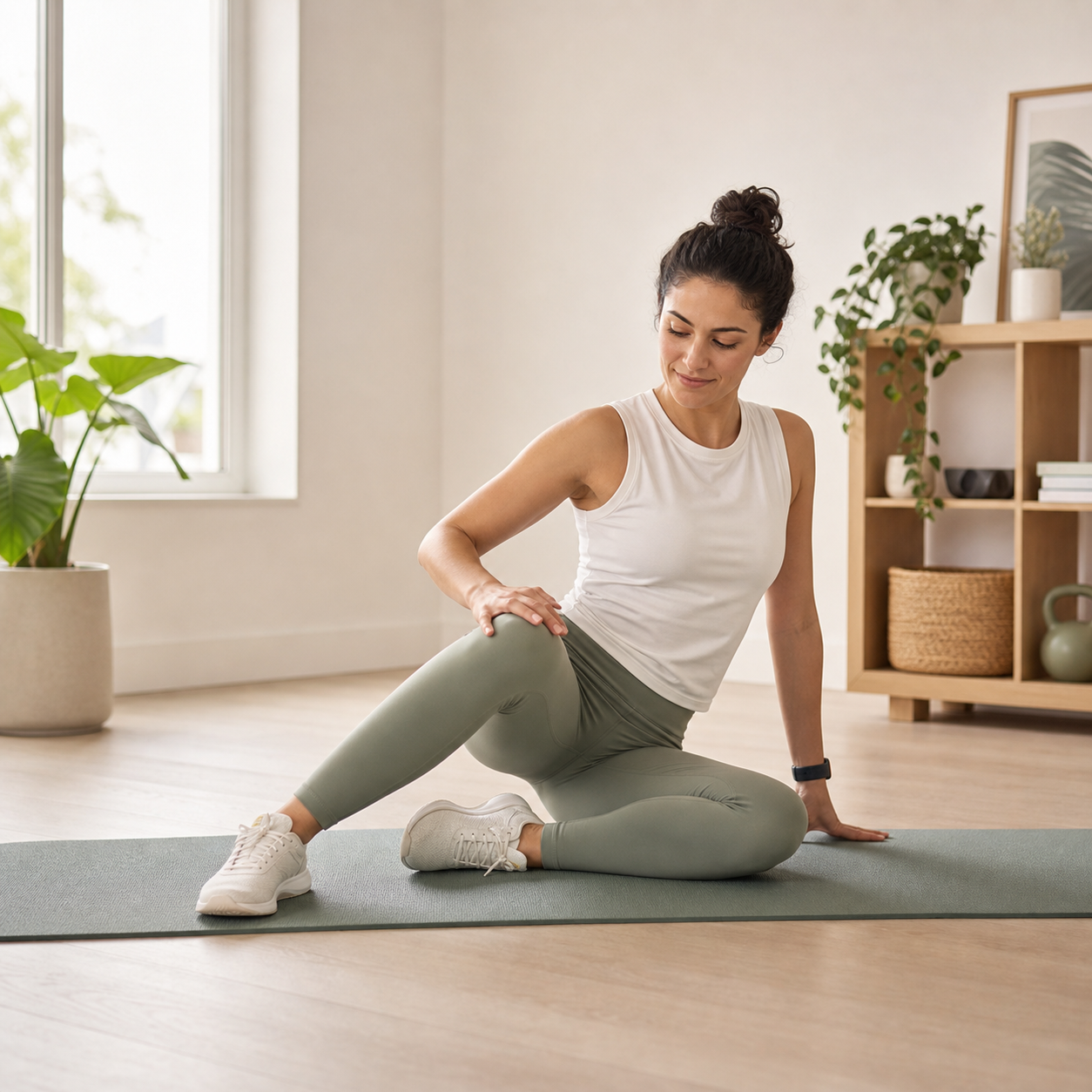
The annoying part of tight hips is when every general hip stretch misses the exact stuck feeling. You can do hip flexors, glutes, and hamstrings, but the moment you try a 90/90 position, one hip still refuses to rotate inward without a pinch.
Hip internal rotation stretches give you a smaller target. Start with a chair, use a tiny range, and build a routine that helps the hip rotate without turning the stretch into a test of pain tolerance.
What are hip internal rotation stretches?
Hip internal rotation stretches are gentle movements that help the thigh bone rotate inward at the hip. They are useful when sitting-heavy days, squats, walking stride, or the back leg in a 90/90 hip stretch feel stiff or uneven.
Hip internal rotation is the motion of turning the thigh inward at the hip joint. In a simple seated check, it is the movement you feel when one knee drifts toward the other side while your pelvis stays mostly still.
For everyday stiffness, the goal is not a dramatic range. The goal is a calm movement you can repeat without pinching, twisting the lower back, or forcing both sides to match.
If you are not sure whether internal rotation is the main limit, start with the hip mobility test. If you already know the 90/90 position feels uneven, this routine is the smaller next step.
What is the easiest hip internal rotation stretch to start with?
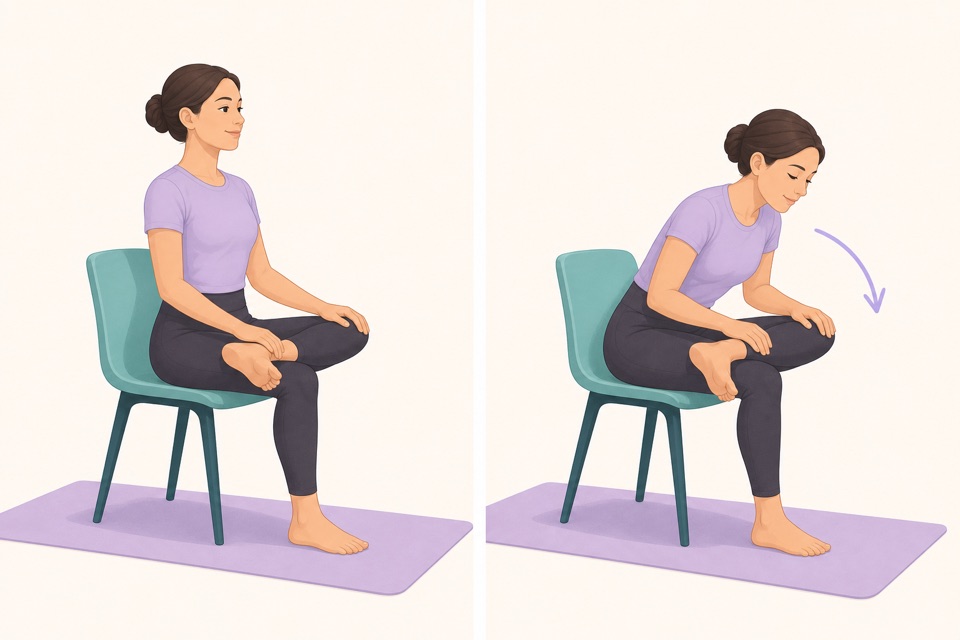
The easiest beginner stretch is a seated windshield-wiper movement. Sit tall on a stable chair, keep both feet on the floor, and slowly move one knee inward a few inches before returning to center. Use a small range and keep the motion boring.
Try this first:
- Sit near the front of a stable chair.
- Place both feet flat and hip-width apart.
- Keep your ribs stacked over your pelvis.
- Let the right knee move inward 2 to 4 inches.
- Return to center slowly.
- Repeat 6 to 8 times.
- Switch sides.
- Stop before pinching, bracing, or twisting.
This is the fast decision rule: if the chair version feels calm, you can add a supported floor stretch. If the chair version pinches, stay smaller or choose a broader stretches for tight hips routine instead.
From Wiggle
Recommended moves
How do you build a 6-minute hip internal rotation routine?
Build the routine around small rotation reps, one supported 90/90 option, and two companion stretches. That gives the hip several chances to move without spending the whole session in one intense pose.
Use this sequence:
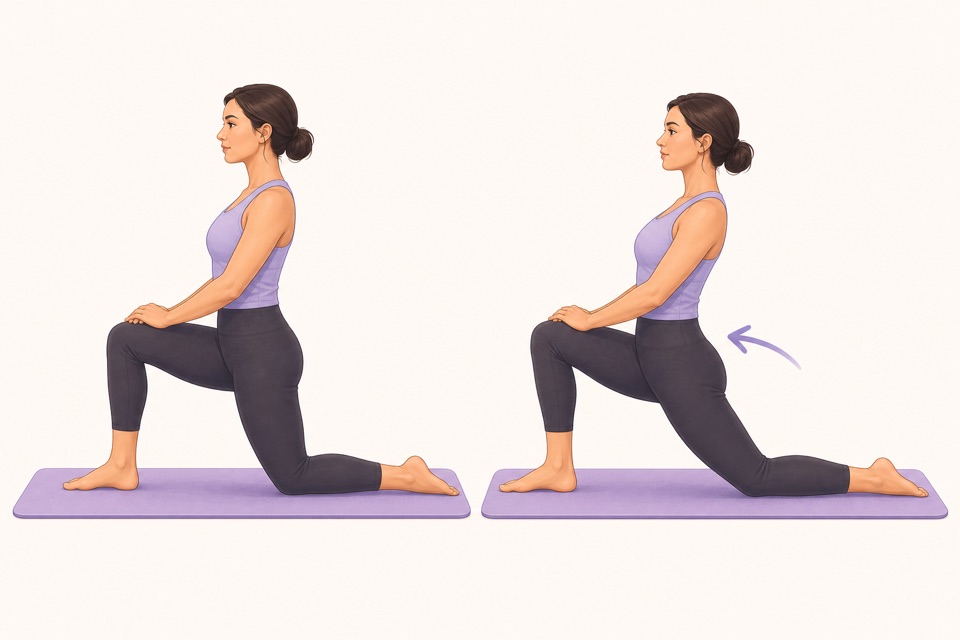
| Step | Time | What to do | Keep it easy by | | --- | ---: | --- | --- | | Easy walk or march | 60 sec | Warm the hips before stretching | Keeping the pace conversational | | Seated knee-in rotations | 60 sec | 6 to 8 reps per side | Moving only a few inches | | Supported 90/90 back-leg lean | 60 sec | Sit high and breathe | Putting hands behind you | | Kneeling hip flexor stretch | 90 sec | 45 sec each side | Avoiding a lower-back arch | | Seated figure-four | 90 sec | 45 sec each side | Keeping the crossed foot lower | | Easy walk | 60 sec | Let the hips reset | Skipping the final stretch if irritated |
The supported 90/90 piece is optional. If it feels too awkward, replace it with another round of seated knee-in rotations. A simple routine that stays pain-free wins.
For a full explanation of the floor position, use the 90/90 hip stretch guide before adding longer holds.
Why does hip internal rotation feel limited?
Hip internal rotation can feel limited for many reasons: long sitting, low movement variety, guarding, strength, hip shape, old injuries, or symptoms that need professional attention. A wellness stretch routine should not try to diagnose the reason.
Instead, use the feeling to choose a safer next move:
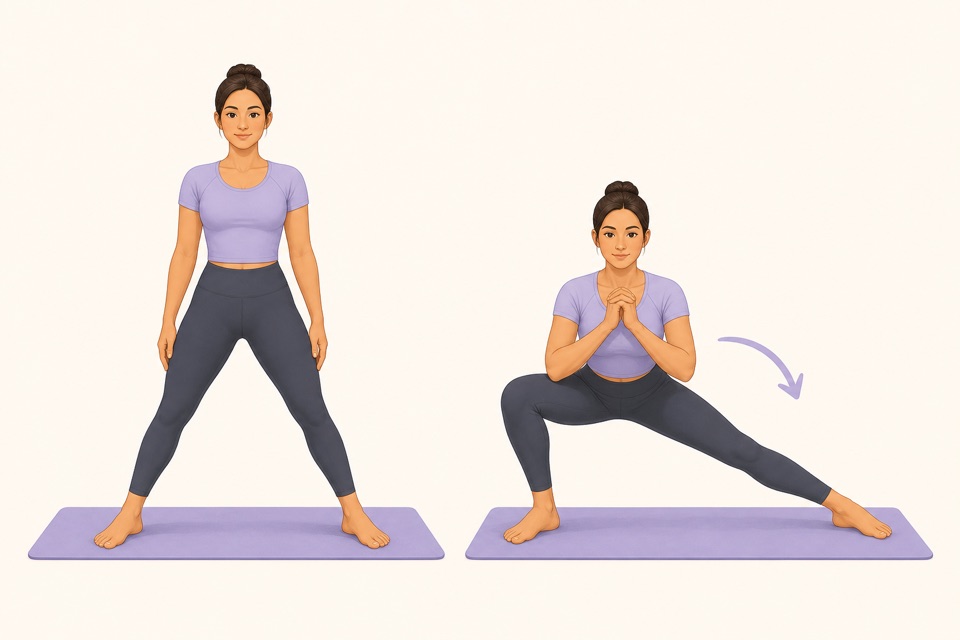
| What you notice | Best next choice | Avoid | | --- | --- | --- | | Mild stiffness only | Seated rotations, then 90/90 support | Deep end-range holds | | Front of hip pinches | Hip flexor stretch, smaller rotation | Pushing through the pinch | | Outer hip feels tight | Figure-four or glute stretch | Forcing the knee down | | Inner thigh guards | Side lunge adductor shift | Wide aggressive stance | | Lower back twists | Smaller chair range | Chasing hip range through the spine |
Mayo Clinic stretching guidance emphasizes gentle movement, breathing, and avoiding pain. That fits hip rotation work especially well because a tiny forced twist can stop being a hip stretch and become a lower-back workaround.
How often should you do hip internal rotation stretches?
For everyday stiffness, do hip internal rotation stretches a few times per week for 3 to 6 minutes. Use them after long sitting, before a hip mobility routine, or when one side feels stuck in a 90/90 position.
Do not make every session harder. Keep one simple score: did the hip feel calmer afterward? If yes, repeat the same routine. If no, reduce the range, shorten the hold, or switch to walking and broader hip movement.
Use this checklist:
- Warm up first.
- Keep the range small.
- Breathe normally.
- Compare sides without forcing symmetry.
- Pair rotation with glute, hip flexor, or adductor work.
- Stop before pinching or sharp pain.
- Ask a qualified professional about new, severe, persistent, radiating, injury-related, or medically concerning symptoms.
How can Wiggle make hip rotation easier to repeat?
Wiggle helps because hip internal rotation stretches are easy to overthink. A guided routine gives you the timer, the side switch, the next movement, and the permission to stop before the stretch turns aggressive.
Start with a short tight-hips or mobility session, then add the seated rotation drill when the app asks for gentle hip work. If you want the simplest next step, open the Wiggle download page and save a routine that is short enough to repeat after sitting-heavy work blocks.
For related hip routines, use adductor stretches when the inner thigh feels like the limiting piece, or the piriformis stretch when the outer hip feels like the tighter target.
Sources
Why we keep it gentle
These guides are written for everyday stiffness and habit-building. They are grounded in mainstream guidance on flexibility, movement, and when to seek medical help.
- A guide to basic stretchesMayo Clinic
- Exercise and Physical FitnessMedlinePlus
- Physical Activity Guidelines for AmericansU.S. Department of Health and Human Services
- Hip Conditioning ProgramAmerican Academy of Orthopaedic Surgeons
When chair rotations feel easy and you want a floor-based progression, the shin box exercise combines one hip turning inward with the other turning outward. Use hand support and keep both knees within a comfortable range.
FAQ
Questions people ask
What are hip internal rotation stretches?
Hip internal rotation stretches are gentle movements that help the thigh bone rotate inward at the hip. They are useful when everyday positions such as sitting, walking, squatting, or the 90/90 stretch feel uneven, but they should stay mild and pain-free.
What is the easiest hip internal rotation stretch for beginners?
The easiest starting point is seated windshield wipers: sit tall with feet on the floor, slowly let one knee move inward a few inches, return to center, and repeat on the other side. Keep the range small enough that the hip does not pinch.
Why does hip internal rotation feel limited?
Hip internal rotation can feel limited because of long sitting, low movement variety, guarding, strength gaps, hip anatomy, or symptoms that need professional guidance. For a wellness routine, do not diagnose it. Use gentle ranges and stop before pain.
How often should I do hip internal rotation stretches?
For everyday stiffness, try 3 to 5 minutes a few times per week, especially after long sitting or before a broader hip routine. A short session you repeat is more useful than one intense stretch that irritates the hip.
When should I stop hip internal rotation stretches?
Stop if you feel sharp pain, pinching that does not ease, numbness, tingling, weakness, catching, radiating symptoms, dizziness, or symptoms connected to an injury or medical condition. Ask a qualified professional when symptoms are new, severe, persistent, or worrying.