Wiggle guide
Piriformis Stretch: A Gentle 6-Minute Outer-Hip Reset
A beginner piriformis stretch routine for mild outer-hip and glute stiffness after sitting, with seated options, stop signs, and an easy Wiggle flow.
piriformis stretch

The frustrating thing about outer-hip stiffness is how specific it feels. You stand up after a long sitting block, the buttock and deep hip area feels stuck, and a generic hamstring stretch does almost nothing.
A piriformis stretch gives you a calmer target. Start with a seated figure-four, keep the range mild, and use a short routine that helps the outer hip relax without turning one stretch into a pain test.
What is a piriformis stretch?
A piriformis stretch is a gentle outer-hip and buttock stretch, usually done in a figure-four position where one ankle crosses over the opposite thigh. Use it for mild everyday stiffness, not as a self-diagnosis for leg pain, sciatica, or a medical condition.
The piriformis is a small muscle deep in the buttock area that helps rotate the hip. Because it sits near the sciatic nerve, symptoms in this region can feel confusing. Keep this routine conservative and get professional guidance for radiating, severe, persistent, or worrying symptoms.
For a simple movement habit, think of the piriformis stretch as one member of the glute and hip-rotation family. It pairs well with glute stretches, hip internal rotation stretches, and a broader stretches for tight hips routine.
What is the easiest piriformis stretch for beginners?
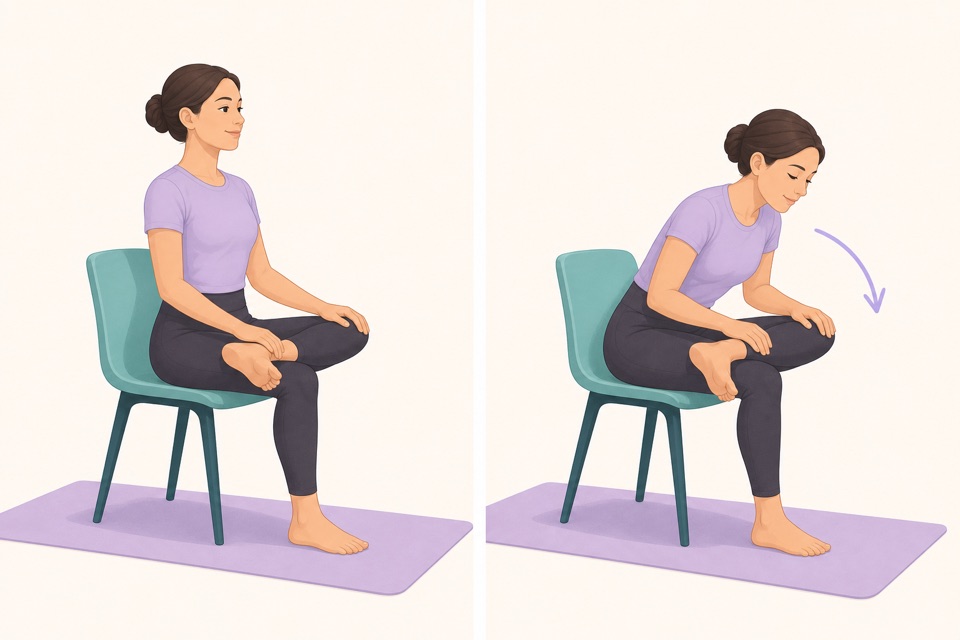
The easiest beginner option is the seated figure-four stretch. Sit on a stable chair, cross one ankle over the opposite thigh, and lean forward only until you feel mild outer-hip tension. If you have to push the knee down, twist, or hold your breath, the setup is too intense.
Use this decision rule first: if the seated version feels calm, hold it for 20 to 30 seconds per side. If it causes knee strain, pinching, numbness, tingling, or radiating symptoms, stop and choose easy walking or a gentler mobility routine instead.
Try it this way:
- Sit near the front of a stable chair.
- Place both feet flat on the floor.
- Cross the right ankle over the left thigh.
- Keep the right foot lightly flexed.
- Let the right knee relax without forcing it down.
- Lean forward a few inches with a long spine.
- Hold for 20 to 30 seconds while breathing normally.
- Switch sides and compare comfort, not depth.
From Wiggle
Recommended moves
How do you build a 6-minute piriformis stretch routine?
Build the routine around one gentle figure-four stretch, one easy walking reset, and two companion moves. That covers the outer hip without asking one deep position to fix everything after hours of sitting.
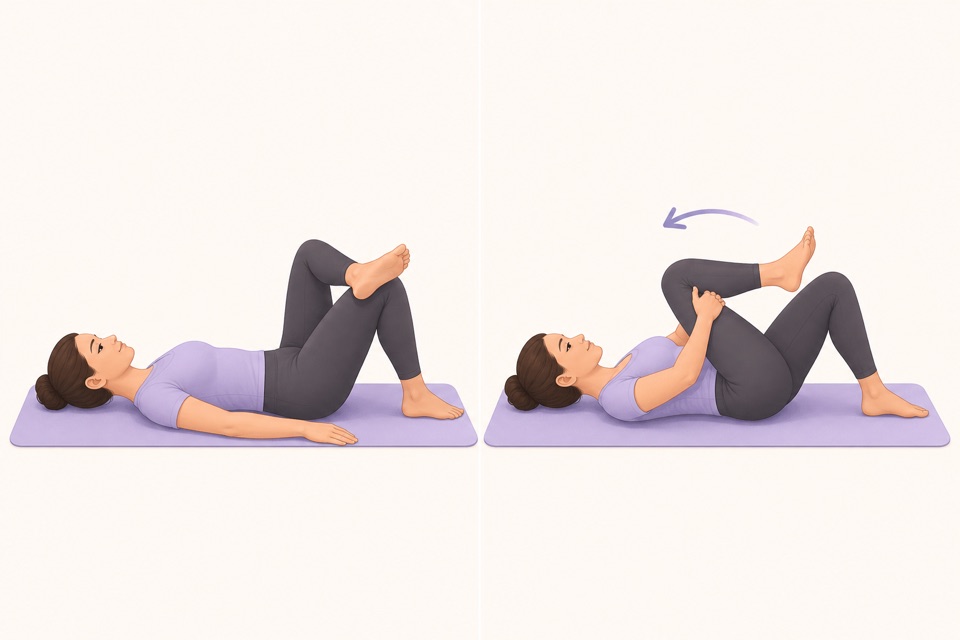
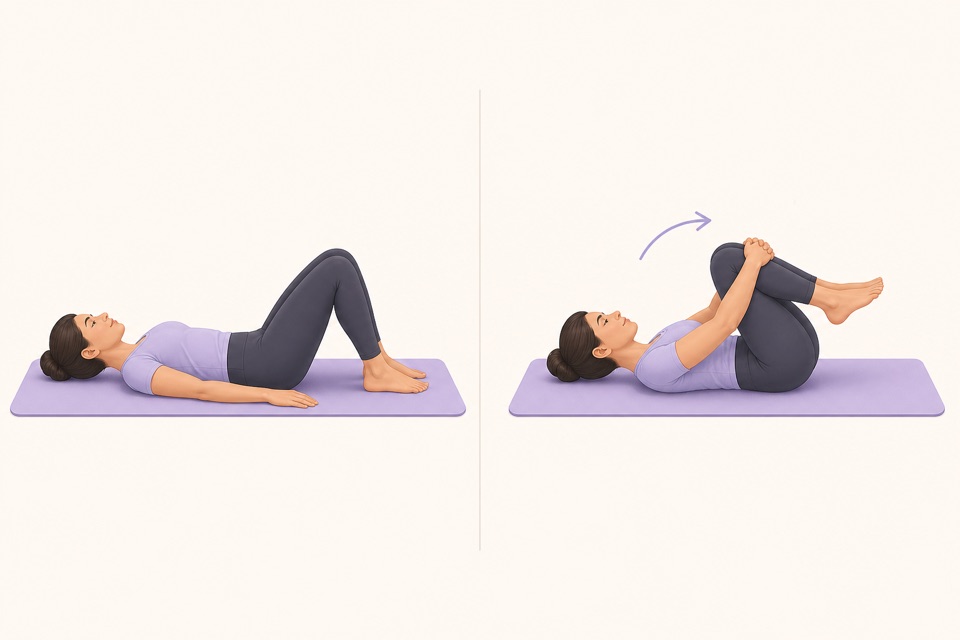
| Step | Time | What to do | Keep it easy by | | --- | ---: | --- | --- | | Easy walk or march | 60 sec | Warm the hips before stretching | Keeping the pace conversational | | Seated figure-four | 60 sec | 30 sec per side | Sitting taller and keeping the foot lower | | Knees-to-chest | 60 sec | Hug one knee, then both if comfortable | Holding behind the thigh | | Hip flexor stretch | 90 sec | 45 sec per side | Avoiding a lower-back arch | | Floor figure-four | 90 sec | 45 sec per side, optional | Keeping the uncrossed foot down | | Easy walk | 60 sec | Let the hips reset | Skipping if anything feels irritated |
If the floor figure-four feels too strong, repeat the chair version instead. The easiest path is the one you can repeat tomorrow without feeling like you overdid it today.
Why can the piriformis area feel tight after sitting?
The piriformis area can feel tight after sitting because the hips stay in one position for a long time, the glutes do less work, and the lower back may start sharing the stiffness story. That does not mean one muscle is definitely the problem.
Use the feeling to choose a low-risk next step:
| What you notice | Best next choice | Avoid | | --- | --- | --- | | Mild outer-hip stiffness | Seated figure-four, short hold | Pushing the knee down | | Stiffness after a long work block | Walk, then stretch | Stretching cold and aggressively | | Lower back joins the complaint | Knees-to-chest or cat-cow | Twisting hard through the spine | | Front of hip feels tight too | Add a hip flexor stretch | Only doing figure-four work | | Symptoms travel down the leg | Stop and ask a professional | Treating it as normal tightness |
Mayo Clinic's stretching guidance favors gentle movement, normal breathing, and avoiding pain. MedlinePlus also warns against pushing through pain and recommends avoiding long periods in positions that add pressure around the hips. That is exactly the tone this routine needs.
How long should you hold a piriformis stretch?
Start with 20 to 30 seconds per side. Repeat once if the stretch stays mild and useful. A good piriformis stretch should feel like manageable tension in the outer hip or buttock area, not sharp pain, nerve-like symptoms, or a battle with the joint.
Use this checklist:
- Warm up first.
- Keep the stretch mild.
- Breathe normally.
- Hold the crossed foot active.
- Compare sides without forcing symmetry.
- Pair the stretch with walking or hip flexor work.
- Stop for sharp pain, numbness, tingling, weakness, radiating symptoms, dizziness, or symptoms that worry you.
How can Wiggle make piriformis stretching easier to repeat?
Wiggle helps because piriformis stretching gets messy when you are guessing the hold time, side switch, and next movement. A guided routine gives you the timer, the exercise order, and a clear end point before the stretch turns too intense.
For a fast next step, open the Wiggle download page, choose a short hip or glute routine, and keep the first session boring on purpose. If seated figure-four feels like the right target, save it after long sitting blocks. If your whole hip feels stiff, rotate it with 90/90 hip stretch and adductor stretches sessions.
Sources
Why we keep it gentle
These guides are written for everyday stiffness and habit-building. They are grounded in mainstream guidance on flexibility, movement, and when to seek medical help.
- A guide to basic stretchesMayo Clinic
- Piriformis syndromeMedlinePlus Medical Encyclopedia
- Hip Conditioning ProgramAmerican Academy of Orthopaedic Surgeons
- Physical Activity Guidelines for AmericansU.S. Department of Health and Human Services
FAQ
Questions people ask
What is a piriformis stretch?
A piriformis stretch is a gentle outer-hip and buttock stretch that usually uses a figure-four position. It is best for mild everyday stiffness, not for diagnosing leg pain, sciatica, or a medical condition.
What is the easiest piriformis stretch for beginners?
The easiest beginner option is a seated figure-four stretch. Sit tall, cross one ankle over the opposite thigh, keep the foot flexed, and lean forward only until you feel mild tension in the outer hip.
How long should you hold a piriformis stretch?
Start with 20 to 30 seconds per side, then repeat once if the stretch stays calm. Longer holds are not automatically better. Stop if the stretch causes sharp pain, numbness, tingling, weakness, or radiating symptoms.
Can piriformis stretches help after sitting?
Piriformis stretches can be useful after sitting when the outer hip or glute area feels mildly stiff. Pair them with easy walking, hip flexor work, and gentle back-friendly movement instead of forcing one deep stretch.
When should you avoid piriformis stretches?
Avoid or stop piriformis stretches if symptoms are new, severe, persistent, injury-related, radiating down the leg, or linked with numbness, weakness, bowel or bladder changes, fever, or other worrying signs. Ask a qualified professional.