Wiggle guide
Glute Stretches: A Gentle 7-Minute Routine for Tight Hips
Glute stretches for tight hips, sitting-heavy days, and mild lower back stiffness. Use this gentle 7-minute routine with clear stop signs and easy modifications.
glute stretches
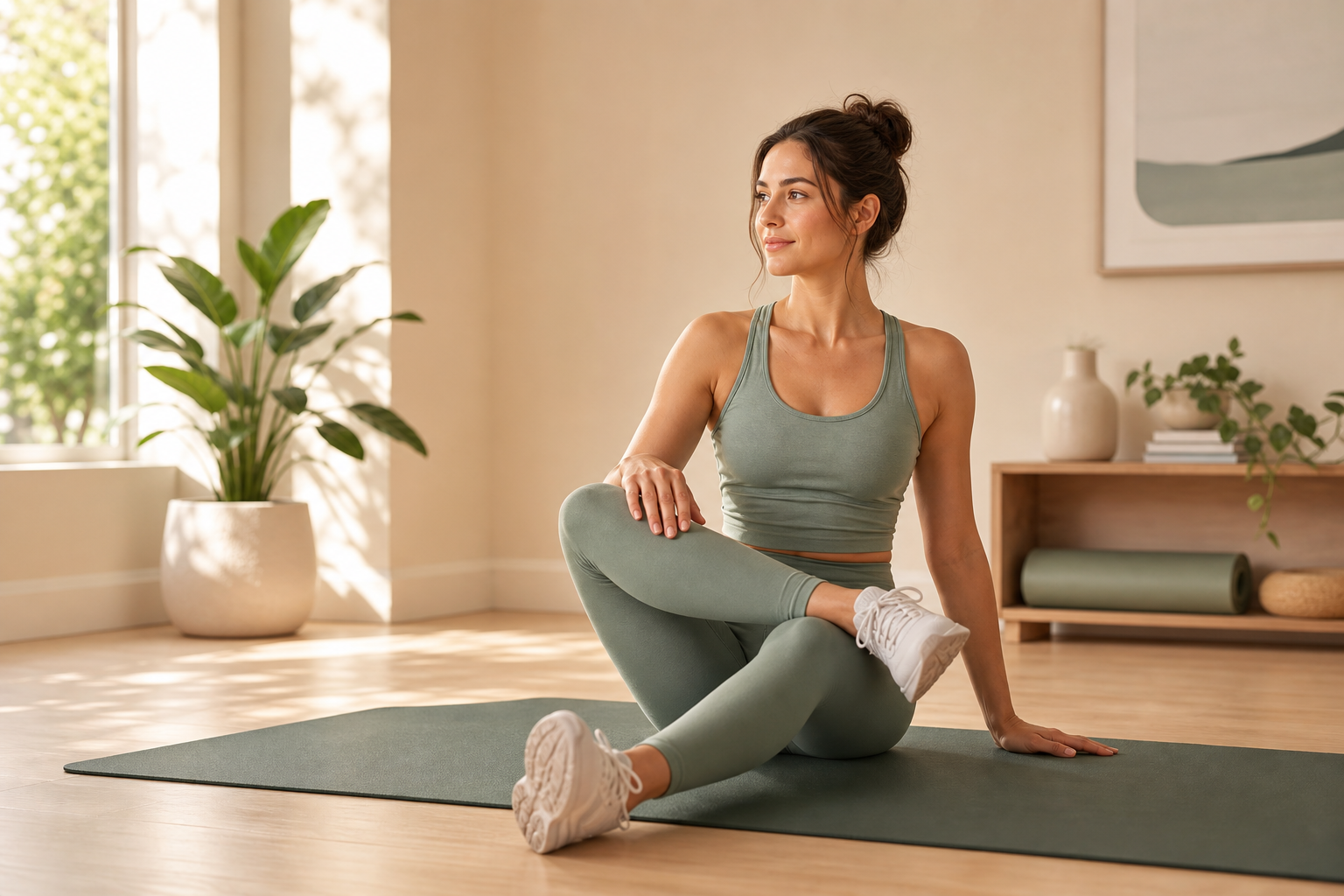
The annoying part about tight glutes is that they rarely feel isolated. You sit for hours, stand up stiff, try one random stretch, and then wonder whether the lower back, hips, hamstrings, or posture are the real issue.
Use this guide when you want a simple answer: a short glute-stretch routine that targets the outer hips and buttock area without turning a mild stiffness break into a pain experiment. The goal is not a dramatic pose. The goal is a repeatable reset you can actually do.
What are glute stretches?
Glute stretches are movements that create gentle tension through the buttock and outer-hip muscles, especially around the gluteus maximus and nearby hip rotators. The most common versions use a figure-four position, where one ankle crosses over the opposite thigh.
Glute stretches matter because sitting-heavy days often leave the hips quiet and the lower back doing too much of the complaining. A good routine should stay gentle, include both sides, and pair glute work with hip flexor, hamstring, or easy spinal movement when needed.
What is the fastest safe glute stretch routine?
The fastest useful glute routine is 5 to 7 minutes: choose one figure-four stretch, hold each side calmly, add one hip flexor or hamstring move, then stand and walk for a minute. That gives you enough time to compare sides without overdoing the stretch.
Use this as your default:
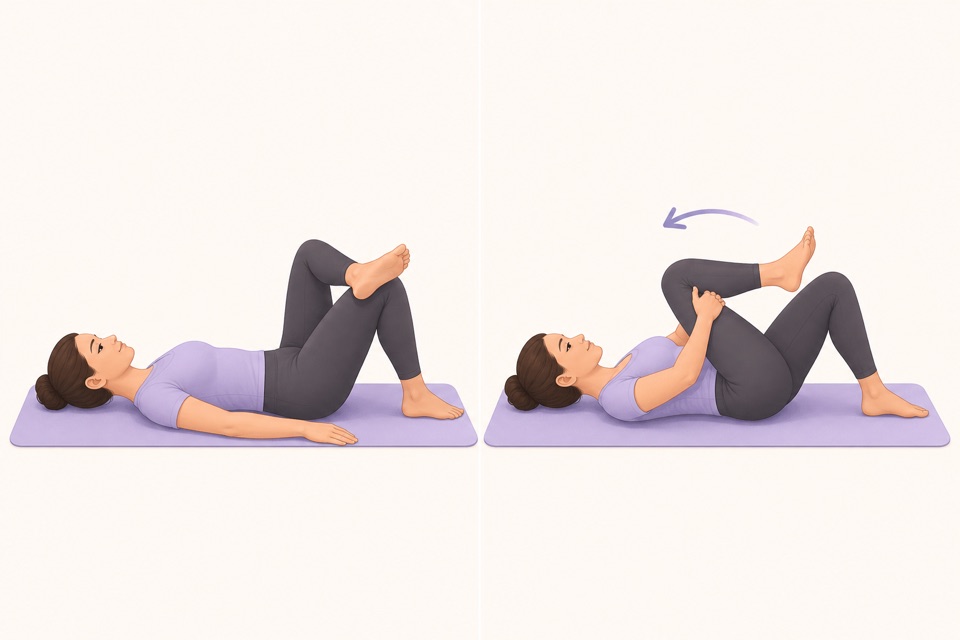
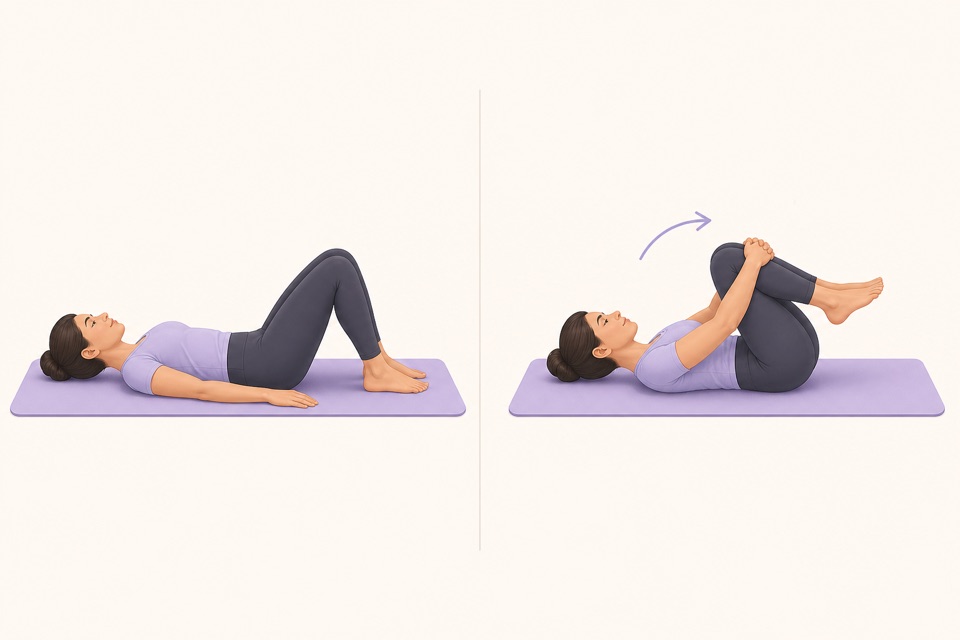
| Move | Time | Best for | Make it easier | | --- | ---: | --- | --- | | Slow walk or march | 60 sec | Warming up after sitting | Hold a desk or wall | | Seated figure-four | 45 sec each side | Work breaks and beginners | Sit taller, keep the foot lower | | Lying figure-four | 45 sec each side | More support on the floor | Keep the uncrossed foot down | | Knees-to-chest | 45 sec | Gentle lower-back-friendly reset | Hold behind the thighs | | Hip flexor stretch | 45 sec each side | Sitting-heavy days | Use a standing version | | Easy walk | 60 sec | Finishing without stiffness | Keep it slow |
If you only have two minutes, do seated figure-four on both sides and then walk. Tiny and repeated beats intense and abandoned.
If you are not sure whether glutes, hip flexors, or rotation are the limiting area, start with the hip mobility test and then choose this routine if the outer hip feels like the clearest target. When the figure-four position is the exact stretch you need, use the piriformis stretch guide for a more specific chair-first setup.
If the stiffness appears right after a long sitting block, the lower back stretches after sitting routine combines this hip work with an easier back reset.
From Wiggle
Recommended moves
Which glute stretch should you choose?
Choose the glute stretch that lets your hip relax without irritating your knee, ankle, or lower back. The best version is the one that gives mild outer-hip tension while your breathing stays normal.
Use this decision table:
| Your situation | Try this first | Why | | --- | --- | --- | | You are at a desk | Seated figure-four | No floor setup | | Floor work feels okay | Lying figure-four | More back support | | Your knees dislike deep crossing | Supported standing figure-four | Easier to control depth | | Your lower back feels guarded | Knees-to-chest before figure-four | Starts smaller | | One side feels much tighter | Shorter holds on both sides | Avoid forcing symmetry |
For a broader hip sequence, use hip and back stretches. If sitting is the main trigger, pair this with hip stretches while sitting at a desk.
Can glute stretches help lower back stiffness?
Glute stretches can be useful for everyday lower back stiffness when the stiffness is tied to long sitting, tight hips, or a lack of movement breaks. They should be treated as a gentle wellness reset, not a treatment plan for back pain.
This distinction matters. MedlinePlus lists many possible causes and care paths for back pain, and Mayo Clinic stretching guidance emphasizes staying controlled and avoiding force. If symptoms are new, severe, persistent, radiating, injury-related, or medically concerning, do not try to solve that with a stretch article.
For ordinary sitting stiffness, the better pattern is:
- Move first instead of yanking into a deep hold.
- Stretch the glutes without twisting hard through the spine.
- Add hip flexors and hamstrings so the lower back is not the only target.
- Keep holds short enough that you can repeat the routine tomorrow.
- Stop if symptoms travel, sharpen, numb, or feel unusual.
Wiggle is useful here because it keeps the routine paced. You do not have to guess whether 20 seconds or three minutes is enough; the timer moves you along before you start forcing range.
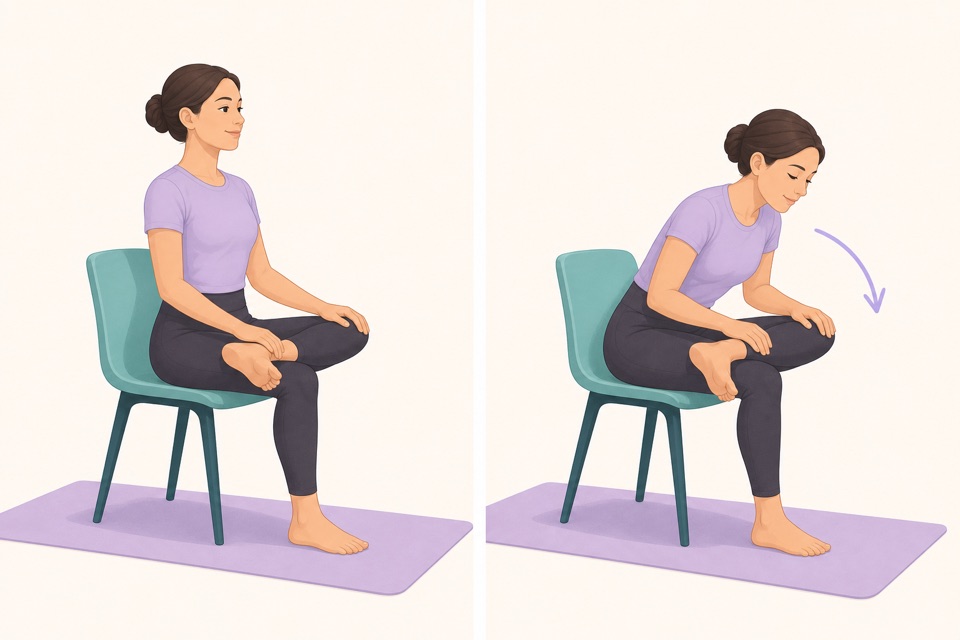
How do you do a seated figure-four stretch?
Sit tall, cross one ankle over the opposite thigh, keep the crossed foot relaxed, and lean forward only until you feel mild outer-hip tension. Hold for 30 to 45 seconds, breathe normally, then switch sides.
Steps:
- Sit near the front of a stable chair.
- Place both feet on the floor.
- Cross the right ankle over the left thigh.
- Keep the right foot gently flexed, not jammed.
- Sit tall first, then hinge forward slightly.
- Stop at mild tension in the glute or outer hip.
- Hold without bouncing.
- Switch sides and use the smaller side as your limit.
If the knee feels cranky, lower the crossed leg, sit taller, or skip this version. A supported standing option may be easier.
What should you avoid when stretching glutes?
Avoid forcing the knee downward, rounding aggressively through the lower back, bouncing, chasing a deep pose, or treating numbness and tingling as normal stretch sensations. Glute stretches should feel controlled, not dramatic.
Use this checklist:
- Mild tension only.
- No sharp hip, knee, or back pain.
- No numbness, tingling, weakness, or radiating symptoms.
- No breath-holding to reach a deeper position.
- No comparing sides as if they must match today.
- No long holds when a shorter hold already works.
The U.S. physical activity guidelines support regular movement as part of health, but a stretch routine works best when it is realistic. A 7-minute routine you repeat three times a week is more valuable than a perfect routine you never open again.
How can Wiggle make glute stretches easier?
Wiggle removes the two things that usually kill a stretching habit: deciding what to do and timing every side yourself. Open a hips or lower-back-friendly routine, follow the next move, and let the timer keep the routine calm.
The specific next step: save one glute-focused Wiggle routine for this week. Use it after long sitting, before an evening walk, or whenever your hips feel stiff but you do not want to search for a new video.
For adjacent routines, try stretching app for tight hips, lower back stretches at desk, or gentle stretches for lower back pain.
Sources
Why we keep it gentle
These guides are written for everyday stiffness and habit-building. They are grounded in mainstream guidance on flexibility, movement, and when to seek medical help.
- Stretching: Focus on flexibilityMayo Clinic
- Back PainMedlinePlus
- Taking care of your back at homeMedlinePlus Medical Encyclopedia
- Physical Activity Guidelines for AmericansU.S. Department of Health and Human Services
FAQ
Questions people ask
What are the best glute stretches for beginners?
The best glute stretches for beginners are the seated figure-four, lying figure-four, knees-to-chest variation, and a supported standing figure-four. Choose the version that lets you feel mild outer-hip tension without forcing your back, knee, or ankle.
How long should I hold a glute stretch?
Start with 30 to 45 seconds per side and repeat once if it feels useful. Longer is not automatically better. A good hold should stay calm, controlled, and easy to breathe through.
Can glute stretches help lower back stiffness?
Glute stretches may help some people with everyday lower back stiffness because the hips and lower back often feel connected after long sitting. They are not a diagnosis or treatment for back pain, so stop and get professional guidance if symptoms are sharp, radiating, new, severe, or persistent.
Should a glute stretch hurt?
No. A glute stretch should feel like mild tension in the outer hip or buttock area, not sharp pain, numbness, tingling, knee strain, or a pinching feeling. Make the range smaller or skip the move if it feels wrong.
How can Wiggle help with glute stretches?
Wiggle helps by timing each side, showing a clear next move, and pairing glute stretches with hip flexor, hamstring, and lower-back-friendly movement. That makes the routine easier to repeat without overthinking it.
If stiffness feels broader than the glutes, use this six-minute pelvic stretch routine to add gentle hip-front and inner-thigh movement.