Wiggle guide
Lower Back Stretches After Sitting: A 7-Minute Reset
A gentle lower-back and hip reset for sitting-heavy days, with clear stop signs and an easy routine.
lower back stretches after sitting
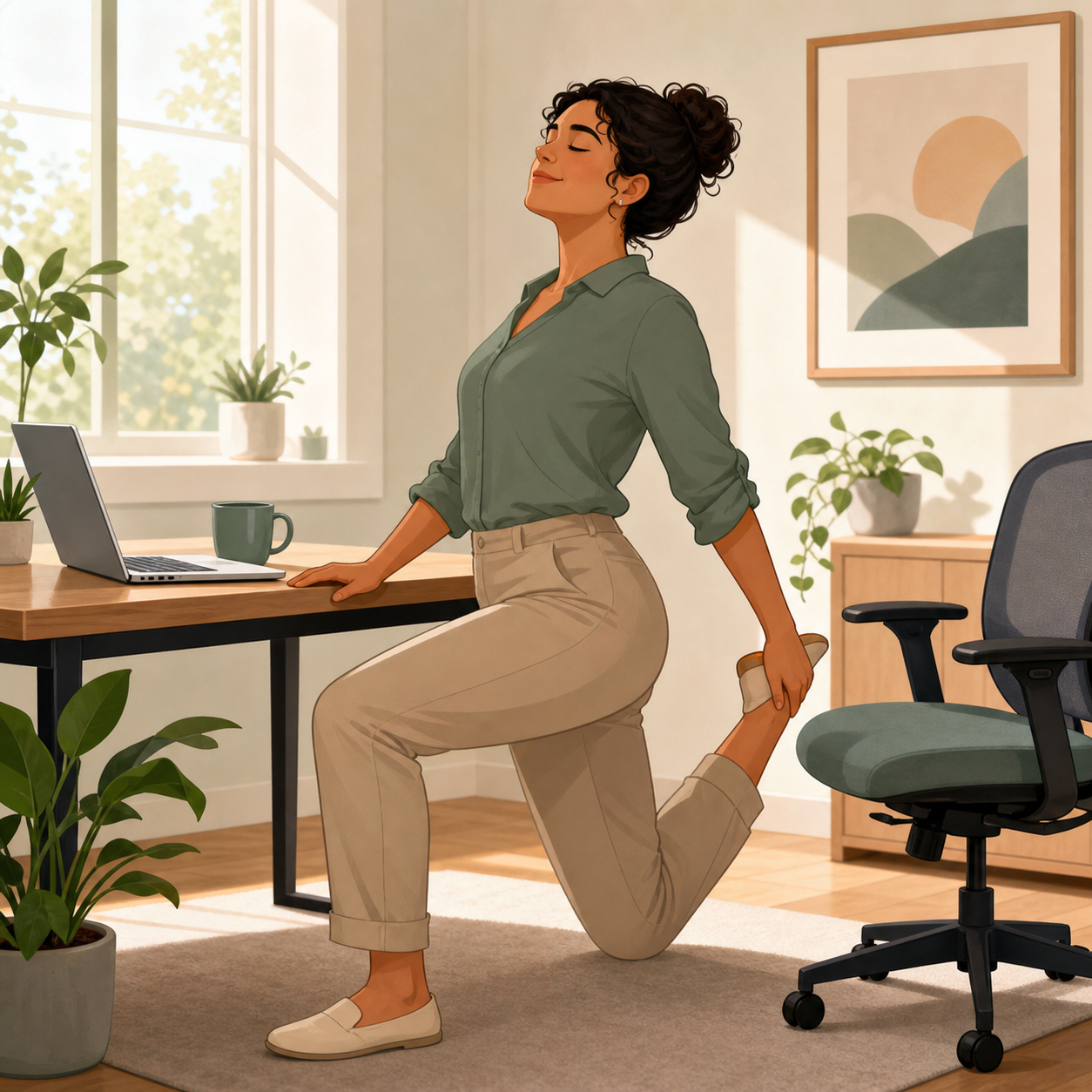
The painful part of sitting too long is that your body can feel stuck in the chair even after you stand up. Your lower back feels compressed, your hips feel short, and the first instinct is to yank yourself into a deep stretch.
Do the opposite. Use a small, calm reset first. Wiggle can make that easier by timing the moves, showing the next step, and keeping the routine short enough to repeat between work blocks.
What should you do first when your lower back feels stiff after sitting?
Stand up and walk for one minute before stretching. After long sitting, your first win is changing position and letting your hips, back, and legs move lightly. Then use gentle lower back stretches after sitting, not aggressive bends, twists, or pain-chasing positions.
Lower back stiffness after sitting is a mild, everyday tightness that appears after staying in one position for a long time. It is not the same as new, severe, radiating, injury-related, or persistent pain. Use this guide as a movement break, not as medical advice.
The fastest decision rule:
- If walking makes things feel calmer, continue with the seven-minute reset.
- If a movement creates sharp pain, stop that movement.
- If symptoms travel down the leg, feel severe, or worry you, skip the routine and ask a qualified professional.
What is the best seven-minute reset after sitting?
The best reset is short, repeatable, and biased toward gentle motion. Do one minute of walking, then choose back and hip movements that stay in mild tension. You should finish feeling looser, not tested. If you only have three minutes, do the walk, pelvic tilts, and hip flexor stretch.
Try this sequence:
- Walk slowly for one minute.
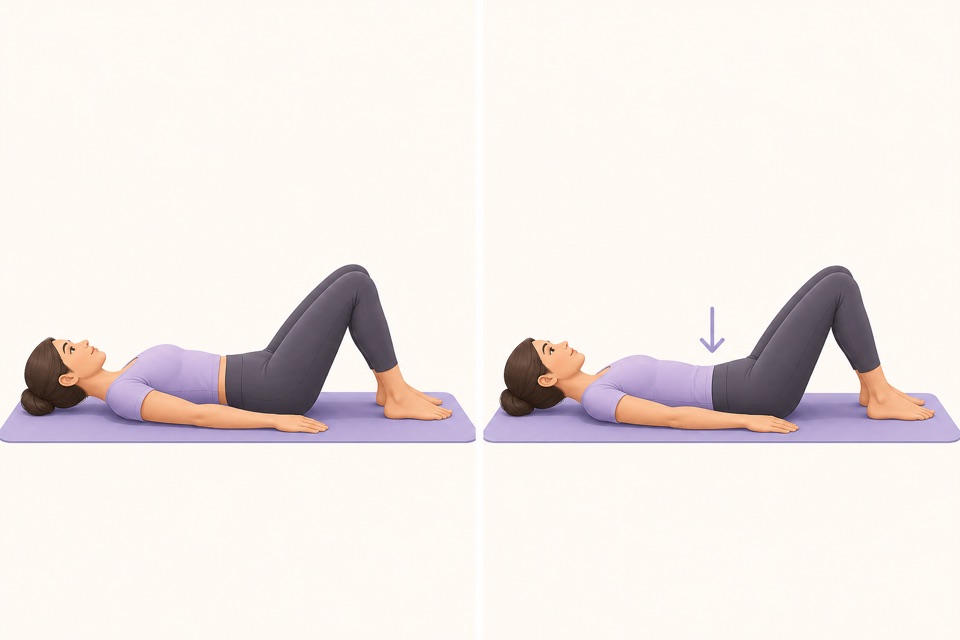
- Standing pelvic tilts for 45 seconds.
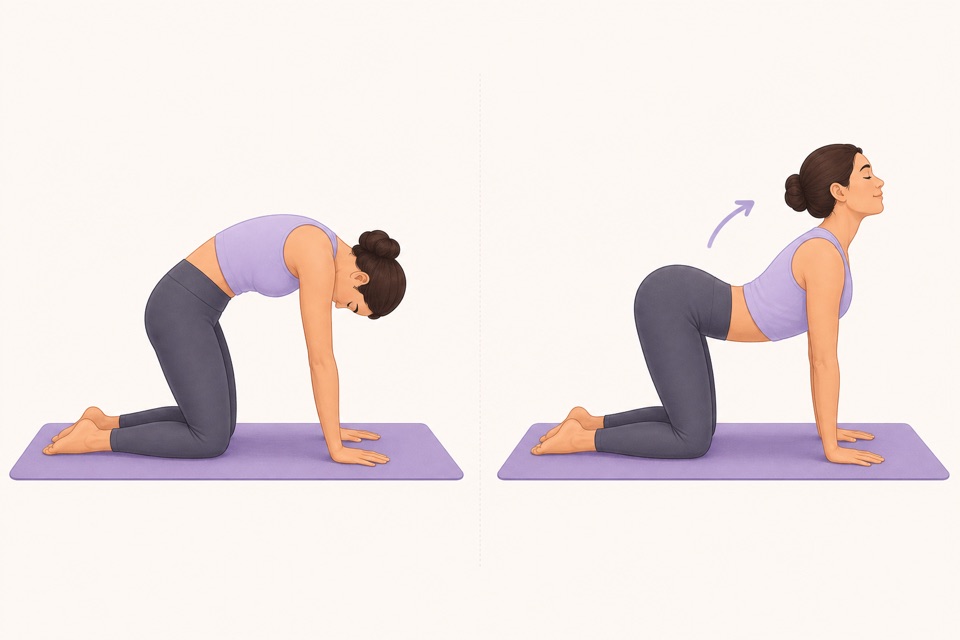
- Seated cat cow for 45 seconds.
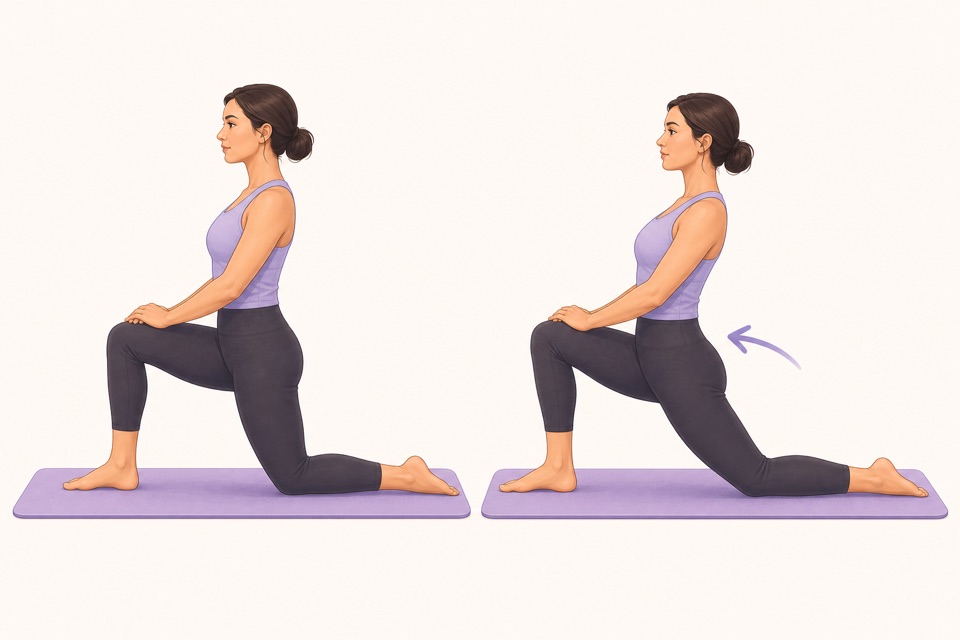
- Supported hip flexor stretch for 45 seconds per side.
- Seated or standing figure-four stretch for 45 seconds per side.
- Easy walk for one final minute.
From Wiggle
Recommended moves
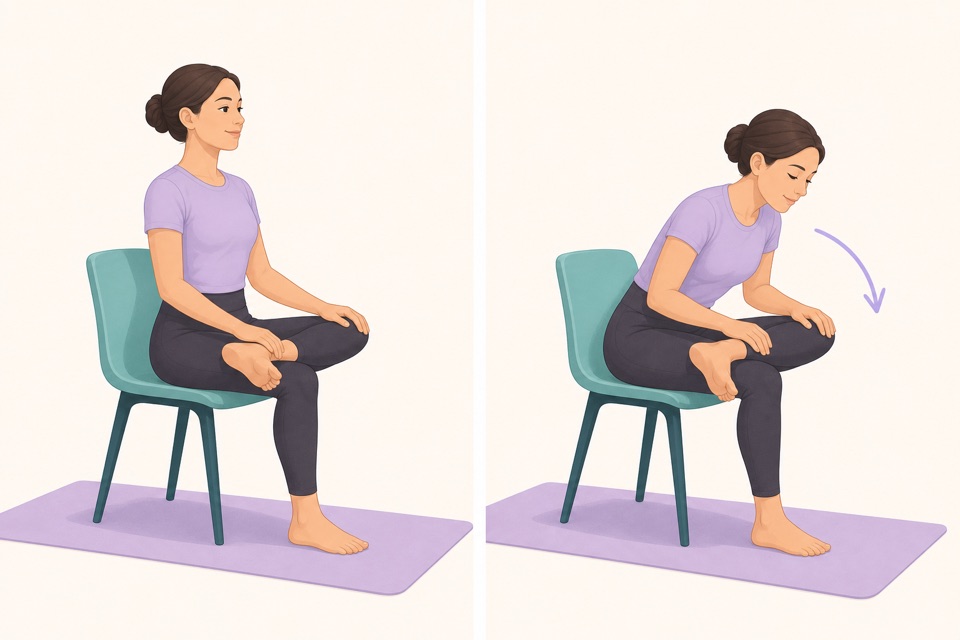
Should you stretch the lower back or the hips first?
Start with hips and gentle spinal motion before trying a deeper lower-back stretch. Sitting keeps your hips flexed, and tight hips can make your lower back feel like it has to do all the work when you stand. A hip-first routine often feels better than folding harder.
Use this simple comparison:
| If you feel this after sitting | Try first | Avoid first | | --- | --- | --- | | Lower back feels compressed | One-minute walk plus pelvic tilts | Forcing a deep forward fold | | Front of hips feels tight | Supported hip flexor stretch | Overarching the lower back | | Glutes feel tight | Seated figure-four stretch | Bouncing into the stretch | | Whole back feels stiff | Seated cat cow and easy walking | Hard twisting |
For more hip-focused work, use Wiggle's guide to glute stretches or the hip mobility test before picking a longer routine.
How do you keep lower back stretches after sitting safe?
Keep the stretch mild enough that you can breathe normally. The point is to interrupt stiffness, not prove range of motion. Stop if a stretch causes sharp pain, numbness, dizziness, weakness, or symptoms that travel down the leg. For concerning pain, get personal medical guidance.
Use this checklist:
- Start smaller than you think you need.
- Keep one hand on a desk, wall, or chair if balance feels uncertain.
- Spend more time walking if stretching feels too intense.
- Skip any movement that makes symptoms worse.
- Repeat the routine later only if the first pass felt good.
If you are at work, the lower back stretches at desk guide gives seated options. If the real problem is long static work blocks, pair this with stretches for sitting all day.
If your legs feel stiff too, add a separate pass of gentle knee stretches instead of turning the lower-back reset into one long routine.
If you want a simpler first pass before choosing a sitting-specific routine, use the easy lower back stretches guide for a beginner seven-minute reset.
If the same stiffness shows up before you even start the day, use the morning stretches for back pain reset instead.
How can Wiggle make the routine easier to repeat?
Wiggle reduces the effort by removing the tiny decisions: which stretch, how long, what comes next, and when to stop. Pick a short guided routine, keep the timer visible, and let the app move you through a lower-back-friendly reset without turning it into a project.
The useful version is not a heroic 30-minute session. It is a small reset you can actually do after two hours at a desk, after a commute, or before your evening walk. If the stiffness shows up after car travel specifically, use the dedicated stretches after a long drive routine instead.
Once this reset feels comfortable, the beginner lower back strengthening routine is the next step for building trunk, hip, and leg capacity over time.
Sources
Why we keep it gentle
These guides are written for everyday stiffness and habit-building. They are grounded in mainstream guidance on flexibility, movement, and when to seek medical help.
- Stretching: Focus on flexibilityMayo Clinic
- Back painMedlinePlus
- Physical Activity Guidelines for AmericansU.S. Department of Health and Human Services
- How much physical activity do adults need?CDC
FAQ
Questions people ask
What are the best lower back stretches after sitting all day?
Start with a short walk, pelvic tilts, seated cat cow, a gentle hip flexor stretch, and a figure-four hip stretch. Keep the range easy and stop if symptoms worsen.
Should I stretch my lower back hard after sitting?
No. After long sitting, a hard forward fold or aggressive twist can feel tempting, but a gentler reset is usually smarter. Change position first, then stretch hips and back lightly.
How long should a lower back reset take?
Five to seven minutes is enough for a first reset. The goal is to interrupt stiffness, not complete a full workout.
Why do hips matter for lower back stiffness after sitting?
Sitting keeps the hips flexed for a long time. When the hips feel tight, the lower back often works harder during standing, walking, or bending.
When should I avoid this routine?
Skip it and ask a qualified professional if pain is new, severe, persistent, injury-related, travels down the leg, or comes with numbness, weakness, fever, dizziness, or symptoms that worry you.
If cleaning is the harder version of your sitting-heavy day, use the six-minute lower back reset after housework when the chores are done.