Wiggle guide
Easy Lower Back Stretches: A Beginner 7-Minute Reset
A beginner-friendly lower-back reset for mild stiffness, with gentle moves, safety stop signs, and a routine you can repeat.
easy lower back stretches
The annoying part of lower-back stiffness is not just the tightness. It is the uncertainty. Should you fold forward? Twist? Lie down? Do nothing? Beginners often make the routine harder than it needs to be, then quit because every option feels like a guess.
Use the smaller win: seven minutes, gentle range, and no pain-chasing. Wiggle can make that easier by timing each move and showing the next step, so the routine feels like a guided reset instead of a body-mechanics exam.
What are easy lower back stretches for beginners?
Easy lower back stretches are slow, low-pressure movements that help mild stiffness feel less stuck without forcing range. Start with walking, pelvic tilts, knees-to-chest, lower trunk rotations, seated cat cow, and a seated figure-four stretch. The goal is to move comfortably, not to prove flexibility.
Easy lower back stretches are beginner-friendly movements for mild, everyday stiffness in the low back and hips. They are not a treatment plan, diagnosis, or replacement for personal medical advice when symptoms are severe, new, persistent, radiating, injury-related, or worrying.
The fastest decision rule:
- If walking and small movement feel calming, continue the routine.
- If a stretch creates sharp pain, stop that stretch.
- If symptoms travel down the leg or feel concerning, skip the routine and ask a qualified professional.
What is the simplest 7-minute lower back routine?
The simplest routine is one minute of easy movement, four gentle stretches, and one final check-in. Beginners should avoid jumping straight into deep forward folds or aggressive twists. Start smaller than you think you need and build trust with the routine before adding intensity.
Try this order:
- Walk slowly or march in place for 1 minute.
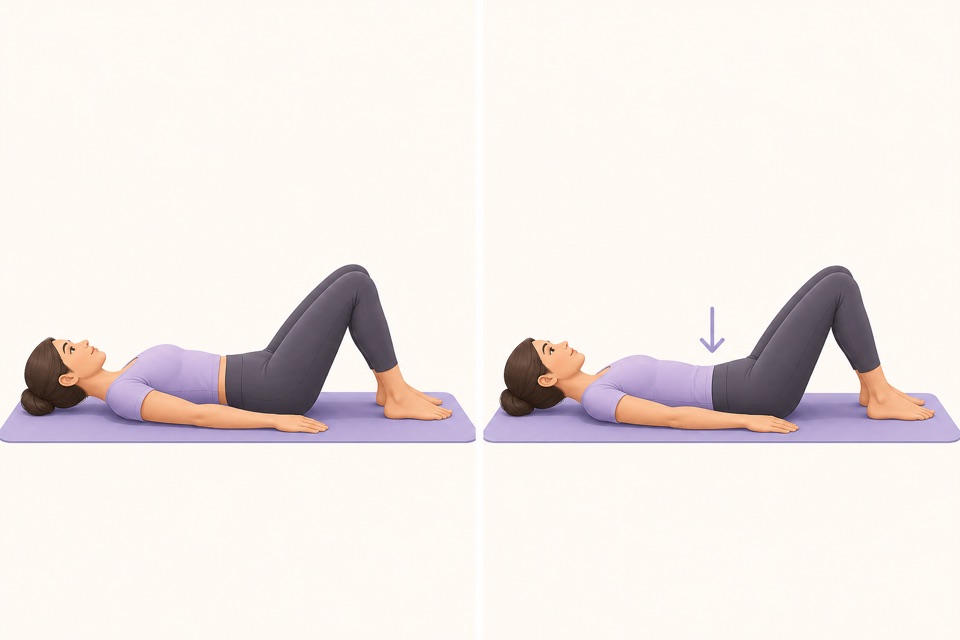
- Pelvic tilts for 45 seconds.
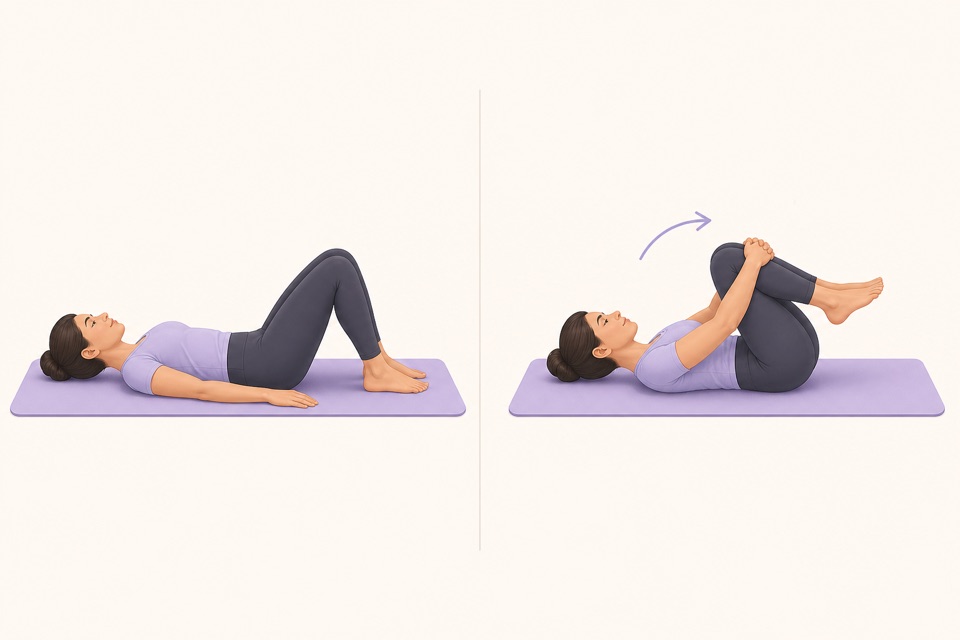
- Knees-to-chest for 45 seconds, one leg or both legs.
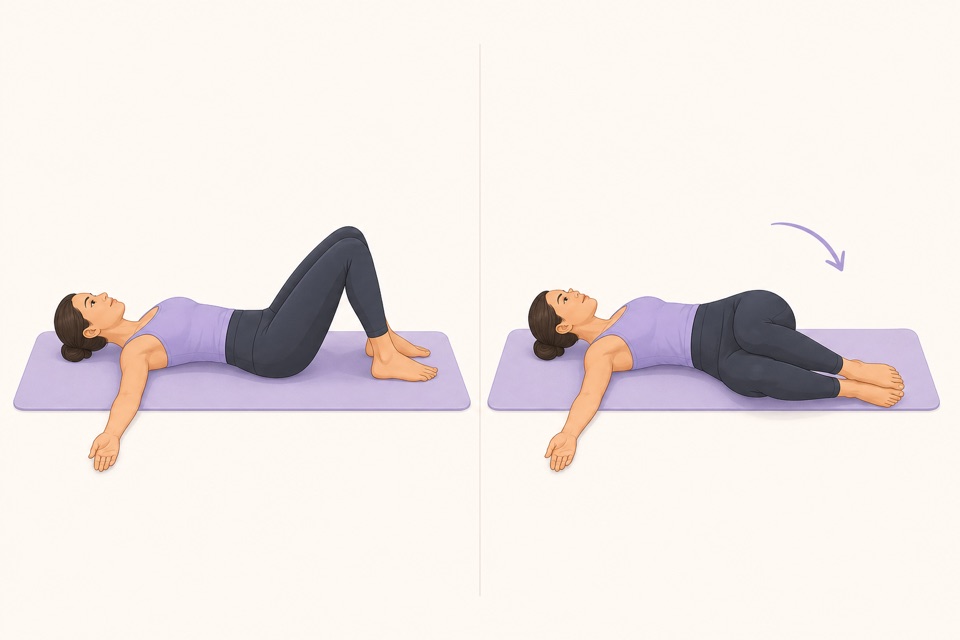
- Lower trunk rotations for 45 seconds.
- Seated cat cow for 45 seconds.
- Seated figure-four stretch for 45 seconds per side.
- Walk for one final minute and notice what changed.
From Wiggle
Recommended moves
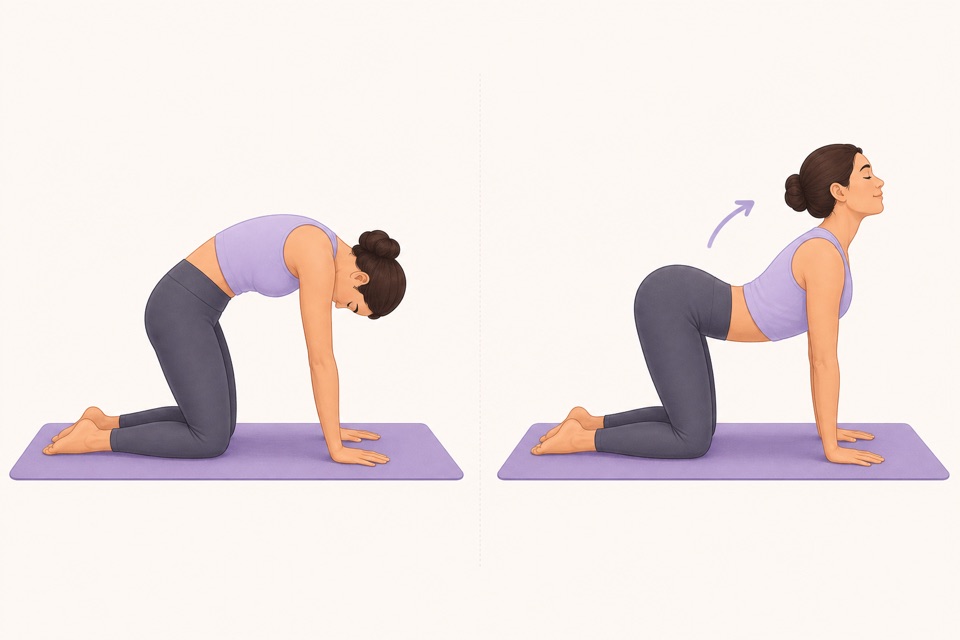
Which beginner stretch should you choose first?
Choose the stretch that matches the moment instead of forcing one standard move. If you have been sitting, start with walking and hips. If you woke up stiff, start lying down. If bending forward feels tense, choose pelvic tilts or seated cat cow before deeper stretches.
| What you notice | Try first | Make it easier | | --- | --- | --- | | Back feels stiff after sitting | One-minute walk and pelvic tilts | Keep the range tiny | | Stiffness is strongest in bed | Knees-to-chest or lower trunk rotations | Use one leg at a time | | Hips feel tight too | Seated figure-four stretch | Sit taller and use less pressure | | You feel guarded or unsure | Seated cat cow | Move only through a comfortable range |
If the stiffness is clearly from sitting, use the more specific lower back stretches after sitting guide. If it shows up after standing all day, use lower back stretches after standing all day so calves, hamstrings, and hips are part of the reset. If it shows up after training, use back stretches after workout so the cooldown includes hips and hamstrings too. If mornings are the pattern, start with morning stretches for back pain or the softer lower back pain stretches in bed version.
How should easy lower back stretches feel?
They should feel like mild tension, easy motion, or gentle relief. You should be able to breathe normally and stop cleanly. Pain is not proof that the stretch is working. Mayo Clinic's stretching guidance emphasizes smooth movement, normal breathing, and backing off when a stretch hurts.
Use this checklist:
- Keep every stretch at a 2 or 3 out of 10 intensity.
- Avoid bouncing.
- Breathe normally instead of holding your breath.
- Use a chair, wall, pillow, or smaller range when needed.
- Stop if symptoms worsen, spread, or feel unusual.
MedlinePlus describes back pain as a broad symptom with many possible causes, so do not use a general routine as a way to self-diagnose. Treat this as a gentle movement break for everyday stiffness.
How can Wiggle make beginner back stretches easier to repeat?
Wiggle reduces the effort by removing the tiny decisions: what to do first, how long to hold it, when to switch sides, and whether a short session counts. For beginners, that matters because consistency is easier when the app keeps the routine timed and calm.
Start with one saved routine for a week. If seven minutes feels like too much, do the first three moves and stop there. The useful version is the one you can repeat after a long desk block, before a walk, or when your back feels mildly stiff but not alarming.
For a broader habit, pair this routine with a stretching app for lower back. When gentle movement feels comfortable and you want to build capacity, use the beginner lower back strengthening exercises next. If you want a full-body beginner plan instead, use the stretching routine for beginners.
If your goal is controlled movement rather than longer holds, use the lower back mobility exercises routine for pelvic tilts, cat cow, and gentle rotation.
For a more anatomy-specific option, the erector spinae stretches routine explains how to use supported forward reaches and side bends without forcing range.
Sources
Why we keep it gentle
These guides are written for everyday stiffness and habit-building. They are grounded in mainstream guidance on flexibility, movement, and when to seek medical help.
- Stretching: Focus on flexibilityMayo Clinic
- Back painMedlinePlus
- How much physical activity do adults need?CDC
- Physical Activity Guidelines for AmericansU.S. Department of Health and Human Services
FAQ
Questions people ask
What are easy lower back stretches for beginners?
Easy lower back stretches for beginners include pelvic tilts, knees-to-chest, lower trunk rotations, seated cat cow, and a seated figure-four hip stretch. Keep each movement slow, mild, and easy to stop.
How long should a beginner lower back routine take?
Start with 5 to 8 minutes. A short routine is easier to repeat and easier to judge than a long session where you keep testing the same stiff area.
Should beginners stretch through lower back pain?
No. Aim for mild tension, not pain. Stop if a stretch causes sharp pain, numbness, weakness, dizziness, or symptoms that travel down the leg.
Should I stretch my hips too?
Yes, if it feels comfortable. Hips and glutes often affect how the lower back feels after sitting, so a beginner routine should include gentle hip movement instead of only folding the back.
When should I ask a professional instead of stretching?
Ask a qualified professional if pain is new, severe, persistent, injury-related, radiating, or worrying, or if you have a medical condition that changes movement advice.
If yard work is the trigger, use this 7-minute lower back reset after gardening instead of forcing a deeper version of the same stretch.