Wiggle guide
Lower Back Stretches After a Workout: A Gentle Cooldown
A gentle 7-minute post-workout reset for the lower back, hips, and glutes, with clear stop signs.
lower back stretches after workout
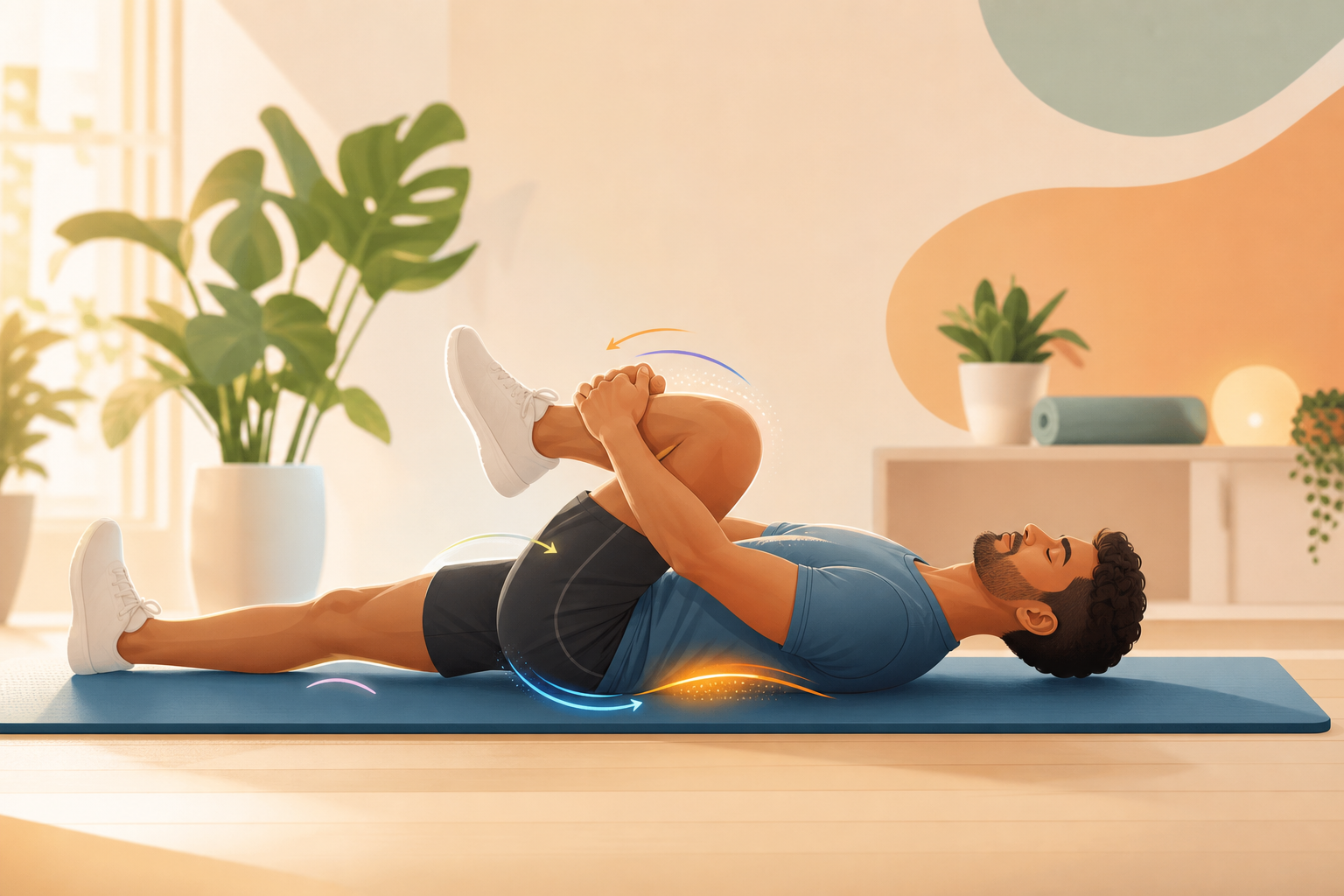
Your workout is over, but your lower back feels like it did not get the memo. The bad instinct is to fold as far as possible and pull on the tight spot. The easier path is a short cooldown that lets your breathing settle, restores gentle hip and trunk motion, and tells you whether you are dealing with ordinary post-workout stiffness or something that should not be stretched.
Use this fast rule: walk first; stretch only if the feeling is mild and does not worsen with movement. A seven-minute sequence is enough. Sharp pain, symptoms travelling into a leg, numbness, or weakness means stop rather than chase a deeper stretch.
What are lower back stretches after a workout?
Lower back stretches after a workout are low-effort cooldown movements for the back, hips, and glutes once the hard work is finished. They should feel calm and controlled, not like another training set. Their job is to help you transition from lifting, running, or classes back to normal movement without forcing tired tissue.
A post-workout lower back cooldown is a brief sequence of easy walking, gentle spinal motion, hip stretches, and relaxed breathing. It is not treatment for an injury and it cannot diagnose why your back feels sore.
First separate normal effort from a warning sign:
| What you notice | Best next step | What to avoid | | --- | --- | --- | | Mild, even tightness that eases while walking | Try the gentle routine | Aggressive holds | | General fatigue after a hard session | Walk, hydrate, and keep stretches short | Turning the cooldown into another workout | | Sharp or worsening pain | Stop and reassess | Stretching through it | | Pain travelling down a leg, numbness, or weakness | Seek qualified medical guidance | Online exercise experiments |
If your back usually feels stiff before training rather than after it, use the lower back mobility exercises guide as a separate, gentle session.
What are the best lower back stretches after a workout?
The best sequence starts with walking, then combines small trunk rotations with supported stretches for the hips and glutes. Try knee rolls, supported child's pose, a half-kneeling hip flexor stretch, and a lying figure-four. Hold only a mild position and breathe normally throughout.
From Wiggle
Recommended moves
1. Walk before you stretch
Walk slowly for two minutes. Let your heart rate and breathing settle, unclench your hands, and notice whether the back already feels easier. Walking is also a useful filter: if symptoms sharpen or spread instead of settling, skip the remaining routine.
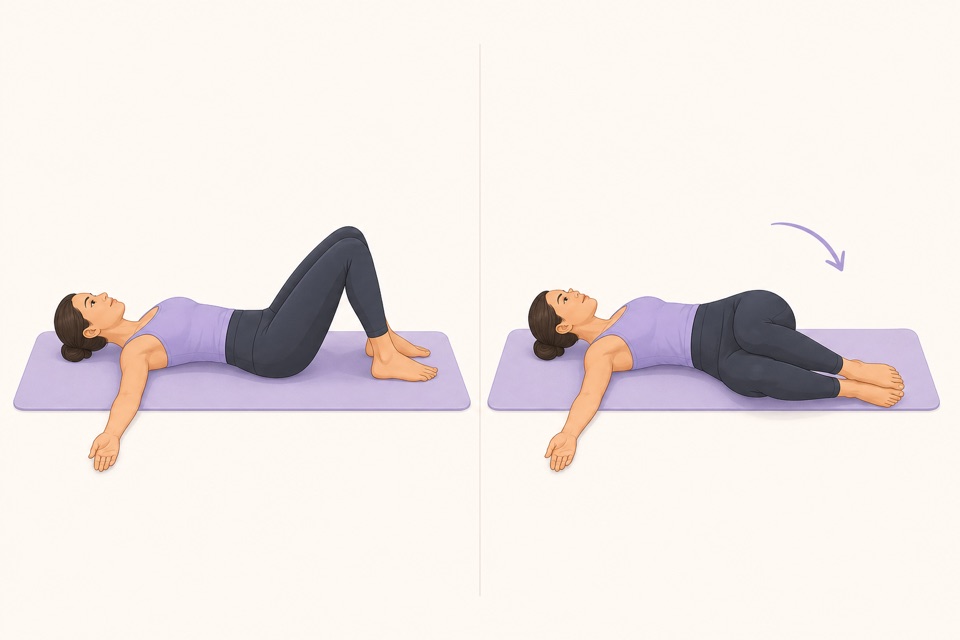
2. Knee rolls
Lie on your back with knees bent and feet down. Let both knees drift a small distance to one side, return to centre, then switch. Keep the range smaller than you think you need. Do six slow repetitions per side.
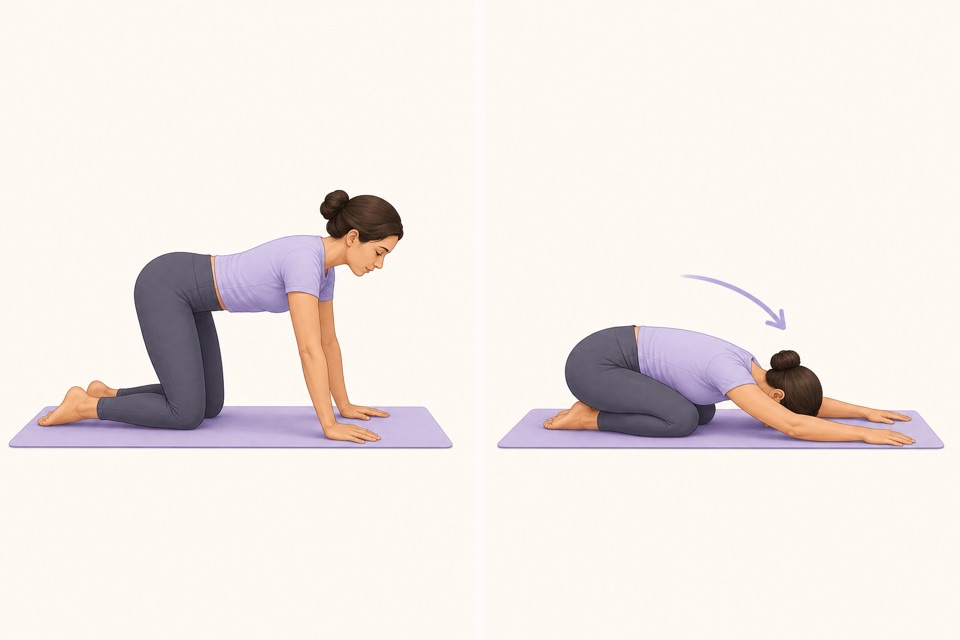
3. Supported child's pose
Kneel in front of a bench, sofa, or stacked cushions and rest your forearms on the support. Shift your hips back only until you feel a mild lengthening through the back and sides. Hold for 20 to 30 seconds. Skip it if kneeling or spinal rounding feels uncomfortable.
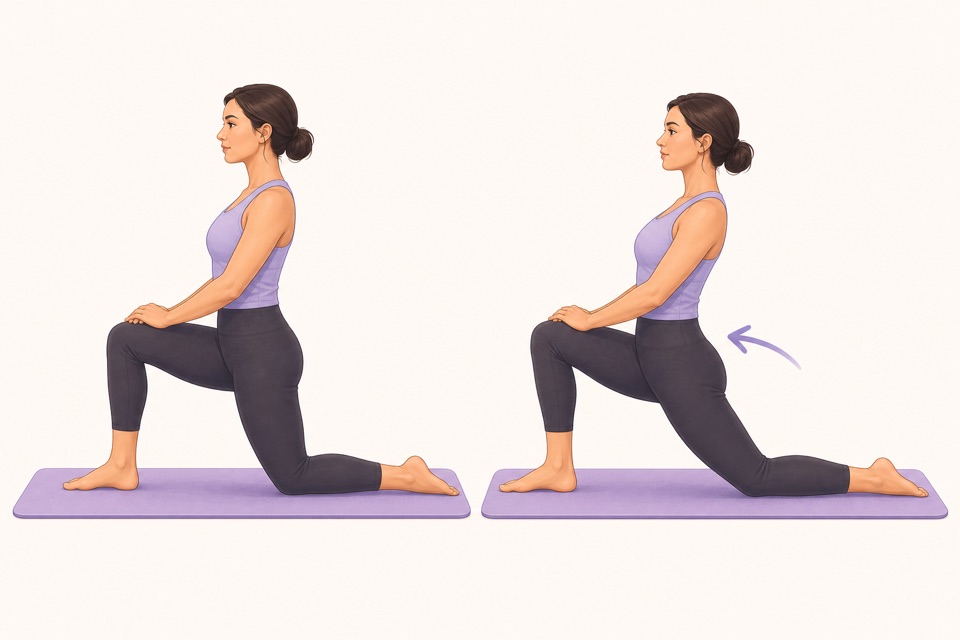
4. Half-kneeling hip flexor stretch
Kneel on a pad with one foot forward and hold a wall or chair. Gently tuck the pelvis, then shift forward without arching the lower back. Hold 20 to 30 seconds per side. The sensation belongs near the front of the rear hip, not as pressure in the spine. See the hip flexor stretch guide for standing modifications.
5. Lying figure-four stretch
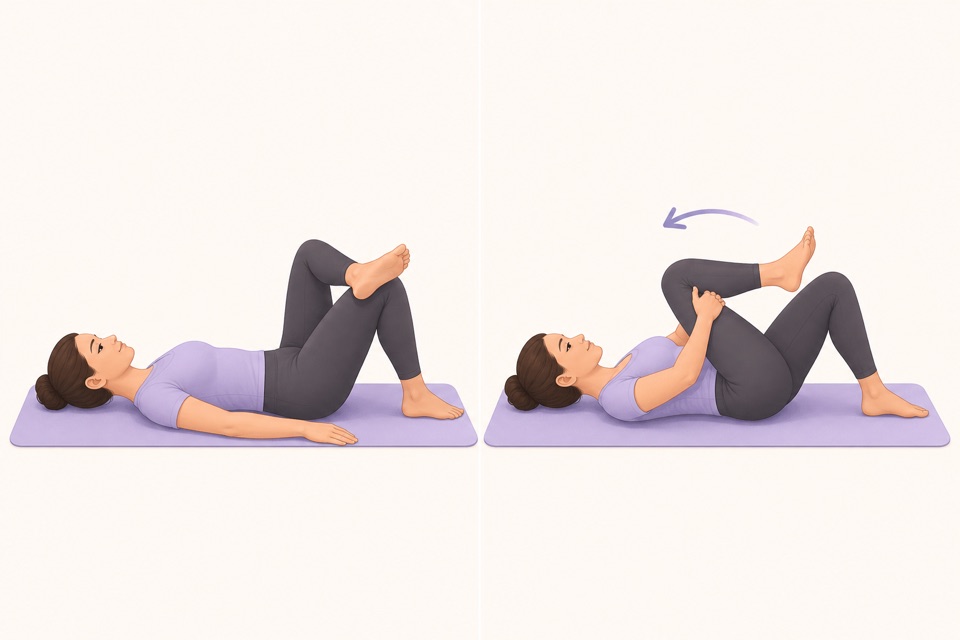
Lie with knees bent, cross one ankle over the opposite thigh, and draw the supporting leg toward you only as far as comfortable. Keep the head and shoulders relaxed. Hold for 20 to 30 seconds per side. Use the glute stretches guide if you prefer seated or standing options.
6. Bent-knee breathing
Stay on your back with feet down. Take five slow breaths, allowing the ribs to expand instead of forcing the lower back flat. Roll to your side before standing. The finish should feel quieter than the start.
What is the best seven-minute post-workout routine?
A useful seven-minute cooldown spends more time changing gears than stretching deeply. Walk for two minutes, use four easy movements for about one minute each, then finish with slow breathing. If one position does not suit the workout you just completed, skip it; the routine still counts.
| Time | Movement | Decision cue | | --- | --- | --- | | 0:00-2:00 | Easy walk | Continue only if symptoms stay mild or ease | | 2:00-3:00 | Knee rolls | Keep both shoulders relaxed | | 3:00-4:00 | Supported child's pose | Use a bench or skip spinal rounding | | 4:00-5:00 | Hip flexor stretch | Do not arch the lower back | | 5:00-6:00 | Figure-four stretch | Stop before pinching or tingling | | 6:00-7:00 | Bent-knee breathing | Finish calm enough to stand normally |
Mayo Clinic advises stretching when muscles are warm and using smooth movement rather than bouncing. That makes the cooldown a sensible place for gentle flexibility work, but it does not mean every tired muscle needs a maximal stretch.
Should you stretch differently after lifting, running, or cycling?
Yes. Match the cooldown to the positions and effort in your session. After lifting, unload before bending deeply. After running, include calves and hips. After cycling, gradually leave the flexed riding position. The lower back does not always need to be the main target just because it feels tight.
| Workout | Useful emphasis | Common mistake | | --- | --- | --- | | Squats or deadlifts | Walking, breathing, gentle hip motion | Deep loaded forward folds | | Running | Walking, calves, hip flexors, glutes | Stopping abruptly and pulling hard on the back | | Cycling | Walking, hip flexors, gentle chest opening | Forcing spinal extension immediately |
If cycling is the activity that repeatedly leaves you folded forward, follow the targeted hip mobility for cyclists routine after your easy spin and short walk. | Core session | Breathing, small rotations, hip mobility | Adding more intense trunk work |
If you just finished a demanding strength session, save the beginner lower back strengthening routine for another day. Recovery work should reduce effort, not disguise extra training.
Why can the lower back feel tight after exercise?
Post-workout tightness can reflect fatigue across the trunk, hips, glutes, and back rather than one shortened muscle that needs pulling. Training load, technique, unfamiliar exercises, and prolonged positions can all influence how you feel. A generic stretch cannot identify the cause.
Use response, not intensity, to guide the next step:
- If easy walking settles the feeling, keep the cooldown gentle.
- If the same exercise repeatedly causes symptoms, review technique and training load.
- If soreness is more widespread, prioritise normal recovery rather than targeting the back aggressively.
- If symptoms persist, worsen, or limit normal movement, get individual guidance from a qualified clinician.
MedlinePlus and the NHS both note that back pain has many possible causes and highlight symptoms that need medical attention. That is why this routine stays deliberately modest.
When should you stop stretching your lower back?
Stop when a stretch produces sharp pain, makes symptoms worse, or sends pain, tingling, or numbness into a leg. Severe pain, significant injury, new weakness, fever, or symptoms that persist deserve professional assessment. Loss of bladder or bowel control or numbness around the groin requires urgent medical care.
For everyday cooldowns, use these boundaries:
- Never bounce into a stretch.
- Keep breathing normally.
- Avoid forcing tired muscles into end range.
- Change or skip any position that feels wrong.
- Judge the routine by how you feel during it and afterwards, not by how far you moved.
How do you make a post-workout cooldown automatic?
Attach it to the final set. When the workout ends, start a saved seven-minute sequence before opening another app or packing your bag. Wiggle handles the order and timing, which removes the small decisions that usually make cooldowns disappear.
Build one version for strength days and one for cardio days. Repeat each for two weeks before adding more movements. The useful cooldown is not the most elaborate one; it is the one you still do when the workout ran late.
If you want an app to handle timing and sequence after other kinds of training too, use the stretching app after a workout checklist to build one short saved cooldown.
Sources
Why we keep it gentle
These guides are written for everyday stiffness and habit-building. They are grounded in mainstream guidance on flexibility, movement, and when to seek medical help.
- Stretching: Focus on flexibilityMayo Clinic
- Back painMedlinePlus
- Back painNHS
- Physical Activity Guidelines for AmericansU.S. Department of Health and Human Services
FAQ
Questions people ask
What are the best lower back stretches after a workout?
After a workout, start with two minutes of easy walking, then use gentle knee rolls, a supported child's pose, a half-kneeling hip flexor stretch, a figure-four stretch, and slow breathing with your knees bent. Keep each stretch mild and stop if pain is sharp, spreading, or worsening.
Should I stretch my lower back immediately after lifting?
Cool down for a few minutes first so your breathing settles. Then choose low-effort positions that do not load or force the spine. If your back feels painful rather than normally worked or stiff, skip deep stretching and use easy walking while you assess how you feel.
How long should a post-workout lower back stretch routine take?
Five to eight minutes is enough for a simple cooldown. Spend one or two minutes walking, then hold three or four comfortable stretches for about 20 to 30 seconds per side. Longer is not automatically better, especially when the muscles are already fatigued.
Why does my lower back feel tight after a workout?
Temporary tightness may reflect fatigue or work shared by the hips, glutes, trunk, and back. Technique, exercise selection, training load, and recovery can also matter. Repeated, severe, radiating, or worsening symptoms deserve assessment by a qualified health professional.
When should I avoid stretching after a workout?
Avoid the routine and seek medical guidance if pain is severe, follows a significant injury, travels down a leg, or comes with numbness or weakness. Loss of bladder or bowel control or numbness around the groin requires urgent medical care.