Wiggle guide
Mid Back Stretches: A Gentle 7-Minute Desk Reset
A gentle middle-back routine for stiffness between the shoulder blades, long sitting, and screen-heavy workdays.
mid back stretches
The frustrating part of mid-back stiffness is how specific it feels. It is not quite neck tension, not quite lower-back tightness, and not dramatic enough to make you stop working. It just sits between the shoulder blades until every reach, twist, or deep breath reminds you it is there.
Use the smaller win: a seven-minute reset that moves the ribs, shoulder blades, and middle spine without forcing a deep twist. Wiggle can make that easier by timing the routine and showing the next move, so you are not guessing while your back is already annoyed.
What are mid back stretches?
Mid back stretches are gentle movements for the area between the shoulder blades, ribs, and thoracic spine. They are useful for mild everyday stiffness from sitting, typing, driving, or laptop posture. They are not a diagnosis, treatment plan, or substitute for personal medical advice.
Fast decision rule: if the tightness is between the shoulder blades, start with mid back stretches. If the main issue is neck tension, use neck stretches at desk. If it is lower than the waistline, use easy lower back stretches or lower back stretches after sitting.
What is the best 7-minute mid back stretch routine?
The best mid back routine starts with shoulder-blade movement, then adds gentle rounding, reaching, rotation, and a small desk reset. Keep every movement at mild tension. The goal is to make the area feel less stuck, not to force a dramatic crack or deep twist.
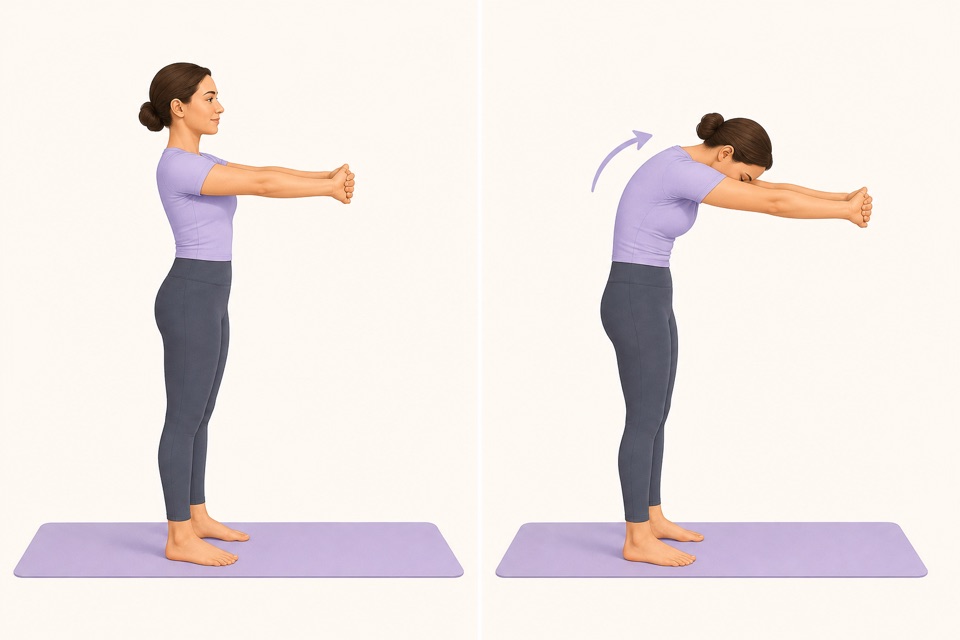
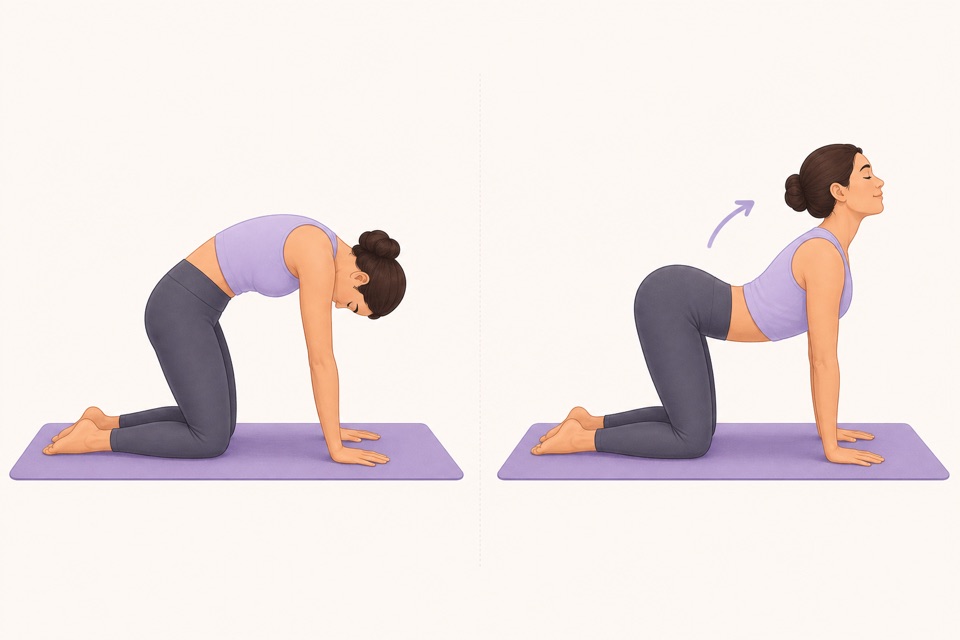
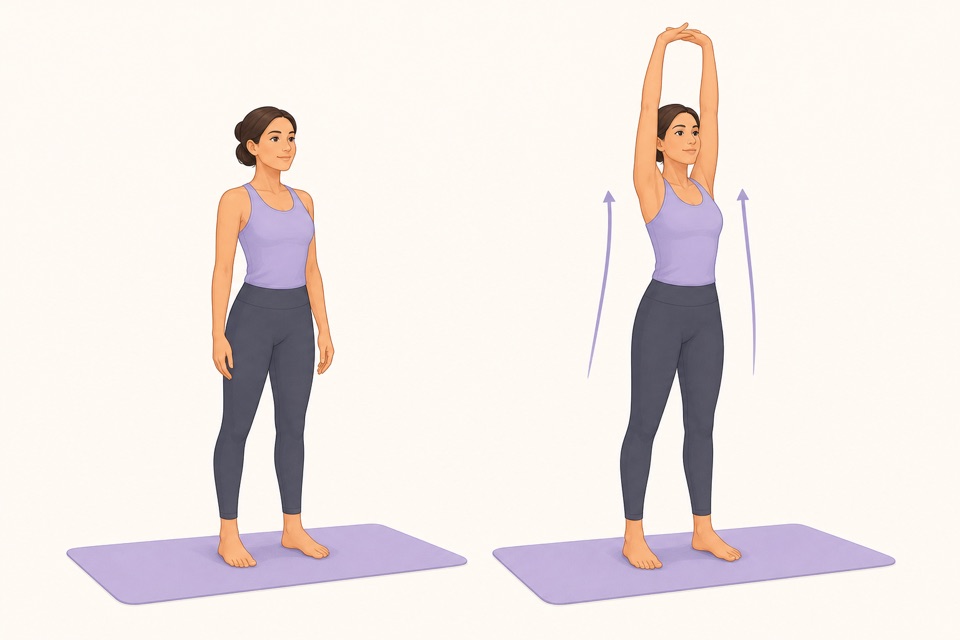
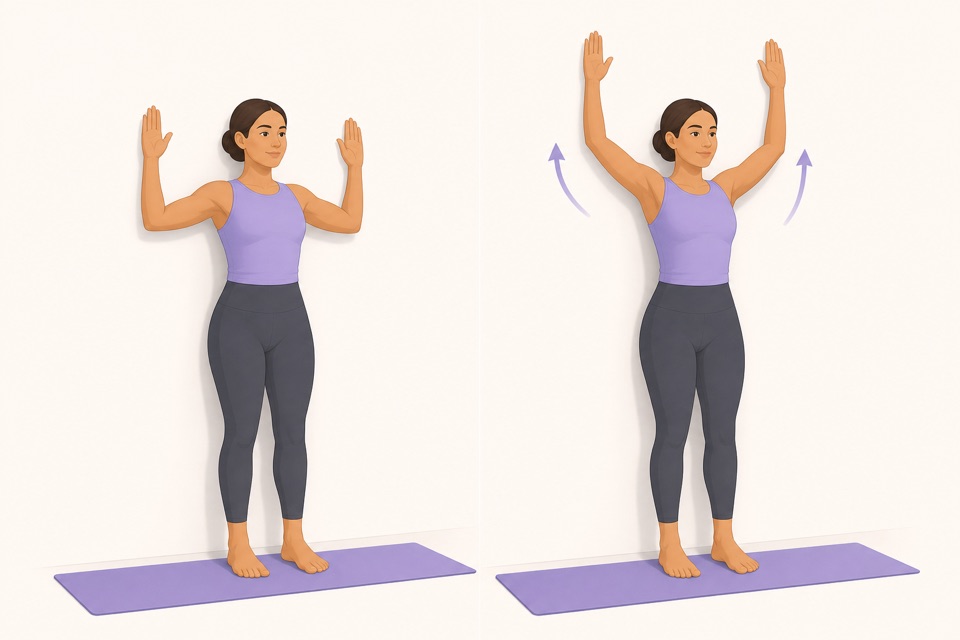
| Step | Time | What to do | Why it helps | | --- | ---: | --- | --- | | Shoulder circles | 45 sec | Roll shoulders slowly backward and forward | Wakes up the shoulder blades | | Upper-back reach | 45 sec | Reach both arms forward and round gently | Opens the space between the shoulder blades | | Seated cat-cow | 60 sec | Alternate rounding and lifting the chest | Moves the middle spine in a small range | | Side-rib overhead reach | 30 sec each side | Reach up and slightly away while breathing | Adds rib and side-body motion | | Seated rotation | 30 sec each side | Turn through the upper body without yanking the neck | Restores easy rotation | | Wall angels or doorway opener | 60 sec | Stand and move the arms gently | Balances rounded sitting posture | | Desk reset | 30 sec | Bring the screen closer and relax shoulders | Keeps the stretch from disappearing immediately |
From Wiggle
Recommended moves
Why does the mid back get stiff after sitting?
The mid back often gets stiff after sitting because the upper body stays rounded, the arms reach forward, and the ribs barely move for long blocks of time. The fastest fix is usually not one intense stretch. It is changing position, moving gently, and making the next work block less compressed.
Common patterns:
- Laptop sits low, so the chest folds and the head drifts forward.
- Keyboard or mouse is too far away, so the shoulder blades stay stretched apart.
- Breathing gets shallow during focused work.
- You sit through meetings without standing or rotating.
- You try to stretch the lower back when the tight spot is actually higher.
Mayo Clinic's office ergonomics guidance keeps coming back to fit, position, and breaks. In plain English: a mid-back stretch works better when the desk setup does not immediately rebuild the same posture.
How should mid back stretches feel?
Mid back stretches should feel like mild tension, easy warmth, or comfortable movement. You should be able to breathe normally and stop cleanly. Pain, dizziness, chest symptoms, numbness, tingling, weakness, or spreading symptoms are not normal stretch goals.
Use this checklist before you continue:
- Keep the intensity at 2 or 3 out of 10.
- Move slowly instead of bouncing.
- Let the neck follow the body instead of yanking it around.
- Use a chair, wall, or smaller range when needed.
- Stop if a movement makes symptoms worse.
MedlinePlus describes back pain as a broad symptom with many possible causes. Treat this article as a gentle movement guide for everyday stiffness, not as a way to self-diagnose what is happening.
Are mid back stretches different from upper or lower back stretches?
Yes. Mid back stretches focus on the middle spine, ribs, and shoulder-blade area. Upper-back desk stretches often lean more into shoulders, neck, and screen posture. Lower-back routines focus more on hips, pelvis, and the area below the waist.
| If the tightness is mostly here | Better first guide | What to avoid | | --- | --- | --- | | Between shoulder blades | This mid-back routine | Forcing a hard twist | | Neck and top of shoulders | Neck stretches at desk | Pulling the head aggressively | | Rounded laptop posture | Upper back stretches at desk | Stretching without changing screen setup | | Lower back after sitting | Lower back stretches after sitting | Deep forward folds as the first move | | Whole workday stiffness | Desk stretches | One isolated stretch for everything |
How can Wiggle make mid back stretches easier to repeat?
Wiggle reduces the effort by removing the tiny decisions: which movement comes first, how long to hold it, when to switch sides, and whether a short session counts. For mid-back stiffness, that matters because the useful routine is often the one you start before the tension gets loud.
Save one desk-friendly reset and use it after a long call, writing block, commute, or laptop session. If seven minutes feels like too much, do the first three moves and stop there. The goal is not to become a mobility person overnight. The goal is to make the gentle version easy enough to repeat.
For a broader workday habit, pair this with stretches for desk workers or stretching app with reminders. If the stiffness spreads into posture more generally, use stretches for posture next.
Sources
Why we keep it gentle
These guides are written for everyday stiffness and habit-building. They are grounded in mainstream guidance on flexibility, movement, and when to seek medical help.
- Stretching: Focus on flexibilityMayo Clinic
- Office ergonomics: Your how-to guideMayo Clinic
- Back painMedlinePlus
- Physical Activity Guidelines for AmericansU.S. Department of Health and Human Services
FAQ
Questions people ask
What are the best mid back stretches for stiffness?
The best mid back stretches for everyday stiffness are seated cat-cow, an upper-back reach, open-book rotations, overhead reaches, and gentle shoulder circles. Keep the range mild, breathe normally, and use them as a short movement reset.
How long should a mid back stretch routine take?
Start with 5 to 7 minutes. That is long enough to move the ribs, shoulder blades, and thoracic spine without turning a quick reset into a workout.
Why does my mid back feel tight after sitting?
Mid back tightness after sitting often comes from staying rounded, reaching forward, typing, or holding the ribs and shoulder blades in one position for too long. A short routine plus a posture change usually works better than one hard stretch.
Are mid back stretches the same as lower back stretches?
No. Mid back stretches focus more on the area between the shoulder blades, ribs, and upper spine. Lower back stretches focus more on the low back, hips, and pelvis. If the stiffness is lower, choose a lower-back routine instead.
When should I stop mid back stretches?
Stop if you feel sharp pain, chest symptoms, dizziness, numbness, tingling, weakness, spreading pain, or anything worrying. Ask a qualified professional about new, severe, persistent, injury-related, or medical-condition-related pain.