Wiggle guide
Upper Back Stretches at Desk: A 6-Minute Workday Reset
Gentle upper back stretches at desk for laptop hunching, tight shoulder blades, and screen-heavy workdays.
upper back stretches at desk
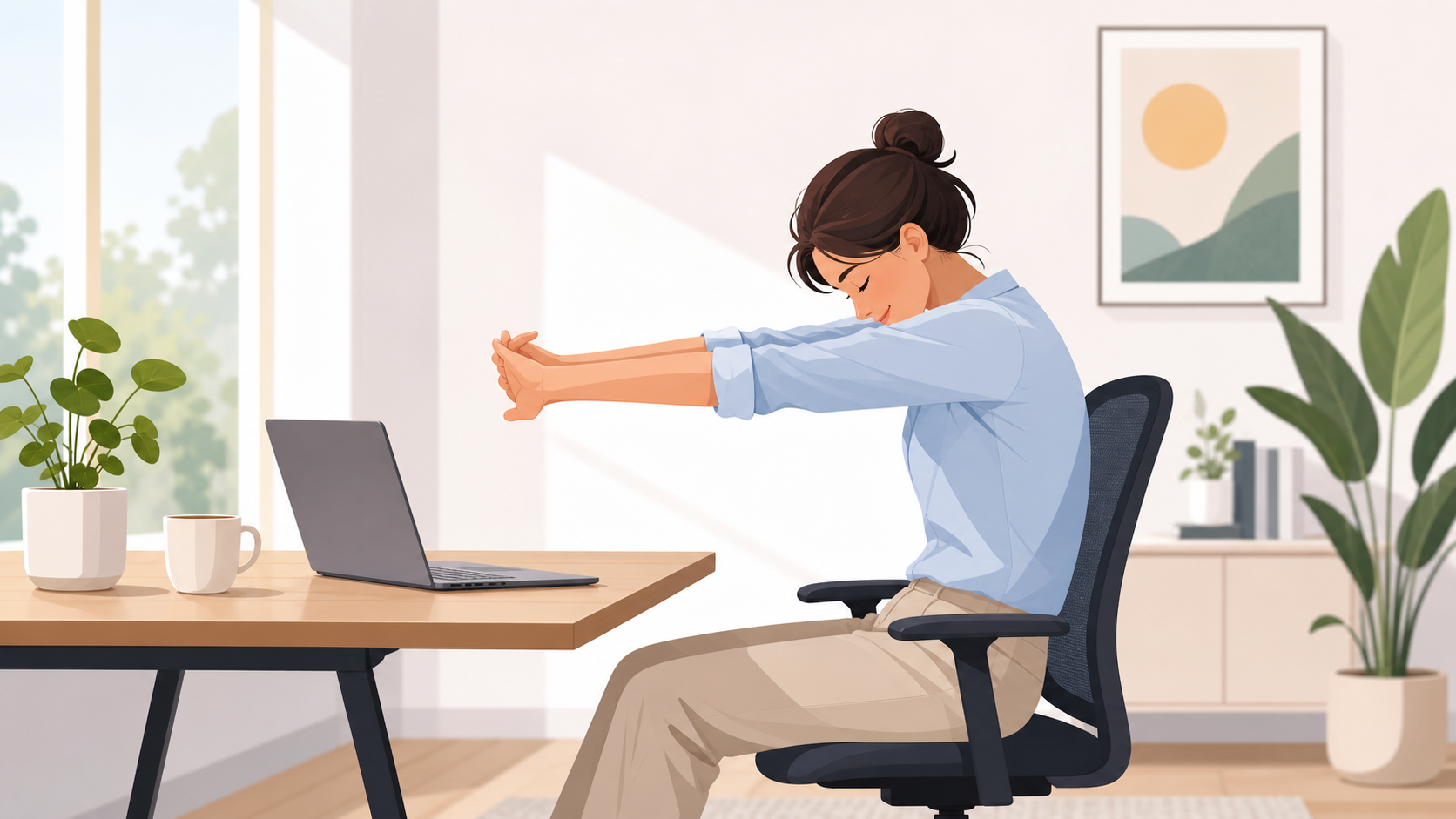
The frustrating part of upper-back stiffness is how invisible it is until you move. You can sit through two calls feeling fine, then stand up and notice the tight band between your shoulder blades.
The better outcome is not a dramatic mobility session in the middle of the workday. It is a short reset that opens the upper back, moves the ribs, wakes up the shoulder blades, and gives you one small setup change before the same laptop posture rebuilds the tension.
What are upper back stretches at desk?
Upper back stretches at desk are short seated or standing movements for the area between the neck, shoulder blades, ribs, and mid-back. They are best for mild everyday stiffness from screen work, typing, calls, and long sitting, not for diagnosing or treating pain.
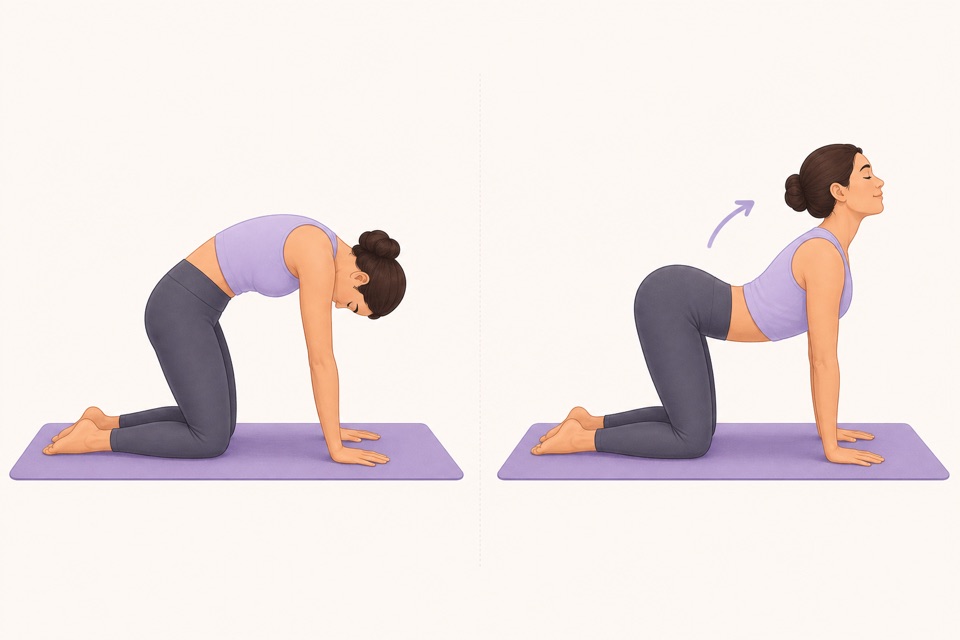
Fast decision rule: if the stiffness feels like a tight band between the shoulder blades, start with an upper-back reach and seated cat-cow. If it feels more like neck tension, use neck stretches at desk. If it feels mostly in the shoulder joint or chest, use shoulder stretches at desk.
What 6-minute upper back routine should I use at work?
A good desk routine starts with easy shoulder-blade motion, then moves the upper spine and chest. Keep the range comfortable, breathe normally, and stop before a stretch turns into pain or bracing.
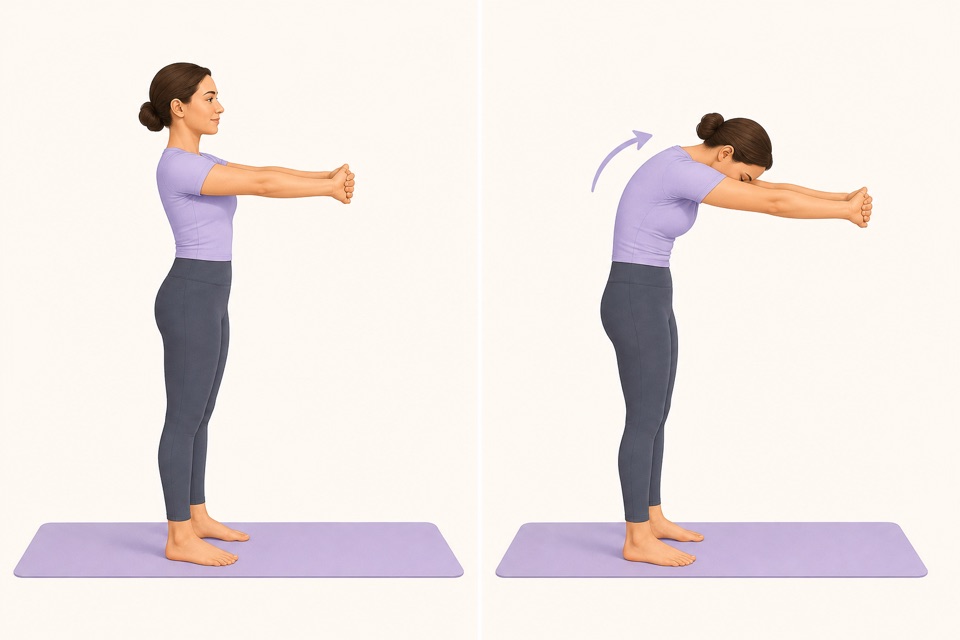
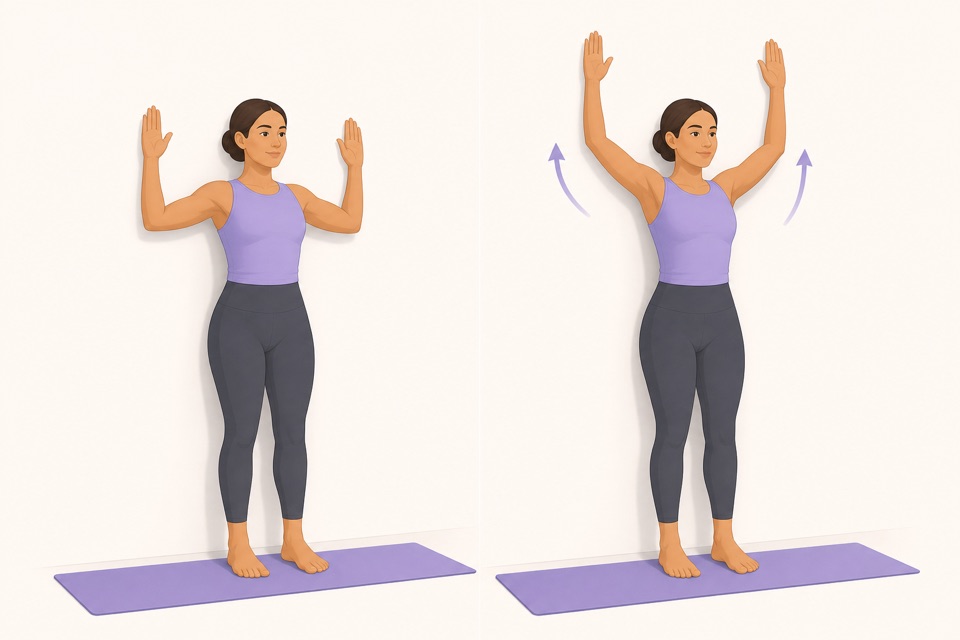
| Step | Time | What to do | Best for | | --- | ---: | --- | --- | | Shoulder circles | 45 sec | Roll shoulders backward and forward slowly | First reset after typing | | Upper-back reach | 45 sec | Round the upper back and reach both arms forward | Tight band between shoulder blades | | Seated cat-cow | 60 sec | Alternate gently between rounding and lifting the chest | Stiff upper spine and ribs | | Overhead reach | 45 sec | Reach up and breathe into the side ribs | Compressed laptop posture | | Seated rotation | 30 sec each side | Turn through the upper body without yanking the neck | One-sided screen posture | | Wall angels or chest opener | 60 sec | Stand near a wall or doorway and move gently | Rounded shoulders | | Workstation reset | 30 sec | Bring the screen closer, relax shoulders, and stand once | Keeping the reset from disappearing |
The point is not to force the upper back flat. The point is to interrupt one position long enough that the next work block starts from a better place.
How do I stretch laptop hunching without overdoing it?
Laptop hunching usually needs two things: gentle extension through the upper back and a setup change that stops pulling you forward. Stretching harder while the screen stays low is the common failure mode.
Use this quick decision block:
| If you notice | Do this first | Then change this | | --- | --- | --- | | Shoulder blades feel stuck apart | Upper-back reach, then shoulder circles | Bring keyboard and mouse closer | | Chest feels collapsed | Overhead reach, then doorway chest opener | Raise laptop or use a stand | | Neck joins the tension | Neck rotations, then upper-back stretch | Bring screen closer to eye level | | Stiffness returns in minutes | Seated cat-cow, then stand | Add a reminder every 60 to 90 minutes |
Upper-back stretching works best when the next minute of work does not recreate the exact same shape. Even one small change, like moving the laptop closer, can make the stretch feel less temporary.
When should desk workers stretch the upper back?
Desk workers should stretch the upper back before stiffness becomes the default. Use a 4- to 6-minute reset after long video calls, writing blocks, spreadsheet work, laptop travel, or any session where your shoulders creep forward.
For most people, frequent gentle breaks are more realistic than saving all movement for the end of the day. The U.S. physical activity guidance supports regular movement as part of overall health, and office ergonomics guidance consistently points back to position changes, screen setup, and workstation fit. In plain English: do not ask one stretch to solve eight hours of one posture.
Good triggers:
- After your second meeting.
- Before lunch.
- After closing a long document.
- Before switching from laptop work to phone work.
- When the upper back feels tight before the neck does.
From Wiggle
Recommended moves
What should I pair with upper back stretches at desk?
Pair upper back stretches with shoulder, neck, chest, wrist, and hip movement. Desk posture is a chain, so the upper back often complains about a position created by the screen, chair, arms, and hips together.
Useful next guides:
- Use mid back stretches when the tightest spot is between the shoulder blades rather than the neck or shoulder joint.
- Start broad with desk stretches when the whole workday feels stiff.
- Use stretches for desk workers when you want a full workday reset.
- Try stretches for posture when rounded shoulders are the main pattern.
- Use hand stretches for office workers if typing tension is part of the issue.
- Open stretching app with reminders if remembering the break is the real blocker.
How can a stretching app make upper back stretches easier?
A stretching app helps when the blocker is not knowledge but friction. You know you should move. The skipped step is choosing a routine, timing each stretch, remembering the next movement, and stopping work before the stiffness gets loud.
Wiggle turns that into a simple loop: open a desk-friendly routine, follow the timer, move through visual cues, and return to work. For this use case, the job is specific: start a 6-minute upper-back reset before your next meeting instead of waiting until the end of the day.
If the backs of your upper arms feel restricted too, add one controlled option from tricep stretches at desk.
Sources
Why we keep it gentle
These guides are written for everyday stiffness and habit-building. They are grounded in mainstream guidance on flexibility, movement, and when to seek medical help.
- Stretching: Focus on flexibilityMayo Clinic
- Office ergonomics: Your how-to guideMayo Clinic
- Back painMedlinePlus
- Physical Activity Guidelines for AmericansU.S. Department of Health and Human Services
FAQ
Questions people ask
What are the best upper back stretches at desk?
The best upper back stretches at desk are upper-back reaches, seated cat-cow, wall angels, overhead reaches, shoulder circles, and gentle spinal rotations. Use them as a short posture reset for mild screen stiffness, not as a forceful stretch for pain.
How long should an upper back desk stretch break take?
Start with 4 to 6 minutes. That is long enough to move the shoulder blades, upper spine, ribs, and chest without turning the work break into a project. A small reset repeated daily usually beats one intense session at the end of the week.
Can upper back stretches help laptop hunching?
Upper back stretches can help interrupt laptop hunching when they are paired with shoulder blade movement, chest opening, and a quick workstation reset. Stretching alone works poorly if the screen stays low, the keyboard stays far away, and the same rounded position returns immediately.
When should I stop upper back stretches?
Stop if you feel sharp pain, numbness, tingling, weakness, dizziness, chest symptoms, spreading pain, or anything that feels worrying. Ask a qualified professional about new, severe, persistent, injury-related, or medical-condition-related upper back pain.
How can Wiggle help with upper back stretches at desk?
Wiggle turns upper back stretches at desk into a timed guided routine with visual cues, simple exercise order, and reminders. That makes the reset easier to start between meetings, writing blocks, or long laptop sessions.