Wiggle guide
Standing Desk Stretches: A 6-Minute Workday Reset
Standing desk stretches for tight calves, hips, shoulders, wrists, and lower-back fatigue when standing still starts feeling like another desk trap.
standing desk stretches
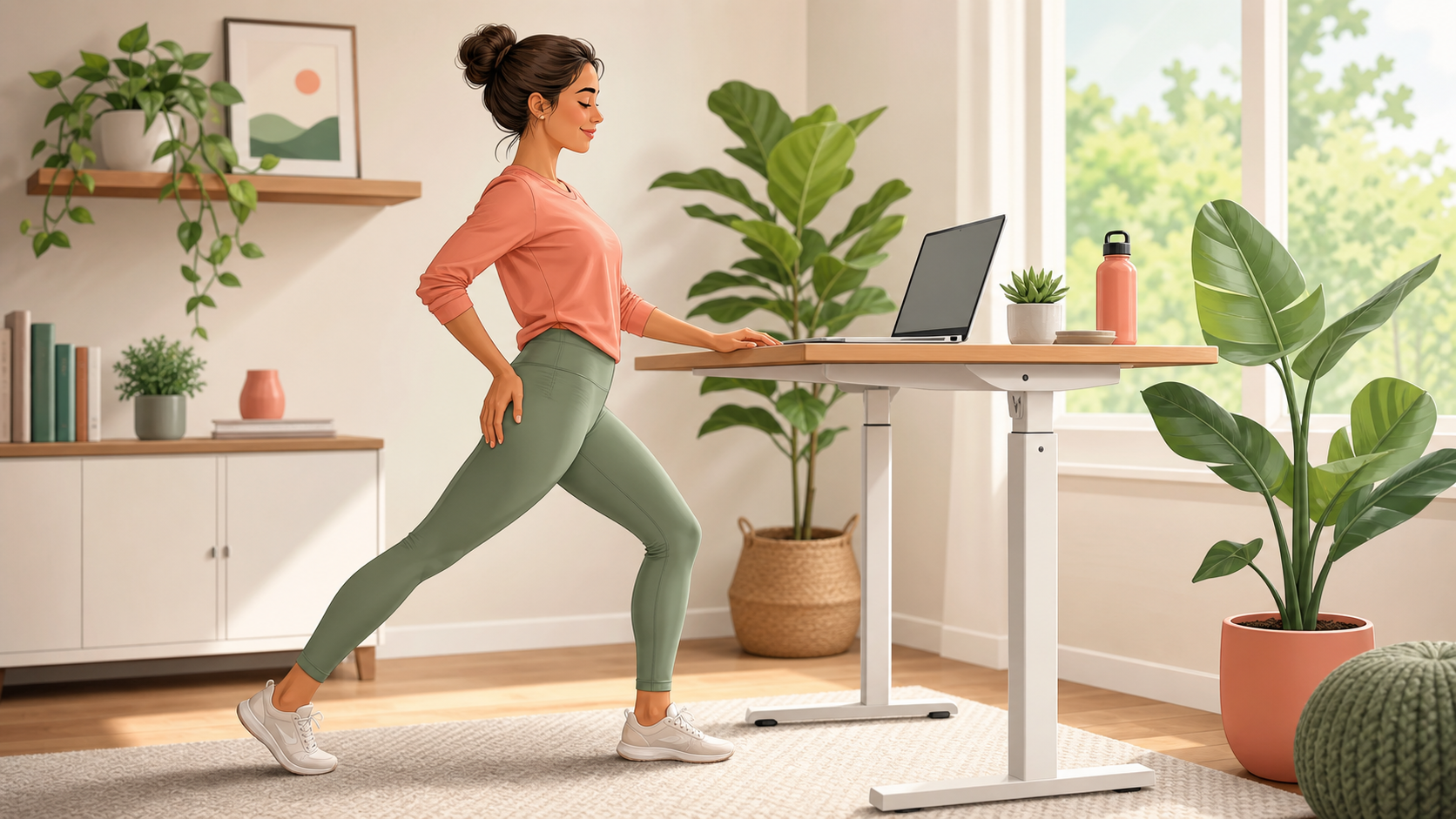
The trap with a standing desk is thinking the desk solved the whole problem. Sitting still for hours can make your hips and back cranky. Standing still for hours can do the same thing to your calves, feet, hips, shoulders, and lower back.
The better outcome is not "stand all day." It is changing position before your body starts bargaining with you. Use this 6-minute standing desk stretch break when your legs feel locked, your shoulders are creeping up, or you realize you have been upright but motionless for an entire work block.
What are standing desk stretches?
Standing desk stretches are short, supported movements you can do beside a height-adjustable desk to interrupt still standing. A good routine targets the calves, hip flexors, hamstrings, chest, shoulders, wrists, and upper back while keeping balance demands low and effort mild.
Fast decision rule: if you have 2 minutes, do calf stretch, shoulder circles, and wrist circles. If you have 6 minutes, add hip flexor, hamstring, chest, and upper-back work. If anything feels sharp, numb, dizzying, weak, radiating, or worrying, stop.
Standing desk stretches are for mild everyday stiffness and general movement breaks. They are not a diagnosis, treatment plan, or replacement for care when pain is new, severe, persistent, injury-related, or medical-condition-related.
What 6-minute standing desk routine should I use?
A useful standing desk routine should start by unlocking your posture, then move from lower legs to hips to upper body. That order works because standing-desk stiffness often starts below the desk, while screen posture still loads the shoulders, wrists, and neck.
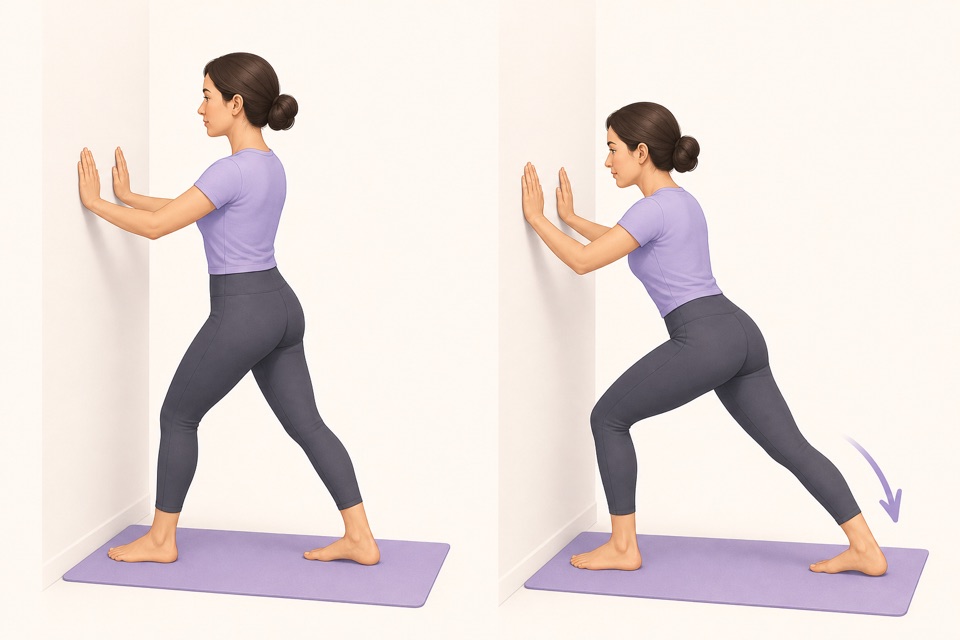
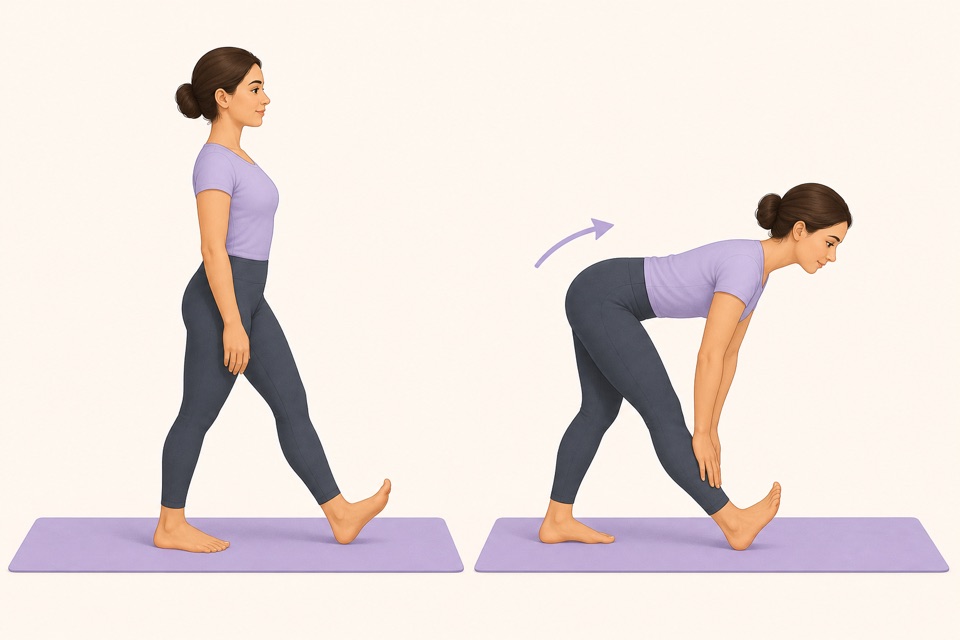
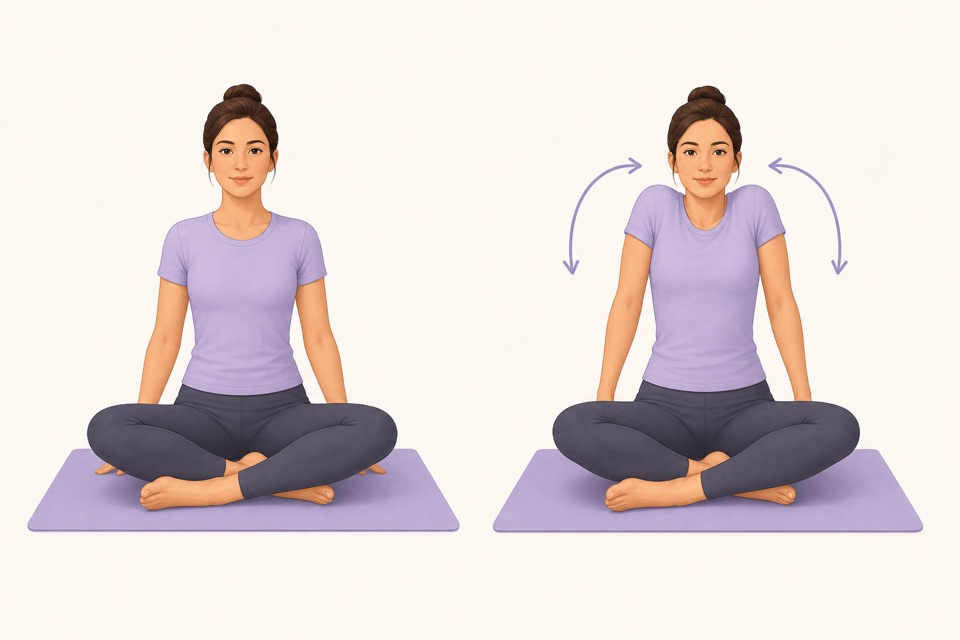
| Step | Time | What to do | Why it helps | | --- | ---: | --- | --- | | Unlock and breathe | 30 sec | Stand tall, soften the knees, and take slow breaths | Breaks the locked-knee stance | | Shoulder circles | 30 sec | Roll shoulders backward and forward | Resets screen posture | | Supported calf stretch | 30 sec each side | Step one foot back and press the heel down lightly | Targets tight calves from still standing | | Standing hip flexor stretch | 30 sec each side | Step into a small split stance and tuck the pelvis gently | Opens the front of the hip | | Supported hamstring stretch | 30 sec each side | Place one heel forward and hinge slightly from the hips | Eases back-of-leg stiffness | | Chest opener | 45 sec | Open the chest with hands behind you or a doorway | Counters rounded shoulders | | Wrist circles and shakeout | 45 sec | Circle wrists, open and close hands, then shake out | Helps typing and mouse tension | | Short walk | 60 sec | Walk away from the desk and back | Turns stretching into a real position change |
Keep the whole routine quiet and normal-clothes friendly. You should not need a mat, sweat, or a dramatic pose to make a standing desk work better.
How do I know whether to sit, stand, walk, or stretch?
The best standing desk habit is position variety. If you have been standing still, do not solve it by standing harder. Change the pattern.
| Signal | Best next move | Why | | --- | --- | --- | | Calves or feet feel tight | Calf stretch, ankle circles, then sit briefly | Lower legs need a load change | | Hips feel pinched or front-of-hip tight | Hip flexor stretch, then a short walk | Standing can still keep hips in a small range | | Lower back feels tired | Walk, sit, then use lower back stretches after standing all day | Back fatigue often needs position variety | | Shoulders or neck feel tense | Use neck stretches at desk or shoulder stretches at desk | Screen posture is still the driver | | Wrists and forearms feel loaded | Try wrist stretches at desk or forearm stretches at desk | Standing does not unload typing muscles |
Failure mode to avoid: buying a standing desk, then treating standing as a badge of discipline. A desk is just furniture. The habit is alternating positions, moving often, and choosing a routine short enough to repeat.
How often should I stretch at a standing desk?
Most people do better with small resets every 60 to 90 minutes than one long routine at the end of the day. Use the clock if you like structure, or use body signals if reminders annoy you.
Good triggers:
- After a 60-minute deep-work block.
- Before a video call.
- After two long standing sessions.
- When your knees lock or weight shifts to one hip.
- When your calves, feet, lower back, shoulders, or wrists start asking for attention.
The U.S. physical activity guidelines emphasize regular movement across the week, and Mayo Clinic's stretching guidance favors controlled, pain-free stretching over forcing range. For a standing desk, that translates into a simple rule: move before the posture becomes a problem.
Which stretches are safest beside a standing desk?
The safest standing desk stretches use support, mild range, and predictable positions. Keep one hand near the desk, wall, or chair when balance is uncertain. Do not turn the routine into a balance challenge during a workday.
Use this checklist:
- Keep knees soft instead of locked.
- Put the desk in a stable height before using it for light support.
- Keep stretches at mild tension while breathing normally.
- Avoid bouncing or forcing deeper range.
- Skip deep forward folds if they make your back or balance feel worse.
- Stop for sharp pain, numbness, dizziness, weakness, radiating symptoms, or anything worrying.
From Wiggle
Recommended moves
What should I pair with standing desk stretches?
Standing desk stretches work best as part of a broader desk reset. Use desk stretches when you want the full workday version, stretches for desk workers when your whole body feels stiff, and calf stretches at desk when the lower legs are the loudest signal. If the main issue is lower-back fatigue after a retail, kitchen, healthcare, or standing-desk shift, use lower back stretches after standing all day as the narrower reset.
If your standing desk habit keeps failing because you forget to move, a guided routine is the easier path. Open Wiggle, choose a short desk-friendly session, and let the timer pull you through the next six minutes instead of negotiating with yourself.
On meeting-heavy days when standing up is not realistic, use chair yoga at desk instead. It keeps the movement seated while still covering shoulders, wrists, spine, hips, and breathing.
Sources
Why we keep it gentle
These guides are written for everyday stiffness and habit-building. They are grounded in mainstream guidance on flexibility, movement, and when to seek medical help.
- Stretching: Focus on flexibilityMayo Clinic
- Office ergonomics: Your how-to guideMayo Clinic
- Physical Activity Guidelines for AmericansU.S. Department of Health and Human Services
- Back painMedlinePlus
FAQ
Questions people ask
What are the best standing desk stretches?
The best standing desk stretches are gentle position resets for the calves, hip flexors, hamstrings, chest, shoulders, wrists, and upper back. Use a stable desk for light support, keep the range mild, and treat the routine as a movement break rather than a flexibility test.
How often should I stretch at a standing desk?
Start with a 3- to 6-minute stretch break every 60 to 90 minutes, or whenever you notice locked knees, tight calves, rounded shoulders, or lower-back fatigue. The exact interval matters less than changing position before stiffness becomes the default.
Are standing desks better than sitting all day?
A standing desk can help you vary posture, but standing still all day creates its own stiffness. The better goal is alternation: sit, stand, walk, and use short stretches so your calves, hips, back, shoulders, and wrists do not stay in one pattern for hours.
What should I avoid when stretching at a standing desk?
Avoid locking your knees, leaning hard on the desk, bouncing, forcing deep forward folds, or stretching through sharp pain, numbness, dizziness, weakness, or symptoms that worry you. Keep one hand near the desk or wall if balance feels uncertain.
How can Wiggle help with standing desk stretches?
Wiggle turns standing desk stretches into a short guided routine with a timer, visual exercise order, and gentle stop signs. That makes it easier to move before the workday turns into several hours of still standing.