Wiggle guide
Desk Stretches for the Middle of a Long Workday
A low-friction desk stretch routine for stiff shoulders, hips, and back without leaving your workspace.
desk stretches
Desk stretches work because they meet the problem where it happens. If your neck, shoulders, back, and hips get stiff while you work, the best routine is one you can do before you leave the desk.
This is not a workout. It is a short interruption in the sitting pattern.
If screen posture is the main problem today, use the narrower neck stretches at desk routine first. If the tension is mostly across the shoulders and upper back, start with shoulder stretches at desk.
If the tightness sits between your shoulder blades after laptop work, use upper back stretches at desk before the broader desk reset.
If the front of your shoulders and chest feel closed after typing, start with the seated chest stretch and then add upper-back movement.
If the stuck spot is lower than the neck but higher than the waist, use mid back stretches for a more specific shoulder-blade and rib reset.
If the workday is hitting your typing grip more than your back, use hand stretches for office workers for fingers and wrists or forearm stretches at desk when mouse grip and typing tension sit higher in the forearm.
If your lower legs feel stiff when you finally stand up, add calf stretches at desk after the hip reset. If the stiffness is mostly at the joint, start with ankle stretches at desk so the ankles get a focused reset too.
If you use a height-adjustable desk, switch to standing desk stretches when your calves, hips, wrists, or shoulders feel stiff from standing still instead of sitting still. On packed days, use these microbreak exercises at work to turn the routine into a quiet two-minute reset.
Desk reset routine
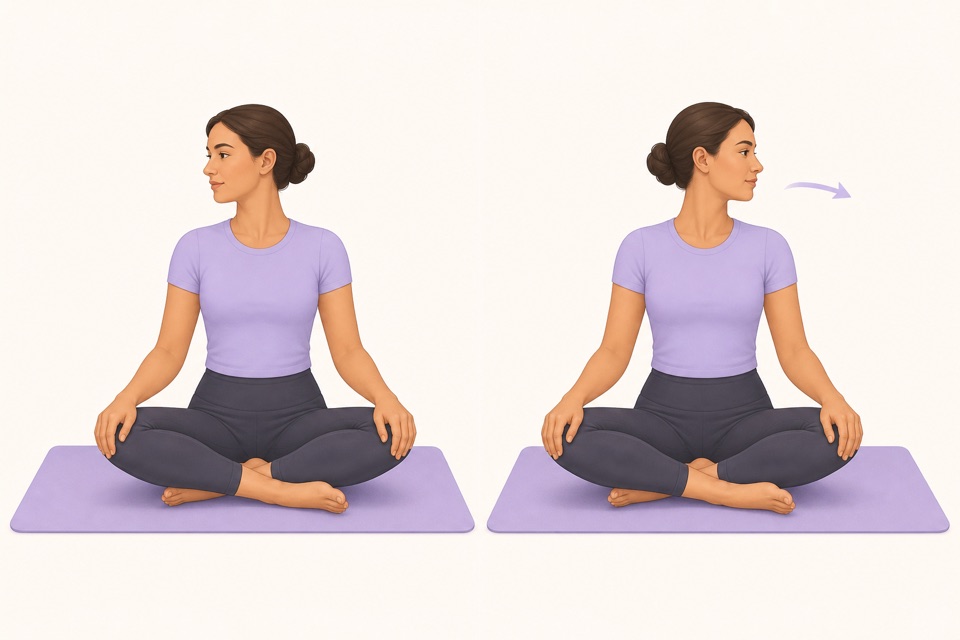
- Look left and right slowly for 20 seconds.
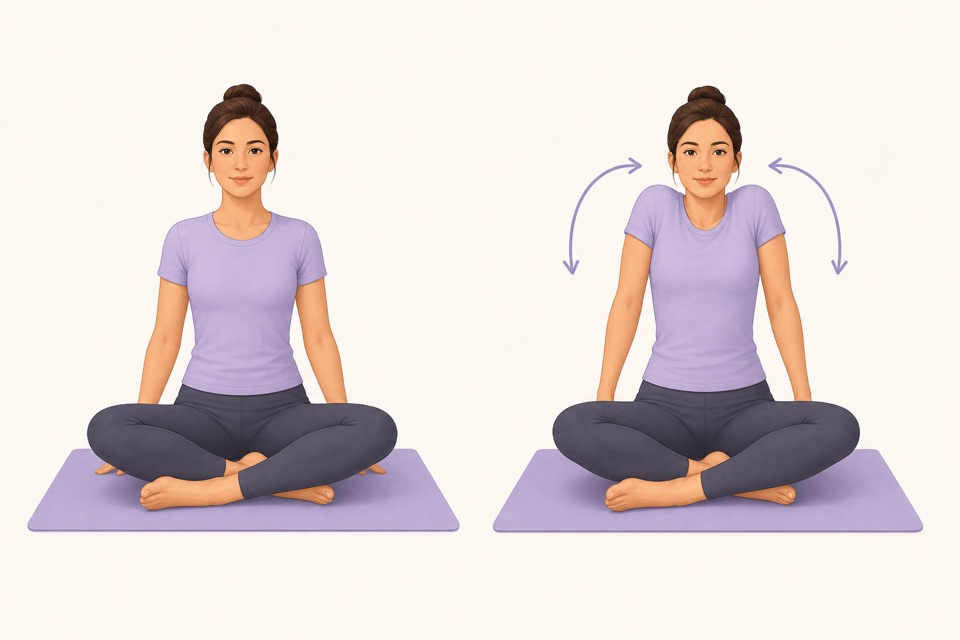
- Roll shoulders for 30 seconds.
- Reach both arms overhead and breathe for 30 seconds.
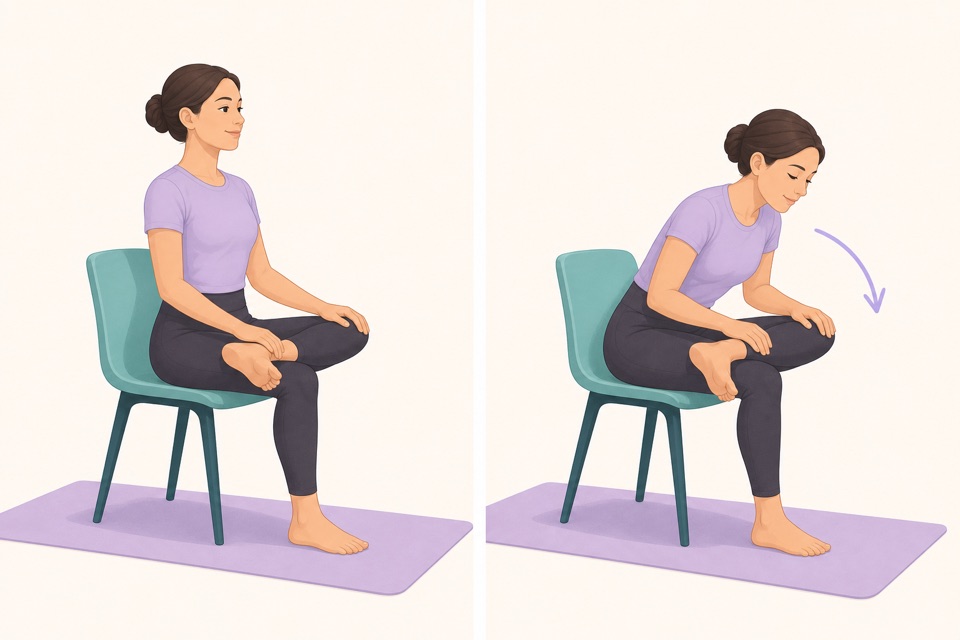
- Place one ankle over the opposite knee for a seated hip stretch, 30 seconds each side.
- Stand and gently squeeze glutes for 20 seconds.
- Step one foot back for a hip flexor stretch, 30 seconds each side.
When to use it
- After a long meeting.
- Before lunch.
- When your shoulders creep toward your ears.
- When you notice shallow breathing.
- As a transition before ending work.
From Wiggle
Recommended moves
Turn it into a routine
The best desk stretch is the one you can do without becoming a different person. Keep it quiet, short, and repeatable.
This is where a guided app helps: the fewer decisions you make, the more likely you are to repeat the session. A visible timer, a clear next movement, and a saved routine remove the tiny bits of friction that usually stop a good intention.
Sources
Why we keep it gentle
These guides are written for everyday stiffness and habit-building. They are grounded in mainstream guidance on flexibility, movement, and when to seek medical help.
- Stretching: Focus on flexibilityMayo Clinic
- Physical Activity Guidelines for AmericansU.S. Department of Health and Human Services
- Back painMedlinePlus
FAQ
Questions people ask
How long should I do desk stretches?
Start with 3 to 10 minutes and keep every stretch mild. A shorter routine you repeat is more useful than a long routine you avoid.
Can beginners use this routine?
Yes. Choose a comfortable range of motion, move slowly, breathe normally, and skip any stretch that does not feel right for your body.
When should I stop or skip this routine?
Use this for mild everyday stiffness only. Stop if you feel sharp pain, numbness, dizziness, weakness, or symptoms that worry you. Ask a qualified professional for new, severe, persistent, radiating, injury-related, or medical-condition-related pain.
How should the stretch feel?
Aim for mild tension that lets you breathe normally. Avoid bouncing, forcing range, or treating pain as progress.
How can Wiggle help with this routine?
Wiggle keeps the routine timed and simple, shows the next move, and saves the habit loop so you do not have to rebuild the session each time.