Wiggle guide
Microbreak Exercises at Work: A Quiet 2-Minute Reset
Microbreak exercises for desk workers: use this quiet 2-minute routine, simple workday triggers, and easy options for shoulders, wrists, hips, and ankles.
microbreak exercises
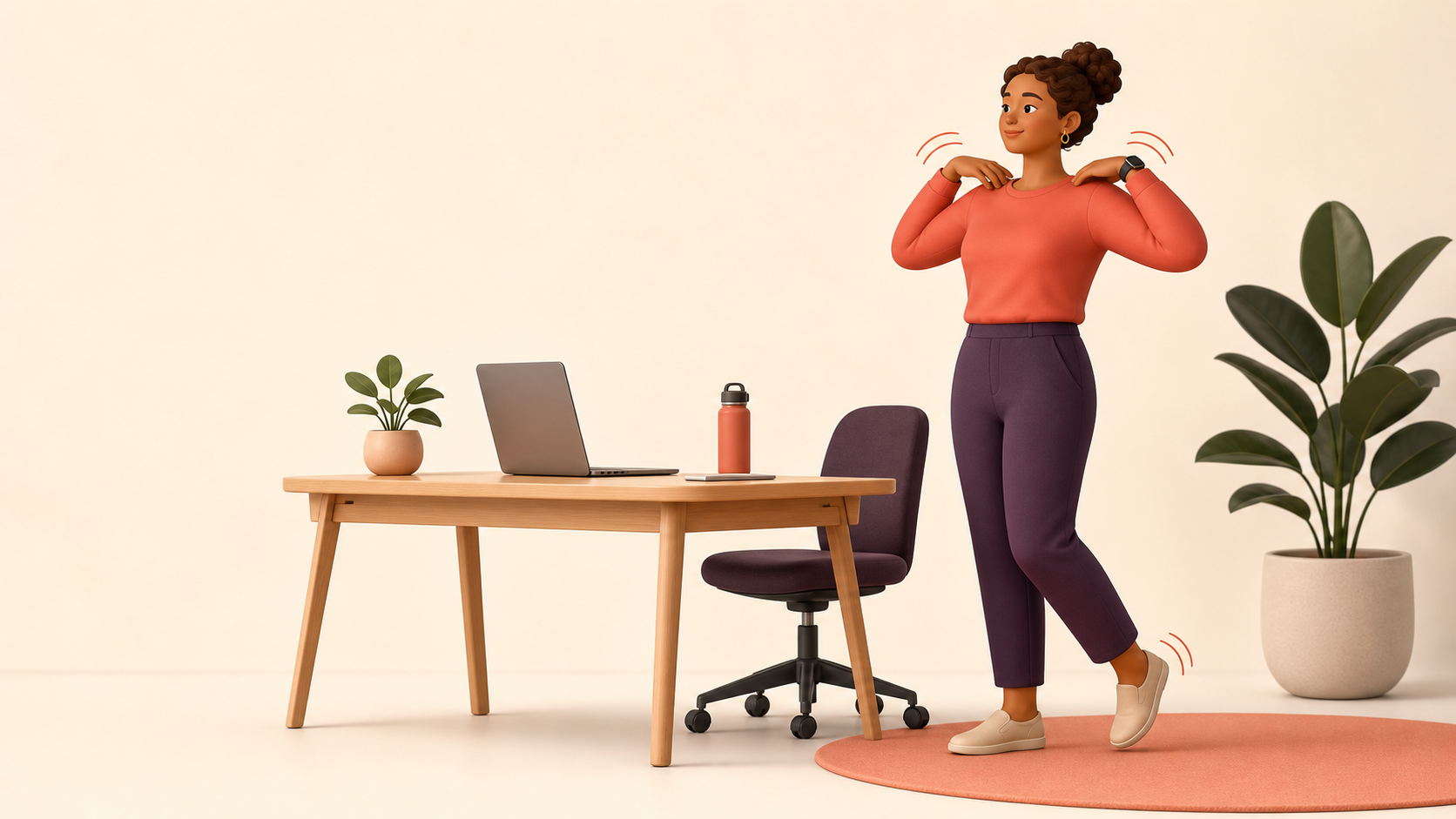
The hardest part of moving during work is rarely knowing another stretch. It is finding a break small enough to start when a deadline, meeting, or full inbox makes five minutes feel expensive.
Use this rule: when one task ends, move for two minutes before the next one begins. Roll the shoulders, move the wrists and ankles, stand once, then walk for 30 seconds if you can. No mat, workout clothes, or perfect routine required.
What are microbreak exercises?
Microbreak exercises are brief, low-effort movements performed between work tasks to interrupt long periods in one position. They usually last 1 to 3 minutes and work best as frequent position changes—not as intense stretches, a treatment for pain, or a replacement for regular physical activity.
The CDC and U.S. physical activity guidelines encourage adults to move more and sit less. A microbreak makes that broad advice usable inside a normal workday: it gives you a tiny action you can repeat without reorganizing your calendar. To start before the first focus block, pair it with morning stretches before work.
What is the best 2-minute microbreak routine at work?
The best routine moves several areas without creating sweat, floor time, or awkward office choreography. Keep every motion comfortable and controlled. The goal is to change position and wake up quiet joints, not chase a deep stretch.
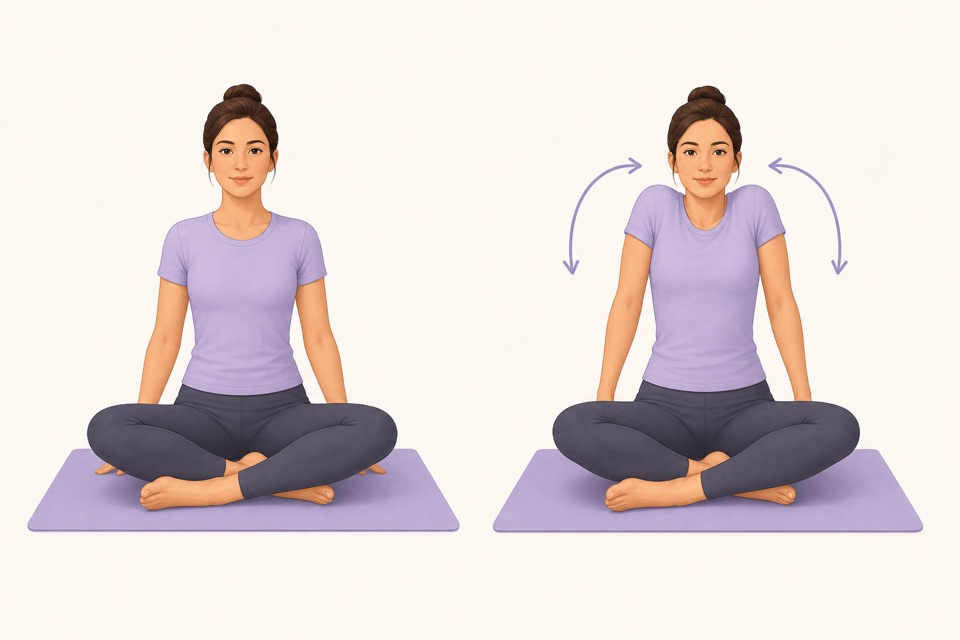
| Time | Movement | Simple cue | | ---: | --- | --- | | 20 sec | Shoulder rolls | Make slow backward circles | | 20 sec | Wrist circles | Relax the fingers and switch direction | | 20 sec | Overhead reach | Reach tall without forcing the shoulders | | 30 sec | Ankle pumps or circles | Move both ankles through an easy range | | 20 sec | Five sit-to-stands | Use the chair arms if needed | | 30 sec | Easy walk | Walk to the door, window, or water |
From Wiggle
Recommended moves
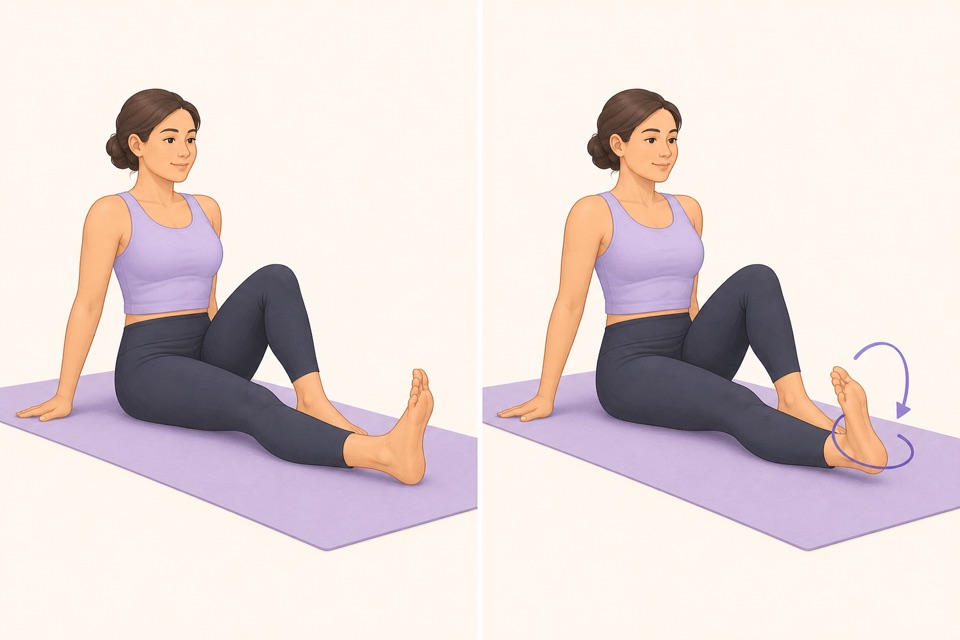
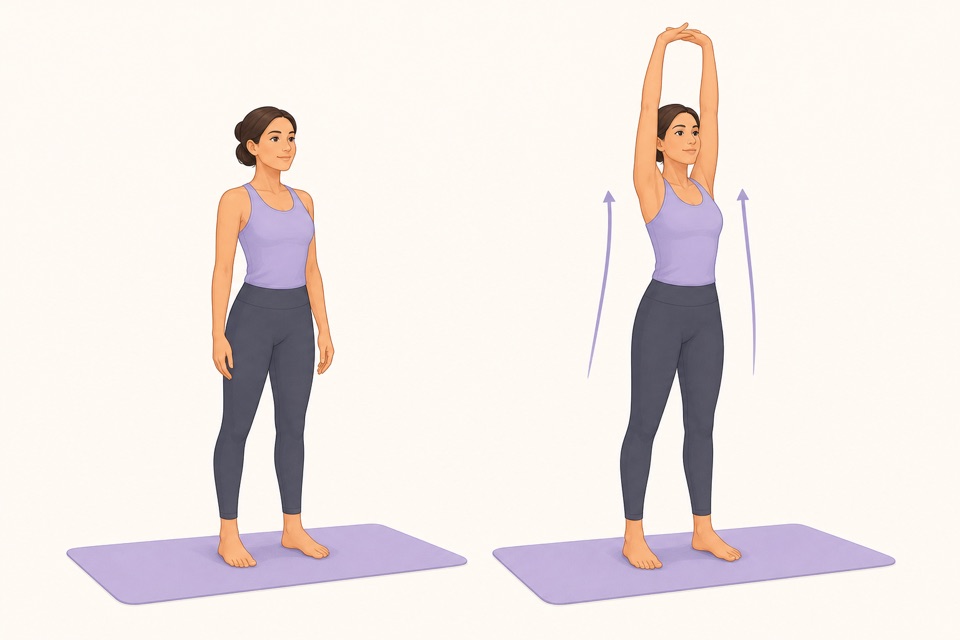
If any listed image is unavailable in your setup, the movement names are enough: stay in a comfortable range, hold a stable desk or chair when balance is uncertain, and skip anything that produces pain.
How do I choose a microbreak for the stiffness I notice?
Match the break to the area that has stayed quiet, but keep the decision fast. One or two movements plus a position change are enough. If choosing becomes a project, use the full-body two-minute routine above.
| What you notice | Start here | Useful next guide | | --- | --- | --- | | Neck and shoulders feel fixed | Shoulder rolls and a gentle turn | Neck stretches at desk | | Hands feel tired from typing | Open the hands and circle the wrists | Wrist stretches at desk | | Hips feel stiff in the chair | Stand, walk, then use a supported hip movement | Hip stretches while sitting at desk | | Lower legs feel quiet | Ankle pumps and a short walk | Ankle stretches at desk | | Everything feels stuck | Use the two-minute sequence | Desk stretches |
When should I take movement breaks during the workday?
Take a microbreak at a transition you already notice: after a meeting, after sending a deliverable, before lunch, or before starting a new focus block. Habit cues work better than waiting until stiffness becomes distracting.
Try this simple progression:
- Pick one reliable cue, such as every meeting ending.
- Start with one 2-minute break each workday.
- Repeat it for a week before adding more reminders.
- If a full break is impossible, stand and move the ankles for 30 seconds.
There is no prize for designing the perfect interval and ignoring it. A modest break you actually take beats an ambitious routine permanently snoozed.
Do microbreak exercises replace a workout?
No. Microbreaks reduce long blocks of stillness and add light movement to the day, while planned aerobic and muscle-strengthening activity serves a broader purpose. Use both: short breaks inside work and activity outside those breaks that matches your ability and health circumstances.
This also prevents a common failure mode—turning every break into a miniature workout. If a two-minute reset requires changing clothes, clearing floor space, or recovering afterward, it has become too complicated for its job.
How can I make exercise breaks at work easier to repeat?
Remove decisions. Save one quiet routine, attach it to one cue, and let a timer handle the duration. Keep the first version short enough that you can do it on a busy day, because busy days are when a low-friction system proves useful.
Wiggle is built for that job: open a guided routine, follow the visual cues, and return to work when the timer ends. Start with a single 2-minute desk reset after your longest recurring meeting. If reminders would help, pair it with the stretching app with reminders guide.
Sources
Why we keep it gentle
These guides are written for everyday stiffness and habit-building. They are grounded in mainstream guidance on flexibility, movement, and when to seek medical help.
- Physical Activity Basics and Your HealthCenters for Disease Control and Prevention
- Physical Activity Guidelines for AmericansU.S. Department of Health and Human Services
- Office ergonomics: Your how-to guideMayo Clinic
FAQ
Questions people ask
What are microbreak exercises?
Microbreak exercises are brief, low-effort movements done between work tasks to interrupt long periods in one position. A practical office microbreak can last 1 to 3 minutes and include shoulder rolls, wrist circles, standing reaches, ankle pumps, or a short walk.
How often should I take a movement break at work?
Use a repeatable trigger instead of chasing a perfect schedule. Take a 1- to 3-minute movement break after a long meeting, when you finish a focused task, or whenever you notice you have stayed still for roughly 30 to 60 minutes.
Can I do microbreak exercises without leaving my desk?
Yes. Shoulder rolls, wrist circles, seated twists, ankle pumps, and sit-to-stands all fit beside a desk. If possible, finish with a short walk because changing location and position makes the break more complete.
Are microbreaks the same as a workout?
No. A microbreak interrupts stillness; it does not replace a workout or the broader physical activity adults need. Think of it as a small workday reset that complements walking, strength work, and other planned activity.
How can Wiggle help me remember exercise breaks at work?
Wiggle can turn a vague reminder to move into a short guided routine with visual cues and a timer. Save a quiet 2-minute desk reset, then attach it to a meeting ending or another cue that already happens in your workday.