Wiggle guide
Seated Spinal Twist: Form, Fixes, and a 3-Minute Reset
Learn the seated spinal twist with a no-pulling setup, simple form fixes, easier options, clear stop signs, and a three-minute desk routine.
seated spinal twist

When your back feels locked after a long work block, the tempting move is to grab the chair and crank as far as possible. That usually adds effort without adding a better stretch.
A seated spinal twist should feel controlled, quiet, and easy to breathe through. Use the no-pulling version below for a fast desk reset: set your feet, turn from the rib cage, take three breaths, and switch sides. The whole routine takes about three minutes.
What is a seated spinal twist?
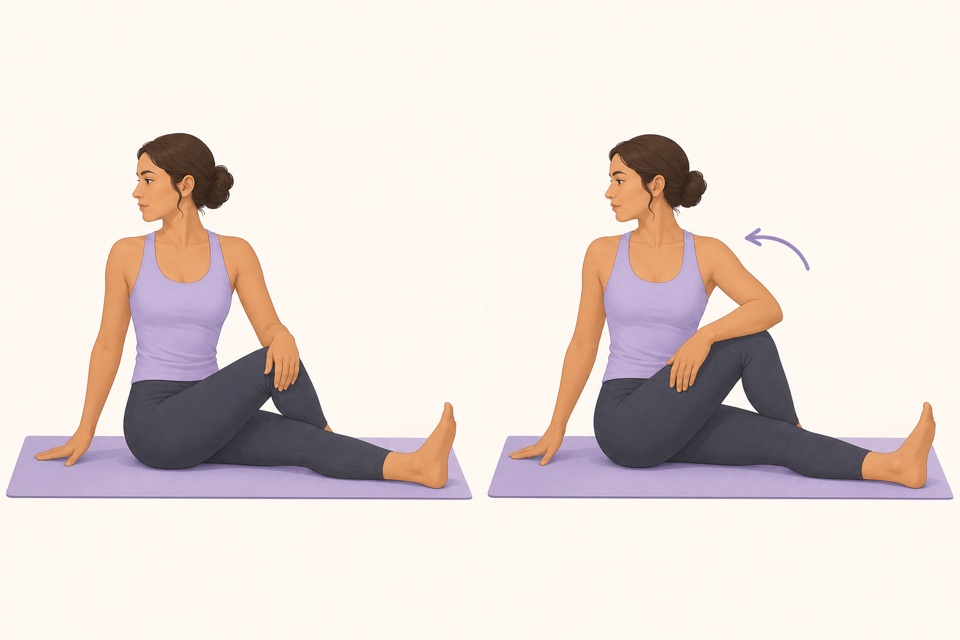
A seated spinal twist is a gentle rotation performed from a stable chair. You sit tall with both feet supported, turn through the ribs and upper back, pause at a mild range, then repeat on the other side. It is a simple movement break for a back that has stayed still during desk work.
The goal is not to make your spine crack or reach the back of the room. The useful version is the one you can control without shifting the knees, holding your breath, or pulling yourself farther with your arms.
Fast decision rule: if the twist feels smooth and you can take a full breath, stay for three breaths. If your hips slide, your neck strains, or the sensation becomes sharp or radiating, return to centre and stop.
How do I do a seated spinal twist correctly?
Sit near the front of a stable chair with both feet flat. Grow tall, cross your arms over your chest or rest your hands lightly on your thighs, then exhale and turn your rib cage to one side. Keep your knees facing forward, breathe, return to centre, and switch sides.
Use this seven-step setup:
- Choose a stable chair without wheels.
- Place both feet flat, roughly under your knees.
- Sit tall without forcing your lower back into a large arch.
- Cross your arms over your chest for the easiest no-pulling version.
- Exhale and rotate gently through the ribs and upper back.
- Take three easy breaths while your jaw and shoulders stay relaxed.
- Return slowly to centre, then repeat on the other side.
From Wiggle
Recommended moves
What should move during a chair spinal twist?
Let the rib cage and upper back lead while the pelvis stays mostly forward. Your neck may follow the turn gently, but it does not need to chase extra range. Keeping the knees aimed ahead makes it easier to notice whether the rotation is controlled or borrowed from shifting on the seat.
| Checkpoint | Useful cue | Common failure mode | Quick fix | | --- | --- | --- | --- | | Feet | Keep both feet supported | One heel lifts | Bring the feet slightly wider | | Knees | Point them forward | Knees drift with the turn | Reduce the range | | Rib cage | Turn as one relaxed unit | Lower back arches hard | Soften the ribs and sit neutral | | Arms | Cross them or touch lightly | Hands yank the chair | Remove the hands from the backrest | | Neck | Let it follow comfortably | Chin cranes over the shoulder | Look diagonally instead | | Breath | Take three easy breaths | Breath becomes braced | Come out of the twist slightly |
Mayo Clinic's general stretching guidance recommends smooth movement without bouncing and holding stretches rather than forcing them. Treat mild tension as enough; more range is not automatically more useful.
Should I pull on the chair during a seated spinal twist?
You do not need to pull on the chair. Using a hand lightly for orientation is fine, but yanking the backrest can create a bigger-looking twist than you actively control. Crossed arms are the cleanest starting point because they remove the temptation to lever yourself farther.
Choose your version by what you can control:
- Crossed arms: best first choice for learning the motion.
- Hands on thighs: easiest when shoulders feel tired or crossed arms feel awkward.
- One hand lightly on the chair: useful for orientation, not for pulling.
- Standing rotation: better if sitting itself feels uncomfortable; try the broader desk stretches routine.
- No twist today: correct choice when rotation causes pain, neurological symptoms, dizziness, or worry.
If your stiffness is mainly between the shoulder blades, pair a small twist with the upper-back stretches at desk rather than forcing a deeper rotation.
What is the best three-minute seated twist routine?
The best short routine changes position before and after the twist. Start by moving the shoulders and upper back, perform one controlled round per side, then stand or walk briefly. This makes the twist part of a movement break instead of treating one pose as a cure for hours of sitting.
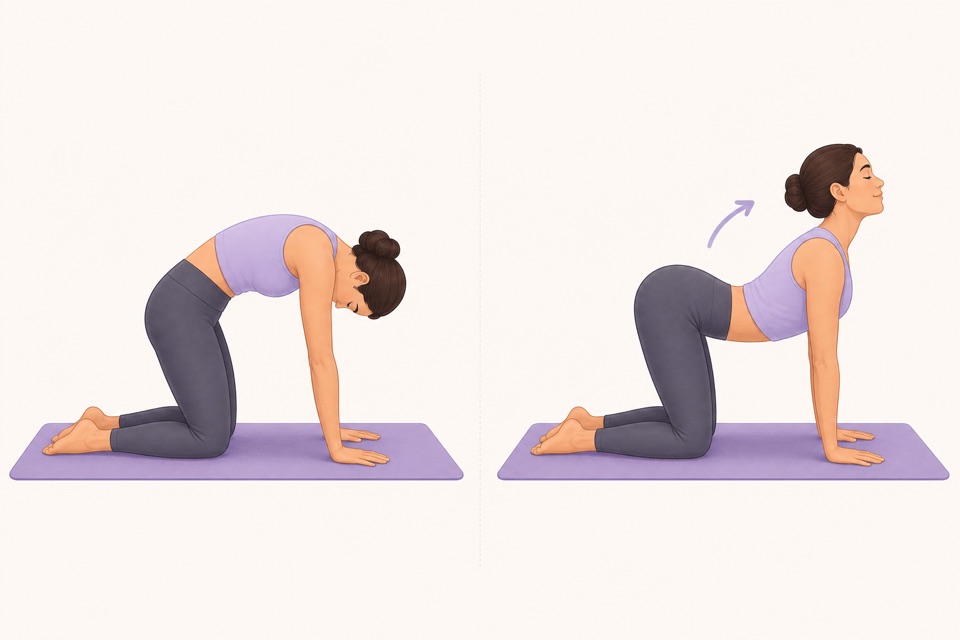
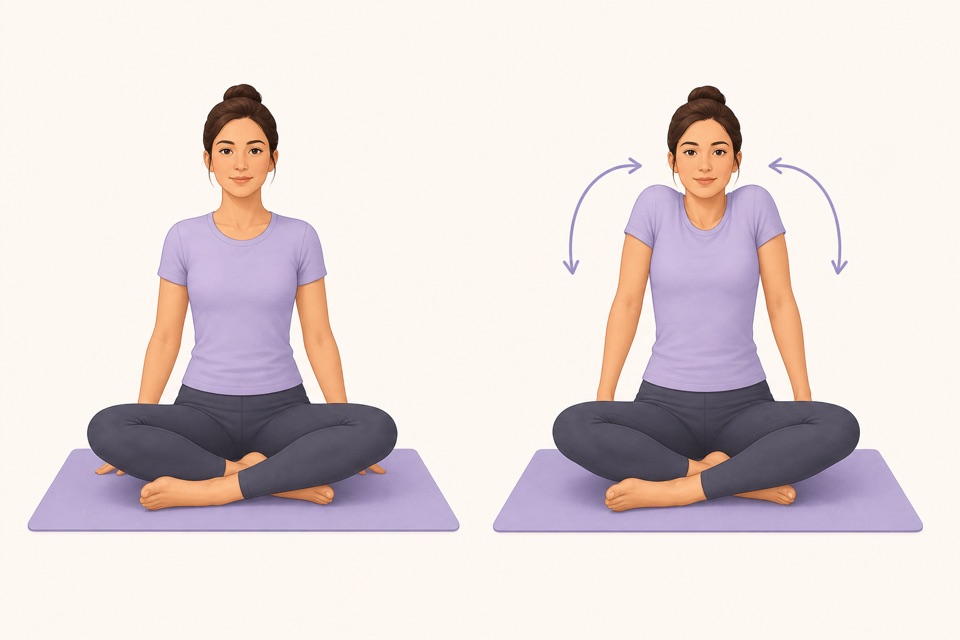
| Time | Movement | Cue | | --- | --- | --- | | 0:00-0:30 | Shoulder rolls | Slow circles, relaxed jaw | | 0:30-1:00 | Seated cat-cow | Use a small comfortable range | | 1:00-1:30 | Twist right | Three easy breaths, no pulling | | 1:30-2:00 | Twist left | Keep both knees forward | | 2:00-3:00 | Stand and walk | Let the arms swing naturally |
Repeat later only if the first round leaves you feeling the same or better. If sitting-heavy days affect more than your back, use the microbreak exercises at work to rotate between hands, shoulders, hips, ankles, and walking.
How often can I do a seated spinal twist at my desk?
Use one gentle round after a long meeting or work block, then judge the response. Short movement breaks repeated across the day are generally more practical than waiting for one long stretch session. The HHS physical activity guidelines encourage adults to move more and sit less, but a desk twist does not replace walking, strength work, or other activity you can do safely.
An easy schedule is:
- One round after the first long work block.
- A short walk around lunch.
- One chair yoga at desk routine during the afternoon if several areas feel stiff.
- A saved Wiggle session at a predictable time so you do not have to invent the next movement.
Use this for mild everyday stiffness, not to diagnose or treat pain. Stop for sharp pain, numbness, weakness, dizziness, radiating symptoms, loss of balance, or anything that worries you. New, severe, persistent, injury-related, postoperative, or condition-related symptoms deserve individual guidance from a qualified professional.
Sources
Why we keep it gentle
These guides are written for everyday stiffness and habit-building. They are grounded in mainstream guidance on flexibility, movement, and when to seek medical help.
- Desk stretches: Video collectionMayo Clinic
- Stretching: Focus on flexibilityMayo Clinic
- Physical Activity Guidelines for AmericansU.S. Department of Health and Human Services
- Exercise and Physical FitnessMedlinePlus
FAQ
Questions people ask
What is a seated spinal twist?
A seated spinal twist is a gentle rotation performed from a stable chair. You sit tall with both feet supported, turn through the ribs and upper back, pause at a mild range, then repeat on the other side. It is a simple movement break for a back that has stayed still during desk work.
How do I do a seated spinal twist correctly?
Sit near the front of a stable chair with both feet flat. Grow tall, cross your arms over your chest or rest your hands lightly on your thighs, then exhale and turn your rib cage to one side. Keep your knees facing forward, breathe, return to centre, and switch sides.
Should I pull on the chair during a seated twist?
You do not need to pull on the chair. Using your hands lightly for orientation is fine, but yanking the backrest can force more range than you control. Start with arms crossed over your chest and let the turn come from your trunk while your neck stays comfortable.
How long should I hold a seated spinal twist?
Start with three slow breaths or about 20 to 30 seconds per side. One or two rounds is enough for a work break. Use a smaller range if breathing becomes strained, your hips shift, or the movement feels sharper instead of easier.
When should I avoid a seated spinal twist?
Stop or skip the twist if it causes sharp pain, numbness, weakness, dizziness, radiating symptoms, or symptoms that worry you. Get individual guidance for new, severe, persistent, injury-related, postoperative, or condition-related pain rather than trying to stretch through it.