Wiggle guide
Seated Chest Stretch: A 5-Minute Desk Posture Reset
Learn a gentle seated chest stretch and a quiet 5-minute desk routine for tight pecs, rounded shoulders, and screen-heavy workdays.
seated chest stretch
After a few hours at a laptop, the front of your body can feel folded: shoulders drifting forward, chest tight, and upper back doing overtime. Pulling your shoulders back harder is not the answer. A better reset takes five minutes and gives the chest, shoulder blades, and upper back room to move.
The fastest version is one seated chest opener, ten slow shoulder-blade squeezes, and a brief upper-back reach. You need a stable chair, enough space to breathe, and a range that feels mild—not a flexibility test.
How do you do a seated chest stretch correctly?
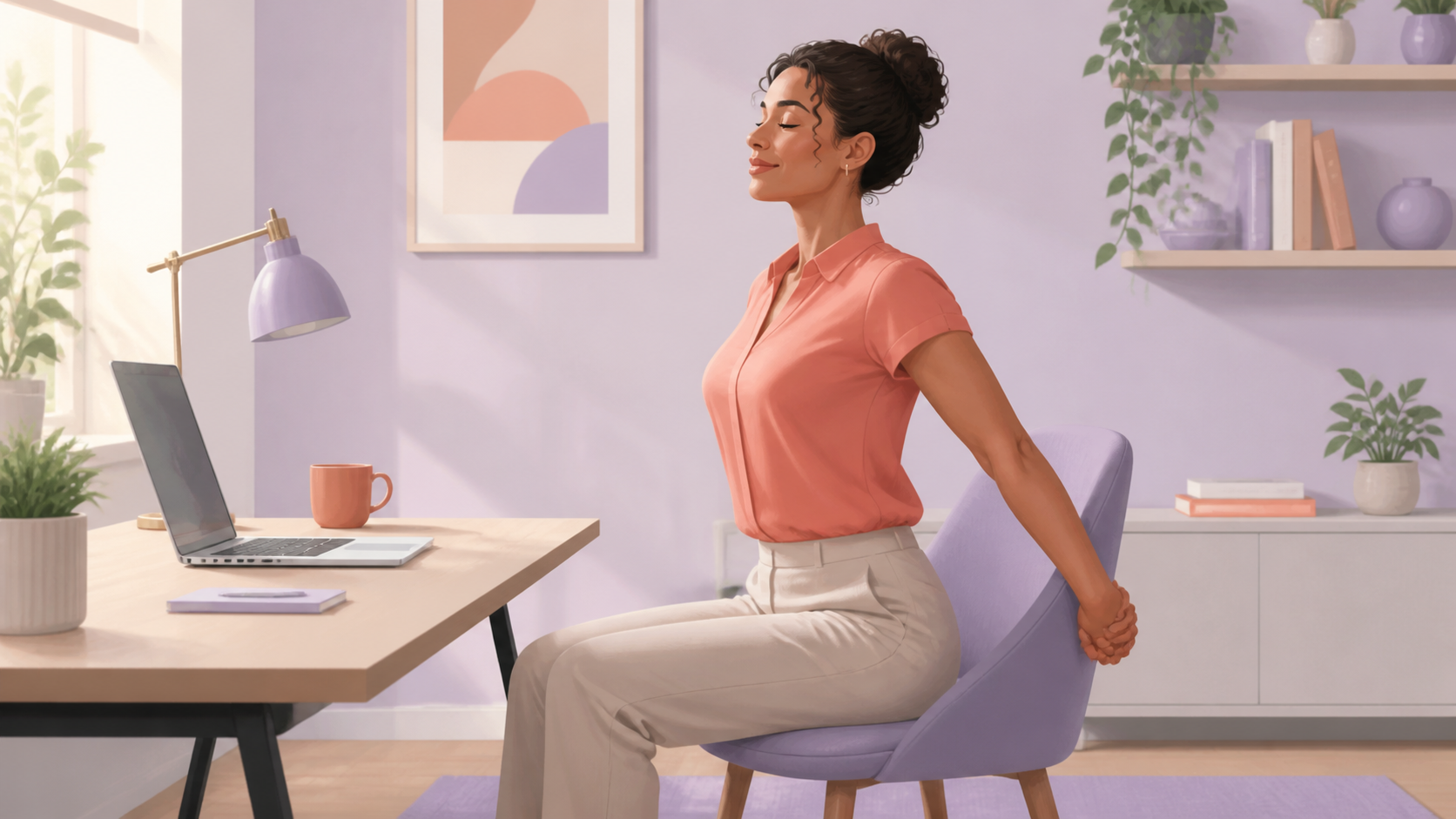
A seated chest stretch starts from a supported, upright position. Sit near the front of a stable chair, place both feet on the floor, rest your hands behind your hips or lightly hold the chair sides, then guide the shoulders down and back as the breastbone lifts slightly. Stop at gentle tension and breathe for 20 to 30 seconds.
A seated chest stretch is a chair-based chest opener for the pectoral muscles and front of the shoulders. It is useful as a movement break after typing or screen work, but it is not a treatment for chest pain, shoulder injury, numbness, or persistent symptoms.
- Keep the lower ribs relaxed instead of arching the back.
- Let the shoulder blades move naturally instead of squeezing hard.
- Stop before the front of either shoulder feels pinched.
If reaching behind you is uncomfortable, place your hands on your hips and gently rotate the upper arms outward. The stretch will be smaller, which is often exactly right.
What 5-minute chest-opening routine can I do at my desk?
A useful desk chest routine combines a gentle opener with shoulder-blade and upper-back movement. This matters because a tight-feeling chest rarely exists in isolation during computer work. Move slowly, keep breathing, and treat every time below as a ceiling rather than a challenge.
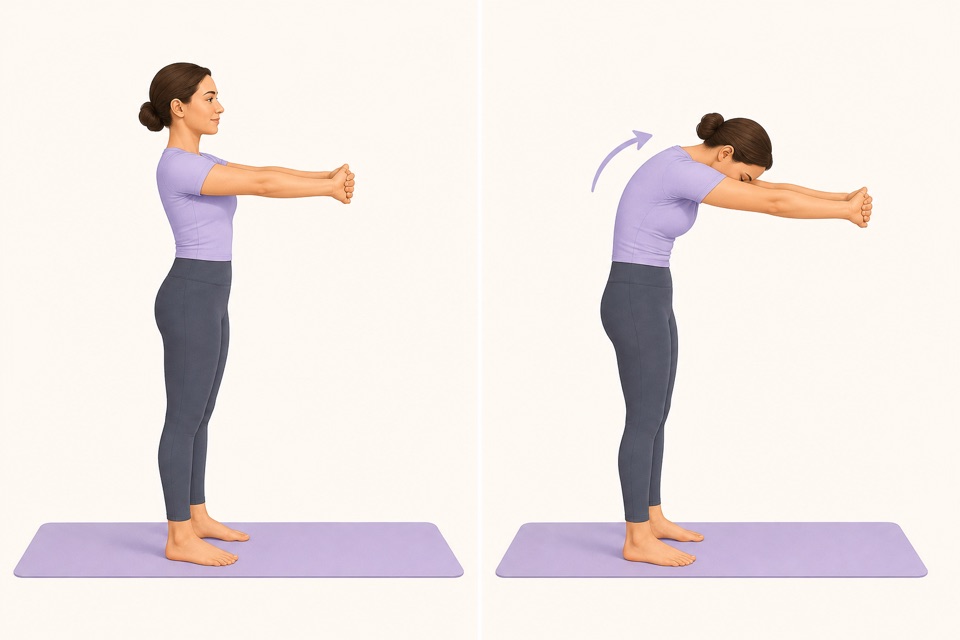
| Step | Time | What to do | Best for | | --- | ---: | --- | --- | | Shoulder circles | 45 sec | Roll up, back, and down slowly | High, tense shoulders | | Seated chest stretch | 30 sec x 2 | Hold chair sides and lift the breastbone gently | Tight front of chest | | Shoulder-blade squeezes | 45 sec | Draw blades slightly together, then fully release | Upper-back movement | | Seated upper-back reach | 45 sec | Reach forward and round gently between the blades | Balancing the opener | | Seated rotations | 30 sec each side | Turn comfortably without pulling | Stiff ribs and mid-back | | Stand and reset | 45 sec | Walk or stand tall with relaxed arms | Leaving the sitting position |
From Wiggle
Recommended moves
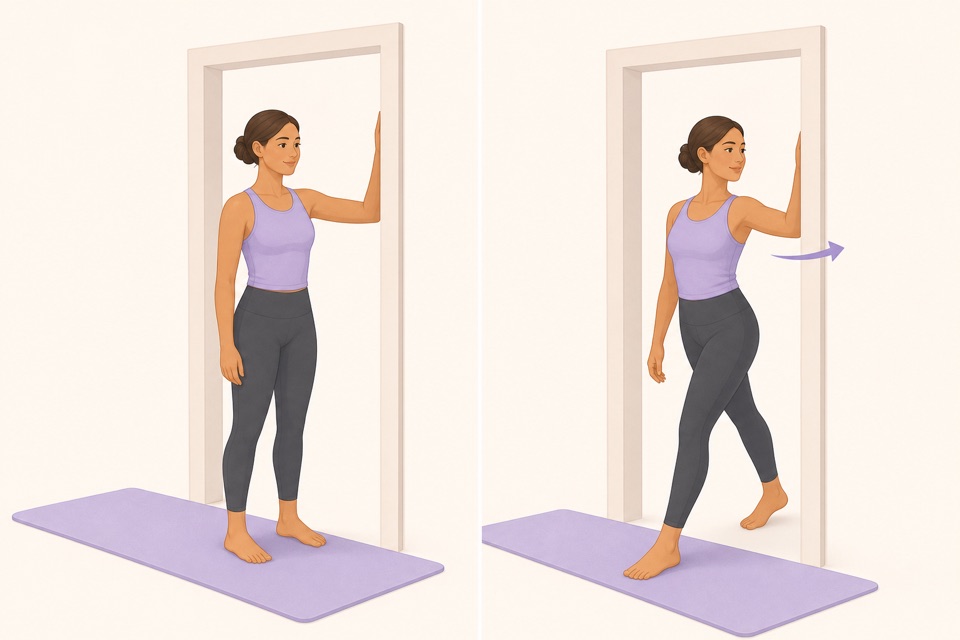
Should I use a seated chest stretch or a doorway stretch?
Choose the seated version when you need a quiet movement between calls, have limited space, or prefer more support. Choose a doorway stretch when standing feels comfortable and you want to adjust each arm separately. Neither is automatically better; the best option is the one you can control without shoulder pinching or back arching.
| What you need | Start with | Avoid | | --- | --- | --- | | A discreet desk break | Seated chest stretch | Forcing both hands far behind you | | More room through one side | Single-arm doorway stretch | Turning away aggressively | | Tight shoulders and upper back too | Shoulder stretches at desk | Treating the chest alone | | Tension between the shoulder blades | Upper back stretches at desk | Repeating only chest openers | | Whole-body stiffness after sitting | Desk stretches | Staying seated for every movement |
The common failure mode is chasing a bigger stretch by pushing the ribs forward. That creates the appearance of chest opening without giving the shoulders or upper back better movement options.
Why does the chest feel tight after computer work?
The chest can feel tight after computer work because the arms stay in front of the body while the shoulders and upper back hold a similar position for a long time. The sensation does not prove that one muscle has permanently shortened. It is a useful cue to change position, move the shoulders and ribs, and check the workstation.
Mayo Clinic's office ergonomics guidance recommends keeping the monitor directly in front of you and placing frequently used objects close enough to avoid repeated reaching. Practical fixes include:
- Move the keyboard and mouse closer before the next work block.
- Raise a low laptop with a stand and use an external keyboard when possible.
- Support the feet so you are not folding forward to find stability.
- Let the arms relax instead of holding the shoulders back all day.
- Alternate sitting with standing, walking, or another comfortable position.
The U.S. physical activity guidelines encourage moving more and sitting less. A chest opener works best as part of that broader pattern, not as permission to stay frozen until evening.
Can chest stretches fix rounded shoulders?
Chest stretches can temporarily interrupt a rounded desk position, but they cannot create one permanent “correct” posture. A more useful goal is posture variety: move the chest, shoulder blades, upper back, neck, and hips, then adjust the desk so the same forward reach is not immediately rebuilt.
If the front of the chest feels tight, open it gently. If the shoulders feel high or stuck, use shoulder stretches at desk. If the whole pattern returns within minutes, change screen height, keyboard distance, or your work-break rhythm before stretching harder.
How often should desk workers stretch the chest?
Use a brief chest-opening break after long calls or focus blocks, or whenever you notice the arms have stayed forward for an extended period. There is no magic interval. A repeatable 30-second opener every hour or two is more realistic than waiting for severe stiffness and doing one aggressive session.
- Open the chest once when a meeting ends.
- Circle the shoulders before starting a deep-work block.
- Stand and walk when a document exports or a call connects.
- Use microbreak exercises at work when you only have two minutes.
When should I skip a chest stretch?
Skip the routine and seek appropriate help when symptoms are new, severe, injury-related, worsening, or worrying. Stretching should not be used to test chest pain or force a painful shoulder through range.
Stop immediately for chest pressure, trouble breathing, dizziness, sweating, nausea, pain spreading to the arm, jaw, back, or neck, or any symptom that may be urgent. MedlinePlus advises seeking immediate medical care for possible heart-attack symptoms. When in doubt, treat new chest symptoms seriously.
How can Wiggle make desk chest stretches easier?
Wiggle turns the reset into one small action: open a guided routine, follow visual cues and a timer, then return to work. You do not have to remember the order or decide how long each movement should take.
Before your next long screen block, start a five-minute chest-and-upper-back reset in Wiggle. Use the seated opener first, balance it with shoulder-blade and upper-back movement, and finish by standing before you open the next tab.
Sources
Why we keep it gentle
These guides are written for everyday stiffness and habit-building. They are grounded in mainstream guidance on flexibility, movement, and when to seek medical help.
- Stretching: Focus on flexibilityMayo Clinic
- Office ergonomics: Your how-to guideMayo Clinic
- Physical Activity Guidelines for AmericansU.S. Department of Health and Human Services
- Chest PainMedlinePlus
FAQ
Questions people ask
How do you do a seated chest stretch?
Sit near the front of a stable chair with both feet supported. Rest your hands behind your hips or lightly hold the chair sides, draw the shoulders down and back, and lift the breastbone slightly until you feel mild tension across the chest. Breathe normally for 20 to 30 seconds without arching the lower back.
What is the best chest stretch to do at a desk?
A hands-behind-chair chest opener is the simplest seated option. A doorway stretch gives you more room when standing is comfortable. Both should feel gentle across the front of the chest and shoulders, never sharp or pinching in the shoulder joint.
How long should I hold a seated chest stretch?
Start with 20 to 30 seconds and repeat once or twice. Use an easy range that lets you breathe normally. A short chest opener repeated during the workday is usually more practical than one forceful hold after hours of sitting.
Can a chest stretch fix rounded shoulders?
A chest stretch can interrupt a rounded sitting position, but it cannot permanently fix posture by itself. Pair it with shoulder-blade movement, upper-back mobility, regular position changes, and a desk setup that keeps the screen and keyboard comfortably close.
When should I stop a chest stretch?
Stop for sharp pain, shoulder pinching, numbness, tingling, weakness, dizziness, breathlessness, chest pressure, or spreading discomfort. New or worrying chest symptoms need prompt medical attention rather than a stretching routine.