Wiggle guide
Ankle Stretches at Desk: A 5-Minute Seated Reset
Try gentle ankle stretches at your desk with a quiet 5-minute routine for circles, pumps, heel lifts, ankle rocks, and clear stop signs.
ankle stretches at desk
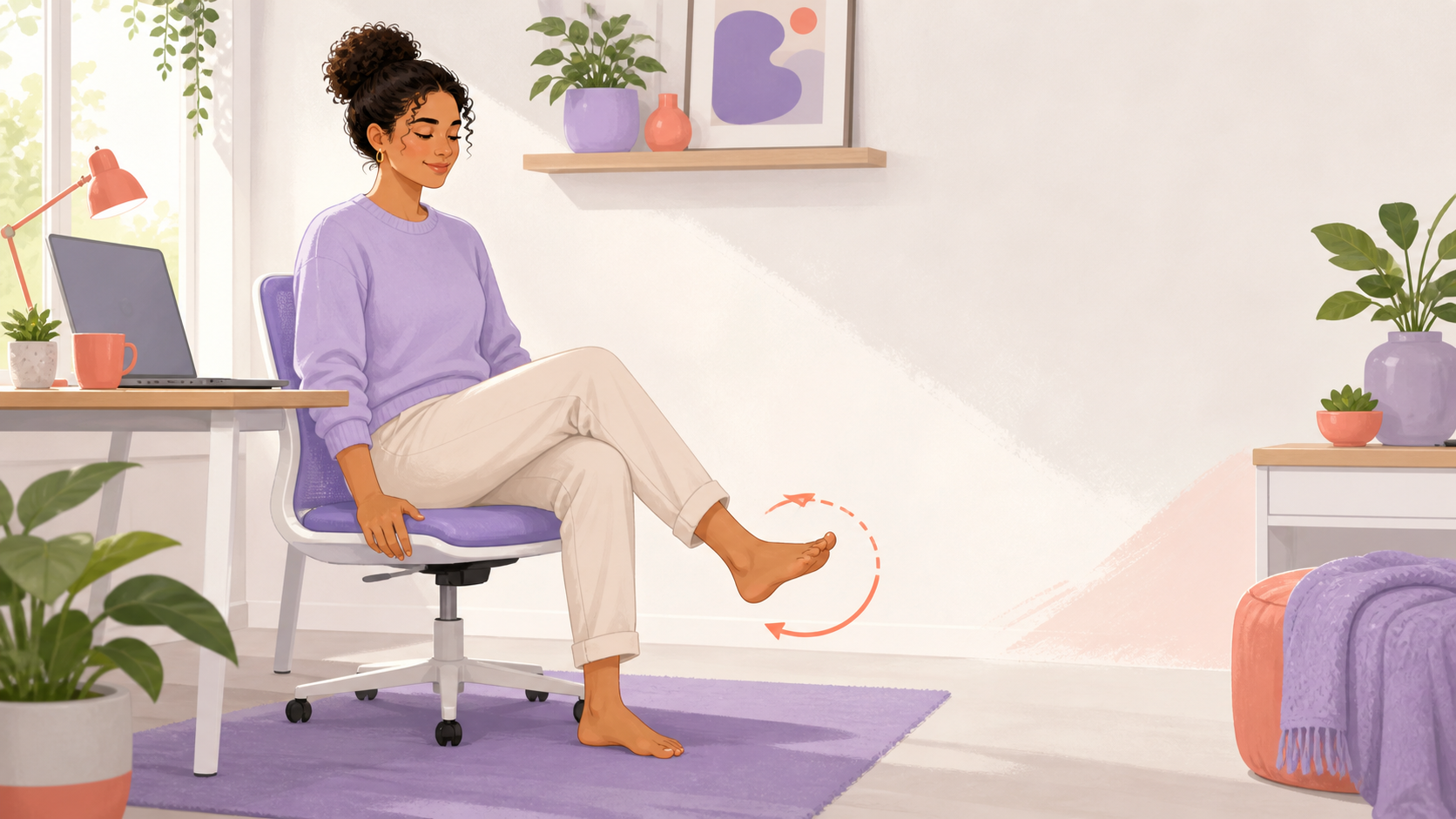
Ankles are easy to ignore during a desk day. Then you stand after two meetings and the first few steps feel wooden, your shoes feel tighter than they did in the morning, or your calves seem to be doing all the work.
The fastest reset is not a dramatic stretch. It is four minutes of ankle movement followed by a short walk: circles, pumps, toe and heel lifts, then a gentle ankle rock if standing feels comfortable. You can do most of it without leaving your chair.
What are ankle stretches at a desk?
Ankle stretches at a desk are small seated or supported standing movements that take the ankle through comfortable pointing, flexing, and circling positions during a sitting-heavy workday. They are intended for mild everyday stiffness, not for diagnosing or treating an injury, swelling, persistent pain, or circulation problem.
Fast decision rule: use circles when the joint feels generally stuck, pumps when your feet have barely moved, and a supported ankle rock when you want more bend at the front of the ankle. If symptoms are sharp, swollen, warm, numb, weak, or linked to an injury, skip the routine and get qualified guidance.
What 5-minute ankle stretch routine can I do at work?
A useful desk ankle routine starts seated, moves both ankles in several directions, and ends with standing or walking if that is comfortable. Keep each repetition slow enough to control. The goal is a smoother ankle, not the largest possible range.
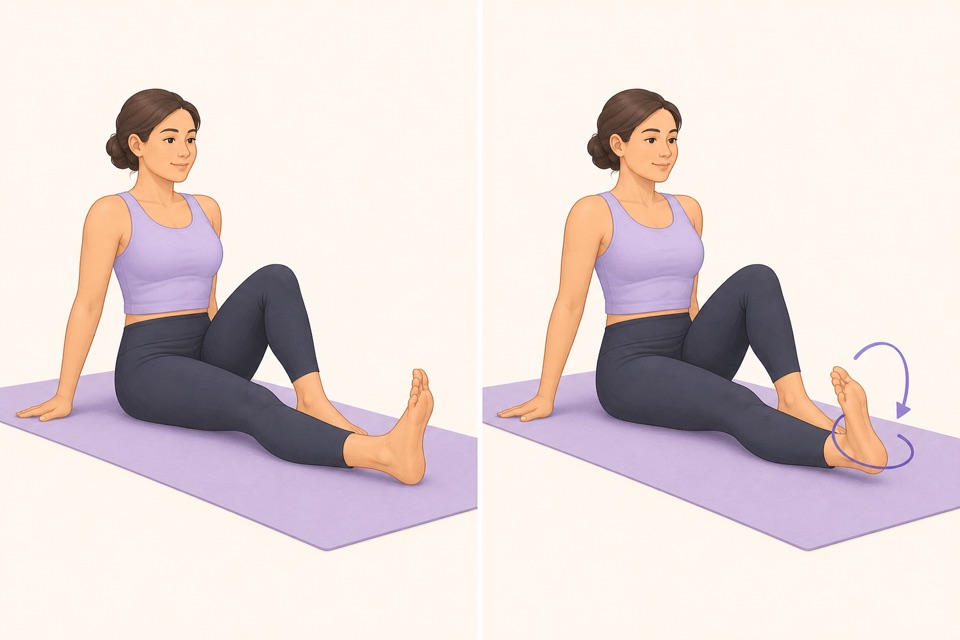
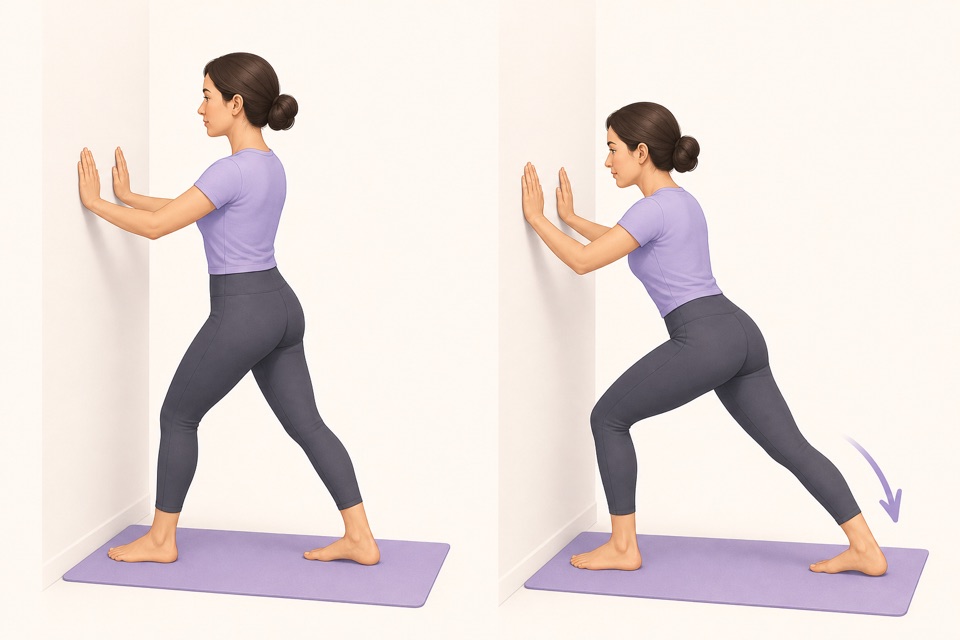
| Step | Time | What to do | Best for | | --- | ---: | --- | --- | | Ankle circles | 30 sec each way | Lift one foot slightly and draw controlled circles | General stiffness | | Ankle pumps | 45 sec | Alternate pointing the toes and pulling them toward you | Long periods with little foot movement | | Seated toe lifts | 30 sec | Keep heels down and lift the front of both feet | Front-of-shin movement | | Seated heel lifts | 30 sec | Keep toes down and raise both heels slowly | Calf and ankle movement | | Supported ankle rocks | 30 sec each side | Stand, keep heel down, and guide knee gently forward | Comfortable ankle bend | | Easy walk | 30-60 sec | Walk around the room before sitting | Turning the reset into whole-leg movement |
Repeat the first four movements on both sides. If standing is awkward, skip the ankle rocks and finish with a slightly longer walk when you are ready.
From Wiggle
Recommended moves
Why do ankles feel stiff after sitting?
Ankles often feel stiff after sitting because they have spent a long block in one position while the muscles around them do very little. A chair that leaves the feet dangling, crossed legs, restrictive shoes, and uninterrupted focus sessions can make the first movements afterward feel especially awkward.
The fix is usually a better workday pattern, not one heroic stretch. The U.S. physical activity guidelines encourage people to move more and sit less; for desk work, that can mean attaching a small ankle reset to an event that already happens.
- Circle your ankles when a video call ends.
- Do ten slow heel lifts before lunch.
- Walk while taking a phone call.
- Reset your feet after a long focus block.
- Keep both feet supported instead of letting them dangle.
Mayo Clinic's office ergonomics guidance recommends adjusting chair height so your feet rest flat on the floor or on a footrest. That basic setup makes it easier to change foot position instead of holding one awkward angle for hours.
Should I do ankle stretches, calf stretches, or walking?
Choose the movement that matches the loudest signal. Ankle circles are useful for a joint that feels reluctant to move; calf stretches suit tension through the back of the lower leg; walking is the simplest option when the entire lower body has been still.
| What you notice | Start with | Add next | | --- | --- | --- | | The ankle feels stiff in several directions | Ankle circles and pumps | A short walk | | The back of the lower leg feels tight | Calf stretches at desk | Ankle circles | | Feet have barely moved for an hour | Heel and toe lifts | 30-60 seconds of walking | | Hips and back feel stuck too | Desk stretches | Ankle pumps as the finisher | | You use a sit-stand setup | Standing desk stretches | Supported ankle rocks |
If stiffness runs up the back of the legs, use hamstring stretches at desk. For a whole-body break that fits between calls, the microbreak exercises at work guide gives you a two-minute option.
How do I avoid overdoing ankle stretches?
Keep the range smooth, keep the heel supported during ankle rocks, and stop well before pain. Ankle mobility is not a contest: a small controlled circle is more useful than dragging the foot through a pinchy or unstable position.
Use this checklist:
- Move slowly enough to notice catching or discomfort.
- Keep circles smaller if they feel jerky.
- Use a stable desk, wall, or chair when standing.
- Keep the heel down during ankle rocks, without forcing it.
- Wear shoes that let the foot move or remove them only if the floor is safe.
- Stop for sharp pain, swelling, warmth, redness, numbness, weakness, or instability.
MedlinePlus notes that ankle problems can include sprains, fractures, tendon injuries, and other conditions. If you cannot bear weight, recently injured the ankle, or symptoms persist or worsen, a generic stretching routine is the wrong tool.
When should I take ankle movement breaks?
Take a brief ankle movement break before stiffness becomes the reminder. A practical trigger is every 60 to 90 minutes, after a long meeting, or whenever you notice your feet have stayed planted or tucked under the chair through an entire task.
The minimum useful version is tiny: ten ankle pumps, five circles each direction, then stand and walk when possible. Consistency beats intensity because the actual problem is usually hours of stillness, not a shortage of aggressive stretching.
How can Wiggle make desk ankle stretches easier?
Wiggle removes the annoying part of movement breaks: deciding what to do, remembering the order, and timing both sides. Short guided routines combine visual cues with a visible timer, so a desk reset feels like one tap instead of another task to plan.
For your next long work block, set one reminder and start a five-minute lower-leg reset as soon as it ends. Begin with ankle circles, add pumps and heel lifts, then finish with a short walk before opening the next tab.
Sources
Why we keep it gentle
These guides are written for everyday stiffness and habit-building. They are grounded in mainstream guidance on flexibility, movement, and when to seek medical help.
- Stretching: Focus on flexibilityMayo Clinic
- Office ergonomics: Your how-to guideMayo Clinic
- Physical Activity Guidelines for AmericansU.S. Department of Health and Human Services
- Ankle Injuries and DisordersMedlinePlus
FAQ
Questions people ask
What are the best ankle stretches at a desk?
The best ankle stretches at a desk are ankle circles, ankle pumps, toe lifts, heel lifts, and a gentle bent-knee ankle rock. They need little space, work in ordinary clothes, and should feel smooth rather than painful.
How long should a desk ankle routine take?
A useful desk ankle routine takes about 4 to 5 minutes. Spend 30 to 45 seconds on each movement, move both ankles, then finish with a short walk before sitting again.
Why do my ankles feel stiff after sitting?
Ankles can feel stiff after sitting because they have stayed in one position with very little movement. Shoes, chair height, crossed legs, and long uninterrupted work blocks can add to the feeling. Gentle movement breaks are more useful than forcing one deep stretch.
Can I do ankle stretches without leaving my chair?
Yes. Ankle circles, pumps, toe lifts, and heel lifts can all be done while seated. Stand only if it feels comfortable and you have stable support. A short walk afterward adds movement that seated exercises cannot fully replace.
When should I avoid stretching a stiff ankle?
Stop and seek qualified guidance for sharp pain, significant swelling, warmth, redness, numbness, weakness, a recent injury, inability to bear weight, or symptoms that persist or worsen. Do not force an ankle through pain.