Wiggle guide
Chair Yoga at Desk: A 6-Minute Office Chair Reset
Chair yoga at desk for office workers who want quiet office chair stretches for neck, shoulders, wrists, hips, and back stiffness.
office chair stretches
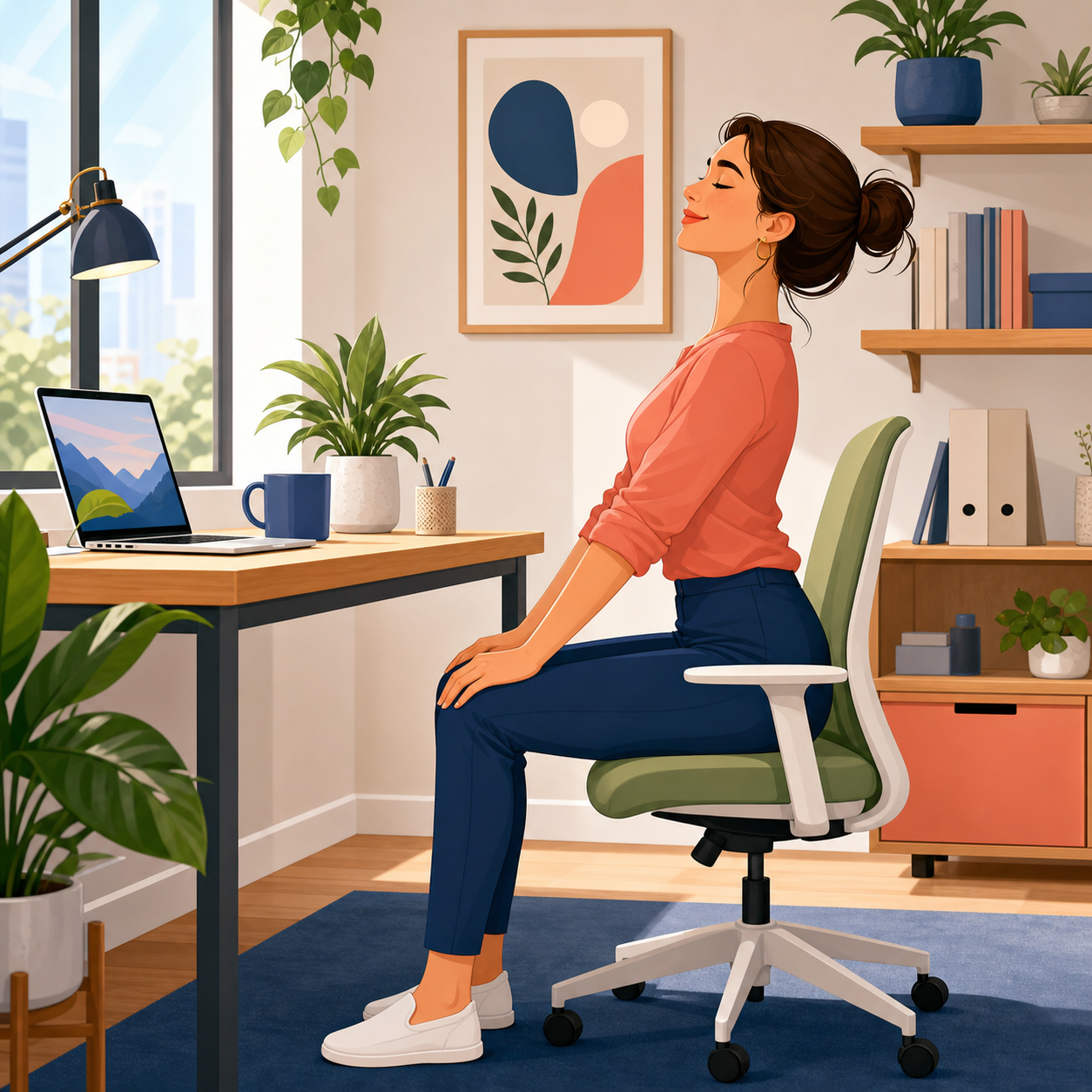
Your chair is not the problem by itself. The problem is staying in the same tiny shape for hours: neck forward, shoulders rounded, wrists active, hips folded, and back quiet until it complains.
Chair yoga at desk gives you a better outcome without asking for a mat, a conference-room floor, or a dramatic wellness ritual. Use this 6-minute reset when you want office chair stretches that feel normal at work and simple enough to repeat.
What is chair yoga at desk?
Chair yoga at desk is a short set of seated, desk-friendly movements that borrow from yoga poses without needing a mat, workout clothes, or floor space. For office workers, it usually means gentle neck, shoulder, spine, wrist, hip, and breathing resets done from a stable chair.
Fast decision rule: if you have 2 minutes, do shoulder rolls, wrist circles, and seated cat-cow. If you have 6 minutes, add a seated twist, figure-four stretch, hamstring reach, and overhead breathing. If anything feels sharp, numb, dizzying, weak, radiating, or worrying, stop.
This is general wellness content for mild everyday stiffness. It is not a diagnosis, treatment plan, or a replacement for care when pain is new, severe, persistent, injury-related, or medical-condition-related.
Which office chair stretches should I do first?
Start with movements that reverse the positions your chair repeats all day. The best office chair stretches move the shoulders, spine, wrists, hips, and back of the legs while keeping your feet grounded and your chair stable.
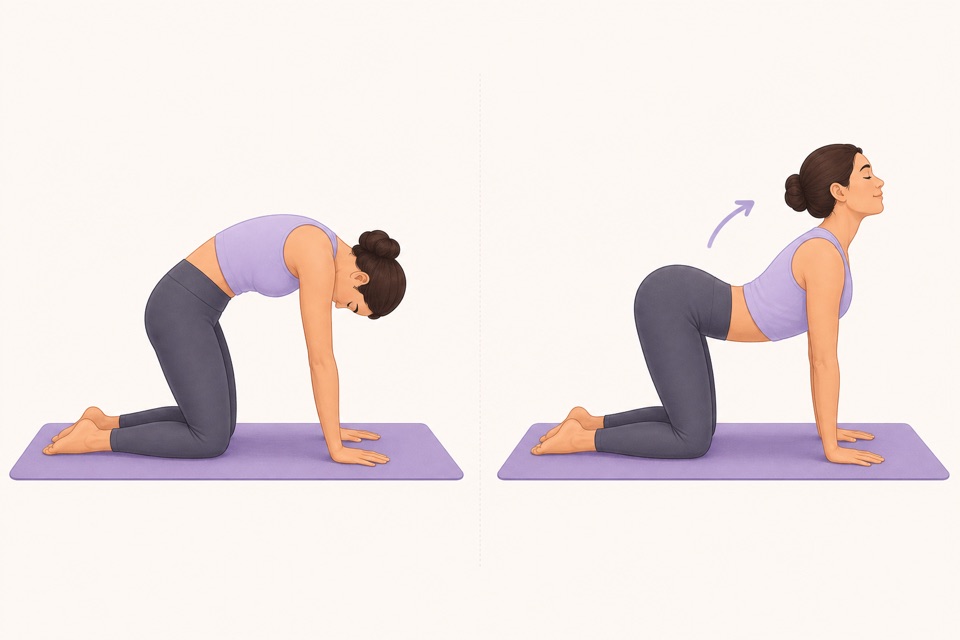
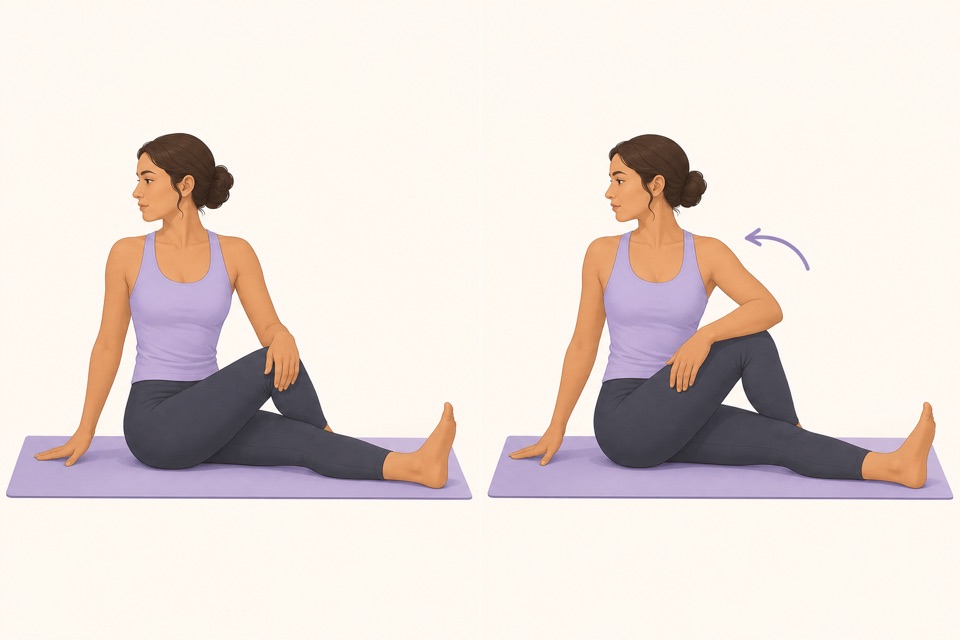
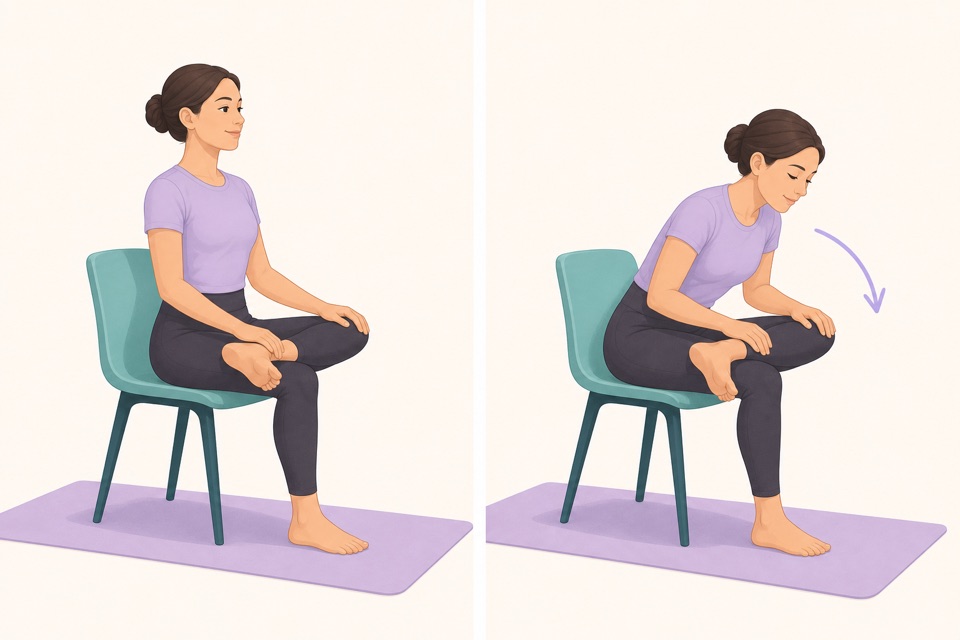
| Step | Time | What to do | Best for | | --- | ---: | --- | --- | | Set the chair | 15 sec | Sit near the front edge with both feet flat | Stability before movement | | Shoulder rolls | 30 sec | Roll shoulders backward and forward slowly | Screen posture and upper traps | | Seated cat-cow | 45 sec | Alternate a gentle rounded back and lifted chest | Mid-back stiffness | | Wrist circles | 45 sec | Circle wrists, then open and close hands | Keyboard and mouse fatigue | | Seated spinal twist | 30 sec each side | Turn from the ribs, not by yanking the neck | Still back and rib cage | | Seated figure-four | 45 sec each side | Cross ankle over opposite thigh and sit tall | Outer hip stiffness | | Seated hamstring reach | 30 sec each side | Extend one heel forward and hinge slightly | Back-of-leg tightness | | Overhead reach | 45 sec | Reach one arm up, then switch sides | Side body and breathing |
Keep each move at mild tension. You should be able to breathe normally, relax your jaw, and return to work without feeling like you just performed for the room.
From Wiggle
Recommended moves
How do I choose between chair yoga, desk stretches, and standing breaks?
Choose the smallest routine that changes the position causing the stiffness. Chair yoga is best when you cannot leave the desk. A standing break is better when your hips, back, or legs feel trapped by sitting. A walk is better when your whole body feels stale.
| Workday signal | Best next move | Useful next guide | | --- | --- | --- | | Neck and shoulders feel tense | Seated cat-cow, shoulder rolls, then a light neck reset | Neck stretches at desk | | Wrists feel loaded from typing | Wrist circles, hand opening, and a forearm break | Wrist stretches at desk | | Hips feel stuck but you cannot stand up | Seated figure-four and seated hamstring reach | Hip stretches while sitting at desk | | Lower back feels tired after sitting | Chair yoga first, then stand and walk if possible | Lower back stretches at desk | | Standing desk fatigue takes over | Switch to supported standing movements | Standing desk stretches |
The failure mode is trying to find the perfect desk routine while staying motionless for another hour. Pick the easiest reset that fits the room you are actually in.
How often should office workers do chair yoga at desk?
Most office workers should think in small movement breaks, not one heroic stretch session. Try 3 to 6 minutes after a long meeting, before lunch, before the final work block, or whenever your shoulders, wrists, hips, or lower back start asking for attention. If even that feels too long, start with a two-minute microbreak exercise routine.
Mayo Clinic's desk-stretch guidance emphasizes stretching in seated or standing positions during work breaks, and its ergonomics guidance still recommends changing position and walking around even when the workstation is well set up. The HHS physical activity guidelines also point toward moving more and sitting less across the day.
Try this simple schedule:
- One short chair yoga reset after your first deep-work block.
- One standing or walking break around lunch.
- One focused area reset in the afternoon, such as shoulder stretches at desk or forearm stretches at desk.
- One saved Wiggle routine before you close the laptop, so the habit has a clear finish line.
How can I make chair yoga at work less awkward?
Make it quieter, shorter, and more repeatable. Chair yoga at work should look like normal position changes: rolling the shoulders, sitting taller, circling the wrists, turning gently, and breathing. Save dramatic poses for home.
Use this checklist:
- Keep both feet on the floor unless the movement needs one leg crossed.
- Move slowly enough that nobody across the room notices a sudden swing.
- Avoid deep forward folds during calls or in tight spaces.
- Keep one hand on the desk or chair if balance feels uncertain.
- Use mild tension, not maximum range.
- Stop for sharp pain, numbness, dizziness, weakness, radiating symptoms, or symptoms that worry you.
Chair yoga at desk works because it removes friction. Open a short guided Wiggle session, follow the timer, and let the next movement be chosen for you instead of negotiating with the workday.
Sources
Why we keep it gentle
These guides are written for everyday stiffness and habit-building. They are grounded in mainstream guidance on flexibility, movement, and when to seek medical help.
- Desk stretches: Video collectionMayo Clinic
- Office ergonomics: Your how-to guideMayo Clinic
- Stretching: Focus on flexibilityMayo Clinic
- Physical Activity Guidelines for AmericansU.S. Department of Health and Human Services
- Exercise and Physical FitnessMedlinePlus
FAQ
Questions people ask
What is chair yoga at desk?
Chair yoga at desk is a short set of seated, desk-friendly movements that borrow from yoga poses without needing a mat, workout clothes, or floor space. For office workers, it usually means gentle neck, shoulder, spine, wrist, hip, and breathing resets done from a stable chair.
What are the best office chair stretches?
The best office chair stretches are seated cat-cow, shoulder rolls, wrist circles, seated spinal twist, seated figure-four, seated hamstring reach, and an overhead side reach. They cover the positions desk work holds longest: rounded shoulders, active hands, flexed hips, and a still back.
How long should chair yoga at desk take?
Start with 3 to 6 minutes. That is long enough to change position, breathe, and move the stiff areas without turning the workday into a workout. A short routine you repeat is better than a perfect 20-minute session you skip.
Can I do chair yoga at work without looking weird?
Yes. Keep the routine small: shoulder rolls, wrist circles, seated cat-cow, a seated twist, and a quiet figure-four stretch. Skip floor poses, deep forward folds, and anything that needs a mat. It should look like a movement break, not a class.
When should I avoid chair yoga at desk?
Avoid or stop the routine if you feel sharp pain, numbness, dizziness, weakness, radiating symptoms, or anything that worries you. Use it for mild everyday stiffness only, and ask a qualified professional about new, severe, persistent, injury-related, or medical-condition-related pain.