Wiggle guide
Morning Stretches Before Work: A Quiet 6-Minute Reset
Morning stretches before work for stiff shoulders, hips, back, and calves. Use this quiet 6-minute, no-sweat routine before your commute or first call.
morning stretches before work
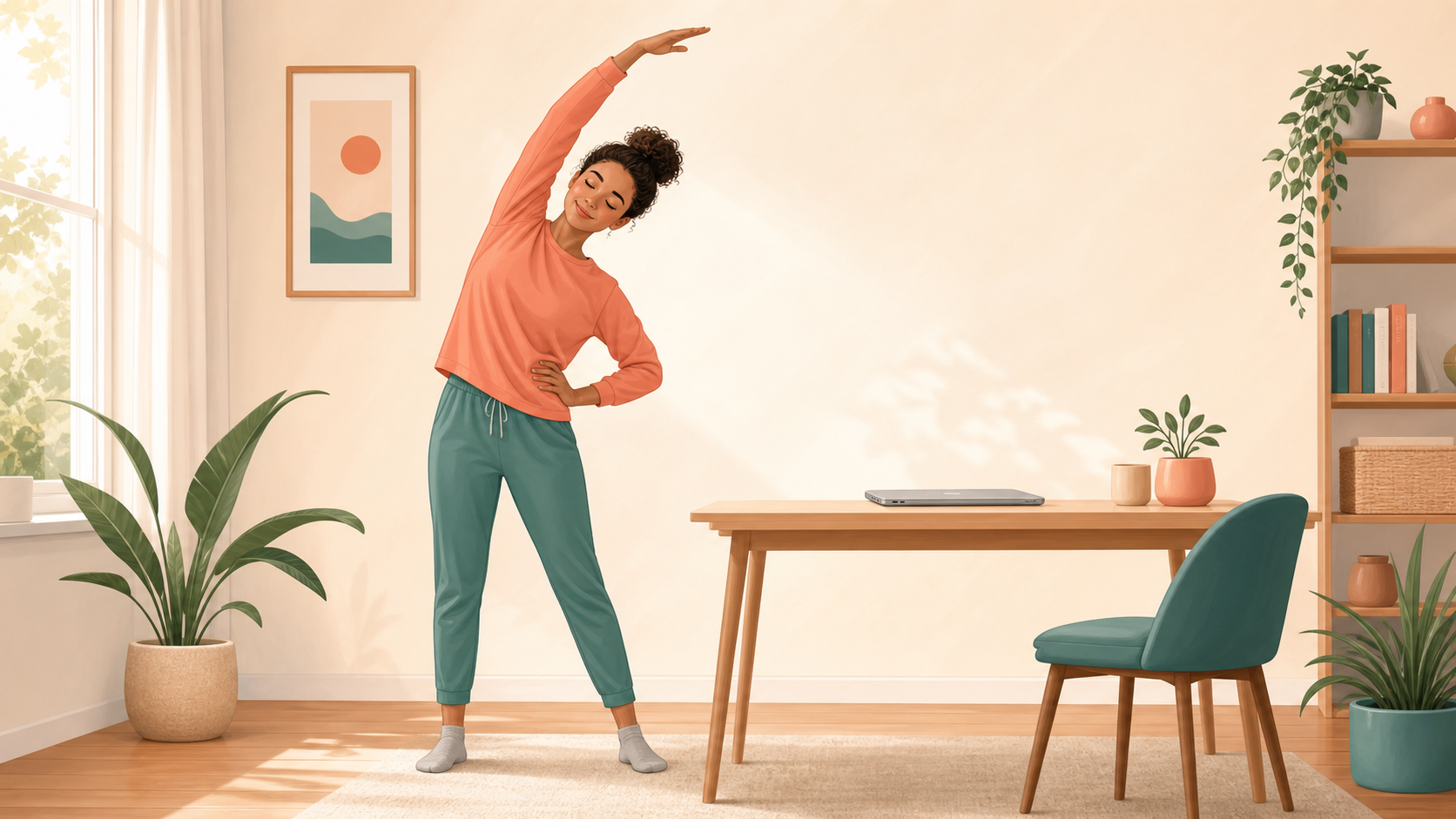
The first work task often starts before your body has properly joined the day. You go from bed to car, train, or desk; your shoulders creep upward; and by the first meeting, sitting already feels uncomfortable.
Morning stretches before work solve the transition, not your entire fitness life. This quiet six-minute sequence needs no mat, creates little heat, and moves the areas most likely to feel forgotten during a desk-heavy morning.
Fast decision rule: do the full routine when you have six minutes. When you have two, do shoulder rolls, hip hinges, calf raises, and a short march. If a movement causes pain rather than mild tension, skip it.
What are the best morning stretches before work?
The best morning stretches before work move the shoulders, sides, hips, calves, and ankles without demanding deep flexibility. A useful sequence begins small, stays mostly standing, and finishes with marching so you feel ready to move into the day rather than ready to lie back down.
Morning stretches before work are a short, low-intensity movement sequence done before a commute, shift, or first desk session. Their job is to reduce morning friction and create a repeatable transition into work—not to replace exercise or fix a medical problem.
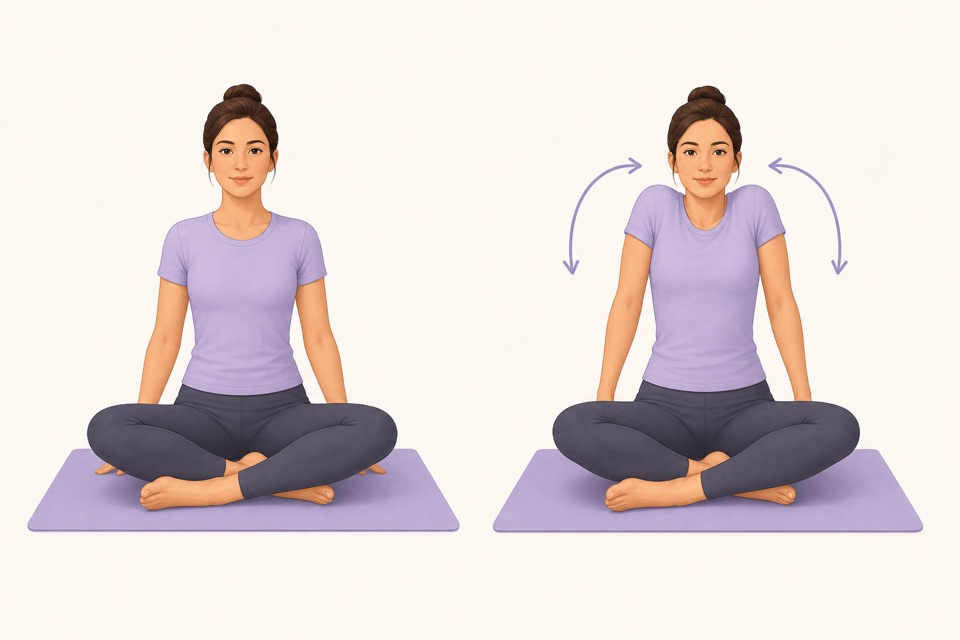
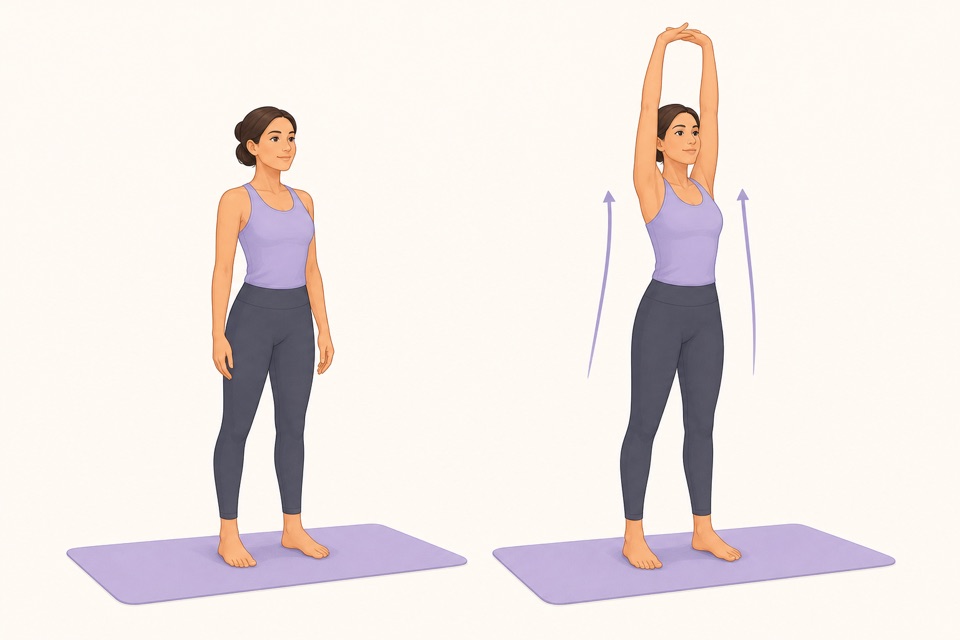
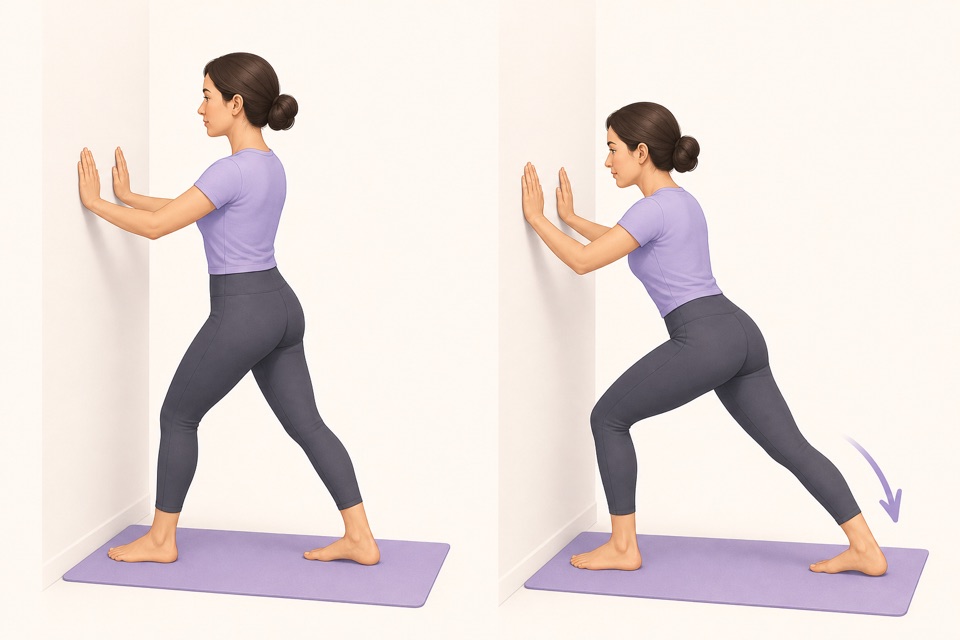
| Move | Time | Workday payoff | Easier option | | --- | ---: | --- | --- | | Breathing and shoulder rolls | 45 sec | Starts neck and shoulder movement gently | Do it seated | | Standing side reaches | 45 sec | Moves the sides and upper back | Reach one arm at a time | | Supported hip hinges | 60 sec | Practises bending through the hips | Keep hands on a desk | | Short hip-flexor stretch | 90 sec | Moves the front of the hips before sitting | Use a shorter stance | | Calf raises and calf stretch | 60 sec | Wakes up lower legs and ankles | Hold a wall | | Easy march | 60 sec | Finishes with whole-body movement | Tap toes instead | | Choose first movement break | 60 sec | Stops one stretch from carrying the whole day | Set one phone reminder |
From Wiggle
Recommended moves
How do I stretch before work without getting sweaty?
Keep the routine below workout intensity: use slow movements, normal breathing, short ranges, and no repeated jumping or demanding holds. You should be able to talk normally throughout. Six calm minutes in work clothes is enough; the goal is a smoother start, not a training session.
- Keep effort near 3 out of 10.
- Choose standing or chair-supported moves.
- Breathe normally instead of bracing.
- Stop each stretch before it becomes a strain.
- Skip the floor if clothes, space, or time make it awkward.
- Finish with an easy march, not cardio.
Mayo Clinic recommends stretching smoothly, avoiding bouncing, and expecting tension rather than pain. Those principles matter more than reaching a specific depth. If you prefer an even shorter sequence, start with the 5-minute morning stretch.
Should I stretch before commuting or after I arrive?
Stretch before commuting when the trip itself involves prolonged sitting. Stretch after arrival when your morning includes a walk or you have more space at work. If both parts of the morning are sedentary, use two tiny sessions: two minutes before leaving and two minutes before opening the laptop.
| Your morning | Best timing | Best emphasis | | --- | --- | --- | | Long drive | Before leaving | Hips, calves, shoulders | | Train or bus | Before leaving plus after arrival | Calves, side reaches, easy walk | | Walk or cycle | After arrival if needed | Gentle shoulders and hips | | Work from home | Before the first login | Full six-minute sequence | | Standing shift | Before leaving | Ankles, calves, hips |
If your lower back is the main problem after commuting, use lower back stretches at work. If the whole body feels stiff immediately after waking, the morning mobility routine is the better starting point.
Can one morning stretch make up for sitting all day?
No. One morning stretch can create a better start, but it cannot make prolonged sitting disappear. The practical approach is to combine the morning routine with regular changes of position, short walks, and brief movement breaks during the workday.
The U.S. physical activity guidelines encourage adults to move more and sit less, while CDC workplace guidance describes short activity breaks as a practical way to add movement. The useful takeaway is simple: your morning routine is the first movement break, not the last.
- After your first call, stand and roll the shoulders.
- Before lunch, walk for two minutes.
- After a long focus block, change position.
- Before the commute home, move the hips and calves again.
For a ready-made workday follow-up, use these microbreak exercises at work.
How do I make pre-work stretching a habit?
Make the routine happen immediately before an action you never miss: starting the kettle, putting on shoes, opening the laptop, or joining the first call. Keep the order fixed for one week and use a two-minute fallback so a rushed morning does not become a skipped morning.
- Pick one reliable cue.
- Save one six-minute routine.
- Put the phone where you will stretch.
- Use the same sequence for seven workdays.
- Do the two-minute version when late.
- Schedule the first workday movement break before you finish.
A guided stretching app with reminders can remove the work of remembering, timing, and choosing. Wiggle is built for exactly this kind of small routine: open it, follow the sequence, and move on with your morning.
When should I skip or modify morning stretches?
Skip or modify the routine when you have more than mild everyday stiffness. Sharp pain, dizziness, numbness, weakness, spreading symptoms, chest symptoms, a recent injury, or symptoms connected to a known condition call for caution and qualified guidance.
This routine is general movement education, not diagnosis or treatment. Make a movement smaller before making it deeper, use support when balance feels uncertain, and stop when your body gives you a clear reason to stop.
Sources
Why we keep it gentle
These guides are written for everyday stiffness and habit-building. They are grounded in mainstream guidance on flexibility, movement, and when to seek medical help.
- Stretching: Focus on flexibilityMayo Clinic
- Physical Activity Guidelines for AmericansU.S. Department of Health and Human Services
- Physical activity breaks for the workplaceCenters for Disease Control and Prevention
FAQ
Questions people ask
What are the best morning stretches before work?
The best morning stretches before work are gentle, full-body movements that do not leave you sweaty: shoulder rolls, standing side reaches, hip hinges, supported lunges, calf stretches, and an easy march. Use comfortable range and keep the routine short enough to repeat.
How long should I stretch before work?
Five to seven minutes is enough for a practical pre-work routine. If you are rushed, do two minutes of shoulder rolls, hip hinges, calf raises, and marching. A short routine you repeat is more useful than a complicated routine you postpone.
Should I stretch before sitting at a desk all day?
A brief stretch before desk work can create a useful movement break, but it does not cancel out hours of sitting. Start with gentle movement, then change position and take short movement breaks during work rather than relying on one morning session.
Can I do morning stretches in work clothes?
Yes. Choose small standing movements that do not require the floor, deep lunges, or a wide stance. Shoulder rolls, side reaches, supported hip hinges, calf raises, and marching can all be done in ordinary work clothes.
When should I stop stretching?
Stop if you feel sharp pain, dizziness, numbness, weakness, spreading symptoms, chest symptoms, or anything that feels wrong. Seek qualified guidance for new, severe, persistent, injury-related, or condition-related symptoms.