Wiggle guide
Morning Calf Stretches for Tight Calves: 6 Minutes
Try these morning calf stretches for tight calves: a gentle 6-minute routine with ankle movement, two wall stretches, and clear stop signs.
morning calf stretches
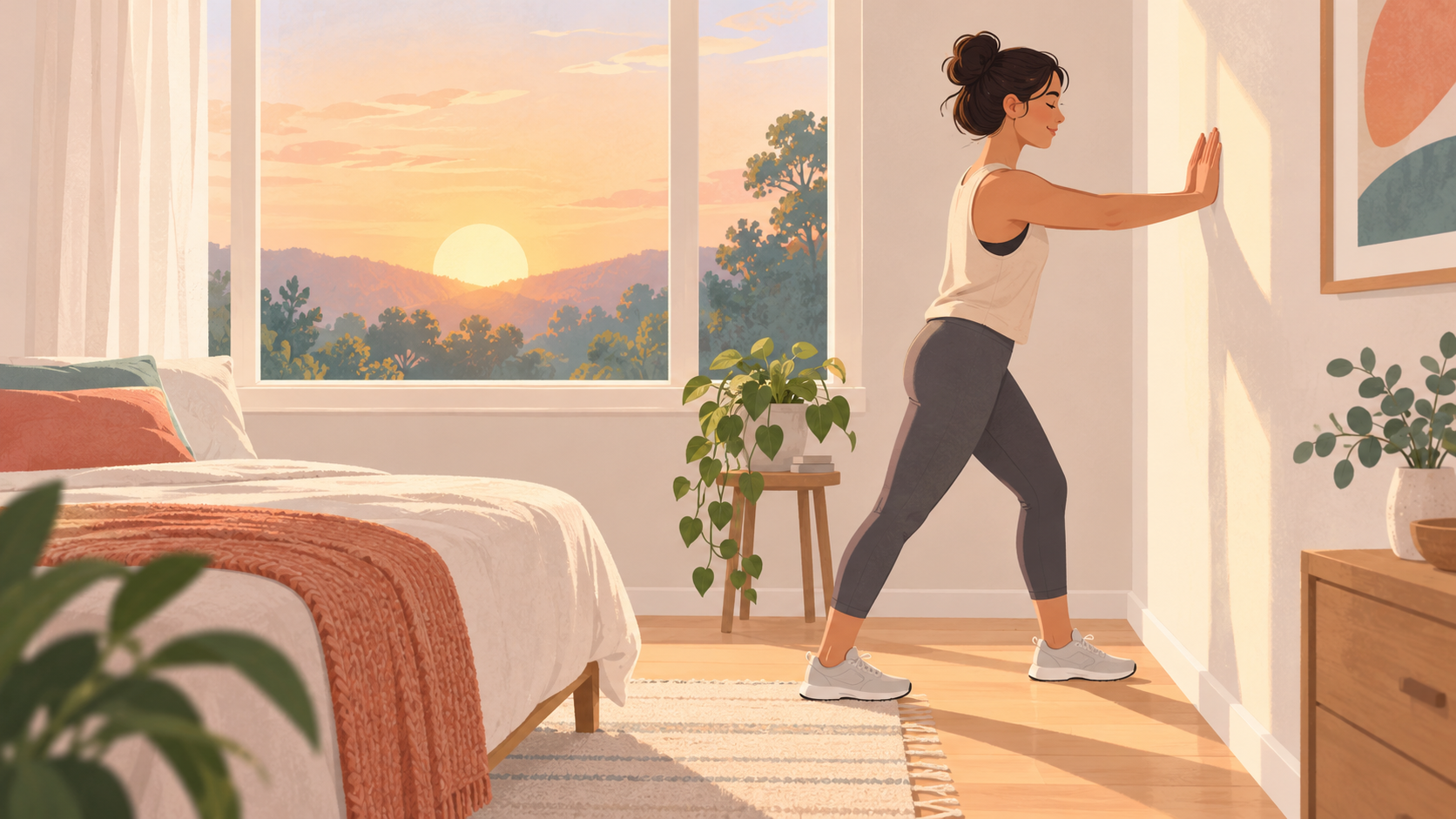
The first steps out of bed should not feel like your calves are negotiating every inch. The tempting fix is to lean hard into a wall stretch, but cold, sleepy legs usually respond better to movement first and mild stretching second.
This six-minute routine removes the guesswork: move the ankles, walk briefly, stretch with both a straight and bent knee, then finish with controlled heel raises. Keep the sensation gentle enough to breathe normally. You are looking for easier steps, not a flexibility record before breakfast.
What are the best morning calf stretches for tight calves?
The best morning calf stretches begin with ankle pumps and circles, then progress to a supported straight-knee wall stretch and a bent-knee version. Add slow heel raises and a short walk so the lower legs move through a comfortable range before you start the day.
A morning calf stretch is a gentle position used after waking to create mild tension through the back of the lower leg. It should not cause sharp pain, ankle pinching, bouncing, numbness, or a need to hold your breath.
| Move | Time | Main cue | Easier option | | --- | ---: | --- | --- | | Ankle pumps and circles | 60 sec | Make smooth, unhurried shapes | Stay seated on the bed | | Easy walk | 60 sec | Take short, relaxed steps | Hold a wall | | Straight-knee wall stretch | 30 sec/side | Back heel heavy, toes forward | Shorten the stance | | Bent-knee wall stretch | 30 sec/side | Bend the back knee slightly | Use less forward lean | | Supported heel raises | 8 reps | Rise and lower slowly | Use both hands for support | | Relaxed finish | 60 sec | Let the stride feel natural | March in place |
From Wiggle
Recommended moves

How do I do this 6-minute morning calf routine?
Start seated, move for two minutes, then stretch each calf from two angles. Use a wall, counter, or sturdy chair for balance. Keep the effort near 3 out of 10 and make the stance shorter whenever the heel lifts or the ankle feels crowded.
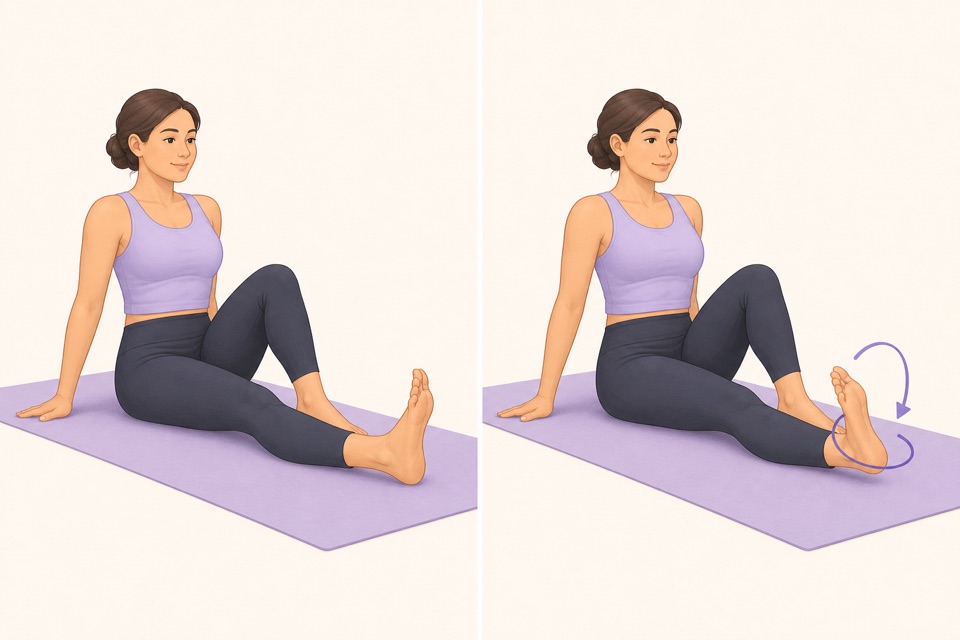
- Wake the ankles: Point and flex both feet, then draw slow circles in each direction.
- Walk easily: Stand with support and walk or march for one minute. Let the ankles roll naturally.
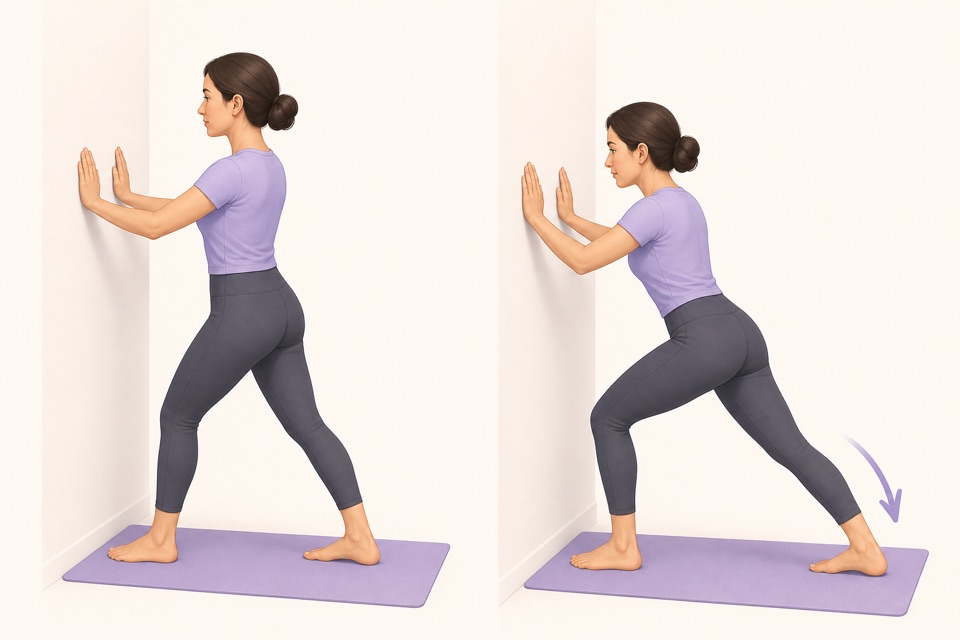
- Keep the back knee straight: Step one foot behind you, point both feet forward, and shift toward the wall until the upper calf feels mild tension. Switch sides.
- Bend the back knee: Use the same stance but soften the back knee while keeping the heel heavy. You may feel this lower in the calf. Switch sides.
- Raise and lower: Hold the wall and complete eight slow heel raises. Use a smaller range if needed.
- Walk again: Finish with one relaxed minute and notice whether your steps feel smoother.
If you want the calves inside a whole-body sequence, follow the standing morning stretches routine. If the stiffness is centered around the joint, try ankle mobility exercises instead of adding more force to the calf stretch.
Why do my calves feel tight when I wake up?
Calves can feel tight after the ankles spend hours in a fairly still position, after more walking or training than usual, or when the legs first take body weight in the morning. The sensation may settle as you move, but tightness alone cannot identify the cause or tell you which tissue is involved.
| What you notice | Best next step | | --- | --- | | Both calves feel mildly stiff | Start with ankle movement and easy walking | | One side is tighter but movement stays comfortable | Use a shorter stance and equal gentle time per side | | The ankle pinches during the wall stretch | Reduce the lean or use ankle circles instead | | Soreness follows a hard workout | Keep the routine easy and allow recovery | | One calf is swollen, warm, red, or unusually painful | Do not stretch it; seek prompt medical advice | | Symptoms include chest pain or unusual shortness of breath | Seek urgent medical help |
For tightness after a sitting-heavy workday rather than sleep, use calf stretches at desk. That version pairs the stretches with movement breaks you can repeat between meetings.
Should I use a straight or bent knee for calf stretches?
Use both positions if they feel comfortable. The straight-knee version usually creates more tension through the upper calf, while bending the back knee tends to shift the sensation lower. Neither version needs a long stance or aggressive lean to be useful.
Keep both feet pointing mostly forward, spread pressure across the whole back foot, and stop before the heel is forced down. If balance is the limiting factor, move closer to the wall. The best variation is the one you can control without wobbling or bracing.
What mistakes make morning calf stretches feel worse?
The biggest mistake is treating stiffness as a challenge to pull harder. Bouncing, turning the back foot outward, forcing the heel flat, locking the knee, or starting with a deep stair drop can make a calm reset feel unnecessarily intense.
- Move for a minute before using a static hold.
- Keep the stretch mild and steady rather than pulsing.
- Shorten the stance if the heel lifts.
- Keep the back foot mostly forward.
- Use support so balance does not distort the position.
- Judge the routine by easier walking, not stretch depth.
Mayo Clinic advises smooth, non-bouncing stretches and aiming for tension rather than pain. If the whole back of the leg feels tight, pair this routine with morning hamstring stretches rather than repeatedly deepening the calf stretch.
How can I make morning calf stretches easy to repeat?
Attach the routine to a cue that already happens: after you open the curtains, while the kettle heats, or before your morning walk. On rushed days, use the two-minute minimum—ankle circles, one supported stretch per side, and ten easy steps.
Wiggle supplies the order, timer, and visual cues so you do not have to rebuild the routine each morning. Download Wiggle, choose a short lower-body flow, and let one guided sequence carry the decision-making.
When should I stop stretching my calves?
Stop for sharp or worsening pain, a pop, marked weakness, numbness, inability to bear weight, or pain after a significant injury. Do not massage or stretch a calf that is newly swollen, warm, red, or unusually tender; seek prompt medical assessment. Chest pain, faintness, coughing blood, or unexplained shortness of breath requires urgent medical help.
This guide is general movement education, not diagnosis or personalized treatment. Persistent morning tightness, repeated cramping, or symptoms that keep changing how you walk deserve advice from a qualified healthcare professional.
Sources
Why we keep it gentle
These guides are written for everyday stiffness and habit-building. They are grounded in mainstream guidance on flexibility, movement, and when to seek medical help.
- Stretching: Focus on flexibilityMayo Clinic
- Warm Up, Cool DownAmerican Heart Association
- Leg Injuries and DisordersMedlinePlus
FAQ
Questions people ask
What are the best morning calf stretches for tight calves?
Start with ankle pumps and circles, then use a supported straight-knee wall stretch and a bent-knee calf stretch. Finish with slow heel raises and an easy walk. Moving first makes the routine gentler than forcing a deep stretch immediately after waking.
Why are my calves tight in the morning?
Calves can feel tight after spending hours with the ankles in one position, after a more active day, or when you first load the legs after sleep. Morning tightness alone does not reveal a specific cause. Persistent, worsening, one-sided, swollen, warm, or painful symptoms deserve professional advice.
Can I stretch my calves as soon as I wake up?
Begin with small ankle movements and a minute of easy walking before holding a calf stretch. Use a wall or chair for balance, keep the stretch mild, and never bounce. Stop for sharp pain, swelling, warmth, redness, numbness, weakness, or unusual shortness of breath.
How long should I hold a morning calf stretch?
Hold a comfortable calf stretch for about 20 to 30 seconds, then switch sides. One or two gentle rounds is enough for a short morning routine. The goal is easier movement, not the deepest possible stretch.
Should I stretch both calf muscles?
Yes. A straight back knee emphasizes the larger upper calf, while a slightly bent back knee shifts the sensation lower toward the soleus. Keep the heel heavy in both versions, but shorten your stance if the heel lifts or the ankle feels pinched.