Wiggle guide
Morning Quad Stretches: A Gentle 6-Minute Routine
Try these morning quad stretches for stiff thighs: a gentle 6-minute routine with supported options, form cues, and clear stop signs.
morning quad stretches

Your first trip down the hallway should not feel like your thighs are still folded into last night's sleeping position. Pulling a heel hard toward your body is tempting, but it often adds a balance problem and a pinched knee to a sensation that needed only gentle movement.
This six-minute routine uses a simpler order: walk, bend the knees a little, choose a supported quad stretch, then return to easy leg work. Fast rule: keep the pull mild and the knee comfortable. If grabbing your ankle changes your posture, use the towel or side-lying option instead.
What are the best morning quad stretches?
The best morning quad stretches start with easy walking and shallow knee bends, then use a supported standing hold, a side-lying alternative, and a gentle half-kneeling hip shift. Finish with slow sit-to-stands. This progression moves the knees and hips before asking the front of the thigh to hold a longer position.
A morning quad stretch is a gentle movement or position used after waking to create mild tension through the front of the thigh. It should not cause sharp pain, knee pinching, forced arching through the lower back, or a need to hold your breath.
| Move | Time | Main cue | Easier option | | --- | ---: | --- | --- | | Easy walk or march | 60 sec | Use short, relaxed steps | Hold a counter | | Shallow supported knee bends | 8 reps | Sit the hips back slightly | Make the bend smaller | | Standing quad stretch | 30 sec/side | Knees close, ribs stacked | Use a towel around the ankle | | Side-lying quad stretch | 30 sec/side | Keep the top knee from drifting forward | Bend only as far as comfortable | | Half-kneeling hip shift | 30 sec/side | Shift forward without arching | Use a standing split stance | | Sit-to-stand and walk | 60 sec | Move smoothly | Use your hands on the chair |
From Wiggle
Recommended moves
How do I do this 6-minute morning quad routine?
Spend the first two minutes moving, then stretch each side in two positions before finishing with normal leg movement. Hold a wall or chair whenever you stand on one leg. Keep the effort around 3 out of 10: noticeable, steady, and easy to breathe through.
- Walk or march: Take small steps for one minute and let the knees bend naturally.
- Use shallow knee bends: Hold a counter, send the hips slightly back, and complete eight comfortable repetitions.
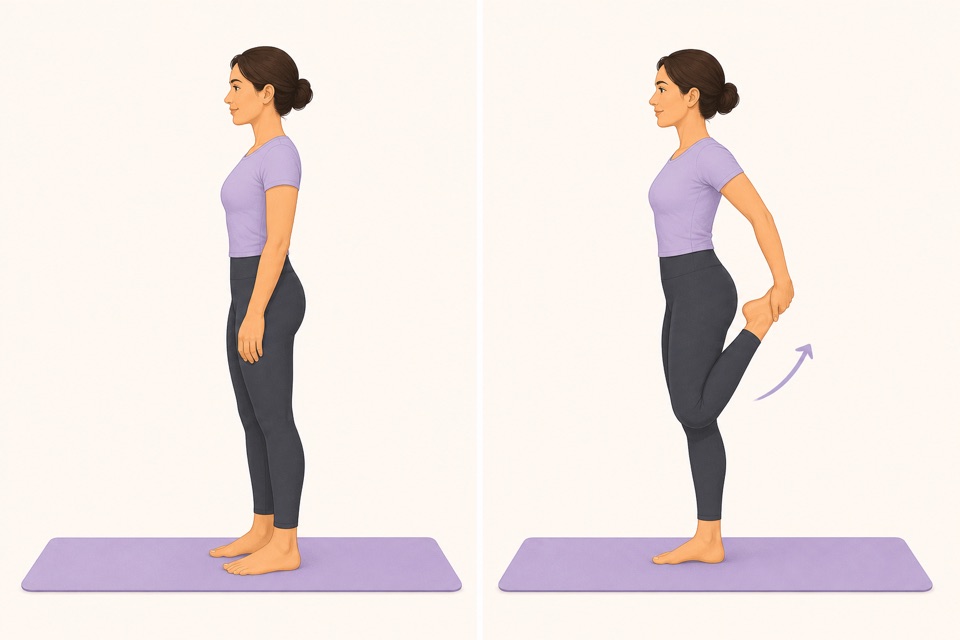
- Stand with support: Hold a chair, bend one knee, and bring the heel toward the body only until you can hold the ankle or towel without twisting. Keep the knees close and switch sides after 30 seconds.
- Lie on your side: Bend the top knee and hold the ankle or trouser cuff. Keep the thigh roughly in line with the body instead of pulling it behind you. Switch sides.
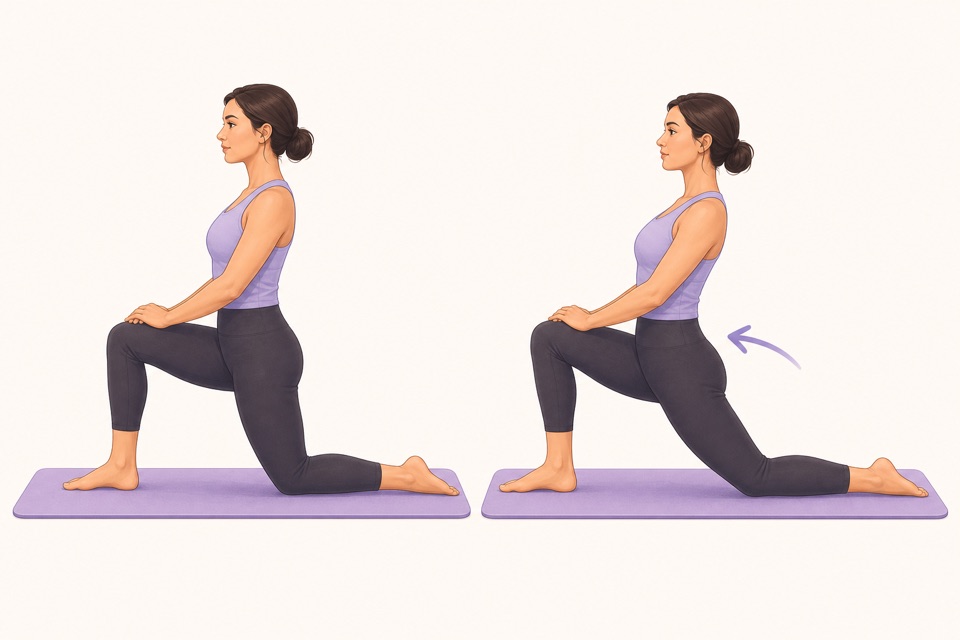
- Shift the hip gently: From half-kneeling, lightly tuck the pelvis and move forward a small amount. Use a standing split stance if kneeling is uncomfortable.
- Return to movement: Complete six controlled sit-to-stands, then walk until your stride feels natural.
For a whole-body no-floor sequence, use standing morning stretches. If the back of the thighs feels tighter than the front, choose morning hamstring stretches. Add morning calf stretches when the stiffness sits below the knee.
Why do my quads feel tight after sleeping?
The quads can feel tight when the hips and knees begin moving after several quiet hours, or after a day that included more squats, stairs, running, or cycling than usual. The feeling may ease as you move, but it does not prove that the muscle is shortened or reveal a specific cause.
| What you notice | Best next step | | --- | --- | | Both thighs feel mildly stiff | Walk first, then use the full gentle routine | | One side is tighter but movement is comfortable | Give both sides the same mild time; do not force the tighter side | | The standing hold feels unsteady | Use the side-lying option or a towel with firm support | | The knee pinches when it bends | Reduce the bend and skip the hold that causes it | | Soreness follows a demanding leg session | Keep the range easy and allow recovery | | Pain is sharp, swollen, injury-related, or changes your walk | Stop and seek appropriate medical advice |
When the main restriction feels closer to the front of the hip, use morning stretches for tight hips rather than pulling harder on the ankle.
Should I stretch my quads before a morning workout?
Use this routine as a wake-up reset, not as the entire warm-up for a run, ride, or strength session. Immediately before exercise, continue with progressive dynamic movements that resemble the activity—such as marching, controlled lunges, or easy squats—then build intensity gradually.
The American Heart Association recommends warming up before moderate or vigorous activity and increasing intensity gradually. A relaxed quad hold may feel good, but it does not prepare you for speed, load, or rapid direction changes by itself.
What mistakes make quad stretches feel worse?
The biggest mistake is sacrificing the knee or lower back to make the heel travel farther. Pulling hard, letting the knee flare sideways, arching the back, bouncing, or balancing without support turns a simple stretch into unnecessary work.
- Warm up with walking before holding the ankle.
- Keep the stretching knee pointing mostly toward the floor.
- Hold a wall so balance does not twist the position.
- Bring the heel only as close as comfort allows.
- Use a towel instead of reaching awkwardly.
- Stop if the knee pinches or the lower back takes over.
Mayo Clinic's general guidance recommends smooth, non-bouncing stretches and aiming for tension rather than pain. Judge the routine by easier walking and bending afterward, not by whether the heel touches the body.
How can I make morning quad stretches easy to repeat?
Attach the routine to a cue that already happens: after opening the curtains, before the shower, or while the kettle heats. Keep a two-minute fallback for rushed mornings—walk for one minute, then use one supported mild hold per side.
Wiggle keeps the timer and exercise order in one place, so you do not need to search for a new routine every morning. Download Wiggle, choose a short lower-body flow, and let the next prompt remove the planning.
When should I stop stretching my quads?
Stop for sharp or worsening pain, marked swelling, a pop, instability, numbness, weakness, inability to bear weight, or pain after a significant injury. Seek prompt professional advice if symptoms persist, repeatedly change how you walk, or involve a hot, red, swollen joint. Urgent or severe symptoms need urgent medical care.
This guide is general movement education, not diagnosis or personalized treatment. Follow a qualified healthcare professional's advice when it differs from a general routine.
Sources
Why we keep it gentle
These guides are written for everyday stiffness and habit-building. They are grounded in mainstream guidance on flexibility, movement, and when to seek medical help.
- Stretching: Focus on flexibilityMayo Clinic
- Warm Up, Cool DownAmerican Heart Association
- Knee Injuries and DisordersMedlinePlus
FAQ
Questions people ask
What are the best morning quad stretches?
Begin with one minute of easy walking, then use a supported standing quad stretch, a side-lying quad stretch, and a gentle half-kneeling hip shift. Keep the knees comfortable, the pelvis steady, and each hold mild. Finish with slow sit-to-stands so the legs return to normal movement.
Why do my quads feel tight in the morning?
The front of the thighs can feel tight after hours in one position, after a demanding leg workout, or when the hips and knees first begin moving after sleep. Tightness alone does not identify a cause. Persistent, one-sided, worsening, swollen, or injury-related symptoms deserve professional advice.
Can I stretch my quads as soon as I wake up?
Start with small knee bends and easy walking before holding a quad stretch. Use a wall or chair for balance and keep the pull mild. Stop for sharp pain, knee pinching, numbness, weakness, swelling, dizziness, or symptoms that worsen as you move.
How long should I hold a morning quad stretch?
Hold a comfortable position for about 20 to 30 seconds per side. One or two gentle rounds is enough for a short morning routine. Do not bounce, yank the ankle, or force the heel toward the body; the goal is easier movement, not maximum range.
What if I cannot reach my ankle for a quad stretch?
Loop a towel or strap around the ankle, use a side-lying version, or replace the hold with supported heel slides and a small split-stance hip shift. You do not need to grab the foot to move the front of the thigh comfortably.