Wiggle guide
Standing Morning Stretches: A 6-Minute No-Floor Routine
Try these standing morning stretches for a gentle full-body reset with no mat: six supported minutes for shoulders, hips, back, and calves.
standing morning stretches
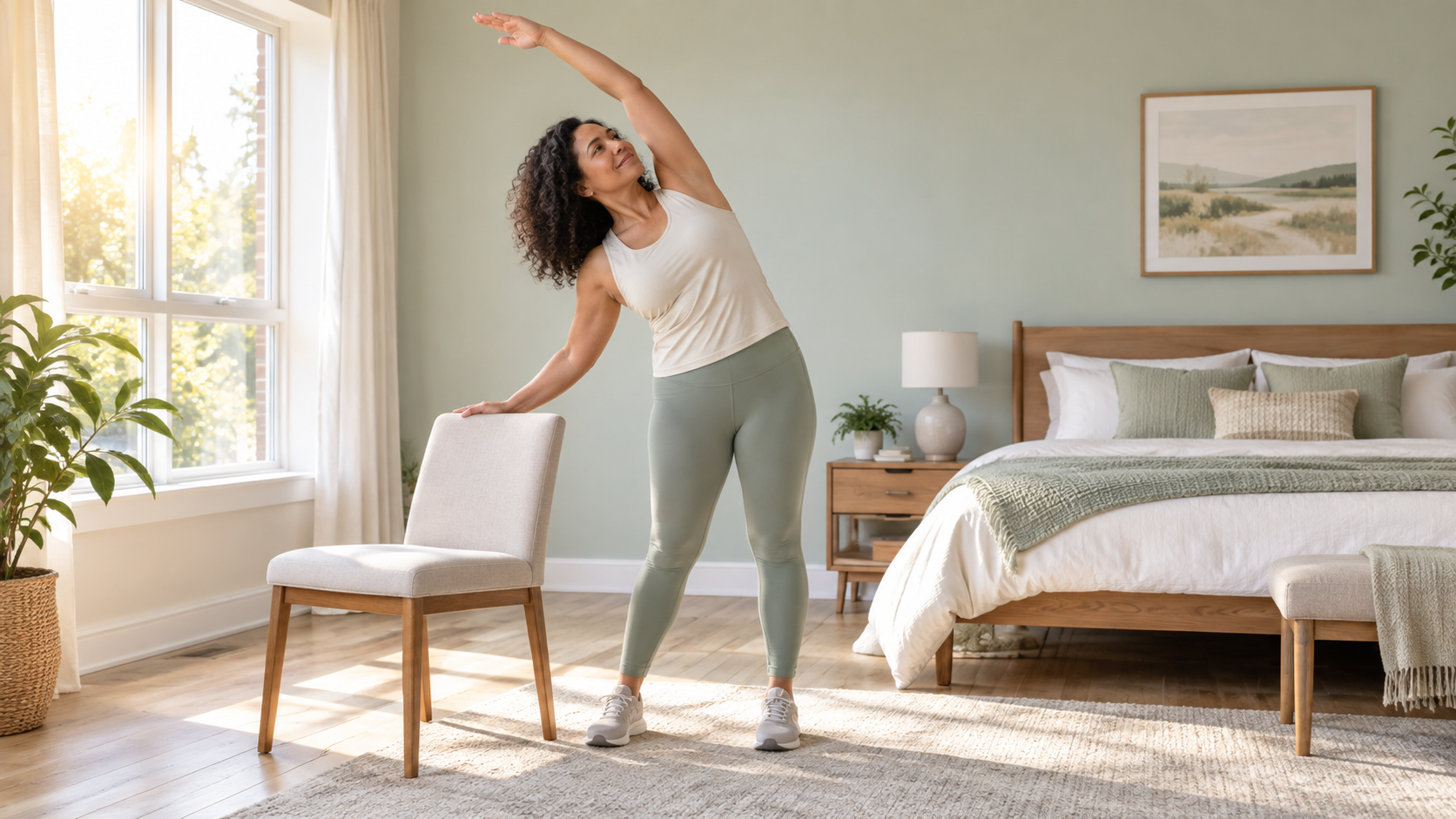
The alarm goes off, your body feels folded from sleep, and the last thing you want is a mat, complicated poses, or a routine that turns into a workout. The easiest path is to stay on your feet, keep one hand near a stable support, and move from small motions into gentle stretches.
These standing morning stretches take six minutes and need no floor space. Use one rule: move first, hold second. Start with marching and shoulder rolls, keep every stretch mild, and finish feeling ready for ordinary walking and reaching—not exhausted.
What are the best standing morning stretches?
The best standing morning stretches cover the shoulders, sides, hips, calves, and ankles while keeping balance demands low. A useful sequence is marching, shoulder rolls, side reaches, supported hip hinges, short hip-flexor stretches, calf stretches, and gentle trunk rotations. Use a wall, counter, or sturdy chair whenever steadiness is uncertain.
Standing morning stretches are low-intensity movements performed upright after waking, usually with stable support nearby. They provide a no-floor transition from sleep into everyday movement; they are not a flexibility test, medical treatment, or a replacement for an activity-specific warm-up.
| Move | Time | Main area | Easier option | | --- | ---: | --- | --- | | Easy march | 45 sec | Hips and ankles | Alternate heel lifts | | Shoulder rolls + arm swings | 45 sec | Shoulders and upper back | Move one arm at a time | | Side reaches | 45 sec | Sides and ribs | Keep the reaching hand lower | | Supported hip hinges | 60 sec | Hips and back of legs | Use both hands on a counter | | Short hip-flexor stretch | 60 sec | Front of hips | Shorten the stance | | Calf stretch | 60 sec | Calves and ankles | Keep both knees soft | | Trunk turns + march | 45 sec | Upper body and whole body | Turn the chest only slightly |
From Wiggle
Recommended moves
How do I do this six-minute no-floor routine?
Stand beside a wall or sturdy chair and leave enough room to step one foot back. Begin with 90 seconds of easy movement, then use comfortable holds and controlled hinges. Keep effort around 3 out of 10, breathe normally, and reduce the range whenever you tense your jaw, grip the support, or hold your breath.
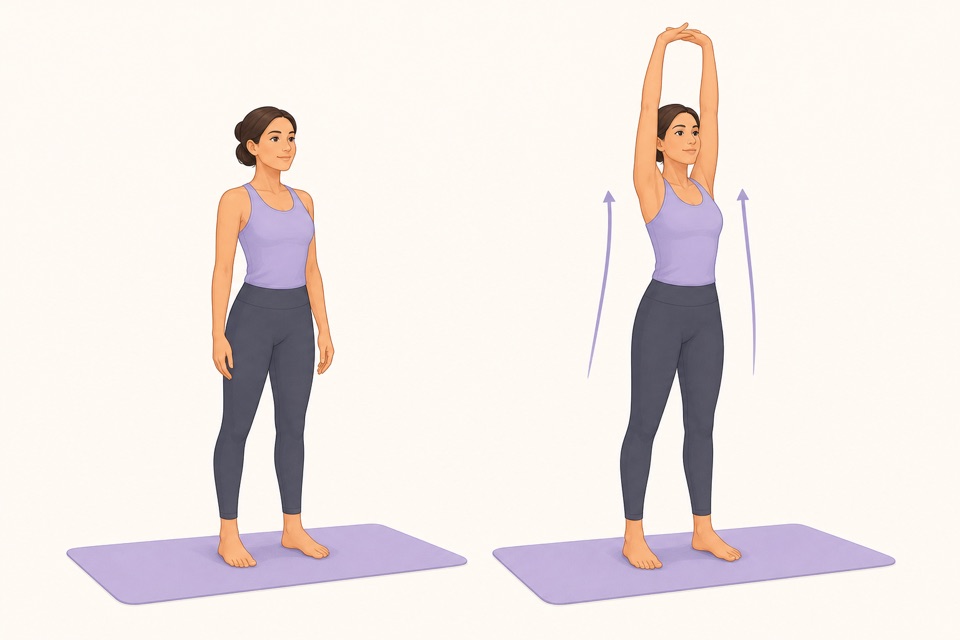
- March gently: Lift one heel or foot at a time. Let the arms swing naturally and keep the pace conversational.
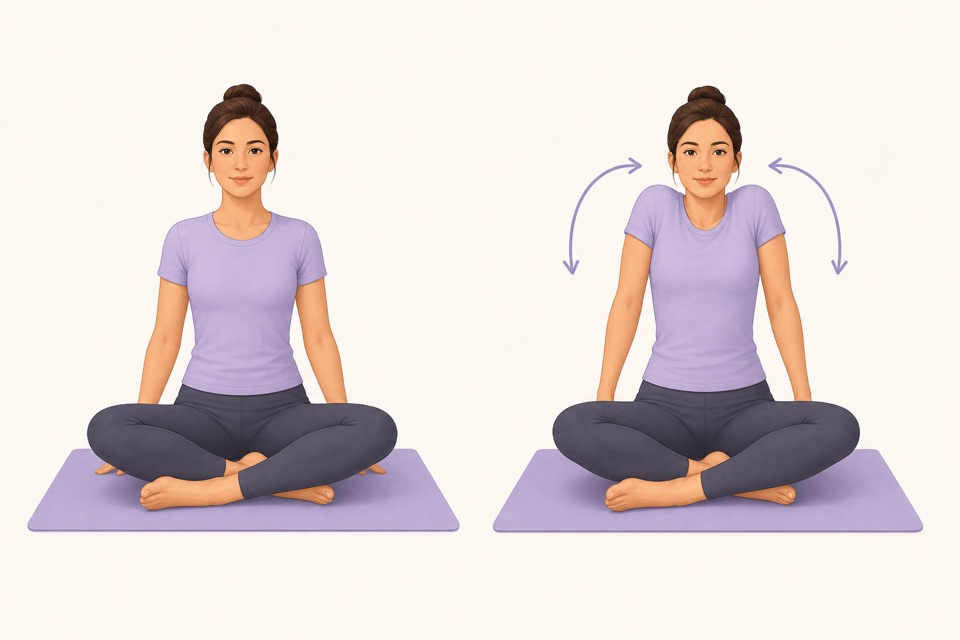
- Roll and swing: Draw small backward circles with the shoulders, then let the arms swing loosely.
- Reach sideways: Reach one arm overhead and lean a little to the opposite side. Keep both feet grounded; switch sides slowly.
- Hinge with support: Hold the chair or counter, soften the knees, and send the hips backward while the spine stays long. Stand tall without thrusting the hips forward.
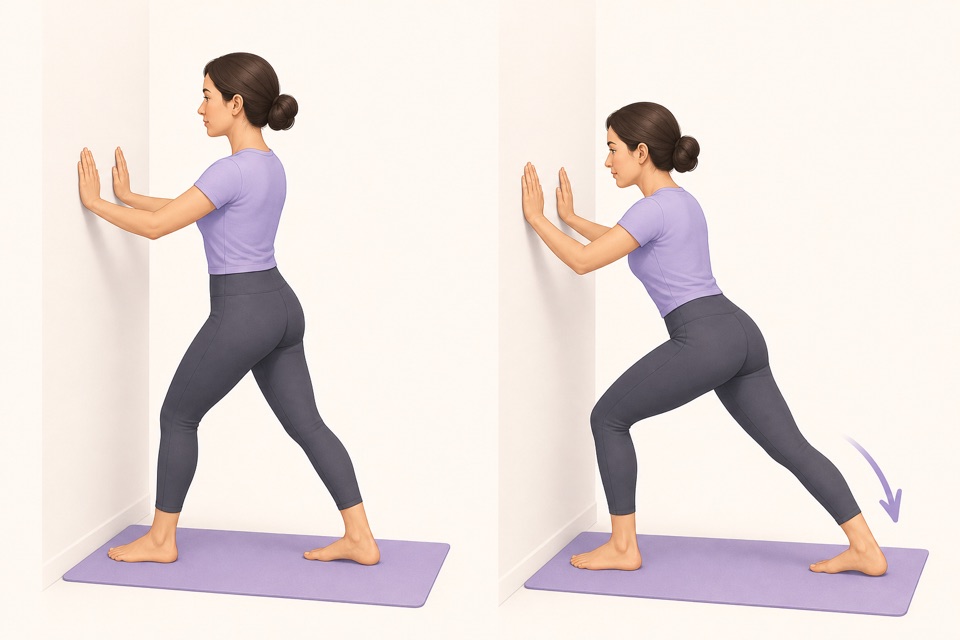
- Open the front of the hip: Step one foot back, hold support, and gently tuck the pelvis until the front of the back hip feels mild tension. Switch sides.
- Stretch the calves: Keep one foot back with the heel aiming down. Stay upright and reduce the step if the position pulls sharply.
- Turn and finish: Let the chest rotate a little from side to side, then march easily for the final 20 seconds.
If you would rather begin under the covers, use morning stretches in bed. For a mixed bed-to-standing sequence, choose the 5-minute morning stretch.
Why choose a standing routine instead of floor stretches?
A standing routine removes the biggest practical barrier: getting a mat out and moving down to the floor. It also transitions directly into dressing, walking, commuting, or making breakfast. Floor positions can still be useful, but they are not required for a balanced morning reset.
| Choose standing when… | Choose bed or floor when… | | --- | --- | | Space is limited | Standing feels unsteady | | You are already dressed | You need more support | | Getting down and up is inconvenient | A lying position is more comfortable | | You want to move straight into the day | Your chosen movement is designed for the floor |
Standing does add a balance demand. Keep support within reach, clear slippery rugs, and wear stable footwear or use a secure nonslip surface. Anyone who feels dizzy or unsteady after waking should sit first rather than trying to “push through.” The morning stretches for seniors guide uses a chair-first approach when support matters more.
Should I use dynamic or static stretches after waking?
Use gentle dynamic movements first, then add short static holds if they feel comfortable. Marching, shoulder rolls, hinges, and easy rotations gradually introduce motion. A calf or hip-flexor stretch can then be held without bouncing for roughly 20 to 30 seconds per side.
Mayo Clinic advises stretching smoothly, without bouncing, and aiming for tension rather than pain. The American Heart Association recommends gradually raising activity during a warm-up. If you are about to run, lift, or play sport, continue from this reset into movements that progressively match that activity.
What mistakes make standing morning stretches less useful?
The common failure is turning a wake-up routine into a range-of-motion contest. Deep forward folds, large twists, locked knees, unstable one-leg poses, and long painful holds add difficulty without making the routine more repeatable. The better target is smooth everyday movement.
- Do not lock the knees during hinges or calf stretches.
- Keep a stable support close enough to use immediately.
- Avoid bouncing to create a deeper stretch.
- Make rotations small and driven by the chest, not forced by the arms.
- Stop if mild tension becomes sharp, pinching, electrical, or spreading.
- Use the two-minute version on rushed days instead of skipping: march, roll, hinge, and raise the heels.
For mornings tied directly to a commute or first meeting, morning stretches before work adds workday timing and movement-break guidance.
How can I make standing morning stretches automatic?
Attach the routine to a cue that already happens: opening the curtains, waiting for the kettle, brushing your teeth, or starting coffee. Keep the chair in the same place, follow the same order for one week, and use a two-minute fallback when time collapses.
Wiggle removes the remaining decisions by supplying the timer and sequence. Download Wiggle, save a short morning routine, and let one tap take you from stiff and sleepy to moving.
When should I stop or seek advice?
Stop for sharp or worsening pain, dizziness, faintness, numbness, tingling, weakness, loss of balance, chest pain, trouble breathing, or symptoms that spread. Seek urgent help for chest symptoms, sudden weakness, a serious fall, or other severe symptoms. New, persistent, injury-related, or condition-related symptoms deserve advice from a qualified healthcare professional.
This article offers general movement education, not diagnosis or personalized treatment. Follow your clinician's guidance when it differs from a general routine.
Sources
Why we keep it gentle
These guides are written for everyday stiffness and habit-building. They are grounded in mainstream guidance on flexibility, movement, and when to seek medical help.
- Stretching: Focus on flexibilityMayo Clinic
- Warm Up, Cool DownAmerican Heart Association
- Physical Activity Guidelines for AmericansU.S. Department of Health and Human Services
FAQ
Questions people ask
What are the best standing morning stretches?
Start with an easy march and shoulder rolls, then add a standing side reach, supported hip hinge, short hip-flexor stretch, calf stretch, and gentle trunk rotation. Use a wall or chair for balance, keep the range comfortable, and finish feeling more mobile rather than tired.
Can I do morning stretches without getting on the floor?
Yes. A wall, counter, or sturdy chair can support a complete standing routine for the shoulders, spine, hips, calves, and ankles. A no-floor sequence is especially practical when space is limited or getting down and up is inconvenient.
How long should a standing morning stretch routine take?
Six minutes is enough for a useful full-body reset. If you only have two minutes, do an easy march, shoulder rolls, supported hip hinges, and calf raises. Consistency and comfortable movement matter more than making the routine long.
Should I stretch immediately after waking up?
Begin with small active movements rather than a deep held stretch. Walk or march, roll the shoulders, and bend gently through the hips before adding short comfortable holds. Stop for sharp pain, dizziness, numbness, weakness, or unusual symptoms.
Are standing morning stretches a warm-up for exercise?
They can be the first part of a warm-up, but they are not a complete warm-up for every activity. Before running, lifting, or sport, continue with progressively more active movements that resemble what you are about to do.