Wiggle guide
Morning Stretches for Women: A Gentle 7-Minute Routine
Try these morning stretches for women: a gentle 7-minute routine for the back, hips, shoulders, hamstrings, and calves, with easy options.
morning stretches for women
You wake up with seven minutes before the day starts asking things from you. Your back feels reluctant, your hips feel parked, and a long workout is not happening. You do not need an ambitious flexibility session. You need a short sequence that starts small, uses no equipment, and ends with you moving.
These morning stretches for women cover the spine, shoulders, hips, hamstrings, and calves in seven minutes. Fast rule: begin seated, keep the sensation mild, and choose today's comfortable range. The goal is to feel ready for the morning—not to prove how flexible you are.
What are the best morning stretches for women?
The best morning stretches for women gently move the major areas that often feel stiff after sleep: the spine, shoulders, hips, hamstrings, and calves. Use seated cat-cow, upper-back rotation, a supported hip-flexor stretch, a hamstring hinge, calf raises, a side reach, and easy marching. Comfortable movement matters more than maximum range.
A morning stretch routine for women is a brief sequence that helps you transition from sleep to normal daily movement. It does not need to be anatomically different simply because it is for women. Your symptoms, mobility, balance, training, pregnancy or postpartum guidance, and health history matter more than a generic label.
| Move | Time | Main area | Easier option | | --- | ---: | --- | --- | | Seated cat-cow | 60 sec | Spine and shoulders | Make the range smaller | | Seated upper-back rotation | 60 sec | Upper back and ribs | Keep hands on chest | | Supported split-stance stretch | 90 sec | Front of hips | Shorten the stance | | Supported hamstring hinge | 90 sec | Back of thighs | Bend the front knee | | Calf raises | 45 sec | Ankles and calves | Hold a wall | | Standing side reach | 45 sec | Sides and shoulders | Stay seated | | Easy march | 60 sec | Whole body | Alternate heel taps |
From Wiggle
Recommended moves
How do I do this 7-minute morning routine?
Start with two seated movements, then stand with support nearby. Spend about one minute on each step and switch sides halfway when needed. Keep breathing normally and use a range that feels smooth. If a movement makes you brace, hold your breath, or chase an intense pull, reduce the range.
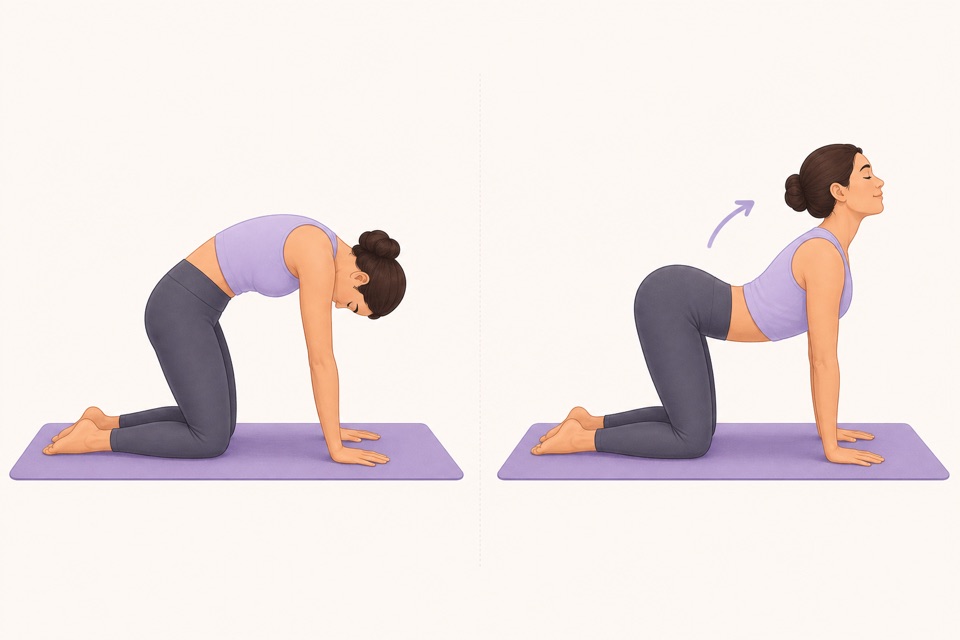
- Seated cat-cow: Sit near the front of a sturdy chair with hands on thighs. Gently round the upper back, then lift the chest without throwing the head backward.
- Upper-back rotation: Cross your arms over your chest and rotate the rib cage slowly left and right while the hips stay mostly forward.
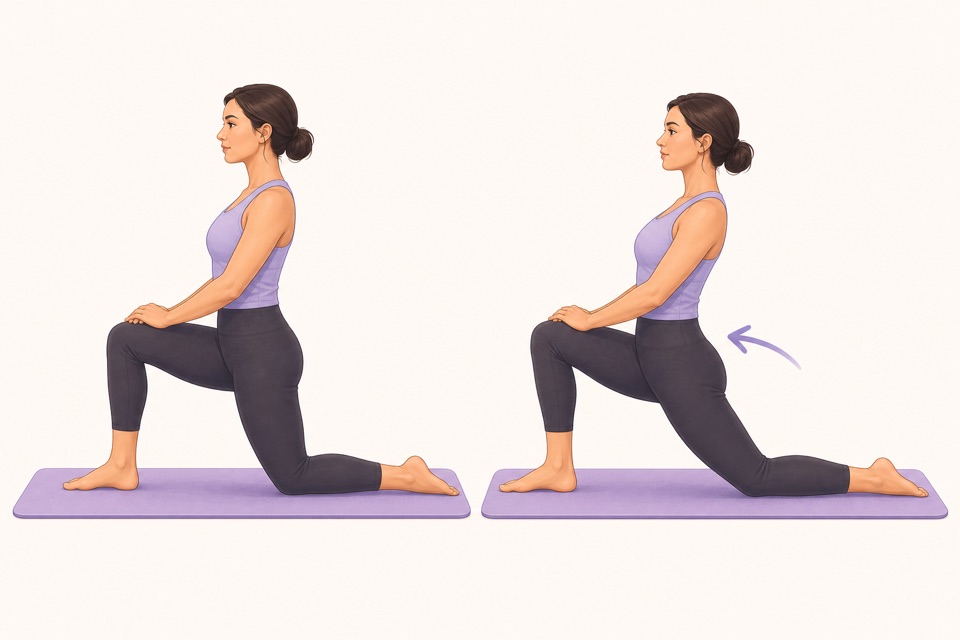
- Supported hip-flexor stretch: Stand in a short split stance beside a chair or wall. Lightly tuck the pelvis and shift forward until the front of the rear hip feels mild tension.
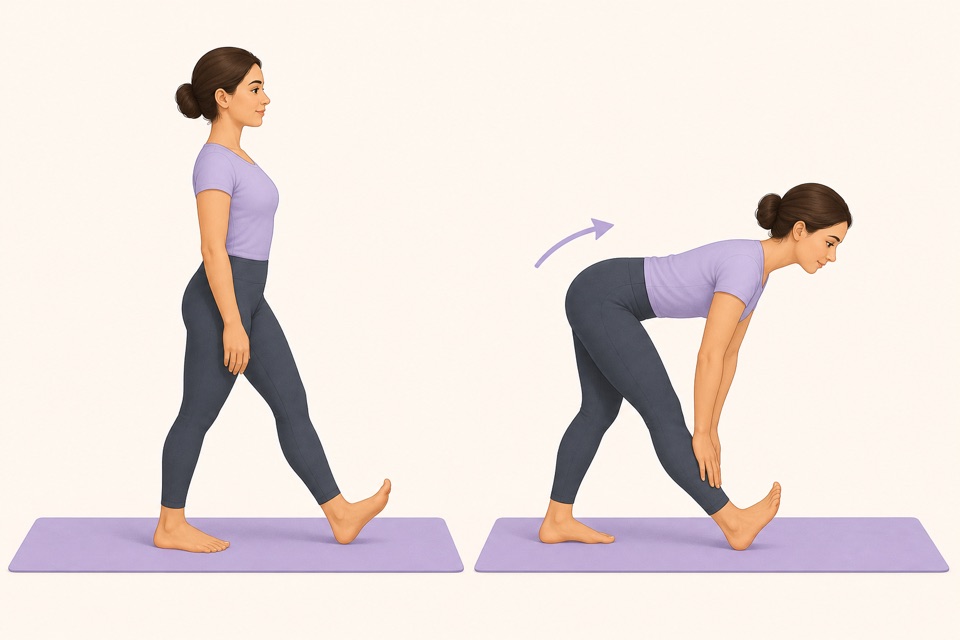
- Hamstring hinge: Place one heel slightly forward, soften both knees, and send the hips backward with a long spine. Rest your hands on the front thigh or chair.
- Calf raises: Stand tall and lift and lower both heels under control. Use the wall so balance does not become the exercise.
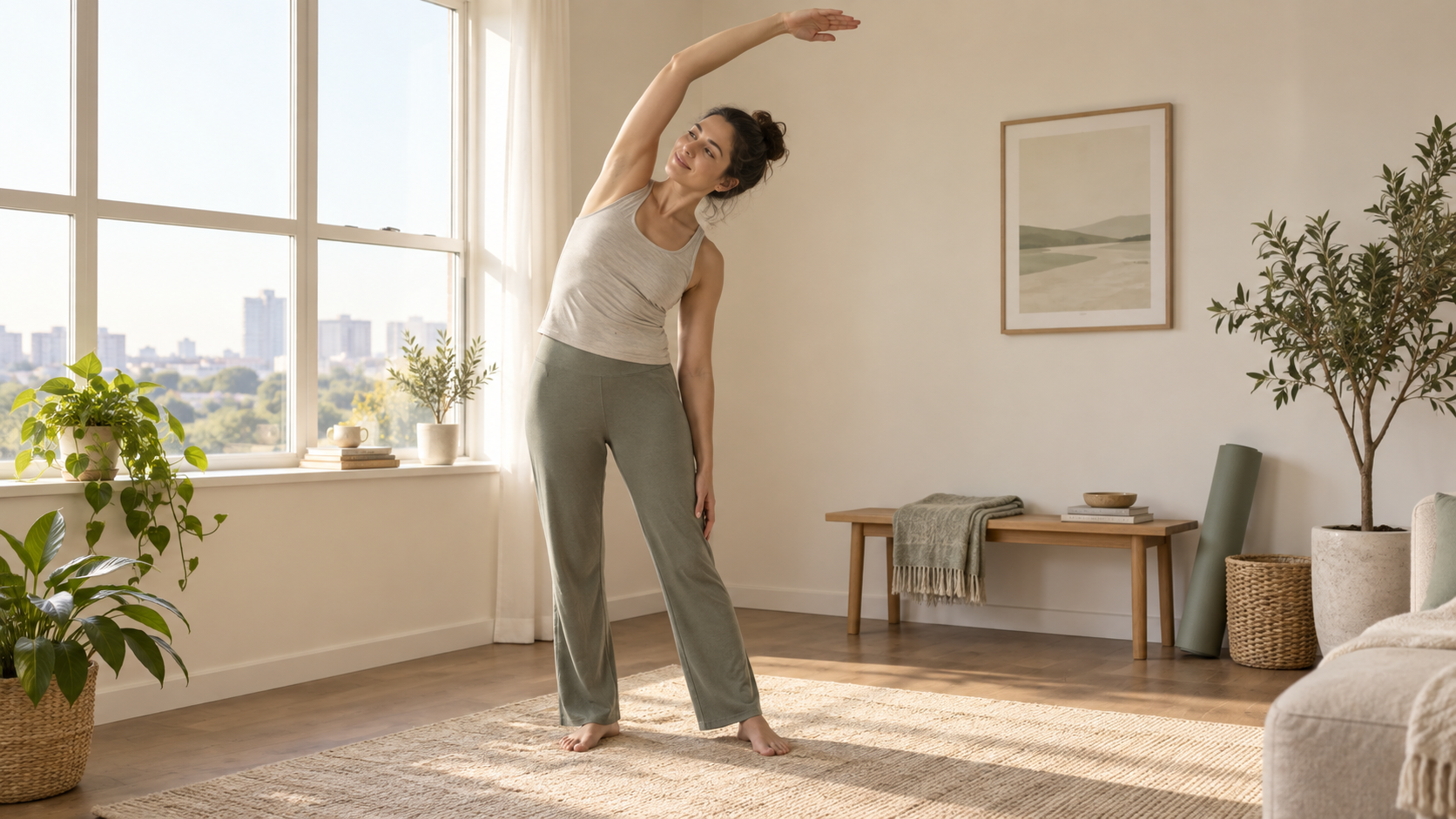
- Side reach: Reach one arm overhead and lean gently away. Keep the chest facing forward and avoid collapsing.
- Easy march: Finish by marching in place with a natural arm swing. Heel taps are a fine lower-balance option.
If seven minutes feels too long, use the 5-minute morning stretch. If you want a slower entry point, start with morning stretches for beginners.
Do women need different morning stretches than men?
Usually, the useful differences are individual rather than gender-wide. Choose movements based on how you feel, what you do later, and whether balance, pain, pregnancy, postpartum recovery, an injury, or a health condition changes your needs. A routine marketed to women should not invent biological rules that do not help you move safely.
Use this decision guide:
| How you feel this morning | Best adjustment | | --- | --- | | Generally stiff but comfortable | Use the full seven-minute routine | | Tired or short on time | Do cat-cow, hip shifts, and marching | | Unsteady when standing | Keep the routine seated or use firm support | | Training immediately afterward | Finish, then do an activity-specific warm-up | | Pregnant, recently postpartum, or under clinical care | Follow your clinician's individual guidance | | Sharp, worsening, or unexplained symptoms | Stop and seek appropriate advice |
The morning mobility routine offers a broader joint-by-joint option. For a chair-first routine, use morning stretches for seniors—the supported versions are useful at any age.
Should I change morning stretches during my period?
There is no universal period-specific stretch plan. If cramps, fatigue, headache, dizziness, or discomfort affect you, shorten the session, choose supported positions, reduce the range, or rest. Movement should respond to how you feel rather than a rule that says every cycle day needs a specific pose.
Try this low-effort filter:
- Keep a move when it feels comfortable during and after the repetition.
- Modify it when a smaller range or chair makes it feel better.
- Skip it when symptoms worsen.
- Seek medical advice for severe, unusual, or persistent symptoms.
Stretching is not a treatment for unexplained pelvic pain or heavy bleeding. General online routines also cannot account for endometriosis, pregnancy, postpartum recovery, surgery, or other individual considerations.
Can morning stretching replace a workout warm-up?
No. Morning stretching prepares you for ordinary movement; a workout warm-up prepares you for the speed, load, and skill of the activity ahead. If you will run, lift, or play sport, gradually raise your effort and rehearse the relevant movements immediately before that session.
The American Heart Association recommends warming up before moderate or vigorous activity and increasing intensity gradually. Before lifting, use lighter versions of the exercise. Before running, walk or jog easily. Before sport, progress toward the direction changes and speed you expect to use.
How do I make a morning stretching habit stick?
Remove decisions from the first ten minutes of your day. Use the same short sequence, attach it to an existing cue, and keep a two-minute fallback. A routine you repeat four mornings a week beats a perfect 30-minute plan that survives until Tuesday.
- Put a chair where you plan to move.
- Start after brushing your teeth or making coffee.
- Save one routine instead of searching each morning.
- Track completion, not stretch depth.
- Let the short version count.
- Add time only after the habit feels automatic.
Wiggle handles the sequence and timer, so your only job is to start. Open one guided morning routine, follow the next movement, and finish before your notifications get a vote.
When should I stop stretching?
Stop if you feel sharp pain, dizziness, numbness, weakness, instability, chest symptoms, marked swelling, or symptoms that worsen as you move. New, severe, persistent, pregnancy-related, postpartum, or injury-related symptoms deserve appropriate individual assessment rather than a harder stretch.
This guide is general movement education, not personalized medical advice. Follow your healthcare professional's plan when it differs from a general routine.
Sources
Why we keep it gentle
These guides are written for everyday stiffness and habit-building. They are grounded in mainstream guidance on flexibility, movement, and when to seek medical help.
- Stretching: Focus on flexibilityMayo Clinic
- Physical Activity Guidelines for AmericansU.S. Department of Health and Human Services
- Warm Up, Cool DownAmerican Heart Association
FAQ
Questions people ask
What are the best morning stretches for women?
The best morning stretches for women gently move the spine, shoulders, hips, hamstrings, and calves: seated cat-cow, upper-back rotation, a supported hip-flexor stretch, a hamstring hinge, calf raises, a side reach, and easy marching. Choose the version that fits how your body feels today rather than forcing a gender-specific ideal.
How long should a morning stretch routine for women take?
Five to eight minutes is enough for a useful, repeatable morning routine. Spend about 45 to 60 seconds on each movement, use a comfortable range, and keep a two-minute fallback for busy mornings. Consistency matters more than making every session long or intense.
Should I stretch as soon as I wake up?
Gentle movement after waking can be reasonable when you feel steady. Start seated, take small ranges, and transition gradually to standing. Stop if you feel sharp pain, dizziness, numbness, weakness, instability, or worsening symptoms, and follow any restrictions given by your healthcare professional.
Should women change morning stretches during their period?
There is no single period-specific routine that every woman needs. On days when cramps, fatigue, dizziness, or discomfort affect you, use a shorter range, more support, or skip movements that feel worse. Exercise choice should follow your symptoms and personal medical guidance, not a rigid calendar rule.
Can morning stretching replace a workout warm-up?
No. A gentle morning routine can help you transition into daily movement, but it does not replace a progressive warm-up before running, lifting, or sport. Warm up again immediately before exercise with movements that resemble the activity and gradually increase effort.