Wiggle guide
Morning Stretches for Beginners: An Easy 8-Minute Start
Morning stretches for beginners who wake up stiff and need a simple, gentle first routine before the day gets loud.
morning stretches for beginners
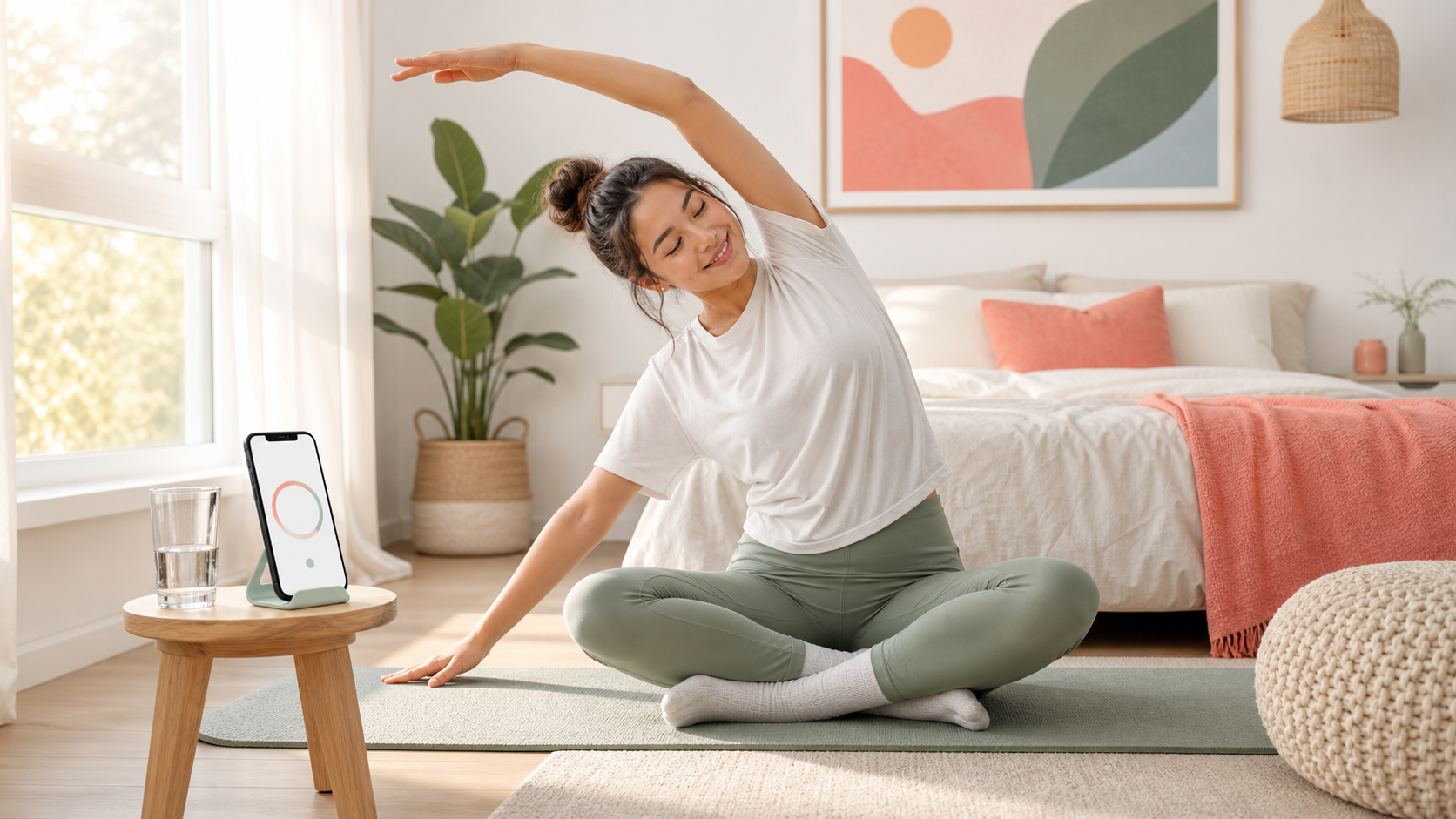
The mistake most beginners make in the morning is starting too ambitious. A long video, deep hamstring holds, or a full workout can sound productive, but it asks for discipline before your body has even agreed to stand up.
Morning stretches for beginners should solve a smaller problem: make the first 8 minutes of movement feel obvious, gentle, and repeatable. Start in a supported position, move from small joints to larger areas, and stop while the routine still feels easy.
If you already have a routine and want a broader version, use the morning mobility routine. If your main goal is feeling less groggy, try morning stretches for energy. If you need the shortest complete version, use the 5-minute morning stretch. If you are still under the blanket, start with morning stretches in bed. Once this sequence feels comfortable, morning stretches for flexibility adds short supported holds without forcing range.
If you are choosing a routine for an older adult, or you want a chair-first version with more support cues, use morning stretches for seniors.
What are morning stretches for beginners?
Morning stretches for beginners are short, low-intensity movements that help you shift from sleep into ordinary motion without forcing flexibility. They should use comfortable range, simple positions, normal breathing, and a predictable order you can repeat for a week.
The best beginner routine is not the deepest one. It is the one you can start before checking messages, finish without fatigue, and repeat tomorrow with less negotiation.
What is the easiest beginner morning stretch routine?
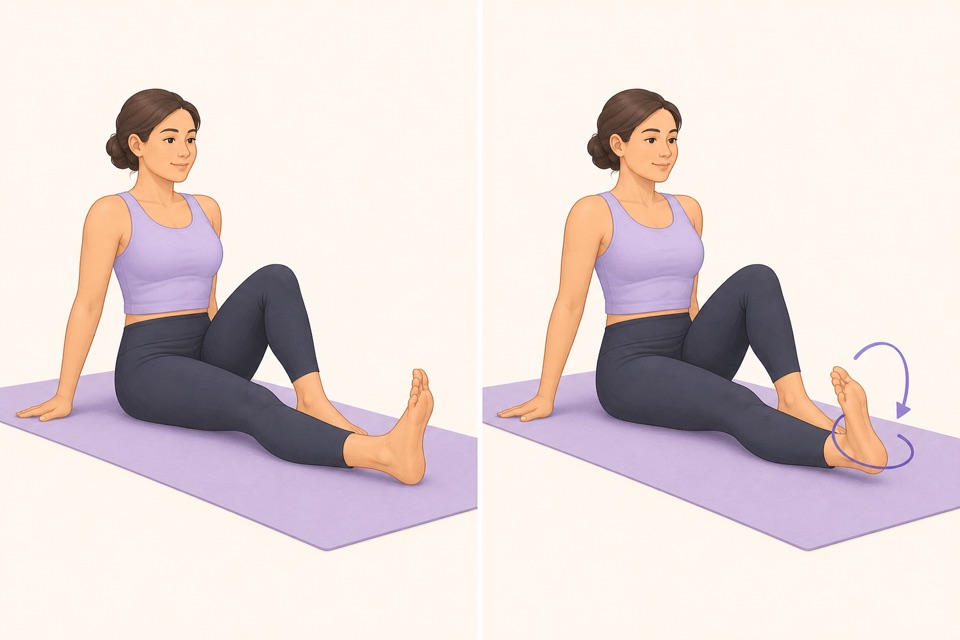
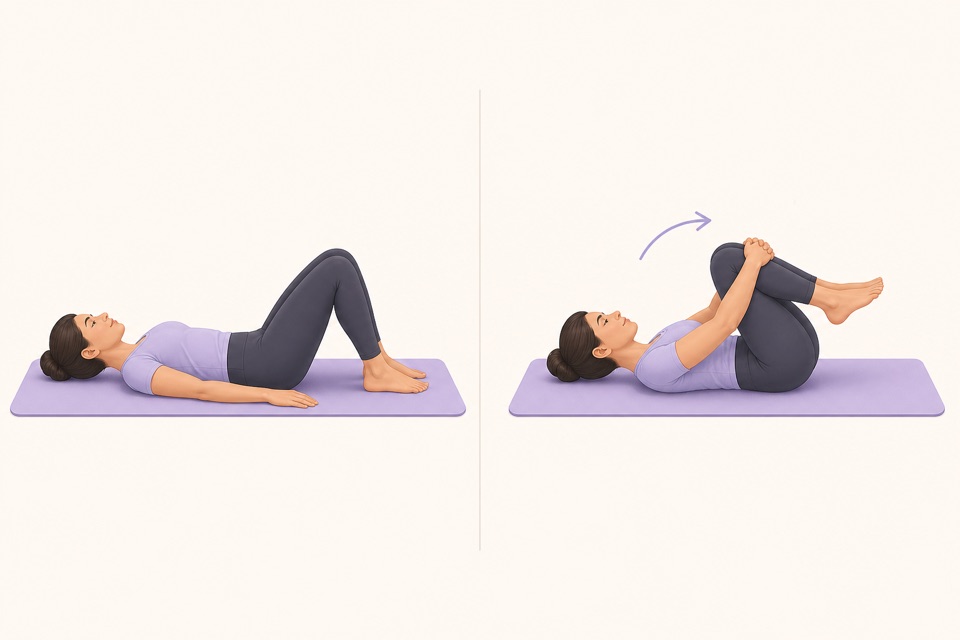
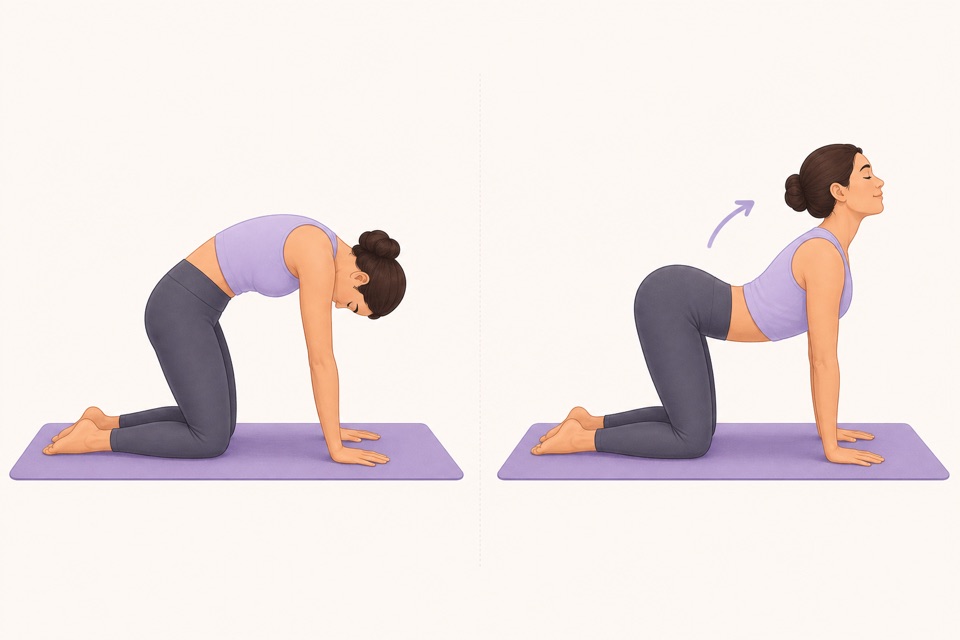
The easiest useful routine takes 5 to 8 minutes: breathe, circle your ankles, hug one knee at a time, rotate the trunk gently, move the spine seated, open the shoulders, reach overhead, then walk. Keep every movement mild.
| Step | Time | Beginner cue | Make it easier | | --- | ---: | --- | --- | | Slow breathing | 30 sec | Keep ribs relaxed | Stay lying down | | Ankle circles | 45 sec | Move one ankle at a time | Make smaller circles | | Knees-to-chest | 60 sec | Hug one knee, then switch | Hold behind the thigh | | Lower trunk rotation | 60 sec | Let knees rock side to side | Keep feet on the bed | | Seated cat-cow | 60 sec | Round and arch gently | Sit on the bed edge | | Shoulder circles | 45 sec | Roll slowly, no shrugging hard | Circle one side first | | Overhead reach | 60 sec | Reach one arm, breathe, switch | Keep the elbow soft | | Easy walk | 60 sec | Walk around the room | Hold a wall if needed |
If you only have three minutes, do breathing, ankle circles, seated cat-cow, shoulder circles, and an easy walk. The win is starting, not completing the perfect routine.
From Wiggle
Recommended moves
Should beginners stretch before getting out of bed?
Beginners can start before getting out of bed if stiffness or grogginess makes standing feel like a jump. Use small supported movements first, then sit up, then stand. That sequence reduces effort because each step prepares the next one.
Use this decision rule:
| Morning situation | Start here | Skip for now | | --- | --- | --- | | Still sleepy | Breathing and ankle circles | Deep forward folds | | Back feels stiff | Lower trunk rotations | Fast twisting | | Shoulders feel tight | Seated cat-cow and shoulder circles | Heavy overhead reaching | | You are late | 3-minute version | Searching for a new routine | | Pain feels unusual | Rest or get guidance | Pushing through symptoms |
This is why a beginner routine should feel slightly underwhelming. If it feels too easy, you are more likely to repeat it. If it feels heroic, you are more likely to skip it by Saturday.
How do you keep morning stretches safe and repeatable?
Keep morning stretches safe by staying below pain, using slow transitions, and treating consistency as the goal. You should feel mild tension or easier movement, not sharp pain, dizziness, numbness, weakness, or symptoms that spread.
Use this checklist for the first week:
- Start before opening messages when possible.
- Keep the routine under 8 minutes.
- Use the same order every morning.
- Breathe normally through each movement.
- Keep intensity around 3 out of 10.
- Let the short version count on busy days.
- Stop while you still feel like you could do more.
Mainstream stretching guidance emphasizes comfortable range and avoiding painful movement. If your stiffness is new, severe, persistent, injury-related, or connected to a medical condition, get personal guidance instead of using a general routine.
What beginner mistakes make morning stretching harder?
The biggest beginner mistakes are changing the routine every day, stretching too intensely right after waking, holding your breath, and treating missed mornings as failure. These turn a tiny habit into a test.
Avoid these common traps:
- Starting with the hardest stretch you know.
- Copying a routine made for flexible people.
- Holding positions so long that breakfast becomes the reward.
- Looking for a new video every morning.
- Ignoring clear stop signs.
- Making the routine all-or-nothing.
If your real problem is remembering to stretch, use stretching app with reminders. If you wake up feeling stuck before you even stand, use morning stretches for stiffness. If you want a broader beginner plan outside the morning, use stretching routine for beginners.
How can Wiggle help beginners in the morning?
Wiggle removes the hidden work from morning stretches for beginners: choosing moves, remembering the order, timing each step, and deciding whether a short session counts. That matters most when you are half-awake and one extra decision can kill the routine.
The specific next step: save one gentle morning routine in Wiggle, run it for 8 minutes tomorrow, and repeat the exact same session for seven mornings before changing anything.
Sources
Why we keep it gentle
These guides are written for everyday stiffness and habit-building. They are grounded in mainstream guidance on flexibility, movement, and when to seek medical help.
- Stretching: Focus on flexibilityMayo Clinic
- Physical Activity Guidelines for AmericansU.S. Department of Health and Human Services
- Back painMedlinePlus
FAQ
Questions people ask
What are the best morning stretches for beginners?
The best morning stretches for beginners are gentle, repeatable moves: slow breathing, ankle circles, knees-to-chest, lower trunk rotations, seated cat-cow, shoulder circles, overhead reaches, and a short walk. Start with small range, breathe normally, and stop before the routine feels like a workout.
How long should a beginner morning stretch routine take?
Start with 5 to 8 minutes. That is enough time to move your back, hips, shoulders, ankles, and breathing without making the morning routine complicated. If you are rushed, a 3-minute version still counts.
Should beginners stretch in bed or after standing up?
Beginners can start in bed with breathing, ankle circles, and gentle trunk rotations, then sit up for shoulder circles and overhead reaches. Stand only when your body feels ready, and keep the first standing movement easy.
How should morning stretches feel?
Morning stretches should feel mild, steady, and easy to breathe through. Avoid bouncing, forcing range, or chasing a deep stretch right after waking. Sharp pain, dizziness, numbness, weakness, or spreading symptoms are stop signs.
How can Wiggle help beginners stretch in the morning?
Wiggle helps beginners by turning the routine into a timed, guided sequence. You do not have to remember the order, search for a new video, or decide how long each move should last while you are still waking up.