Wiggle guide
Morning Stretches for Seniors: An 8-Minute Chair-First Routine
Morning stretches for seniors who wake up stiff and want a gentle chair-first routine with clear support options and stop signs.
morning stretches for seniors
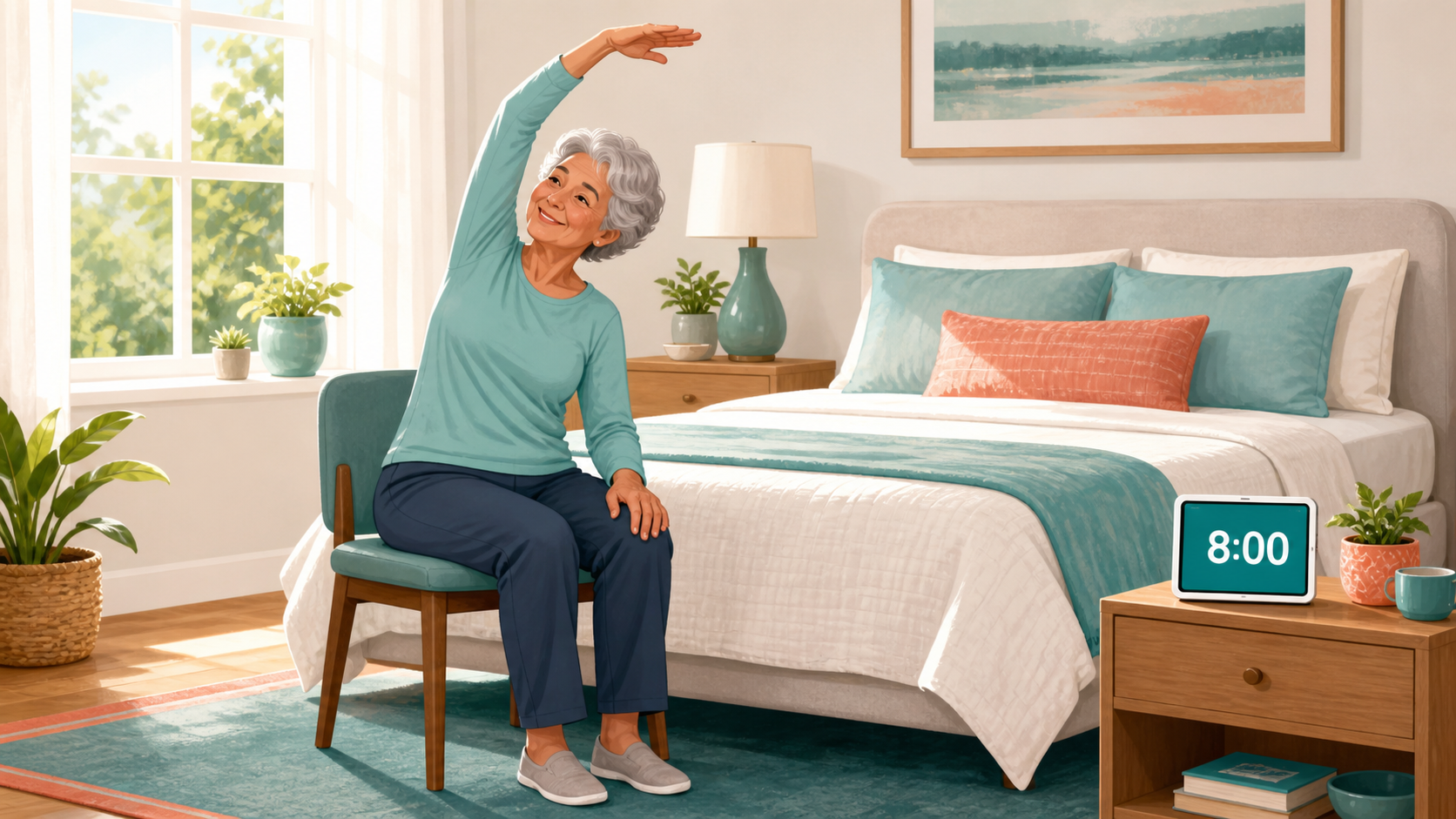
Morning stiffness is annoying because it makes the first normal tasks of the day feel bigger than they are. Getting out of bed, walking to the bathroom, reaching for clothes, or making breakfast should not feel like a negotiation with your hips, back, ankles, and shoulders.
Morning stretches for seniors should make those first 10 minutes easier. The fastest decision rule is simple: start seated if balance, grogginess, or stiffness is a concern; add standing stretches only near a wall, counter, or stable chair; stop if anything feels sharp, dizzy, numb, weak, or unusual.
If hip stiffness is the main limitation, use the focused chair-first hip mobility routine for seniors.
If you want the broader all-day version, use stretching exercises for seniors. If you are new to morning routines at any age, start with morning stretches for beginners. If you are not ready to sit up yet, use morning stretches in bed.
What are morning stretches for seniors?
Morning stretches for seniors are short, gentle movements for older adults who wake up stiff and want a safer bridge from sleep to daily activity. They usually work best when they start in a chair, move the ankles, spine, shoulders, hips, and calves, then finish with easy walking.
They are not a flexibility test, pain treatment, or replacement for personalized medical guidance. Think of the routine as a low-effort warm-up for the day: enough movement to feel less stuck, not enough intensity to feel tired before breakfast.
What is the best 8-minute morning routine for older adults?
The best 8-minute senior morning routine starts seated, uses support, and moves from small joints to bigger daily movements. Use mild tension only. If you are rushed or tired, do the first four steps and let that count.
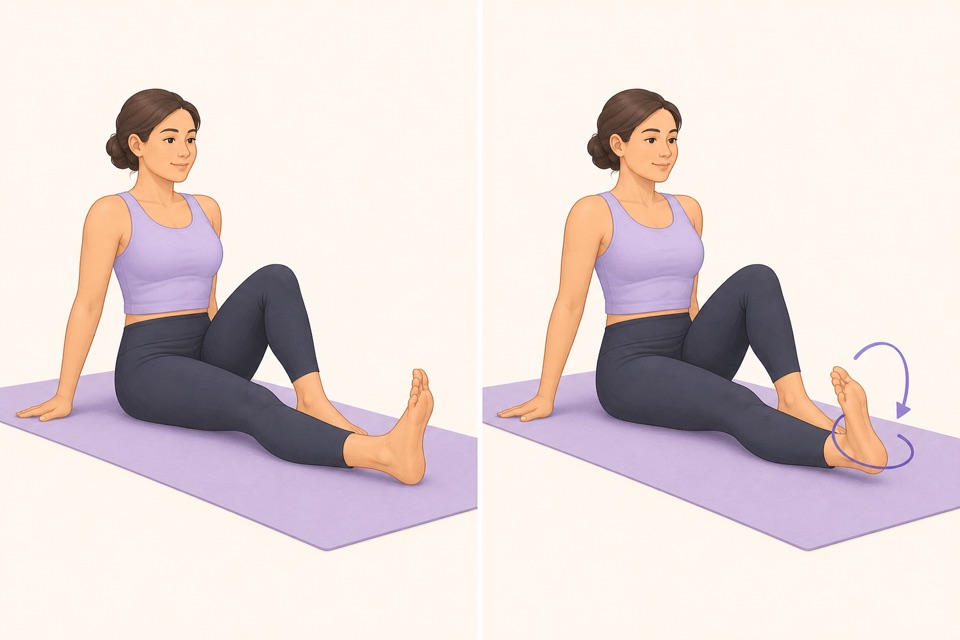
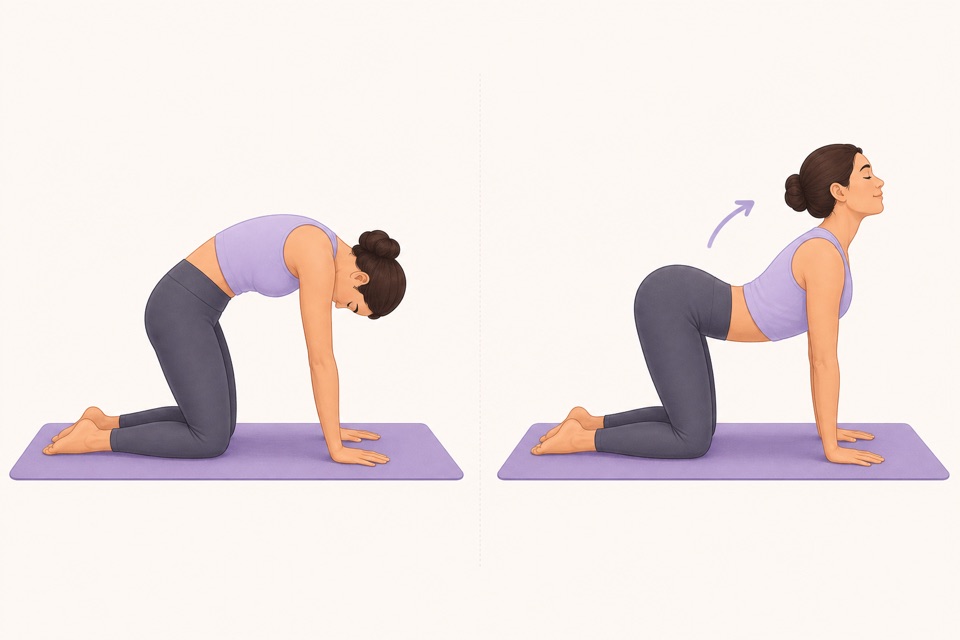
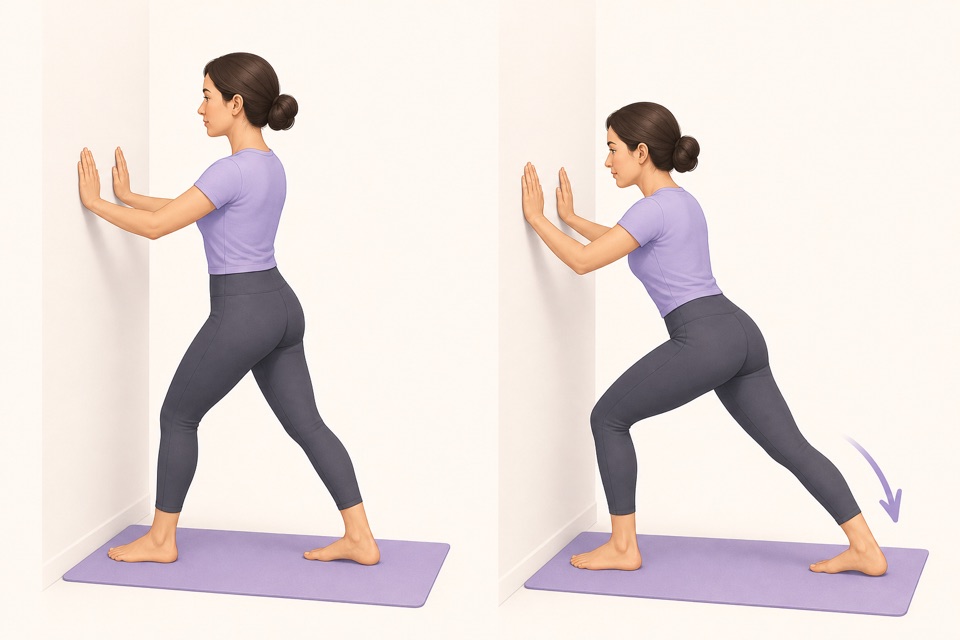
| Move | Time | Why it helps | Make it safer | | --- | ---: | --- | --- | | Seated breathing | 30 sec | Settles the body before standing | Sit back against the chair | | Ankle circles | 45 sec | Wakes up feet and lower legs | Move one ankle at a time | | Shoulder circles | 45 sec | Eases upper-back and neck stiffness | Make tiny circles | | Seated cat-cow | 60 sec | Adds gentle spine movement | Keep hands on thighs | | Seated side reach | 60 sec | Opens ribs and side body | Reach one arm only | | Seated hamstring stretch | 60 sec each side | Eases the back of the thigh | Keep the knee bent | | Supported calf stretch | 45 sec each side | Prepares ankles and walking | Hold a wall or counter | | Easy walk | 60 sec | Transitions into the day | Stay near support |
The order is the point. It removes the "what should I do first?" problem while the body is still waking up.
From Wiggle
Recommended moves
Should seniors stretch in bed, in a chair, or standing?
Start with the version that feels safest before you are fully awake. Bed stretches are useful for very stiff mornings, chair stretches reduce balance demands, and supported standing stretches help you transition into walking. You do not need to choose only one.
| Morning state | Start here | Avoid first | | --- | --- | --- | | Very stiff or groggy | Bed breathing, ankle circles, small trunk rocks | Deep standing folds | | Balance feels uncertain | Chair breathing, shoulder circles, seated cat-cow | Unsupported single-leg positions | | Legs feel heavy | Seated hamstring stretch, supported calf stretch | Fast lunges or big steps | | Back feels guarded | Seated cat-cow and small side reaches | Forceful twisting | | Ready to move | Chair routine plus easy walk | Turning it into a workout |
This is why chair-first works so well. A stable chair lets you move before balance becomes the main task.
How can seniors keep morning stretches safe?
Keep morning stretches safe by using support, moving slowly, breathing normally, and stopping before effort turns into strain. Mayo Clinic's stretching guidance emphasizes gentle stretching without bouncing or pain. For older adults, that same idea matters even more in the morning because sleep inertia and stiffness can make transitions feel less predictable.
Use this quick checklist:
- Use a stable chair without wheels.
- Clear loose rugs, cords, and clutter from the first steps.
- Keep a wall, dresser, or counter within reach for standing moves.
- Keep the stretch at mild tension, not pain.
- Breathe normally instead of holding your breath.
- Stop for sharp pain, dizziness, numbness, weakness, chest symptoms, new swelling, or anything that worries you.
- Ask a qualified clinician before starting if you have recent surgery, a recent fall, a new injury, osteoporosis concerns, nerve symptoms, or new severe or persistent pain.
Morning stretching should feel like an easier start, not a test you pass by pushing through.
How often should older adults do morning stretches?
For most older adults, a short routine several mornings per week is a realistic starting point. The National Institute on Aging describes flexibility as one part of an older adult movement plan, while CDC guidance also emphasizes regular aerobic activity, strengthening, and balance work. Morning stretching can support mobility, but it should sit beside those habits when they are appropriate for your body.
Start with one week:
- Do the same 5- to 8-minute routine.
- Keep the same exercise order.
- Use the seated-only version on low-energy days.
- Add time before adding intensity.
- Pair the routine with a fixed cue, like the first glass of water.
- Track whether walking, dressing, and first chores feel easier afterward.
If you are searching "what is the best way to start morning stretches for older adults," the least dramatic answer is the right one: make the routine easy enough that you can repeat it while half-awake.
What should seniors do if morning stretching feels too hard?
If morning stretching feels too hard, reduce the routine before you abandon it. Use two minutes: sit tall, breathe, circle the ankles, roll the shoulders, and walk slowly around the room. That still moves the body from stillness into the day.
Use this fallback plan:
| If the routine fails because... | Do this instead | | --- | --- | | It feels too long | Use the first four steps only | | Standing feels uncertain | Stay seated and skip the calf stretch | | The bed-to-chair transition is hard | Start with morning stretches in bed | | You forget the order | Save a guided routine in Wiggle | | Symptoms feel medical, new, or worrying | Stop and get qualified guidance |
The failure mode is not doing a shorter routine. The failure mode is forcing a routine that your body does not trust.
How can Wiggle help with morning stretches for seniors?
Wiggle removes the hidden work from morning stretches for seniors: picking moves, remembering the order, counting seconds, switching sides, and deciding whether a short routine still counts. Open a gentle morning routine, follow the timer, and repeat the same sequence for a week.
That is the specific next step: use Wiggle for one chair-first morning reset tomorrow. Keep it under eight minutes, stay near support, and stop while the routine still feels easy.
Sources
Why we keep it gentle
These guides are written for everyday stiffness and habit-building. They are grounded in mainstream guidance on flexibility, movement, and when to seek medical help.
- Three types of exercise can improve your health and physical abilityNational Institute on Aging
- What counts as physical activity for older adultsCDC
- Exercise for Older AdultsMedlinePlus
- Stretching and flexibilityMayo Clinic
FAQ
Questions people ask
What are the best morning stretches for seniors?
The best morning stretches for seniors are gentle, supported movements that start small: breathing, ankle circles, shoulder circles, seated cat-cow, seated side reach, seated hamstring stretch, supported calf stretch, and an easy walk. Use a chair or wall for support and keep every stretch mild.
How long should a senior morning stretch routine take?
Start with 5 to 8 minutes. That is enough time to loosen the ankles, spine, shoulders, hips, and calves without turning the morning into a workout. If energy or balance feels low, use the seated-only version and stop early.
Should seniors stretch in bed, in a chair, or standing?
Start where the body feels safest. Bed stretches work well for very stiff mornings, chair stretches reduce balance demands, and supported standing stretches help calves and walking readiness. Many older adults do best with a chair-first routine, then one or two standing moves near a wall.
Are morning stretches safe for seniors with arthritis or back pain?
Gentle movement may be useful for mild everyday stiffness, but arthritis, back pain, osteoporosis concerns, recent falls, surgery, injury, nerve symptoms, or new severe pain should be discussed with a qualified clinician. Do not force range, bounce, or stretch through sharp symptoms.
How can Wiggle help seniors stretch in the morning?
Wiggle can make morning stretches easier by giving older adults a short guided routine, visible timer, simple exercise order, and repeatable reminders. That removes the need to search for a new video or remember every stretch while still waking up.