Wiggle guide
Stretching Exercises for Seniors: A Gentle 10-Minute Routine
A safe, chair-friendly guide to stretching exercises for seniors, with a simple routine, stop signs, and ways to make the habit easier.
stretching exercises for seniors
Stiffness gets frustrating when the advice sounds like a workout plan disguised as stretching. If you are older, returning after a break, helping a parent, or simply less steady than you used to be, the win is not an extreme pose. The win is a routine that feels calm enough to repeat tomorrow.
Stretching exercises for seniors should be supported, slow, and easy to stop. Use this guide for mild everyday stiffness, not for diagnosing pain or replacing personalized medical advice.
If mornings are the hardest part of the day, use morning stretches for seniors instead. It keeps the same support-first approach but narrows the routine to the first few minutes after waking.
What stretching exercises should seniors start with?
Seniors should start with gentle stretches that use a stable chair, wall, or countertop for support. A good first routine covers the neck, shoulders, upper back, hips, hamstrings, and calves without forcing end range. The right stretch feels like mild tension while you can still breathe normally.
Stretching exercises for seniors are simple flexibility movements chosen for older adults who need lower balance demands, slower transitions, and clear stop signs. They are not a test of pain tolerance.
Use this quick rule: if the position makes you tense, hold your breath, wobble, or worry about getting out of it, make it easier.
What is a safe 10-minute senior stretching routine?
A safe 10-minute senior stretching routine starts seated, uses support for standing moves, and ends before fatigue builds. Keep every stretch mild. If you only have five minutes, do the first half and count that as a complete session.
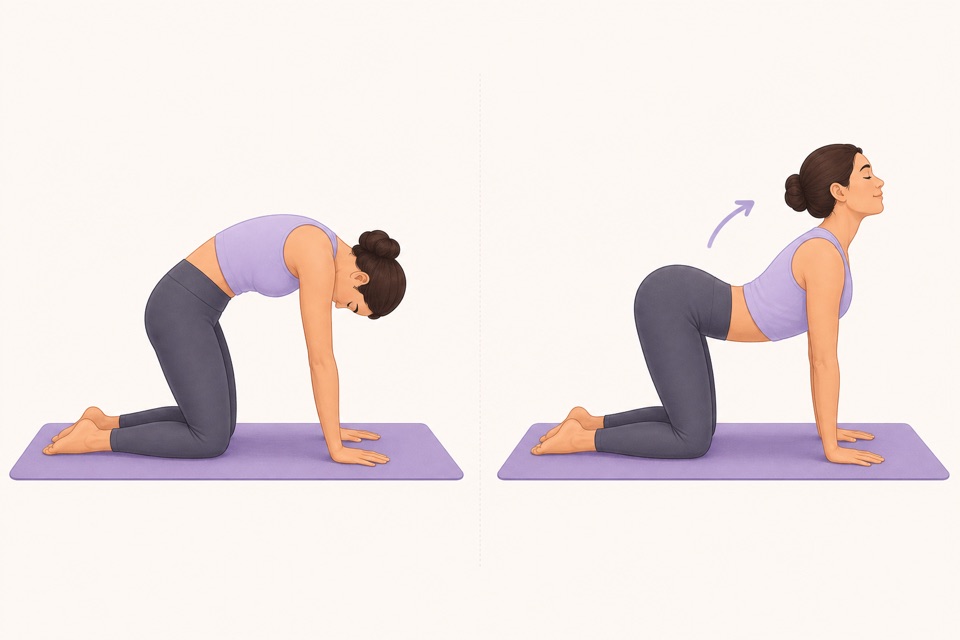
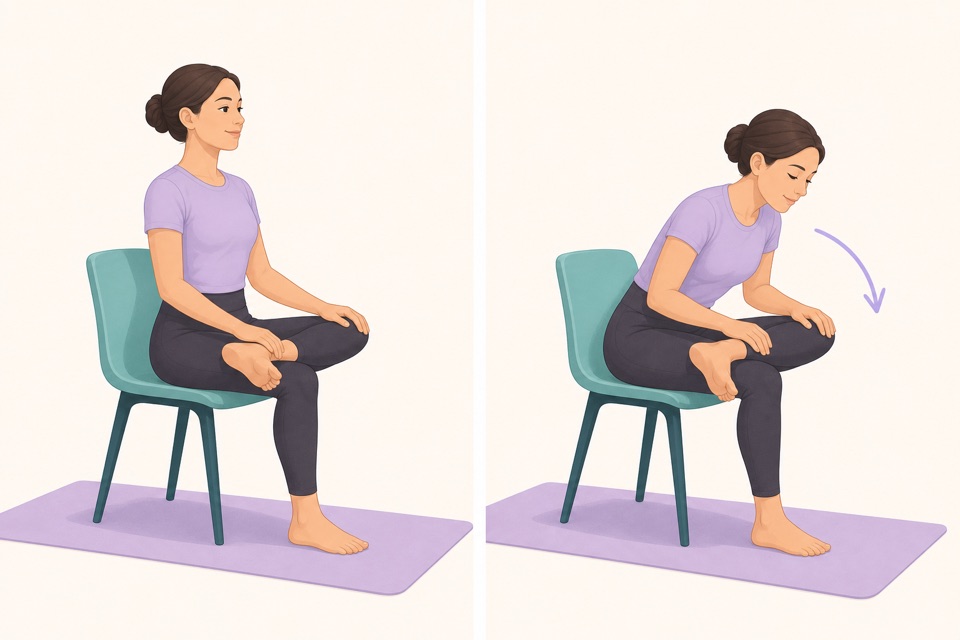
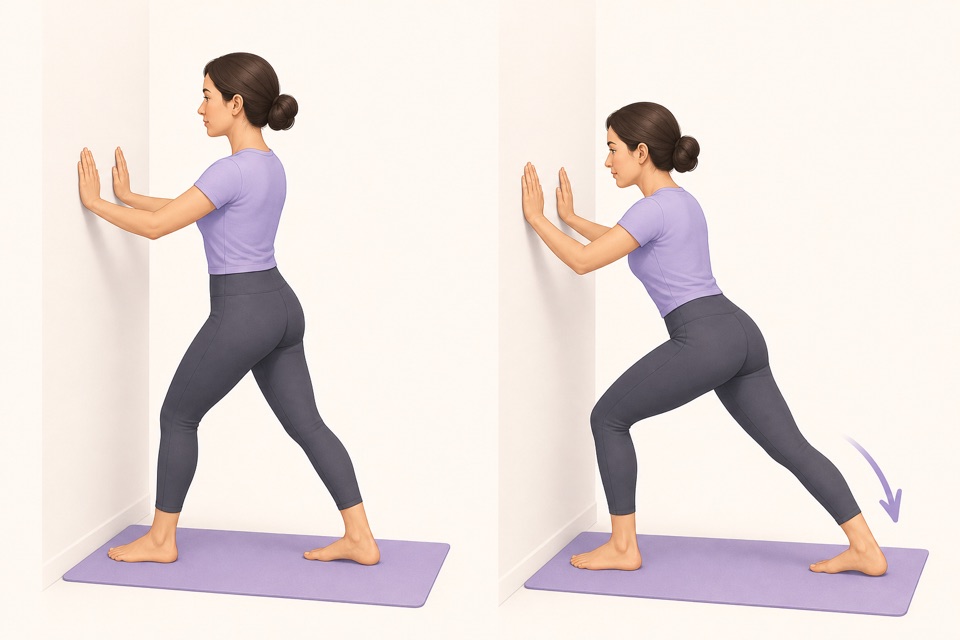
| Move | Time | Why it helps | Make it easier | | --- | ---: | --- | --- | | Slow breathing, seated tall | 30 sec | Settles the body before movement | Sit back against the chair | | Neck turns | 45 sec | Eases screen and reading stiffness | Move only halfway | | Shoulder circles | 45 sec | Wakes up shoulders and upper back | Make tiny circles | | Seated cat-cow | 60 sec | Adds gentle spine movement | Keep hands on thighs | | Seated hamstring stretch | 60 sec each side | Opens the back of the thigh | Bend the knee slightly | | Seated figure-four | 60 sec each side | Targets outer hip and glute stiffness | Keep the crossed foot lower | | Supported calf stretch | 45 sec each side | Helps ankles and lower legs | Hold a wall or countertop | | Easy walk or march in place | 60 sec | Transitions out of the routine | Stay beside support |
The sequence matters because it removes decisions. Start seated, add one supported standing stretch, then finish while you still feel comfortable.
How should older adults decide which stretches to skip?
Older adults should skip any stretch that feels sharp, unstable, breathless, dizzy, numb, or wrong. Mild muscle tension is fine. Pain, symptoms, fear of falling, or a position you cannot exit smoothly are reasons to stop.
Use this checklist before each session:
- Stable chair without wheels.
- Clear floor with no loose rugs underfoot.
- Shoes or bare feet that feel secure.
- Water nearby if needed.
- Phone nearby if you are alone and have fall concerns.
- Permission from your clinician if you have recent surgery, a fall, new pain, osteoporosis concerns, nerve symptoms, heart symptoms, or a condition that changes what movement is safe.
This is where generic videos often fail. They keep moving. A better senior routine gives you permission to pause.
Are chair stretches better than floor stretches for seniors?
Chair stretches are often better as a starting point because they reduce the effort of getting down to and up from the floor. Floor stretches can work for some people, but they should not be the entry requirement for building flexibility.
Compare the options:
| Option | Best for | Watch out for | | --- | --- | --- | | Chair stretches | Balance concerns, small spaces, beginner routines | Choose a stable chair without wheels | | Standing supported stretches | Calves, chest, hips, light balance practice | Keep a wall or counter nearby | | Floor stretches | People comfortable getting up and down | Avoid if the transition feels risky | | App-guided stretching | People who need timing and reminders | Pick gentle routines over intense programs |
For many people, the best way to start is a chair-first routine, then add supported standing work when it feels appropriate.
If the legs feel stiff after walks or long sitting, keep the same support-first mindset and use the knee stretches guide for calf, hamstring, and quad options.
How often should seniors stretch?
For general wellness, a short routine repeated several times per week is more realistic than one long session. The CDC and U.S. physical activity guidance emphasize that older adults benefit from regular movement that includes aerobic activity, muscle strengthening, and balance work; stretching can support comfort and mobility, but it should not be the only movement habit.
The easiest plan is:
- 5 to 10 minutes of gentle stretching.
- Same time of day for one week.
- Same sequence until it feels familiar.
- Add duration before adding intensity.
- Pair stretching with walking, strength, or balance work if appropriate.
If you are searching "what is the best way to start stretching exercises for seniors," the answer is boring but effective: make the session so easy that starting is not a debate. If reminders and timers would help, use the stretching app for seniors checklist before picking an app-led routine.
How can an app make senior stretching easier?
An app helps when the hard part is consistency, not knowledge. A stretching app for seniors should show the next move, keep time, support short sessions, and make it easy to repeat the same routine without rebuilding it every day.
Wiggle is useful for this because it turns the routine into a guided habit loop. You choose a gentle session, follow the timer, and stop without needing to remember the order. That reduces perceived effort, especially on days when motivation is low.
Good app features for older adults include:
- Clear routine names.
- Short session lengths.
- Calm visual pacing.
- Reminders you can control.
- No pressure to chase extreme flexibility.
- Simple routines for morning, chair, hips, back, and bedtime.
From Wiggle
Recommended moves
What should seniors do when stretching does not help?
If stretching does not help, do not keep forcing the same movement. Stiffness can come from many causes, and some situations need a clinician, physical therapist, or trainer who works with older adults. The failure mode is assuming every tight feeling needs a deeper stretch.
Ask for professional guidance when symptoms are new, severe, persistent, spreading down a limb, related to a fall, linked to weakness or numbness, or connected to a known medical condition. For everyday stiffness, make the routine smaller before making it harder.
The practical decision rule is:
- If it feels mild and stable, continue gently.
- If it feels awkward, modify.
- If it feels painful or unsafe, stop.
- If it keeps returning or worries you, get individualized advice.
Sources
Why we keep it gentle
These guides are written for everyday stiffness and habit-building. They are grounded in mainstream guidance on flexibility, movement, and when to seek medical help.
- Older Adult Activity: An OverviewCDC
- Exercise and physical activityNational Institute on Aging
- Exercise for Older AdultsMedlinePlus
- Stretching: Focus on flexibilityMayo Clinic
FAQ
Questions people ask
What are the best stretching exercises for seniors to start with?
The best stretching exercises for seniors are gentle, supported, and easy to repeat: neck turns, shoulder circles, seated cat-cow, seated hamstring stretch, seated figure-four, standing calf stretch, and a supported chest stretch. Start with mild tension, steady breathing, and a stable chair or wall nearby.
How long should seniors stretch each day?
A practical starting point is 5 to 10 minutes, especially if the routine is new. Consistency matters more than long holds. Stop before fatigue or discomfort turns the session into something you avoid tomorrow.
Are chair stretches enough for older adults?
Chair stretches can be enough for a first routine because they lower balance demands and make movement easier to start. Over time, many older adults also benefit from balance, strength, and walking work if those are appropriate for their body.
When should an older adult avoid stretching?
Skip or stop a stretch if it causes sharp pain, dizziness, numbness, weakness, chest symptoms, sudden swelling, or a feeling of instability. Ask a qualified clinician for guidance after a fall, surgery, new injury, or new severe or persistent pain.
How can Wiggle help with stretching exercises for seniors?
Wiggle can make senior stretching easier to repeat by turning a short routine into a guided, timed session. The useful part is not intensity. It is having a simple sequence, a visible timer, and fewer decisions before you start.