Wiggle guide
Morning Stretches for Stiffness: An 8-Minute Wake-Up Reset
Morning stretches for stiffness when your back, hips, shoulders, or legs feel stuck after waking. Use this gentle 8-minute routine.
morning stretches for stiffness

The irritating part of morning stiffness is how quickly it steals the first win of the day. You wake up, your back feels slow, your hips feel heavy, your shoulders feel packed together, and suddenly even getting dressed feels like a negotiation.
Morning stretches for stiffness should make the first five minutes easier, not impressive. Use a short sequence that starts small, moves the whole body, and gives you a clear rule: if it feels sharp, strange, or like you are forcing range, stop and choose the easier version.
If the stiffness is mostly in your lower back after sleep, use lower back stretches after waking up. If it feels more like back pain than stiffness, use morning stretches for back pain. If your neck and shoulders are the loudest part, use morning neck stretches. If you want the most beginner-friendly version, start with morning stretches for beginners. If you are still lying down, use morning stretches in bed. If you want a broader joint reset, use the morning mobility routine. When stiffness has eased and your goal becomes gradual range, switch to morning stretches for flexibility.
If your hips are the main problem area, use the focused morning stretches for tight hips routine instead of stretching everything.
What are morning stretches for stiffness?
Morning stretches for stiffness are gentle wake-up movements for mild tightness after sleep. They usually work best when they begin with small joint motion, add easy spine and hip movement, then finish standing so your body transitions into normal walking, bending, and reaching.
Think of the routine as a ramp from stillness to daily movement. It is not a diagnosis, pain treatment, flexibility test, or punishment for sleeping badly. The goal is simple: feel less stuck with the least effort required.
What is the fastest morning stiffness routine?
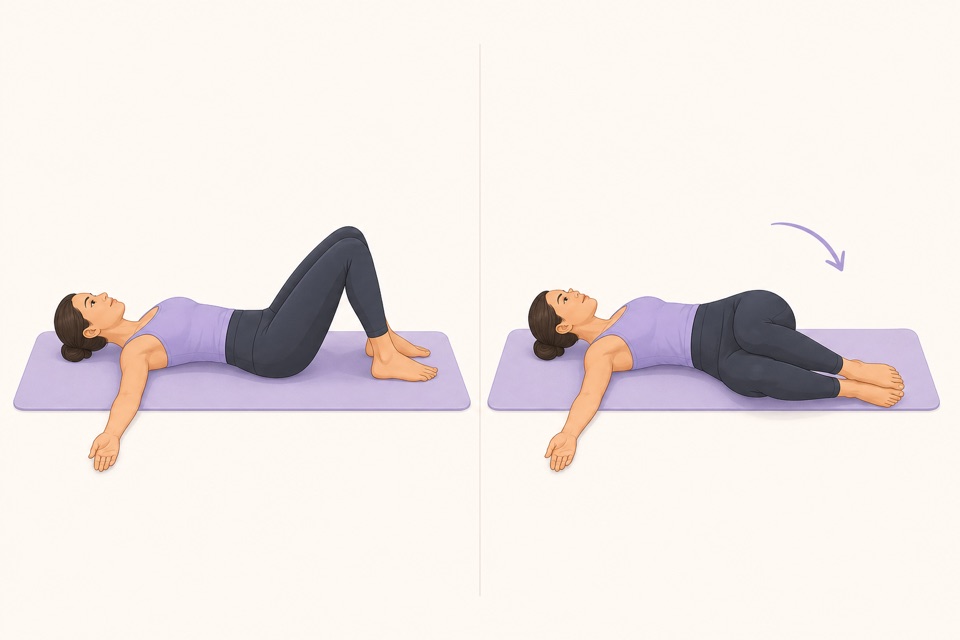
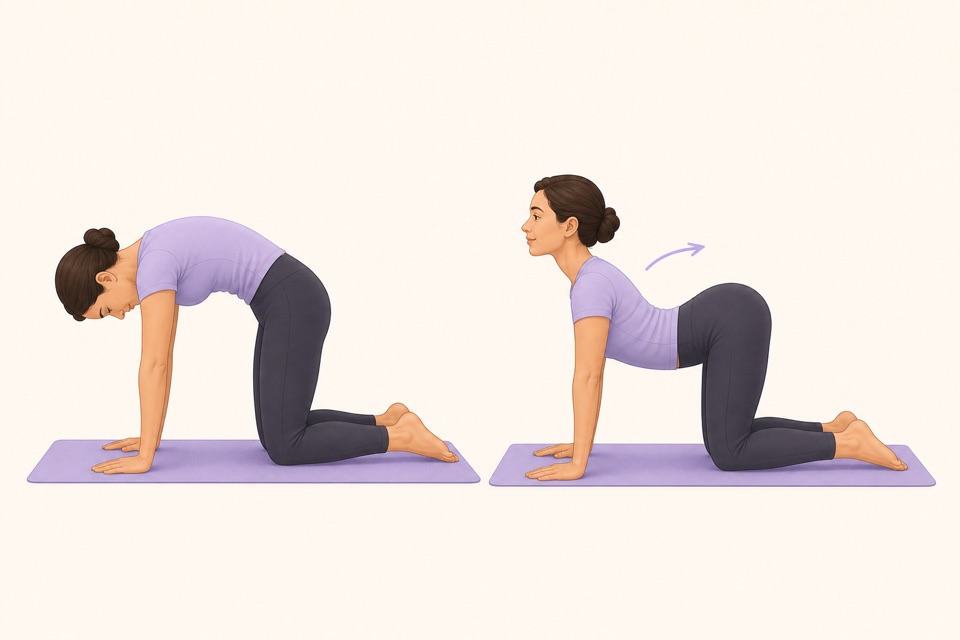
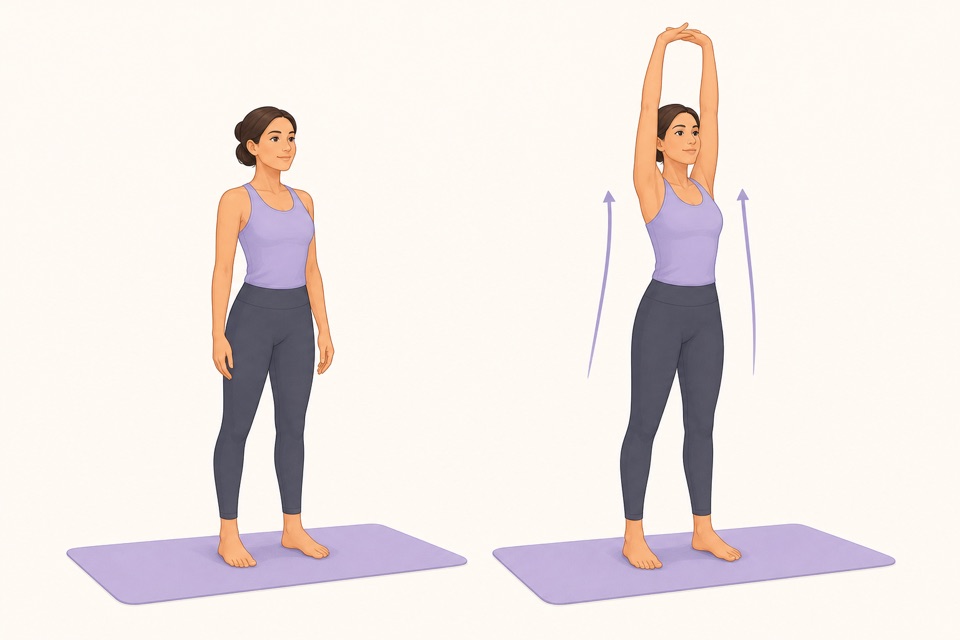
The fastest useful routine is 5 to 8 minutes: breathe, move the small joints, rock the trunk, mobilize the spine, circle the shoulders, reach overhead, hinge with support, then walk. If time is tight, shorten the holds instead of skipping the order.
| Move | Time | Use it for | Make it easier | | --- | ---: | --- | --- | | Slow breathing | 30 sec | Groggy, tense start | Stay lying down | | Ankle and wrist circles | 45 sec | Small-joint stiffness | Move one side at a time | | Lower trunk rotation | 60 sec | Back and hip stiffness | Keep knees closer together | | Cat-cow or seated cat-cow | 60 sec | Spine stiffness | Do it seated on the bed | | Shoulder circles | 45 sec | Neck and upper-back tightness | Circle one shoulder at a time | | Overhead reach | 60 sec | Side-body and rib stiffness | Reach one arm only | | Supported hip hinge | 60 sec | Hamstrings and hips | Hold a wall or dresser | | Easy walk | 60 sec | Whole-body wake-up | Walk around the room |
Do the first round before your phone gets involved. That is not productivity theater. It removes the biggest friction point: once you start scrolling, stretching becomes a decision instead of a default.
From Wiggle
Recommended moves
Should you stretch in bed or after standing up?
Start in bed if standing feels like too much, and start standing if you already feel steady. The right choice is the version that gets you moving gently without needing willpower, balance confidence, or a perfect setup.
Use this decision rule:
| Morning state | Start with | Avoid at first | | --- | --- | --- | | Very stiff or groggy | Bed breathing, ankle circles, trunk rocks | Jumping into standing folds | | Mildly stiff but steady | Cat-cow, shoulder circles, supported hinge | Deep holds before warming up | | Tight from sitting yesterday | Hip hinge, trunk rotation, calf movement | Forcing hamstring range | | Rushed | A 2-minute version | Searching for a new routine | | Painful or uncertain | Rest, tiny movement, or professional advice | Treating pain as progress |
If mornings are consistently stiff because your body feels cold and slow, wake up stretches gives you a simpler first step. If you want a session that stays mostly under the blanket, use bedtime stretches in bed as a softer movement reference and adapt the same low-effort idea for morning.
Why does your body feel stiff in the morning?
Morning stiffness can happen because your body has been still for hours. Sleep position, yesterday's training, long sitting, stress, age, hydration, and medical conditions can all change how you feel when you first stand up.
For mild everyday stiffness, the practical move is to start below your limit. Mayo Clinic's stretching guidance emphasizes controlled movement without bouncing or forcing pain. MedlinePlus frames physical activity as a broad health habit, but your morning version should still be gentle enough to repeat tomorrow.
How do you keep morning stretches from becoming a chore?
Morning stretches become repeatable when they are short, familiar, and timed. Do the same routine for a week before changing exercises. Your body gets the benefit of movement, and your brain gets the benefit of not choosing from scratch.
Use this checklist:
- Keep the first version under eight minutes.
- Put the routine before messages when possible.
- Use comfortable range only.
- Breathe normally instead of holding your breath.
- Use the same movement order for one week.
- Let the 2-minute version count on busy mornings.
- Stop before the routine feels like a workout.
- Save the sequence in a guided app so timing is automatic.
If the habit keeps falling apart because you do not want to count seconds, use a stretching app with a timer. If you want the broader app-selection checklist, read stretching routine app.
When should morning stiffness be checked?
Use this routine for mild, everyday stiffness only. Morning stiffness that is new, severe, persistent, injury-related, swollen, fever-related, or paired with numbness, weakness, chest symptoms, spreading symptoms, or other worrying signs should be discussed with a qualified professional.
That caution matters because "stiff" is a feeling, not a diagnosis. A gentle routine can help you notice how your body responds, but it cannot tell you what is causing symptoms.
How can Wiggle help with morning stiffness?
Wiggle removes the hidden work from morning stretches for stiffness: choosing movements, remembering the order, timing each step, switching sides, and deciding whether a short session counts. Open a saved morning reset, follow the timer, and finish before the day starts bargaining with you.
The specific next step: use Wiggle for one 8-minute morning stiffness routine tomorrow. Repeat the same sequence for seven mornings before adding more exercises.
Sources
Why we keep it gentle
These guides are written for everyday stiffness and habit-building. They are grounded in mainstream guidance on flexibility, movement, and when to seek medical help.
- Stretching: Focus on flexibilityMayo Clinic
- Exercise and physical fitnessMedlinePlus
- Physical Activity Guidelines for AmericansU.S. Department of Health and Human Services
FAQ
Questions people ask
What are the best morning stretches for stiffness?
The best morning stretches for stiffness are gentle movements that move the spine, hips, shoulders, ankles, and breathing before you ask for deep flexibility. Start with breathing, ankle circles, lower trunk rotations, cat-cow, shoulder circles, an overhead reach, a supported hip hinge, and a short walk.
How long should I stretch in the morning if I feel stiff?
Start with 5 to 8 minutes. That is long enough to reduce the stuck feeling without turning the morning into a workout. If you are rushed, do a 2-minute version with breathing, ankle circles, trunk rocks, and an easy walk.
Should morning stiffness stretches be done in bed or standing?
Start where your body feels safest. If you wake up very stiff, begin in bed with small ankle circles and trunk rocks, then move to seated or standing stretches once you feel steadier. If you already feel balanced, a standing routine is fine.
Why do I feel stiff when I wake up?
Morning stiffness can come from normal stillness during sleep, yesterday's sitting or training, sleep position, stress, age, or a medical condition. Use gentle stretching for mild everyday stiffness only. New, severe, persistent, swollen, fever-related, or worrying symptoms deserve professional guidance.
When should I skip morning stretches for stiffness?
Skip or stop the routine if you feel sharp pain, dizziness, numbness, weakness, spreading symptoms, chest symptoms, fever, swelling, or anything that feels unusual. Ask a qualified professional about new, severe, persistent, injury-related, or medical-condition-related symptoms.