Wiggle guide
Morning Neck Stretches: A Gentle 6-Minute Wake-Up Reset
Morning neck stretches for stiff neck, tight shoulders, and screen-posture residue after sleep, with a gentle 6-minute routine and clear stop signs.
morning neck stretches
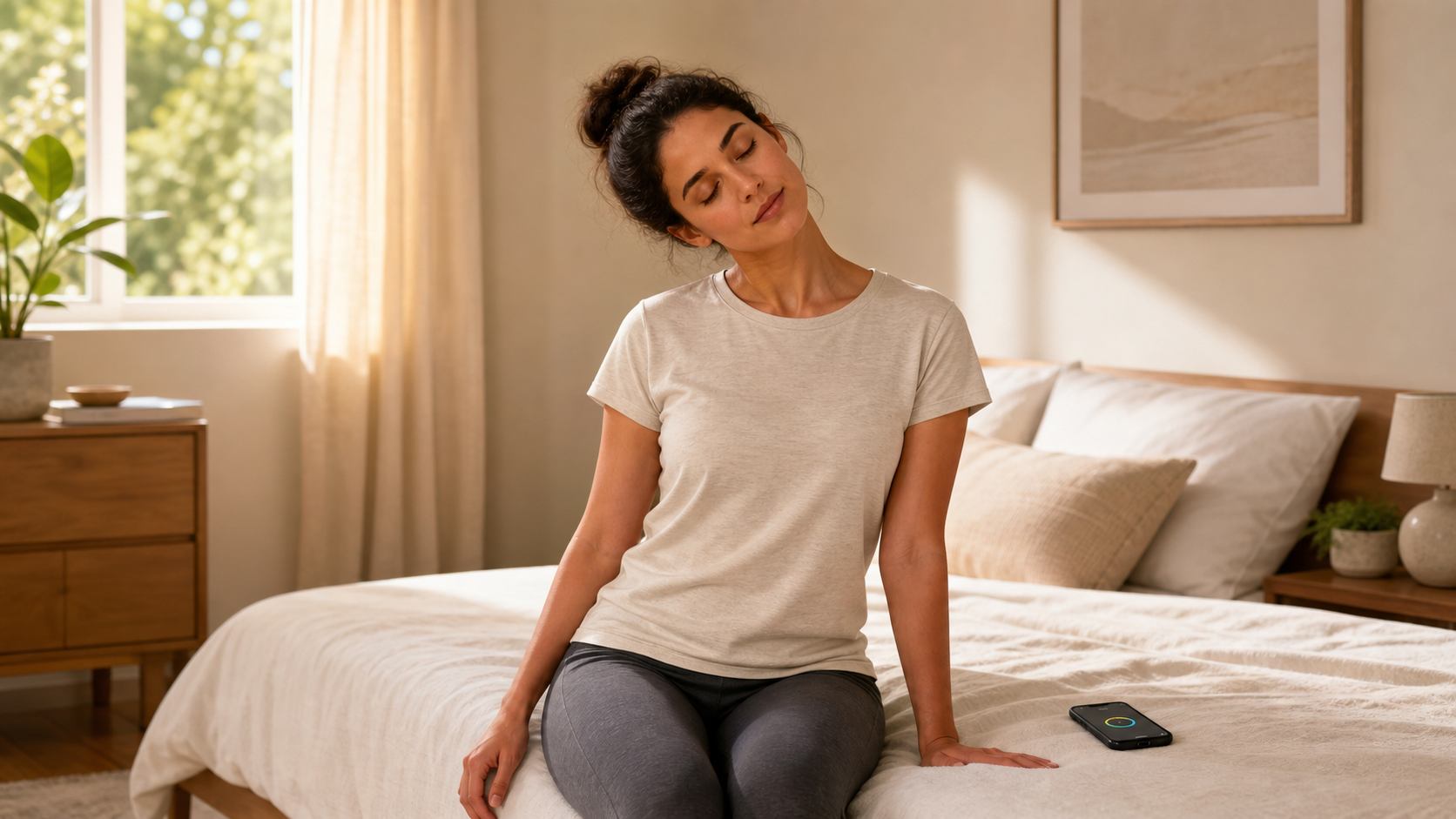
The annoying part of a stiff neck in the morning is how early it starts making decisions for you. Before coffee, before messages, before the day has earned any drama, turning your head already feels careful.
Morning neck stretches should solve the first problem only: help your neck, shoulders, and chest move gently enough that the first hour feels less guarded. The fast rule is simple: stay below pain, move the shoulders too, and stop before the routine turns into a workout.
If your stiffness is mostly from screen work, use neck stretches at desk later in the day. If your whole body feels stuck, start with morning stretches for stiffness. If you want the broadest first-move routine, use wake up stretches.
What are morning neck stretches?
Morning neck stretches are gentle wake-up movements for mild neck and shoulder stiffness after sleep. They work best when they begin with tiny range, add shoulder and chest movement, and avoid hard pulling while the body is still transitioning from rest.
Morning neck stretches are general wellness movements, not a diagnosis or treatment plan for neck pain. The goal is not to force a stiff neck into flexibility. The goal is to make turning, looking down, and starting the day feel less guarded.
What is the best 6-minute morning neck routine?
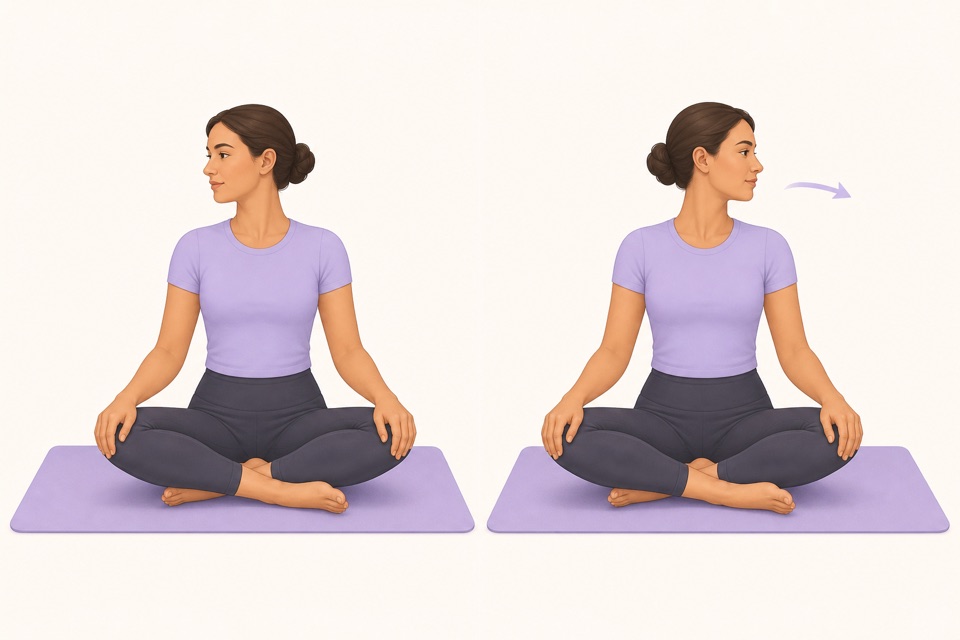
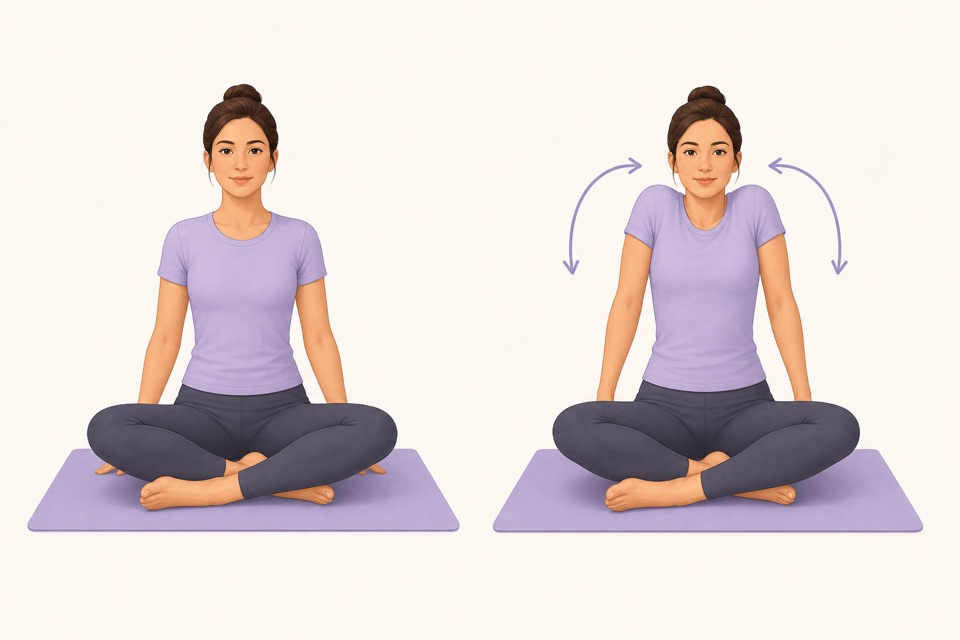
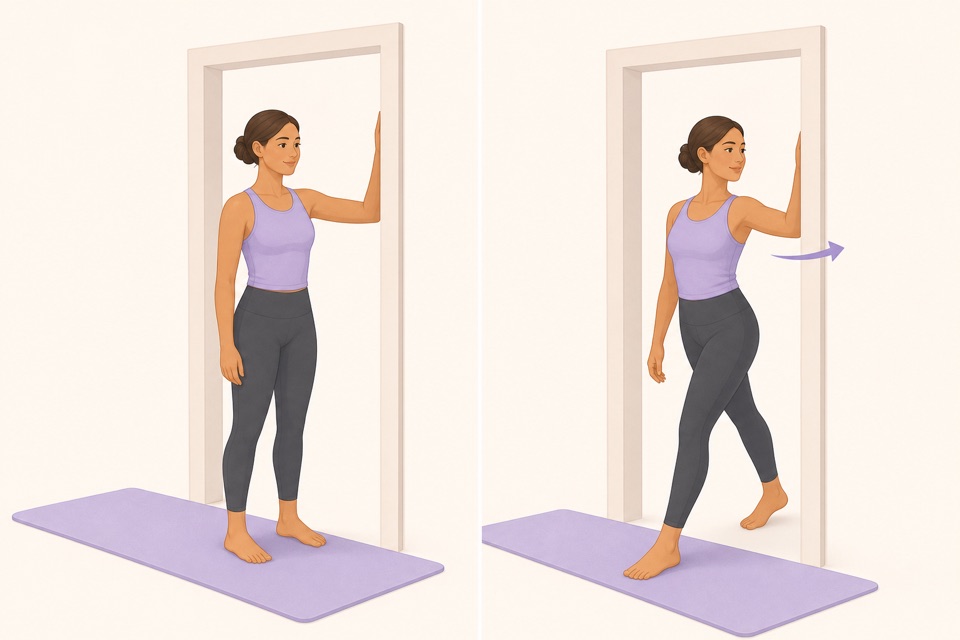
The best morning neck routine starts seated, keeps the range small, and moves from breath to neck, shoulders, and chest. If you only have two minutes, do breathing, shoulder circles, and small neck rotations. If anything feels sharp, dizzying, radiating, numb, or unusual, stop.
| Move | Time | What it helps | Keep it gentle by | | --- | ---: | --- | --- | | Seated breathing | 30 sec | Guarded neck and jaw tension | Keeping shoulders heavy | | Small chin nods | 30 sec | First neck motion after sleep | Nodding tiny yes motions | | Neck rotations | 45 sec | Turning left and right | Avoiding end-range pushing | | Upper-trap side bend | 30 sec each side | Side-neck tightness | Letting the opposite shoulder relax | | Levator scapulae stretch | 30 sec each side | Neck-to-shoulder stiffness | Looking toward the armpit without pulling hard | | Shoulder circles | 45 sec | Upper-back and shoulder stiffness | Making the circles slow | | Chest opener | 45 sec | Rounded sleep or screen posture | Opening gently, not arching the low back | | Easy walk | 30 sec | Transition into the day | Standing only if you feel steady |
Do the first round before your phone gets a vote. That reduces the hidden effort: no searching, no new video, no debating whether the routine is worth it.
From Wiggle
Recommended moves
Why does your neck feel stiff in the morning?
Morning neck stiffness can come from sleep position, pillow height, yesterday's screen posture, stress, jaw clenching, training load, or a medical condition. For mild everyday stiffness, the useful move is to start smaller than you think you need.
Mayo Clinic's stretching guidance emphasizes controlled stretching without bouncing or forcing pain, and its neck-stretch guidance focuses on simple movements like chin-to-chest, side bends, and shoulder-supported resets. MedlinePlus also treats neck pain as a reason to watch symptoms carefully, especially when pain is severe, persistent, or paired with neurologic signs.
That is why the routine above does not start with a deep neck pull. It starts with breath, small motion, and shoulder movement.
How do you stretch a stiff neck without making it worse?
Stretch a stiff morning neck by making the movement easier before you make it longer. Keep your jaw relaxed, breathe normally, and use a mild range that you could repeat tomorrow. Pain is not proof the stretch is working.
Use this checklist:
- Sit before standing if you feel groggy.
- Move the neck through a small range first.
- Add shoulder circles every time.
- Keep stretches at mild tension.
- Skip bouncing, yanking, and hard end-range holds.
- Avoid dropping the head backward if it feels pinchy.
- Stop for dizziness, numbness, tingling, weakness, radiating symptoms, or sharp pain.
The common failure mode is treating morning stiffness like an emergency flexibility test. It is usually better to do less, repeat it tomorrow, and use upper back stretches at desk later if screen posture rebuilds the same tightness.
Should you stretch your neck in bed or after getting up?
Start seated on the edge of the bed if you wake up groggy, guarded, or unsure. Start standing only if you already feel steady. The best first position is the one that lets you move calmly without balance stress.
| Morning state | Start with | Avoid first | | --- | --- | --- | | Groggy or half-awake | Seated breathing and shoulder circles | Standing end-range stretches | | Neck feels guarded | Tiny chin nods and rotations | Pulling hard with the hand | | Neck plus upper back feels tight | Shoulder circles and chest opener | Neck-only stretching | | Rushed | Two-minute reset | Searching for new exercises | | Painful or unusual symptoms | Rest or professional guidance | Treating pain as progress |
If getting upright feels like the biggest barrier, morning stretches in bed gives you the lowest-friction version of a wake-up routine. If your morning stiffness is more back and hip than neck, use morning mobility routine.
When should morning neck stiffness be checked?
Use this guide for mild everyday stiffness only. Get professional guidance for neck symptoms that are new, severe, persistent, injury-related, spreading into the arm, linked with numbness or weakness, paired with dizziness, fever, headache changes, chest symptoms, or anything that feels worrying.
This is the boring but important boundary: a guided stretch routine can reduce friction and help you move gently, but it cannot tell you why symptoms are happening.
How can Wiggle help with morning neck stretches?
Wiggle removes the hidden work from morning neck stretches: choosing the movements, counting seconds, remembering sides, and deciding whether a short session counts. Open a neck-and-shoulder wake-up reset, follow the timer, and keep the first version under six minutes.
The specific next step: use Wiggle for one morning neck reset tomorrow before messages. Repeat the same short sequence for a week before adding more exercises.
Sources
Why we keep it gentle
These guides are written for everyday stiffness and habit-building. They are grounded in mainstream guidance on flexibility, movement, and when to seek medical help.
- Neck stretches for the workplaceMayo Clinic
- Stretching: Focus on flexibilityMayo Clinic
- Neck painMedlinePlus
- Physical Activity Guidelines for AmericansU.S. Department of Health and Human Services
FAQ
Questions people ask
What are the best morning neck stretches?
The best morning neck stretches are gentle movements that start small: slow breathing, chin nods, neck rotations, upper-trap side bends, levator scapulae stretches, shoulder circles, and a chest opener. Keep the range mild because the neck often feels less ready for deep stretching right after sleep.
How long should morning neck stretches take?
Start with 4 to 6 minutes. That is enough time to move the neck, shoulders, and chest without turning the first few minutes of the day into a workout. If you are rushed, do slow breathing, shoulder circles, and small neck rotations for two minutes.
Why is my neck stiff in the morning?
Morning neck stiffness can come from sleep position, pillow setup, screen posture from the previous day, stress, jaw tension, or a medical issue. Gentle movement can help mild everyday stiffness, but new, severe, persistent, injury-related, radiating, or worrying symptoms should be checked by a qualified professional.
Should morning neck stretches hurt?
No. Morning neck stretches should feel like mild tension, not pain. Stop if you feel sharp pain, dizziness, numbness, tingling, weakness, headache changes, symptoms down the arm, or anything that feels unusual.
How can Wiggle help with morning neck stretches?
Wiggle makes morning neck stretches easier by giving you a short guided routine, visible timer, simple exercise order, and repeatable cues so you do not have to choose stretches while still half-awake.