Wiggle guide
5-Minute Morning Stretch: A Gentle Wake-Up Routine
A 5-minute morning stretch for sleepy stiffness, with an easy bed-to-standing sequence, stop signs, and a simple Wiggle habit cue.
5 minute morning stretch
The problem with most morning routines is that they ask for a motivated person before one exists. You wake up stiff, reach for your phone, lose ten minutes, then the stretching plan becomes another thing you failed to do before breakfast.
A 5-minute morning stretch fixes a smaller problem: make the first movement of the day obvious. You do not need a full workout, a long yoga video, or a heroic flexibility session. You need a sequence short enough to start while your brain is still negotiating.
Fast decision rule: if you are still in bed, do the first three moves lying down. If you are already standing, start with seated cat-cow, shoulder circles, a supported calf stretch, and an easy walk. If five minutes feels too much today, do two minutes and count it.
What is a good 5-minute morning stretch?
A good 5-minute morning stretch starts with breathing and small joint motion, then moves through the back, hips, shoulders, calves, and a short walk. It should feel mild, repeatable, and easy to stop. The best version is not the deepest one; it is the one you can do tomorrow too.
A 5-minute morning stretch is a short wake-up sequence for mild everyday stiffness. It uses comfortable movements, normal breathing, and simple timing to help the body transition from sleep into ordinary motion without forcing flexibility.
Use this routine when you want a quick full-body morning stretch before coffee, messages, work, school, or a longer Wiggle session. If you need a standing version that fits between getting dressed and opening your laptop, use these morning stretches before work.
| Move | Time | Why it belongs | Make it easier |
|---|---|---|---|
| Slow breathing with knees bent | 30 sec | Starts calmly before range of motion | Stay under the blanket |
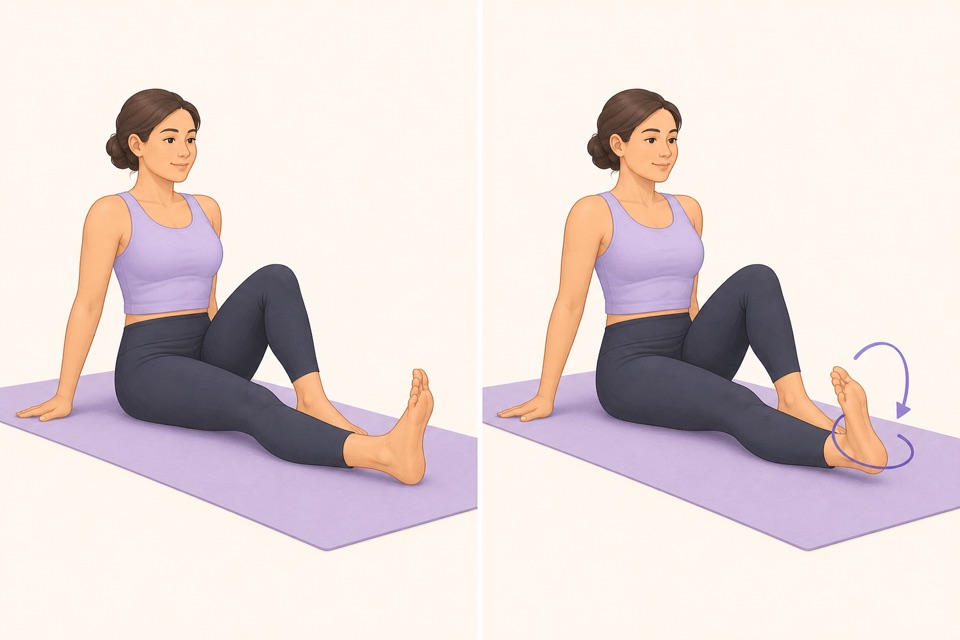
| Ankle circles | 30 sec | Wakes up feet and lower legs | Move one ankle at a time |
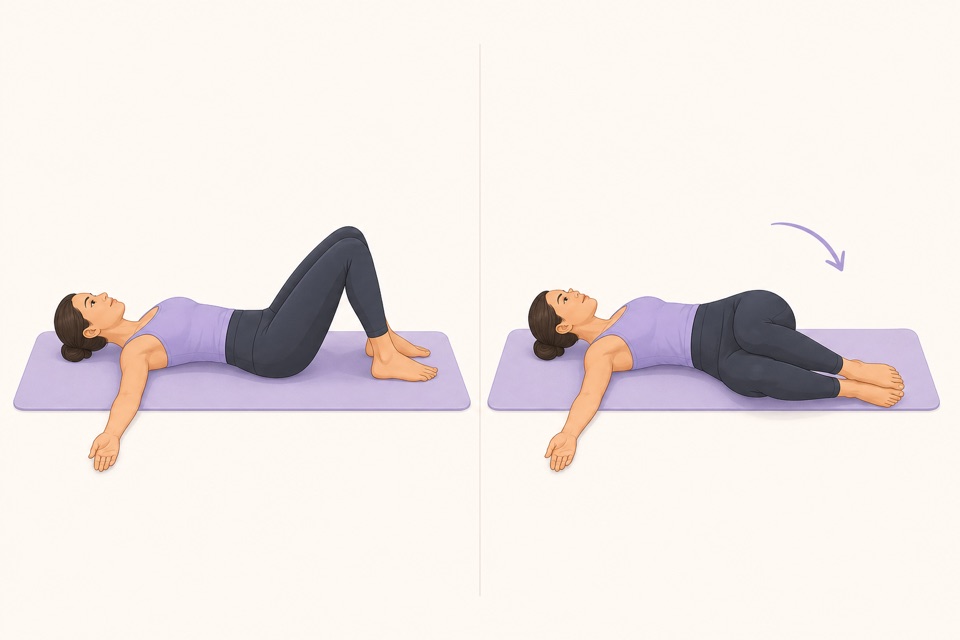
| Knee rocks side to side | 45 sec | Adds gentle back and hip motion | Keep the range tiny |
| One-knee hug | 60 sec | Eases hips and lower back | Hold behind the thigh |
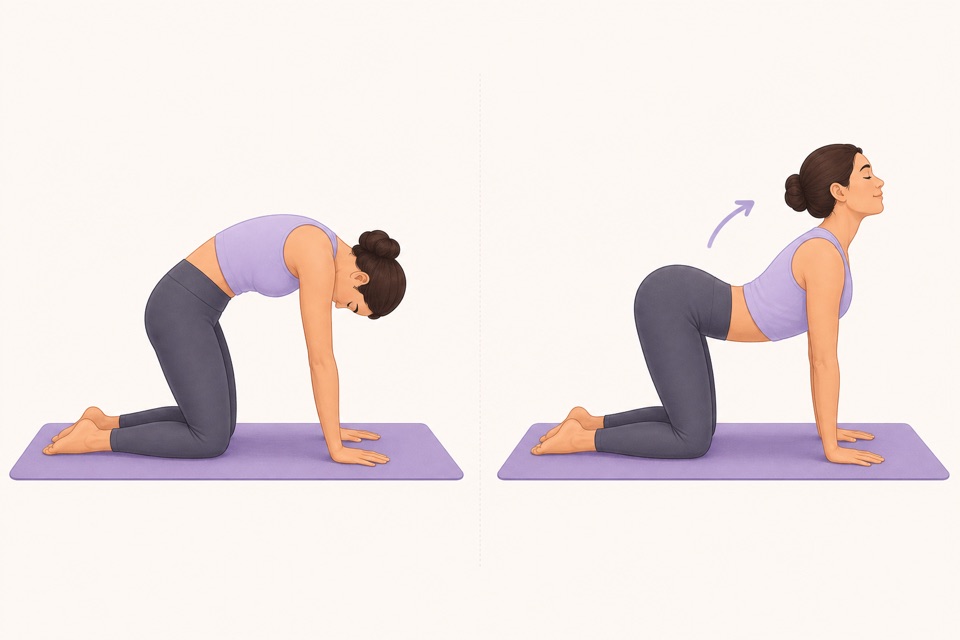
| Seated cat-cow | 60 sec | Moves the spine without deep holds | Sit on the bed edge |
| Shoulder circles and overhead reach | 60 sec | Opens the upper body | Reach one arm at a time |
| Supported calf stretch | 45 sec | Prepares standing and walking | Hold a wall or dresser |
| Easy walk | 30 sec | Turns stretching into the day | Walk around the room |
If you want a longer beginner version, use morning stretches for beginners. If your main issue is waking up with back stiffness, use lower back stretches after waking up.
From Wiggle
Recommended moves
Why does a short morning stretch work better than a long one?
A short morning stretch works because it reduces the effort needed to begin. Five minutes gives you enough time to move the major stiff areas without turning the routine into a project. That matters because morning consistency is usually limited by friction, not by knowledge.
Long routines can be useful later, especially if you enjoy them. But first thing in the morning, the failure mode is planning too much. A routine that starts on the bed, moves to sitting, then finishes standing creates a natural ramp.
Use this comparison:
| Morning state | Better choice | Why |
|---|---|---|
| Groggy and stiff | 5-minute routine | Fewer decisions before movement |
| Already warmed up | 10-minute routine | More time for hips, back, and shoulders |
| Very rushed | 2-minute version | Keeps the habit alive |
| Unsure what hurts | Tiny movement or rest | Avoids forcing symptoms |
| Motivated after breakfast | Longer guided session | Better timing for deeper holds |
If the whole body feels stuck, morning stretches for stiffness gives you a broader 8-minute option. If you want a joint-focused flow, use the morning mobility routine.
Should I stretch before getting out of bed?
You can stretch before getting out of bed if the movements are small and supported. Start lying down for breathing, ankle circles, knee rocks, and one-knee hugs. Then sit up before spinal and shoulder work. Stand only when the first few moves make standing feel less abrupt.
This is the easiest path for people who wake up stiff but do not want a full in-bed routine. If you prefer to stay lying down for the whole first sequence, use morning stretches in bed.
Avoid big forward folds, aggressive hamstring stretches, or fast twisting as your first move. Mayo Clinic stretching guidance emphasizes comfortable range, steady breathing, and avoiding pain. That advice matters more when your body has just been still for hours.
How do I make a 5-minute stretch feel energizing?
Make the routine feel energizing by keeping it gentle enough that you finish with momentum instead of fatigue. Use normal breathing, move through comfortable range, and end with an easy walk. You are trying to create a wake-up cue, not prove flexibility.
Try this one-week rule:
- Do the same five-minute sequence for seven mornings.
- Start before checking messages when possible.
- Keep intensity around 3 out of 10.
- Shorten the routine instead of skipping it.
- Stop if symptoms feel wrong.
- Save the routine in Wiggle after the first successful day.
For a more specific low-energy version, use morning stretches for energy. For a simple app-led habit loop, the stretching routine app guide explains what to look for.
When should I skip or modify the routine?
Skip or modify the routine when the sensation is more than mild everyday stiffness. Sharp pain, dizziness, numbness, weakness, spreading symptoms, chest symptoms, recent injury, or symptoms tied to a known condition deserve caution and qualified guidance.
This article is for general stretching habits, not diagnosis or treatment. MedlinePlus and mainstream physical activity guidance both frame movement as part of a broader health picture. Stretching can support comfort and routine, but it is not a replacement for medical care, strength work, walking, sleep, hydration, or personal advice when something feels off.
The practical version: make the routine smaller before making it harder. If a move feels questionable, skip it and keep the habit with breathing, ankle circles, and an easy walk.
How can Wiggle make this routine easier to repeat?
Wiggle helps because the hidden effort is not the stretch itself. It is choosing the moves, remembering the order, counting seconds, switching sides, and deciding whether a short session counts. A guided five-minute routine removes those tiny decisions.
Open Wiggle, choose a gentle morning routine, and repeat the same session for a week before changing it. That gives you the fastest path from "I should stretch" to "I already did it."
Sources
Why we keep it gentle
These guides are written for everyday stiffness and habit-building. They are grounded in mainstream guidance on flexibility, movement, and when to seek medical help.
- Stretching: Focus on flexibilityMayo Clinic
- Physical Activity Guidelines for AmericansU.S. Department of Health and Human Services
- Back painMedlinePlus
FAQ
Questions people ask
Is a 5-minute morning stretch enough?
Yes, a 5-minute morning stretch can be enough when the goal is easing mild stiffness and starting the day with less friction. Keep it gentle, repeat the same order, and treat consistency as the win. Longer routines can wait until the habit feels automatic.
What should I stretch first in the morning?
Start with small, supported movements before deep stretches. Breathe, circle the ankles, rock the knees, move the spine gently, then sit or stand for shoulder and calf work. This order respects the transition from sleep to movement.
Should morning stretches be dynamic or static?
Use mostly gentle dynamic movement right after waking: circles, rocks, reaches, and easy transitions. Static holds can work later, but long intense holds first thing often create more effort than a sleepy morning needs.
When should I skip a morning stretch?
Skip or stop if you feel sharp pain, dizziness, numbness, weakness, spreading symptoms, chest symptoms, or anything that feels wrong. Ask a qualified professional about new, severe, persistent, injury-related, or medical-condition-related symptoms.
Can Wiggle guide a 5-minute morning stretch?
Yes. Wiggle is useful because a short morning stretch fails when you have to choose moves, count time, and remember the next step while half-awake. A guided routine gives you the order, timer, and stopping point.