Wiggle guide
Morning Stretches for Men: A 7-Minute Wake-Up Routine
Morning stretches for men who wake up stiff: use this simple 7-minute routine for hips, back, shoulders, hamstrings, and calves.
morning stretches for men

You wake up, stand, and immediately notice the same places: stiff hips, a rounded upper back, tight hamstrings, and calves that feel a step behind the rest of you. The answer is not a heroic flexibility session before coffee. It is a short sequence with almost no setup.
These morning stretches for men take seven minutes, need no equipment, and move from small spinal motion to standing. Fast rule: keep the sensation mild, breathe normally, and finish feeling more ready—not worked over. If you are training afterward, use a separate activity-specific warm-up.
What are the best morning stretches for men?
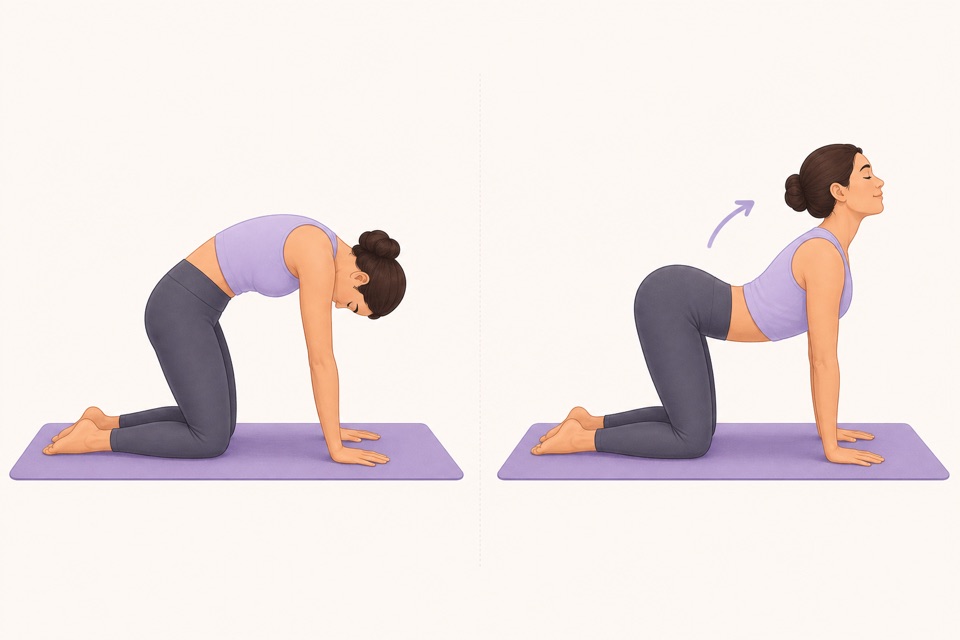
The best morning stretches for men gently move the spine, shoulders, hips, hamstrings, and calves before finishing with whole-body motion. Use cat-cow, upper-back rotation, a half-kneeling hip shift, a supported hamstring hinge, calf raises, a side reach, and easy marching. Comfortable range beats maximum range.
A morning stretch routine for men is a brief wake-up mobility sequence designed to make the first movements of the day easier. It is not a flexibility test, medical treatment, or replacement for the warm-up you need before lifting, running, or sport.
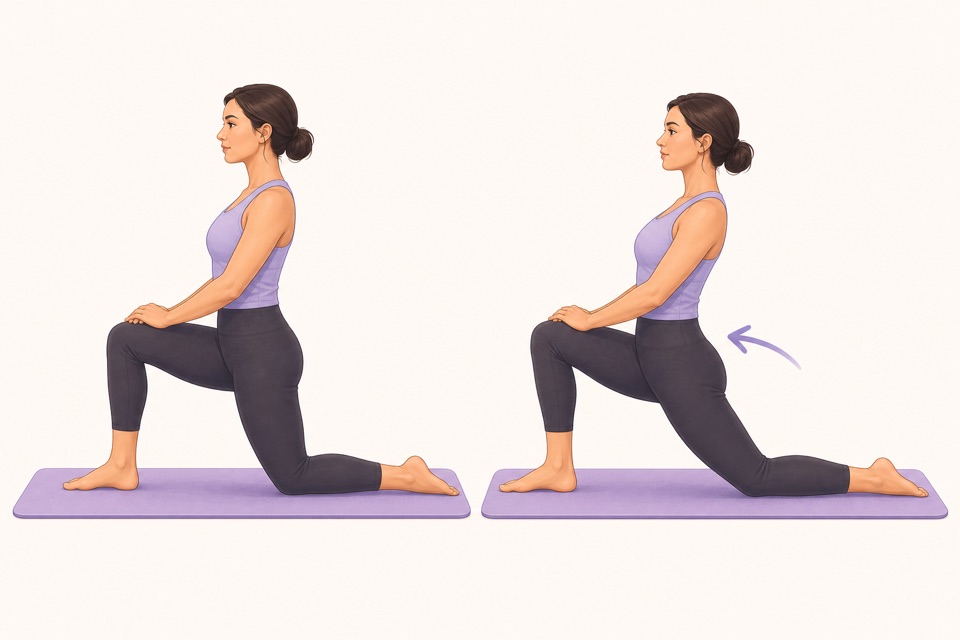
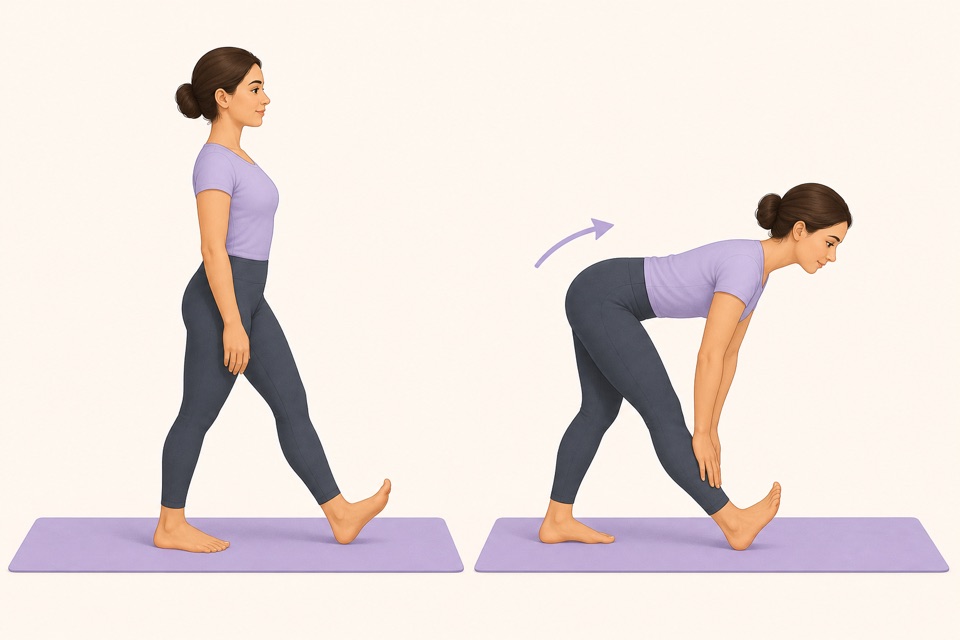
| Move | Time | Main area | Easier option | | --- | ---: | --- | --- | | Seated or standing cat-cow | 60 sec | Spine and shoulders | Keep hands on thighs | | Open-book rotation | 60 sec | Upper back and ribs | Rotate while seated | | Half-kneeling hip shift | 90 sec | Front of hips | Use a standing split stance | | Supported hamstring hinge | 90 sec | Back of thighs | Bend the knee more | | Calf raises | 45 sec | Ankles and calves | Hold a wall | | Standing side reach | 45 sec | Sides and shoulders | Reach one arm at a time | | Easy march | 60 sec | Whole body | Alternate heel taps |
From Wiggle
Recommended moves
How do I do this 7-minute morning routine?
Start seated or standing, then move gradually toward larger upright motions. Spend roughly one minute on each step and switch sides halfway where needed. Do not chase a prescribed depth: the useful dose is the range that feels smooth today and lets you breathe without bracing.
- Cat-cow: Put your hands on your thighs or a stable surface. Gently round the upper back, then lift the chest without throwing the head backward.
- Upper-back rotation: Keep the hips mostly still and rotate the rib cage left and right. Move slowly enough to notice whether one side needs a smaller range.
- Half-kneeling hip shift: Use a cushion and nearby chair, or take a standing split stance. Lightly tuck the pelvis and shift forward until the front of the rear hip feels mild tension.
- Supported hamstring hinge: Place one heel slightly forward, soften both knees, and send the hips backward with a long spine. Support your hands on the front thigh or a chair.
- Calf raises: Stand tall, hold a wall if needed, and lift and lower the heels under control.
- Side reach: Reach one arm overhead and lean gently away without twisting or collapsing forward.
- Easy march: Finish by marching in place and letting the arms swing naturally.
If seven minutes feels unrealistic, the 5-minute morning stretch uses the same low-friction idea. If you are completely new to mobility work, begin with morning stretches for beginners.
Why do men feel stiff in the morning?
Morning stiffness can follow hours of relative stillness, yesterday's training, a long sitting day, or simply the first movements after sleep. Men are not served by a special anatomical loophole: the useful response is to start gently, notice the pattern, and avoid treating unexplained pain as something to overpower.
Common failure modes make the routine less useful:
- Pulling hard because tightness feels like a problem to beat.
- Copying an advanced range instead of choosing today's range.
- Holding the breath during hip or hamstring work.
- Using fast bouncing to reach farther.
- Stretching through sharp, electric, or worsening symptoms.
Mayo Clinic's general guidance recommends smooth movement and feeling tension rather than pain. Persistent stiffness that limits normal movement, follows an injury, or comes with other concerning symptoms deserves individual assessment rather than a more aggressive routine.
Should men stretch or do mobility in the morning?
Use both ideas without getting trapped by the labels. Controlled repetitions work well when you are first waking up; brief comfortable holds can fit once you feel warm and steady. This routine blends them, then ends with marching so the session leads into normal movement.
| Your next step | Best morning choice | What not to assume | | --- | --- | --- | | Desk or commute | Full gentle 7-minute routine | One stretch cancels hours of sitting | | Strength workout now | Brief mobility, then lifting warm-up | Morning stretches prepare heavy sets | | Run now | Brief mobility, then dynamic running warm-up | A long static hold replaces easy jogging | | Rest day | Full gentle routine | Mobility must feel like training | | Pain changes normal movement | Stop and seek appropriate advice | More intensity will fix the cause |
The morning mobility routine gives you a broader joint-by-joint version. For a workday-specific sequence that stays quiet and sweat-free, use morning stretches before work.
Are morning stretches different for men over 40 or 50?
There is no switch that flips at 40 or 50. Scale the routine to your current balance, mobility, training history, injuries, and health. A wall, chair, shorter range, or slower transition is smart load management—not a lesser version of the exercise.
Use this decision checklist:
- Choose standing variations only when you feel steady.
- Use support before balance becomes the limiting factor.
- Keep the first repetition deliberately small.
- Allow extra time when changing position makes you light-headed.
- Follow a clinician's plan over any general online routine.
For a chair-first option with more support, use morning stretches for seniors. The label matters less than choosing a routine you can perform comfortably and repeat.
Can morning stretching replace a workout warm-up?
No. A seven-minute wake-up sequence prepares you to move through the morning; a workout warm-up prepares you for the specific speed, load, and skill that comes next. If you train hours later, warm up again immediately before the session.
The American Heart Association recommends warming up before moderate or vigorous activity and building intensity gradually. Before lifting, rehearse the movement with lighter loads. Before running, walk or jog easily and add controlled dynamic movements. Before sport, progress toward the direction changes and speed you will use.
How do I make a men's morning mobility habit stick?
Remove choices. Save one routine, attach it to an existing cue, and keep a shorter fallback. The easiest system is seven minutes after brushing your teeth, with cat-cow, hip shifts, and marching as the two-minute version on chaotic mornings.
- Keep a chair or clear wall where you stretch.
- Use the same sequence for one week.
- Let the fallback count instead of restarting tomorrow.
- Track completion, not flexibility depth.
- Add exercises only after the habit is stable.
Wiggle handles the sequence and timer so the job is simply to start. Open one guided morning routine, follow the next movement, and finish before your inbox gets a vote.
When should I stop stretching?
Stop if you feel sharp pain, dizziness, numbness, weakness, instability, marked swelling, or symptoms that worsen as you move. New, severe, persistent, or injury-related symptoms need appropriate assessment; stretching harder is not a diagnostic test.
This article is general movement education, not personalized medical advice. If a healthcare professional has given you specific restrictions or exercises, follow that plan.
Sources
Why we keep it gentle
These guides are written for everyday stiffness and habit-building. They are grounded in mainstream guidance on flexibility, movement, and when to seek medical help.
- Stretching: Focus on flexibilityMayo Clinic
- Physical Activity Guidelines for AmericansU.S. Department of Health and Human Services
- Warm Up, Cool DownAmerican Heart Association
FAQ
Questions people ask
What are the best morning stretches for men?
The best morning stretches for men are simple movements for the spine, shoulders, hips, hamstrings, and calves: cat-cow, an open-book rotation, a half-kneeling hip shift, a supported hamstring hinge, calf raises, and an easy march. Use a comfortable range and finish in about seven minutes.
Should men stretch immediately after waking up?
Gentle movement after waking is reasonable if you feel steady, but begin with small ranges and avoid forcing a deep stretch. Start seated or supported, breathe normally, and stop if you feel sharp pain, dizziness, numbness, weakness, or worsening symptoms.
How long should a morning stretch routine be?
Five to eight minutes is enough for a repeatable morning mobility habit. A short routine that you do consistently is more useful than an ambitious session you skip. If you are about to exercise, follow it with a warm-up that matches that activity.
Are morning stretches different for men over 40 or 50?
The basic movements do not need to change at a particular birthday. Choose range, support, and pace based on your current mobility, balance, training history, and health—not age alone. Use a chair or wall when useful and seek individual guidance for persistent or injury-related symptoms.
Can morning stretching replace a workout warm-up?
No. A gentle wake-up routine helps you transition into the day, but it does not replace a progressive warm-up immediately before lifting, running, or sport. Warm up again with movements that resemble the activity and gradually raise effort.