Wiggle guide
Morning Stretches for Back Pain: A Gentle 7-Minute Reset
A gentle morning back and hip reset for everyday stiffness after waking, with clear stop signs and a repeatable sequence.
morning stretches for back pain

The painful part of morning back stiffness is the first move. You wake up tight, the day is already waiting, and the tempting answer is to force one big stretch until something changes.
Use a smaller win. These morning stretches for back pain are built for mild everyday stiffness: supported first, hip-aware, timed, and easy enough to repeat tomorrow. If your symptoms are new, severe, spreading, injury-related, or worrying, skip the routine and get personal medical guidance.
What should morning stretches for back pain do first?
Morning stretches for back pain should first help you move from stillness into gentle motion. Start with supported positions, breathe normally, and use small ranges before standing. The goal is to calm stiffness, not test flexibility or force the lower back into a deep stretch.
Morning back stiffness is a common way to describe tightness after lying still overnight. In this guide, it means mild, familiar stiffness that eases with careful movement. It does not mean severe pain, numbness, weakness, fever, injury-related pain, or symptoms that travel down the leg.
Use this fast decision rule:
- If tiny movements feel better as you warm up, continue with the seven-minute reset.
- If one movement feels wrong, skip that movement.
- If symptoms are sharp, spreading, severe, or unusual for you, stop and ask a qualified professional.
If you only feel generally stiff, start with wake up stretches. If the stiffness is specifically in the lower back after sleep, use lower back stretches after waking up. If the stiffness appears after a desk day, the lower back stretches after sitting guide is a better match.
What is the best 7-minute morning back reset?
The best morning back reset starts on your back, moves through hips and spine gently, then finishes with walking. This order lowers effort: you begin supported, add range slowly, and avoid jumping straight into deep forward folds while your body is still waking up.
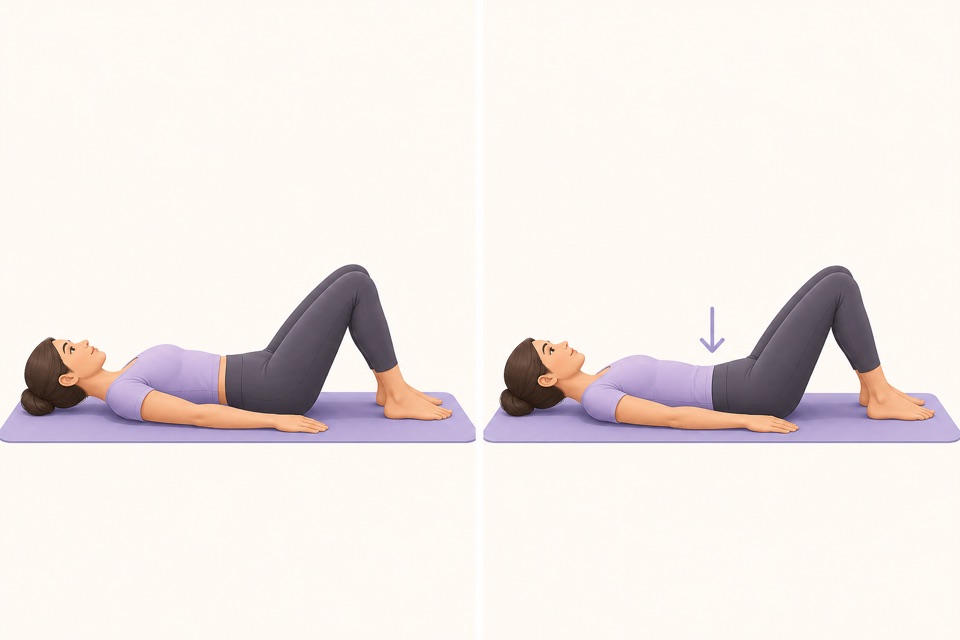
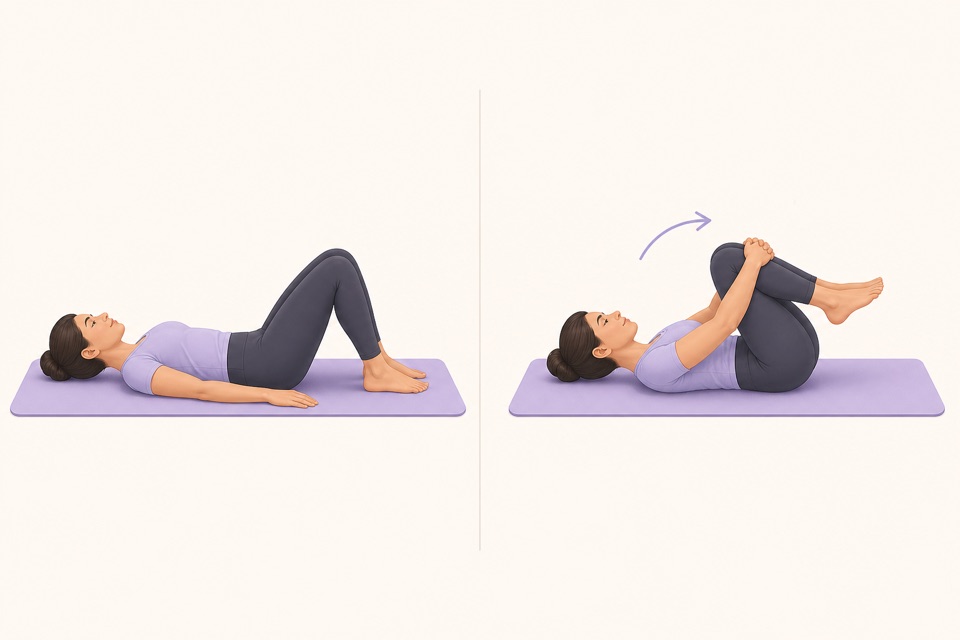
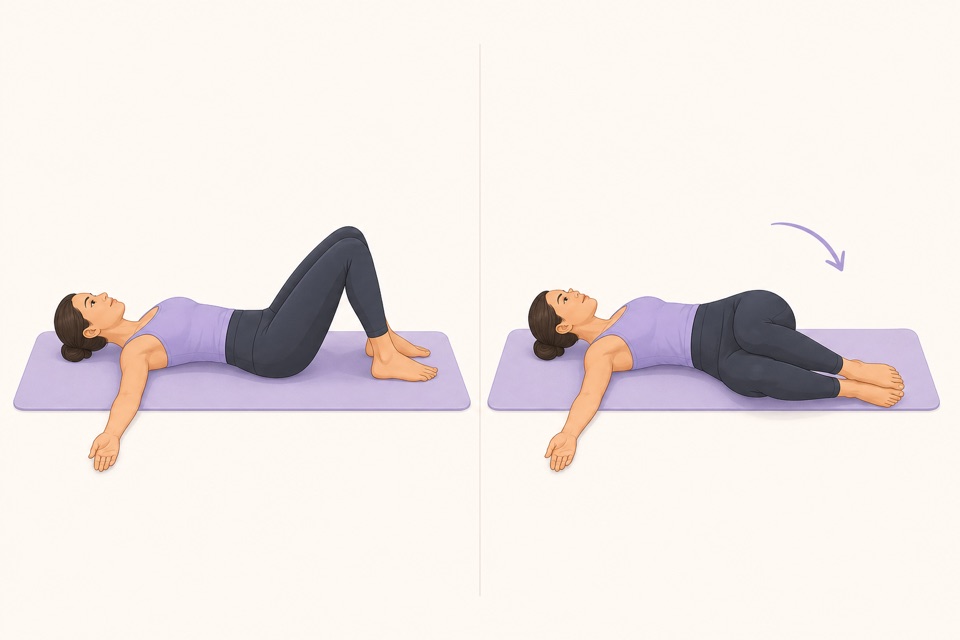
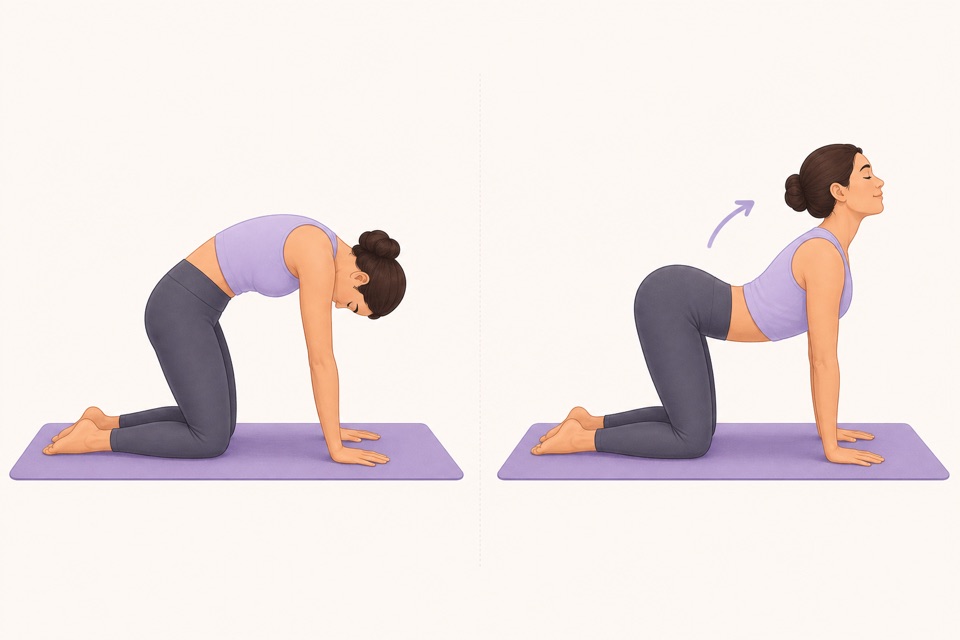
| Move | Time | Why it helps | Make it easier | | --- | ---: | --- | --- | | Breathing with knees bent | 45 sec | Starts supported and calm | Rest hands on ribs | | Pelvic tilts | 45 sec | Adds tiny lower-back motion | Make the tilt smaller | | One-knee-to-chest | 60 sec | Gives the hips and back a mild reset | Hold behind the thigh | | Lower trunk rotation | 60 sec | Moves back and hips without standing | Keep knees closer together | | Cat-cow or seated cat-cow | 60 sec | Adds flexion and extension gently | Do it seated on the bed | | Supported hip flexor stretch | 90 sec | Opens the front of the hips | Use a wall or bed frame | | Easy walk | 60 sec | Turns stretching into normal movement | Walk around the room |
If you only have three minutes, do breathing, pelvic tilts, lower trunk rotations, and a short walk. A tiny routine that happens is better than a perfect one you avoid.
From Wiggle
Recommended moves
Should you stretch your lower back or hips first in the morning?
Start with gentle lower-back motion, then add hips before deeper back stretches. Hips matter because they influence how your back feels when you stand, walk, bend, and sit. A hip-aware routine is usually easier than chasing one intense lower-back stretch.
Use this comparison:
| If you wake up feeling... | Try first | Avoid first | | --- | --- | --- | | Back feels locked up | Breathing, pelvic tilts, trunk rotations | Hard twisting | | Hips feel short or tight | Supported hip flexor stretch | Overarching the back | | Glutes feel tight | Knees-to-chest or figure-four later | Bouncing into range | | Whole body feels groggy | Easy walk after supported moves | A long new routine |
For more hip-specific work, use the glute stretches guide or check your starting point with the hip mobility test. For a broader first-move habit, use the morning mobility routine.
How do you keep morning back stretches safe?
Keep morning back stretches mild enough that you can breathe normally and stop before the routine becomes impressive. Mayo Clinic's flexibility guidance emphasizes avoiding painful stretching, and general back-pain guidance from MedlinePlus and the NHS points people toward staying active while getting help for concerning symptoms.
Use this checklist:
- Start on your back or seated before standing.
- Keep each stretch at mild tension, not pain.
- Move slowly enough that you can notice symptoms changing.
- Use support from a wall, bed, or chair when balance feels uncertain.
- Skip any stretch that sends symptoms down the leg.
- Ask a qualified professional about new, severe, persistent, radiating, injury-related, or medical-condition-related symptoms.
This is also why a guided timer helps. Without one, it is easy to hold too long, change moves randomly, or keep searching for a more dramatic stretch.
How can Wiggle make this easier to repeat?
Wiggle reduces the hidden work in morning stretches for back pain: choosing moves, remembering the order, timing each step, and deciding whether a short session counts. Save one gentle routine, start it before checking messages, and repeat it for a week before changing anything.
The specific next step is simple: open Wiggle tomorrow morning, run a 7-minute back-friendly routine, and stop while it still feels easy. If you want a lighter version on rushed days, the five-minute stretching routine gives you a smaller fallback.
Sources
Why we keep it gentle
These guides are written for everyday stiffness and habit-building. They are grounded in mainstream guidance on flexibility, movement, and when to seek medical help.
- Stretching: Focus on flexibilityMayo Clinic
- Back painMedlinePlus
- Low back painNHS
- Physical Activity Guidelines for AmericansU.S. Department of Health and Human Services
FAQ
Questions people ask
What are the best morning stretches for back pain?
The best morning stretches for back pain are gentle, supported movements: slow breathing with knees bent, pelvic tilts, knees-to-chest, lower trunk rotations, cat-cow, a supported hip flexor stretch, and a short walk. Keep every movement mild and stop if symptoms worsen.
Should I stretch my back as soon as I wake up?
Start with small supported movements before deeper stretches. Your back and hips have been still for hours, so the first goal is easy motion, not maximum range.
How long should morning back stretches take?
Five to eight minutes is enough for a useful morning reset. If you are rushed or uncertain, do the first three moves only: breathing, pelvic tilts, and lower trunk rotations.
What if morning stretches make my back pain worse?
Stop the routine if a movement creates sharp pain, numbness, weakness, dizziness, spreading symptoms, or pain that worries you. Ask a qualified professional about new, severe, persistent, injury-related, or radiating symptoms.
How can Wiggle help with morning back stiffness?
Wiggle makes morning back stretches easier to repeat by giving you a saved routine, timer, movement order, and gentle prompts, so you do not have to decide what to do while stiff and half-awake.