Wiggle guide
Hip Mobility Test: A Gentle 5-Minute Check Before You Stretch
Use this simple hip mobility test to check rotation, tightness, and side-to-side differences before choosing hip stretches or a guided Wiggle routine.
hip mobility test
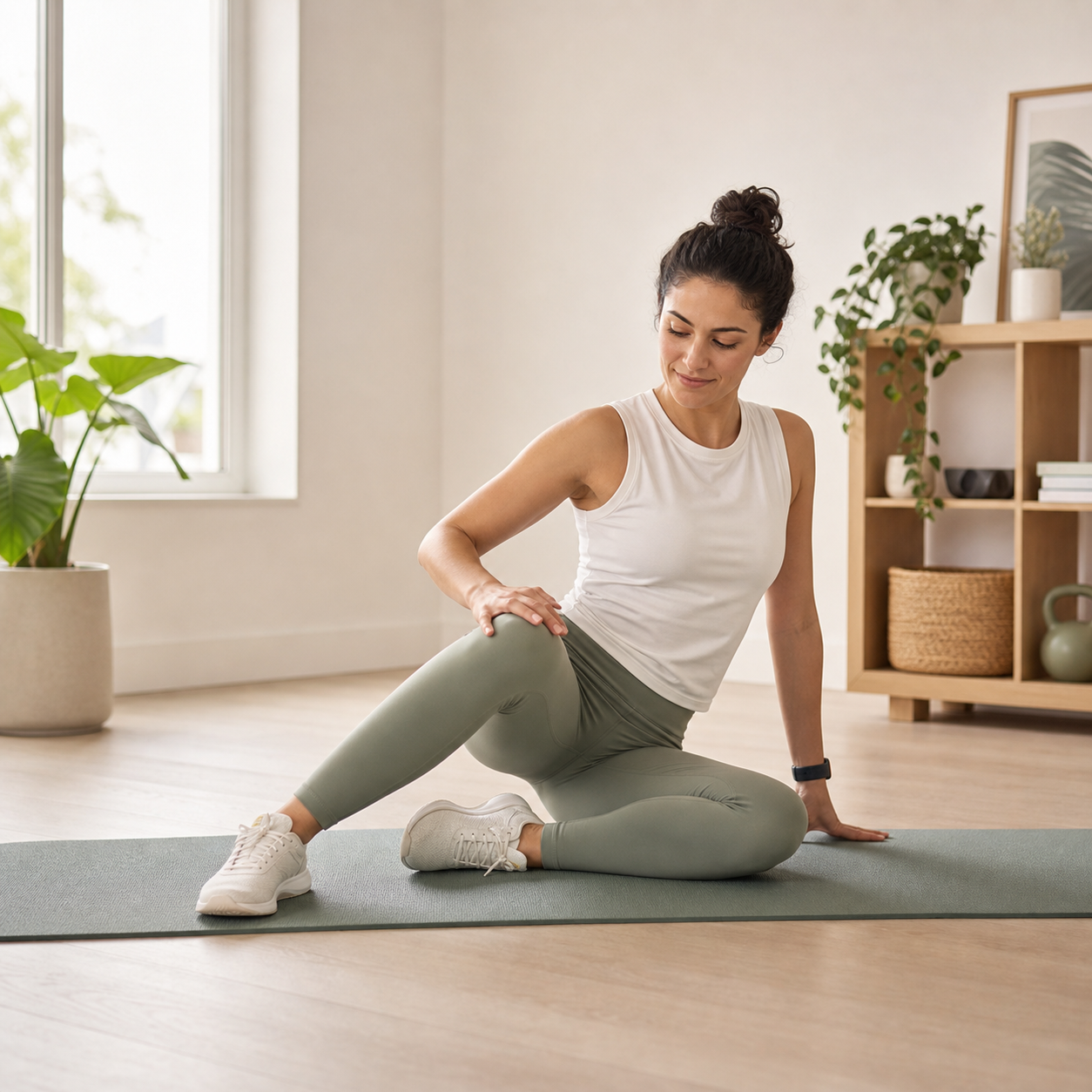
The frustrating part about tight hips is not knowing what to do next. You open a stretch routine, guess at a hip flexor pose, force one side deeper than the other, and finish with the same question: did that actually match what your body needed?
A hip mobility test gives you a faster decision rule. Spend five calm minutes checking rotation, hip flexor comfort, glute range, and side-to-side difference. Then choose a smaller routine that fits the result instead of throwing every hip stretch at the problem. The hip mobility stretches guide matches each result to a gentle next movement, while the hip mobility warm-up for golfers turns the check into a gradual pre-round sequence.
What is a hip mobility test?
A hip mobility test is a simple movement check that shows how your hips move through common positions such as internal rotation, external rotation, extension, flexion, and side-to-side shifting. It is not a diagnosis, pain screen, or substitute for a clinician.
Use it for everyday stiffness and habit-building. The point is to answer practical questions: Which side feels tighter? Which position feels calm? Which stretch should come first? Which range should you avoid forcing today?
Hip mobility is your ability to move the hip joint through useful ranges with control, comfort, and enough freedom for daily positions like sitting, standing, walking, squatting, and stepping.
What is the fastest hip mobility test at home?
The fastest useful home check is a 5-minute sequence: warm up briefly, compare seated hip rotation, check a supported hip flexor position, compare figure-four comfort, then finish with a side lunge shift. You are looking for comfort and control, not a perfect range.
Use this order:
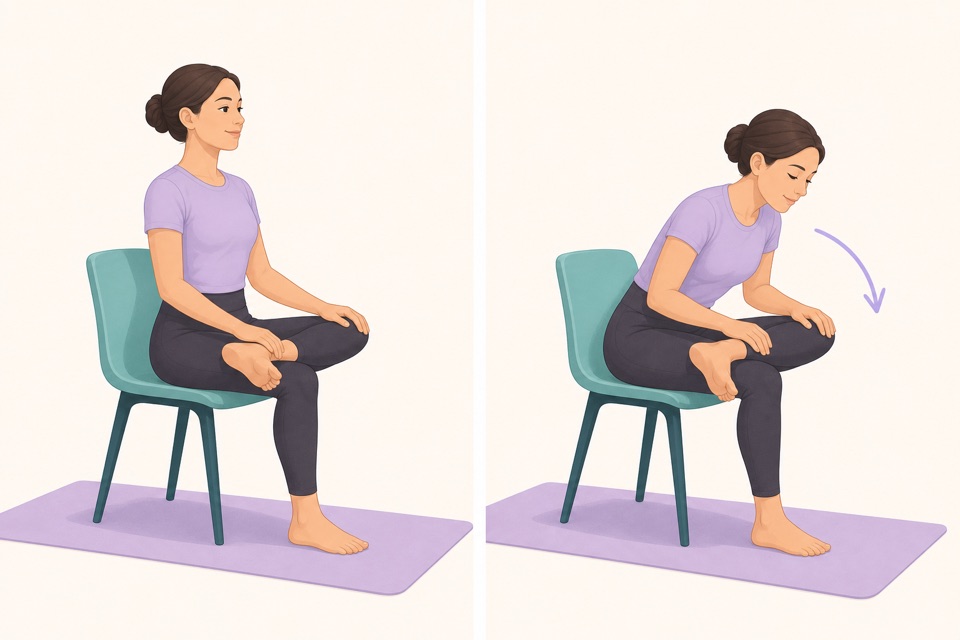
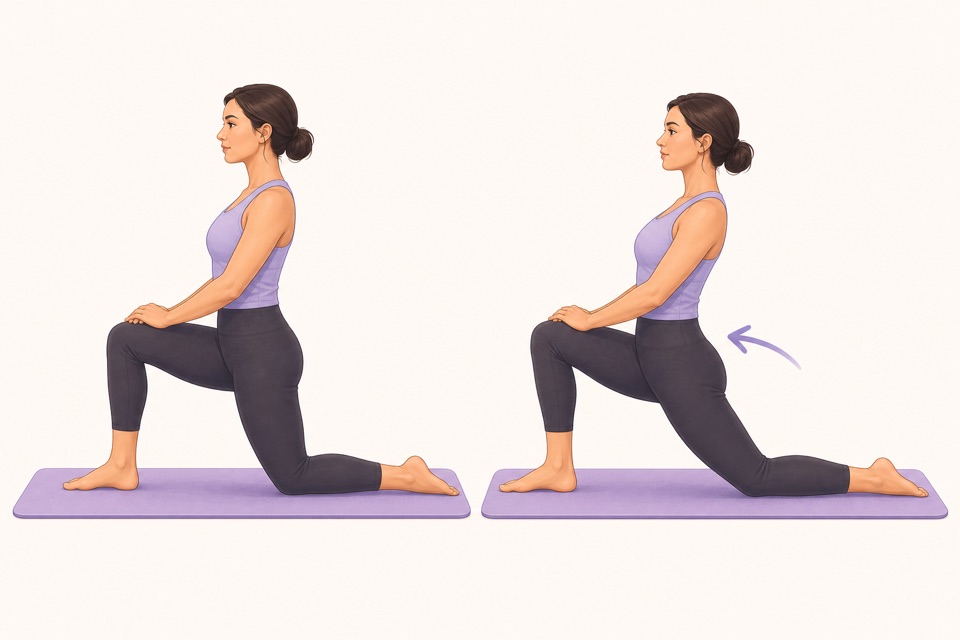
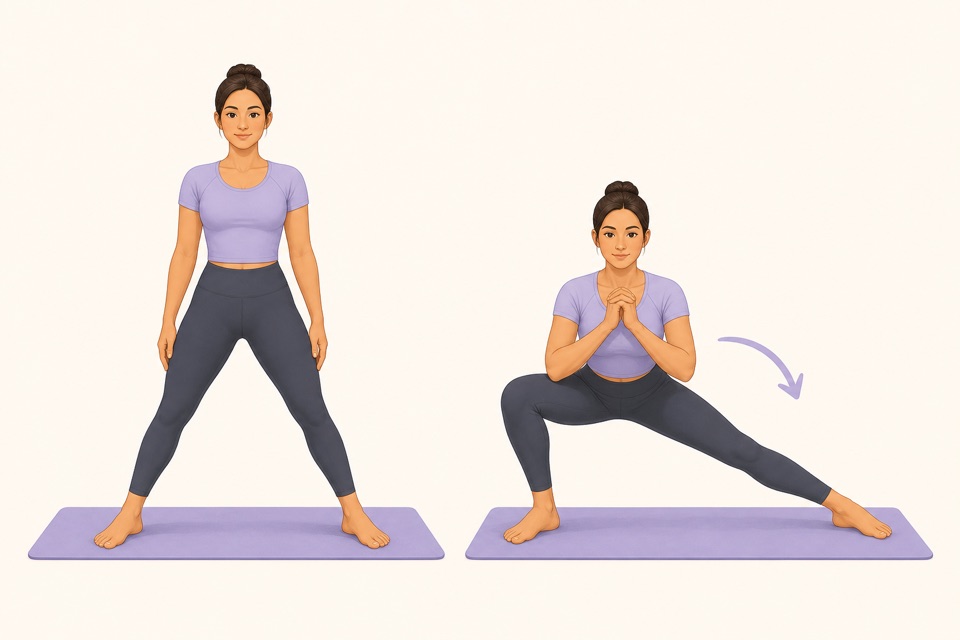
| Check | Time | What to notice | What it suggests | | --- | ---: | --- | --- | | Easy walk or march | 60 sec | Does movement reduce stiffness? | Start routines with motion before holds | | Seated hip rotation | 60 sec | Does one knee rotate less comfortably? | Add gentle internal and external rotation work | | Supported hip flexor position | 60 sec | Does the front of the hip feel blocked or tight? | Use a small hip flexor stretch before deeper poses | | Seated figure-four | 60 sec | Does outer-hip tension feel mild or cranky? | Choose glute stretches that do not irritate the knee | | Side lunge shift | 60 sec | Does the inner thigh tolerate a small shift? | Add adductor mobility only in a comfortable range |
If you only learn one thing, learn your working range. The useful range is the place where you can breathe normally, control the movement, and stop before pain or pinching.
From Wiggle
Recommended moves
How do you test hip internal and external rotation?
Sit tall near the front of a stable chair with both feet on the floor. Slowly move one knee inward a few inches, return to center, then move it outward a few inches. Repeat on the other side and compare smoothness, comfort, and control.
This is not a flexibility contest. A cleaner test is smaller and slower:
- Sit tall without leaning back.
- Keep both sitting bones grounded.
- Move the right knee inward while the foot stays light.
- Return to center.
- Move the right knee outward without twisting the spine.
- Repeat on the left side.
- Notice whether one side feels blocked, pinchy, shaky, or much smaller.
Searchers often ask "why does my hip internal rotation feel limited?" The practical answer is that many things can influence the feeling: long sitting, low movement variety, guarding, strength, anatomy, or symptoms that need professional attention. For a wellness routine, do not diagnose it. Choose gentle rotation work and stop before pain.
For a broader hip sequence after this check, use hip mobility exercises for beginners, stretches for tight hips, or how to release tight hips.
What should you do with the test result?
Your result should change the routine, not become a score you obsess over. If rotation feels limited, pick small controlled movement. If the hip flexor position feels tight, use a supported stretch. If figure-four feels cranky, choose a gentler glute option.
Use this decision table:
| What you noticed | Start with | Avoid today | | --- | --- | --- | | One side rotates less | Small seated rotations, then easy walking | Forcing both sides to match | | Front of hip feels tight | Supported hip flexor stretch | Deep lunges with back arching | | Outer hip feels stiff | Seated or lying figure-four | Pushing the knee down | | Inner thigh feels guarded | Tiny side lunge shifts | Wide aggressive holds | | Lower back takes over | Knees-to-chest, pelvic tilt, easy walk | Twisting harder through the spine |
If your main issue is sitting-related stiffness, hip stretches while sitting at a desk may be the easiest next step. If the knee-in rotation check feels limited, use hip internal rotation stretches before returning to deeper 90/90 work. If the ankle-over-thigh or knee-out check feels limited, use hip external rotation stretches before deeper outer-hip positions. If glutes feel like the limiting area, use the glute stretches routine instead. If the side-lunge check points to guarded inner thighs, the adductor stretches guide gives you a smaller next routine.
When should you stop a hip mobility test?
Stop a hip mobility test if you feel sharp pain, numbness, tingling, weakness, radiating symptoms, dizziness, a catching sensation that worries you, or pain linked to an injury or medical condition. A mobility check should feel boring, clear, and controlled.
Mayo Clinic stretching guidance emphasizes gentle technique, normal breathing, and avoiding pain. That matters here because testing can quietly turn into forcing. If you keep trying to "prove" range, the test stops being useful.
Use this checklist:
- Warm up for at least one minute.
- Keep every movement slow.
- Compare sides without judging them.
- Stop before pain or pinching.
- Do not bounce into range.
- Do not hold your breath.
- Ask a qualified professional about new, severe, persistent, radiating, injury-related, or medically concerning symptoms.
How can Wiggle turn a hip test into a routine?
Wiggle helps because the hard part is usually not the test; it is choosing what to do after the test. A saved routine gives you the next move, the timer, the side switch, and the stopping point before you start overthinking it.
A simple post-test Wiggle routine could look like this:
- 60 seconds easy marching.
- 45 seconds seated hip rotation.
- 45 seconds each side hip flexor stretch.
- 45 seconds each side seated figure-four.
- 45 seconds side lunge shifts.
- 60 seconds slow walk.
That is enough to act on the test without turning it into a long workout. For app-led consistency, start with the Wiggle download page and keep the routine short enough to repeat. If you want help choosing the right app features before downloading, use the mobility app checklist.
Sources
Why we keep it gentle
These guides are written for everyday stiffness and habit-building. They are grounded in mainstream guidance on flexibility, movement, and when to seek medical help.
- Stretching: Focus on flexibilityMayo Clinic
- Stretching and flexibilityMayo Clinic
- Exercise and Physical FitnessMedlinePlus
- Physical Activity Guidelines for AmericansU.S. Department of Health and Human Services
FAQ
Questions people ask
What is a hip mobility test?
A hip mobility test is a simple movement check that helps you notice how your hips move through rotation, flexion, extension, and side-to-side positions. It is not a diagnosis. Use it to choose gentler stretches, compare sides, and decide whether everyday stiffness needs a shorter routine or professional guidance.
What is the easiest hip mobility test to start with?
The easiest starting point is a seated hip rotation check: sit tall, keep both feet grounded, and slowly rotate one knee inward and outward without forcing range. Compare comfort, control, and side-to-side difference rather than chasing a perfect number.
How often should I test hip mobility?
Check hip mobility once or twice a week, or before choosing a hip routine. Daily testing can make you overthink normal variation. A short check followed by 5 to 8 minutes of gentle movement is usually more useful than repeated testing.
What should I do if one hip feels much tighter?
Use the tighter or less comfortable side as your limit, then choose smaller ranges and shorter holds on both sides. Stop if you feel sharp pain, pinching, numbness, weakness, radiating symptoms, or anything that feels medically concerning.
How can Wiggle help after a hip mobility test?
Wiggle turns the test result into a simple next routine: hip flexor work, figure-four glute stretching, adductor movement, hamstring resets, and short timers so you can repeat the habit without rebuilding the plan every time.