Wiggle guide
Hip Mobility Exercises for Beginners: A Gentle 7-Minute Routine
Hip mobility exercises for beginners who feel stiff after sitting and want a simple 7-minute routine with clear stop signs and easy options.
hip mobility exercises for beginners
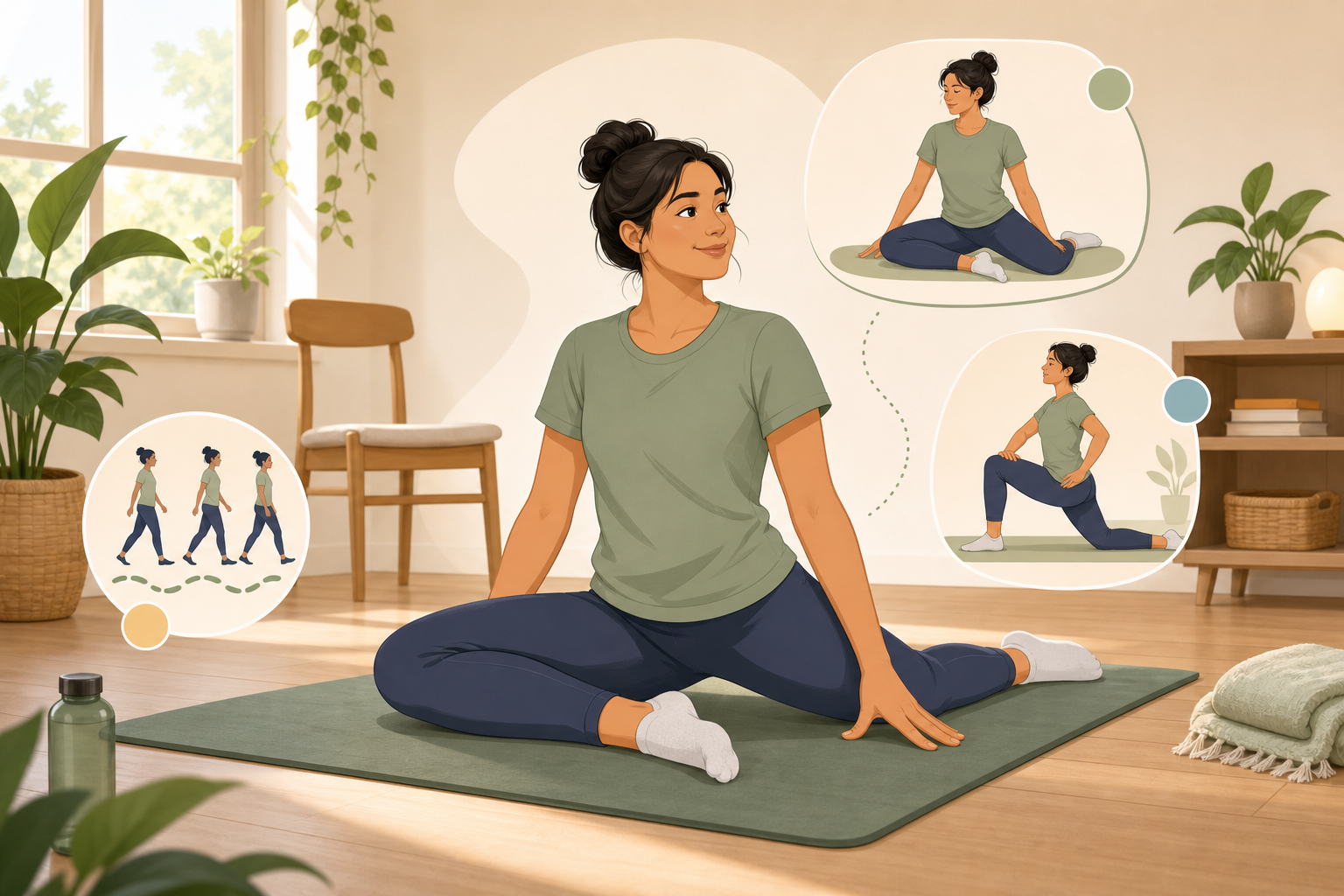
Tight hips make simple things feel annoying: standing up from a chair, taking the first few steps after work, sitting cross-legged, or starting a workout without feeling stuck. The usual mistake is going straight into the deepest hip stretch you know and hoping more intensity fixes it.
Beginner hip mobility works better when it is small, repeatable, and easy to choose. Use the routine below when your hips feel stiff after sitting and you want a clear 7-minute reset before walking, stretching, or opening Wiggle for a guided session.
If you already know the basics and want to match each movement to the front, outer, inner, or rotating hip, use the hip mobility stretches decision guide.
What are hip mobility exercises for beginners?
Hip mobility exercises for beginners are gentle movements that help your hips move through useful ranges without forcing pain or chasing a perfect pose. The best starter routine includes a warm-up, hip rotation, hip flexor work, outer-hip movement, and a small inner-thigh shift.
Hip mobility is the ability to move your hip joint through everyday positions with control, comfort, and enough range for sitting, standing, walking, bending, stepping, and getting down to the floor.
For a beginner, the goal is not to prove flexibility. The goal is to find the smallest useful movement that makes the next step easier. If you want a quick screen before choosing exercises, use the hip mobility test first. If you already know your hips feel tight after sitting, start with this routine and keep the first round boring on purpose.
What is the best 7-minute hip mobility routine for beginners?
The best beginner hip mobility routine starts with easy movement, then checks rotation, front-of-hip stiffness, outer-hip range, and inner-thigh comfort. Seven minutes is enough to move both sides without turning the session into a workout.
Use this order:
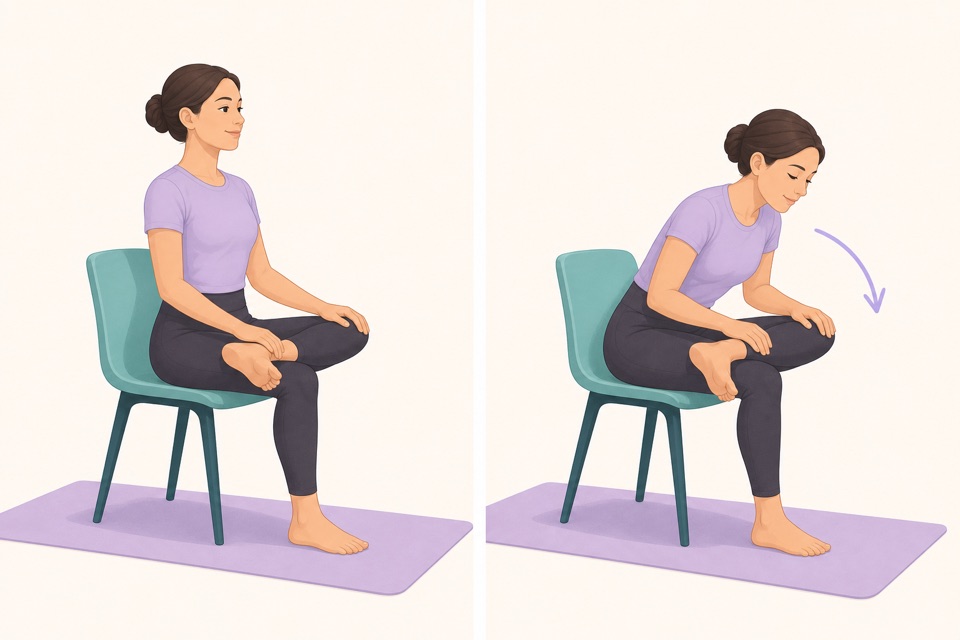
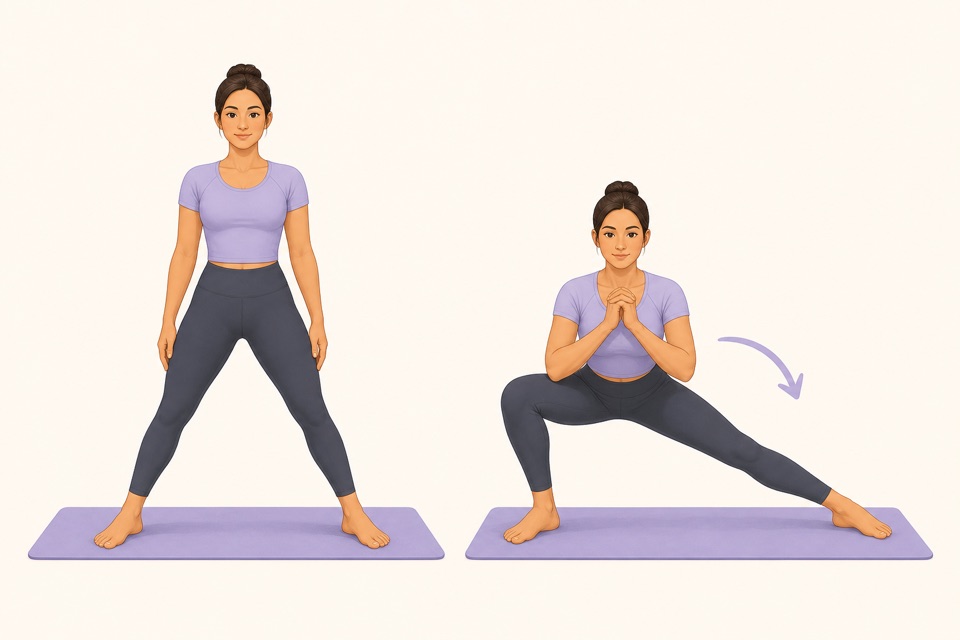
| Move | Time | How to keep it beginner-friendly | | --- | ---: | --- | | Easy walk or march | 60 sec | Move lightly before asking the hips for more range | | Seated hip rotations | 60 sec | Move one knee inward and outward in a small range | | Supported hip flexor stretch | 90 sec | Use a chair, wall, or cushion; keep the back comfortable | | Seated figure-four | 90 sec | Sit tall and avoid pressing the knee down | | Small side-lunge shifts | 90 sec | Shift only far enough to feel mild inner-thigh tension | | Slow walk or breathing | 60 sec | Let the hips settle before deeper stretching |
This sequence works because it reduces the decision cost. You do not need to know whether your exact limitation is hip internal rotation, hip external rotation, hip flexor tightness, glute stiffness, or adductor guarding before you begin. You touch each area gently, then let the clearest tight spot guide tomorrow's routine.
From Wiggle
Recommended moves
How do you do seated hip rotations?
Sit near the front of a stable chair with both feet on the floor. Slowly move one knee inward a few inches, return to center, then move it outward a few inches. Repeat on the other side and compare comfort, control, and side-to-side difference.
This is the easiest first move because it does not require floor mobility. Keep the range small enough that your spine stays quiet and your breath stays normal. If one side feels limited, do not try to make both sides match. Use the smaller side as today's limit.
If the inward movement feels especially limited, use hip internal rotation stretches as the narrower follow-up. If the outward movement or figure-four shape feels blocked, use hip external rotation stretches before trying deeper hip openers.
How do beginners stretch hip flexors without overdoing it?
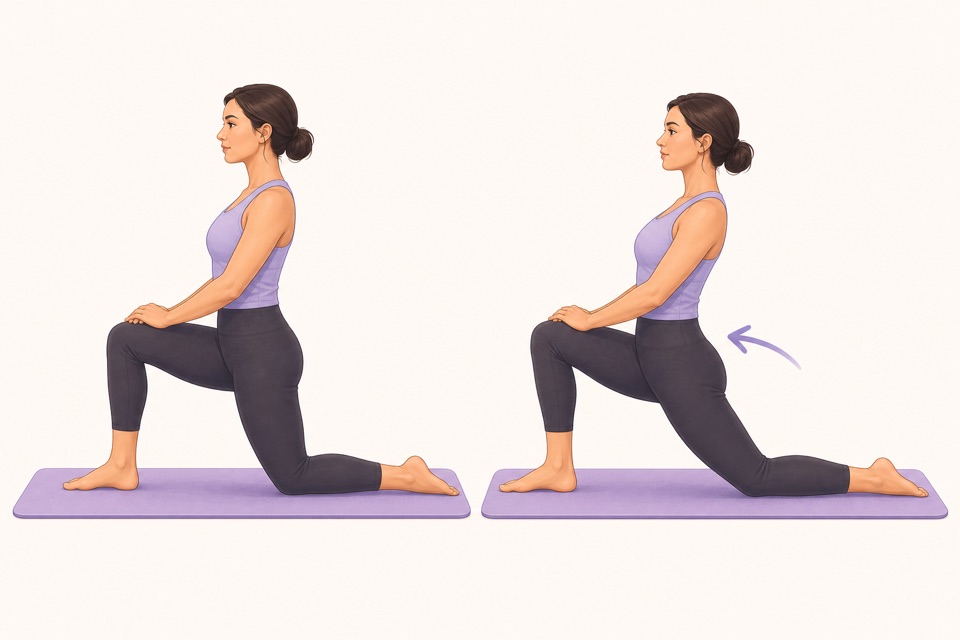
Beginners should stretch hip flexors with support, a short hold, and a neutral lower back. The stretch should feel mild at the front of the hip, not like a deep lunge contest. Use a chair, wall, or cushion so balance does not become the hard part.
Try this version:
- Kneel on a cushion or stand in a short split stance.
- Hold a chair or wall if balance is distracting.
- Gently tuck the pelvis like you are making the front hip long.
- Shift forward only a little.
- Breathe for 20 to 30 seconds.
- Switch sides before either side becomes intense.
If this is the main tight area, the hip flexor stretches guide gives you more options. If your lower back keeps taking over, pair it with lower back and hip pain stretches and keep every position easier than you think you need.
Once the supported version feels calm, you can try the couch stretch as a slightly more specific front-of-hip progression. Keep the first hold short and use knee padding.
What should you do if 90/90 feels too hard?
If 90/90 feels too hard, do not force it. Start with seated rotations, seated figure-four, and small side-lunge shifts first. The 90/90 position asks for hip rotation on both sides at once, which can be too much for a first session.
Use this decision rule:
| If this happens | Do this instead | | --- | --- | | Front leg feels blocked | Seated figure-four or hip external rotation work | | Back leg feels awkward | Seated hip internal rotation work | | Lower back rounds hard | Sit on a cushion or stay in the chair | | Knee feels uncomfortable | Reduce the angle and stop pressing range | | Whole position feels confusing | Use a Wiggle timed routine before floor work |
When the chair versions feel calm, use the 90/90 hip stretch as a next step. The floor version should feel like a skill you are practicing, not a position you have to win.
How often should beginners do hip mobility exercises?
Beginners usually do best with short hip mobility sessions three to five times per week, especially after long sitting blocks. The useful habit is frequency, not intensity. A 7-minute routine you repeat beats a 30-minute session you dread.
Try this weekly pattern:
- After work: use the 7-minute beginner routine.
- Before a walk: do seated rotations and a short hip flexor stretch.
- Before bed: use a calmer version from hip stretches before bed.
- On stiff mornings: pair hips with the morning mobility routine.
- On sitting-heavy days: use hip stretches while sitting at a desk.
Mayo Clinic's stretching guidance emphasizes gentle technique and avoiding pain. The same rule applies here: mild, repeated movement is the point. Stop chasing the deepest shape and build a routine your body can trust.
When should you stop hip mobility exercises?
Stop hip mobility exercises if you feel sharp pain, numbness, tingling, weakness, radiating symptoms, dizziness, a catching sensation that worries you, or pain connected to an injury or medical condition. Beginner mobility should feel clear, controlled, and easy to leave.
Use this checklist before each session:
- Warm up for at least one minute.
- Keep the first round smaller than your maximum range.
- Breathe normally.
- Compare sides without forcing symmetry.
- Skip any move that irritates your knee, back, or hip.
- Ask a qualified professional about new, severe, persistent, radiating, injury-related, or medically concerning symptoms.
How can Wiggle make hip mobility easier to repeat?
Wiggle helps because beginners do not need more random exercises; they need a simple next session. A timed routine removes the tiny decisions that usually stop the habit: which move, how long, which side, what comes next, and when to stop.
Open Wiggle after the first manual run and save a short hip routine:
- 60 seconds easy walking or marching.
- 45 seconds seated hip rotations.
- 45 seconds each side supported hip flexor stretch.
- 45 seconds each side seated figure-four.
- 45 seconds small side-lunge shifts.
- 60 seconds slow walk.
If one area keeps standing out, rotate the routine with stretches for tight hips, how to release tight hips, or the broader mobility app guide. The easiest path is not the most intense routine. It is the one you can start again tomorrow.
Sources
Why we keep it gentle
These guides are written for everyday stiffness and habit-building. They are grounded in mainstream guidance on flexibility, movement, and when to seek medical help.
- Stretching: Focus on flexibilityMayo Clinic
- Physical Activity Guidelines for AmericansU.S. Department of Health and Human Services
- Exercise and Physical FitnessMedlinePlus
- American College of Sports Medicine: Stretching and FlexibilityAmerican College of Sports Medicine
FAQ
Questions people ask
What are hip mobility exercises for beginners?
Hip mobility exercises for beginners are gentle movements that help the hips move through useful ranges without forcing a deep stretch. Start with easy walking, seated hip rotations, supported hip flexor stretches, figure-four options, and small side-lunge shifts.
How long should a beginner hip mobility routine take?
Start with 6 to 8 minutes. That is long enough to warm up, move both hips in a few directions, and stop before the routine turns into a workout you avoid. Repeat short sessions more often instead of doing one aggressive session.
Should hip mobility exercises hurt?
No. Hip mobility exercises should feel mild, controlled, and easy to breathe through. Stop if you feel sharp pain, numbness, tingling, weakness, radiating symptoms, dizziness, or anything that feels medically concerning.
What is the easiest hip mobility exercise to start with?
The easiest starting exercise is seated hip rotation. Sit tall on a stable chair, keep both feet on the floor, and slowly move one knee inward and outward in a small range. Compare sides without forcing them to match.
How can Wiggle help with hip mobility exercises?
Wiggle helps by turning beginner hip mobility into a timed routine with clear moves, side switches, and a gentle stopping point. That makes it easier to repeat the habit after sitting, before a walk, or before deeper stretching.