Wiggle guide
90/90 Hip Stretch: A Gentle Way to Open Tight Hips
Learn the 90/90 hip stretch for tight hips, with beginner modifications, stop signs, a 6-minute routine, and an easy Wiggle follow-up plan.
90/90 hip stretch
The annoying thing about tight hips is that the usual advice jumps straight to big poses. You try to fold deeper, push the knee down, or copy a perfect mobility video, and the hip answers with a pinch instead of relief.
The 90/90 hip stretch works better when you treat it as a position to explore, not a test to pass. Use support, keep the first round small, and let the stretch tell you which hip needs a gentler follow-up routine.
What is the 90/90 hip stretch?
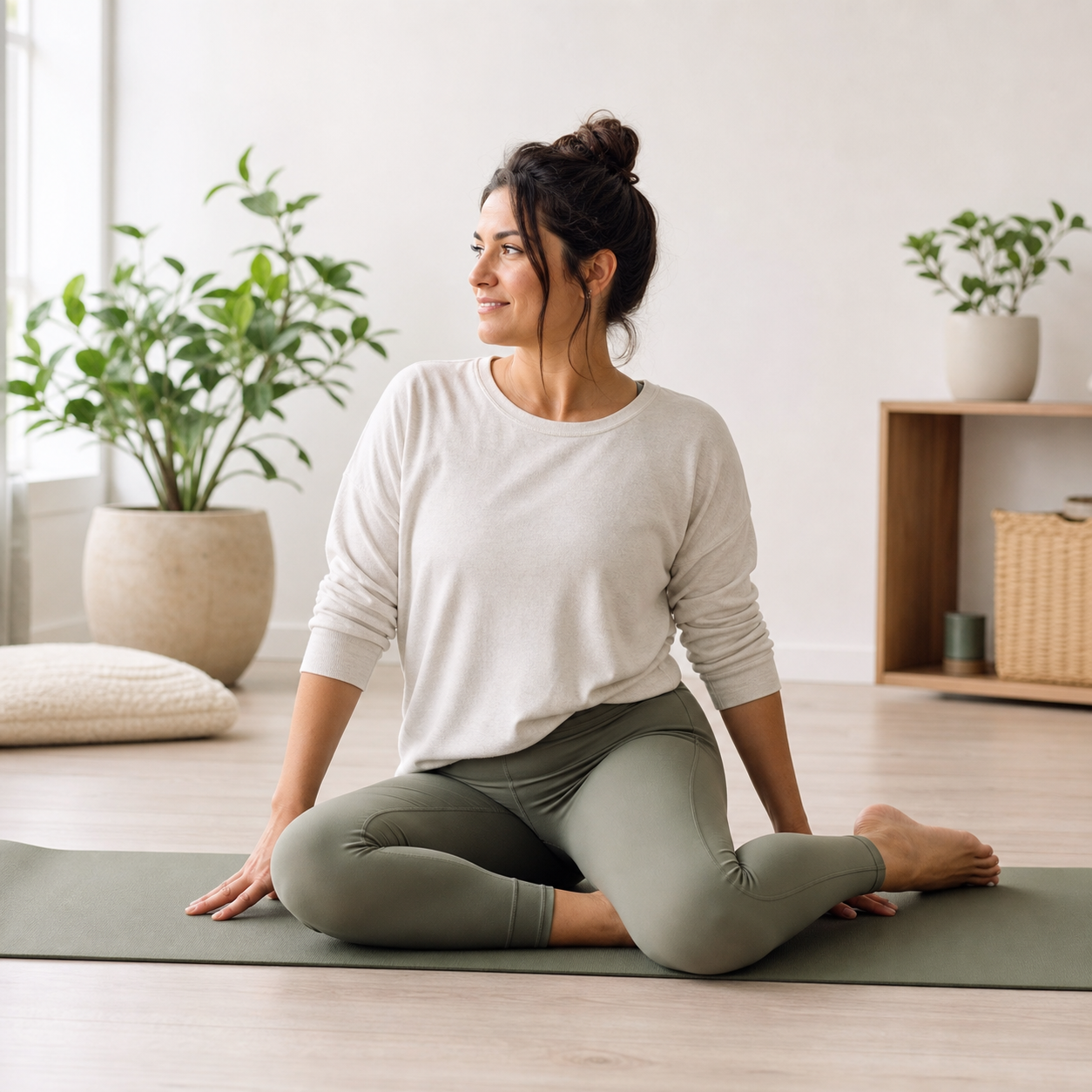
The 90/90 hip stretch is a seated hip mobility position where the front leg and back leg are both bent near 90 degrees. It asks one hip to work mostly in external rotation while the other works mostly in internal rotation.
The 90/90 hip stretch is a floor-based hip rotation drill for everyday stiffness, tight hips, and side-to-side mobility work. The goal is comfortable hip control, not forcing the knees into a perfect square.
It is useful because it shows you both sides quickly. One side may feel smooth while the other feels blocked, guarded, or awkward. That difference gives you a simple decision: make the position easier and build from there.
If you want a quick screen before choosing this stretch, start with the hip mobility test. If the floor position feels too much today, use hip mobility exercises for beginners first. If you already know your hips feel tight after sitting, the 90/90 position can be a good next step after a short walk.
How do you do the 90/90 hip stretch safely?
Sit with the front leg bent near 90 degrees and the back leg bent near 90 degrees, then support yourself with your hands or a cushion. Stay tall, breathe normally, and use a smaller angle if either hip feels pinchy.
Use this beginner setup:
- Warm up with 60 seconds of easy walking or marching.
- Sit on a folded towel, cushion, or yoga block if the floor position feels hard.
- Bring the front shin across your body with the knee bent.
- Bend the back leg beside you instead of forcing it behind you.
- Place both hands on the floor behind you for support.
- Keep the chest tall and breathe for 20 to 45 seconds.
- Switch sides slowly.
The best early version may not look like a perfect "90/90." That is fine. A supported 70/70 shape that feels calm is more useful than a textbook angle that makes your hip pinch.
From Wiggle
Recommended moves
Why does the 90/90 stretch feel hard?
The 90/90 stretch can feel hard because it asks both hips to rotate at the same time. Long sitting, limited movement variety, outer-hip tension, hip flexor tightness, inner-thigh guarding, or normal anatomy can make one side feel much harder.
Use the feeling as information, not failure. Searchers often ask "why does the 90/90 stretch hurt?" For a general wellness routine, the practical answer is simple: do not push through pain. Make the shape smaller or choose a different hip stretch.
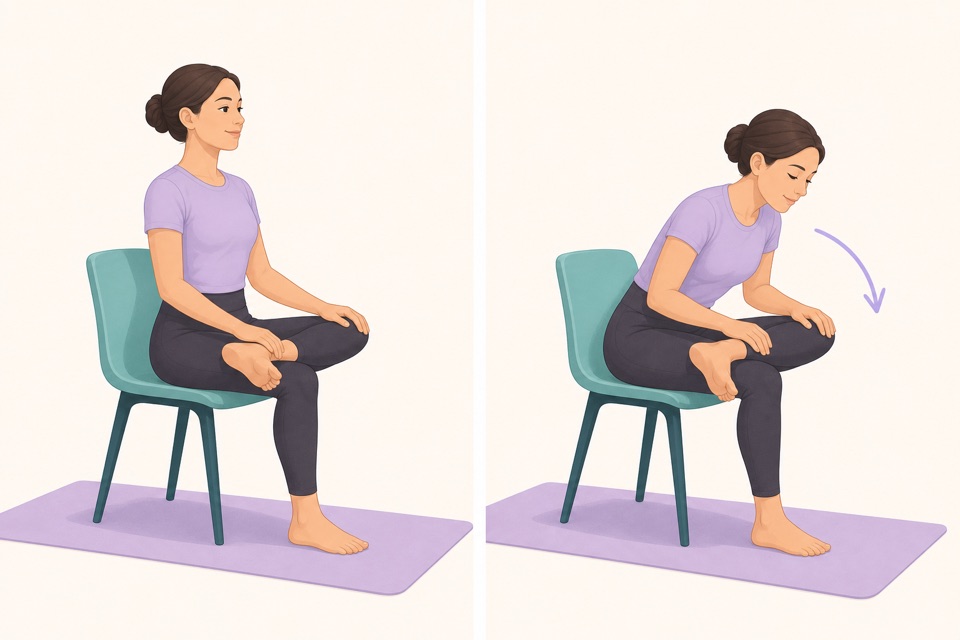
| What you feel | Likely routine choice | Make it easier | | --- | --- | --- | | Front hip pinches | Skip the deep lean | Sit higher on a cushion | | Back hip feels blocked | Work smaller rotation | Move the back leg closer | | Knee feels stressed | Use another stretch | Try seated figure-four | | Lower back takes over | Add support | Put hands behind you | | One side feels tighter | Match the calmer side | Shorten both holds |
For a less intense outer-hip option, use glute stretches. If the front leg in 90/90 is the awkward piece, use hip external rotation stretches before trying longer holds. If the back leg is the awkward piece, use hip internal rotation stretches. If the front of the hips feels like the main limiter, start with hip flexor stretches before returning to 90/90.
What is the best 90/90 stretch progression for beginners?
The best beginner progression is supported 90/90, then a small forward lean, then a gentle side switch. Do not add lift-offs, reaches, or aggressive holds until the basic position feels calm on both sides.
Try this 6-minute version:
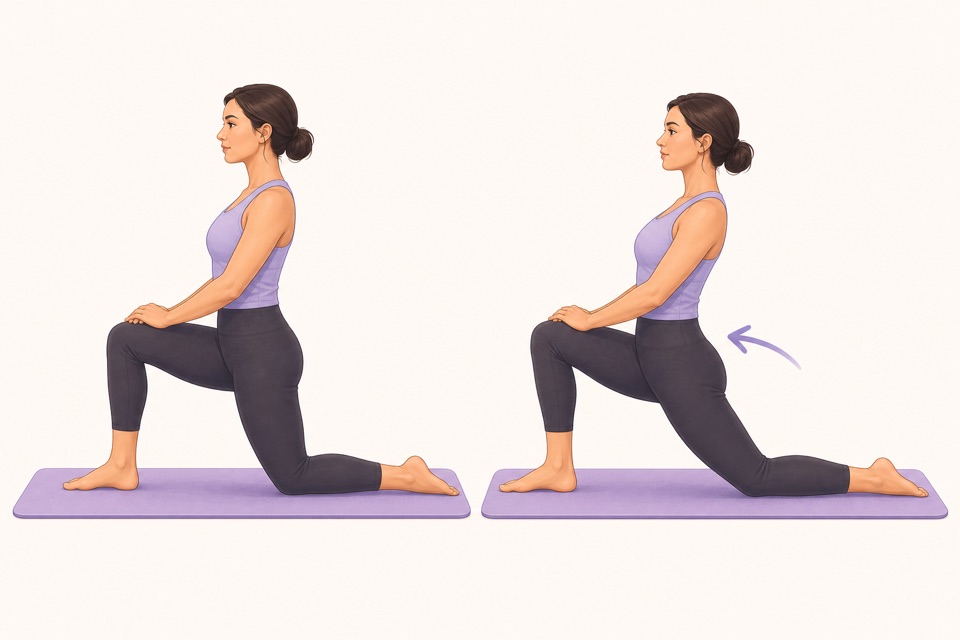
| Step | Time | Goal | | --- | ---: | --- | | Easy walk or march | 60 sec | Warm the hips before floor work | | Supported 90/90 right | 30 sec | Find a mild front-hip stretch | | Supported 90/90 left | 30 sec | Compare sides without forcing | | Small forward lean right | 30 sec | Add tension only if calm | | Small forward lean left | 30 sec | Keep the spine long | | Side-to-side switch practice | 60 sec | Move slowly between sides | | Kneeling hip flexor stretch | 45 sec each side | Balance the front of the hips | | Easy walk | 60 sec | Finish with motion |
If the floor transition feels clunky, skip the side-to-side switch. Stand up, reset, and sit down on the other side. The point is to build a routine you will repeat tomorrow, not win a mobility challenge today.
How often should you do the 90/90 hip stretch?
For everyday stiffness, try the 90/90 hip stretch three to five times per week for 20 to 45 seconds per side. Keep it easy enough that your hips feel calmer afterward, not irritated.
Mayo Clinic stretching guidance emphasizes gentle technique, steady breathing, and avoiding pain. That is the right standard here. A short, repeatable hold usually beats one intense session that makes you avoid stretching for a week.
Use this checklist before each round:
- Warm up first.
- Sit higher if the floor position feels blocked.
- Keep hands down for support.
- Use mild tension only.
- Breathe normally.
- Switch sides before the stretch becomes irritating.
- Stop for sharp pain, pinching, numbness, weakness, radiating symptoms, or symptoms that worry you.
How can Wiggle make the 90/90 stretch easier to repeat?
Wiggle helps by turning the 90/90 hip stretch into a timed routine with warm-up movement, side switches, and easier follow-up moves. That removes the hardest part: deciding what to do after one awkward hip position.
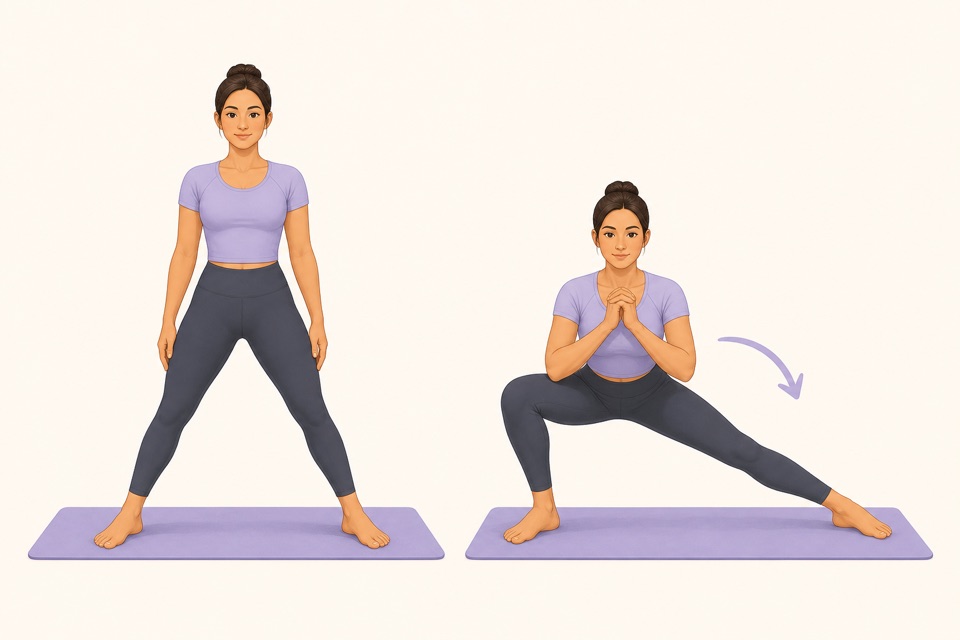
A good Wiggle-style hip routine would pair the 90/90 stretch with a stretches for tight hips sequence, adductor stretches, and a calm finish like walking or breathing. If you want a broader app-led plan, use the mobility app checklist before starting.
If you are using 90/90 as part of a split goal, keep it as a supporting hip-rotation drill rather than the whole plan. The stretching app for splits guide shows how to pair it with hip flexor, hamstring, and adductor work.
If the 90/90 position feels especially relevant before lower-body workouts, use it inside the hip mobility for squats warm-up instead of treating it as a standalone flexibility test.
For app-led consistency, start with the Wiggle download page and keep the session short enough that you can repeat it on sitting-heavy days.
Sources
Why we keep it gentle
These guides are written for everyday stiffness and habit-building. They are grounded in mainstream guidance on flexibility, movement, and when to seek medical help.
- Stretching: Focus on flexibilityMayo Clinic
- Exercise and Physical FitnessMedlinePlus
- Physical Activity Guidelines for AmericansU.S. Department of Health and Human Services
FAQ
Questions people ask
What is the 90/90 hip stretch?
The 90/90 hip stretch is a seated hip mobility position where the front leg and back leg are both bent near 90 degrees. It helps you work on hip external rotation on the front side and hip internal rotation on the back side without needing a deep lunge.
How do beginners do the 90/90 hip stretch?
Beginners should sit on a folded towel or cushion, keep the hands behind the body for support, and use a smaller leg angle if the full position feels pinchy. Hold only mild tension and breathe normally before switching sides.
Why does the 90/90 stretch feel hard?
The 90/90 stretch can feel hard because it asks both hips to rotate at the same time. Long sitting, limited movement variety, glute tension, hip flexor tightness, or simply the shape of your hips can make one side feel much less comfortable.
How long should you hold a 90/90 hip stretch?
Start with 20 to 45 seconds per side. For everyday stiffness, two calm rounds are usually more useful than one intense hold. Stop before sharp pain, pinching, numbness, weakness, or symptoms that worry you.
Can Wiggle guide a 90/90 hip stretch routine?
Yes. Wiggle can turn the 90/90 hip stretch into a short guided hip routine with warm-up movement, timers, side switches, easier options, and follow-up stretches for hip flexors, glutes, and inner thighs.