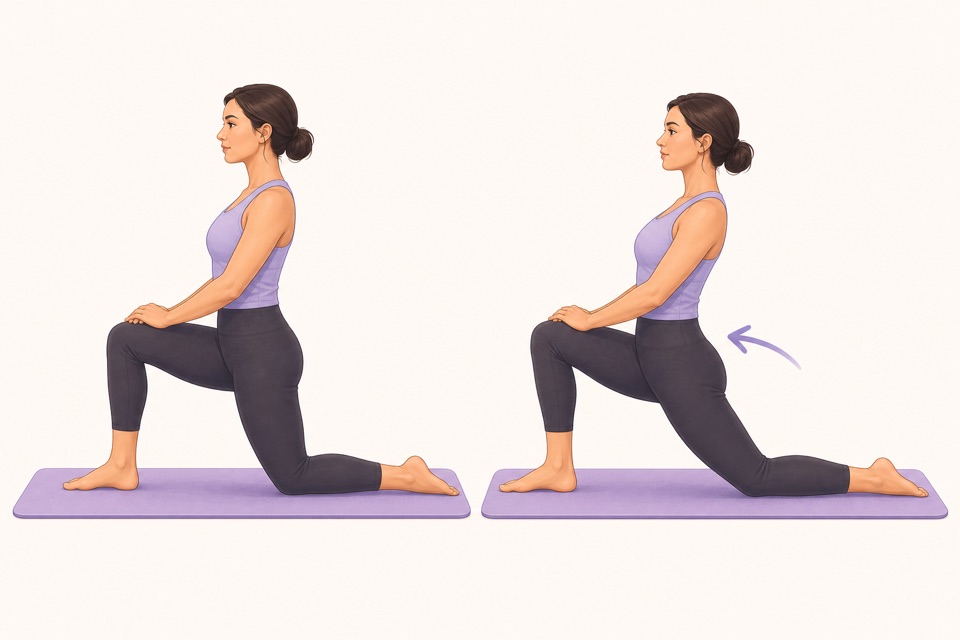
Wiggle guide
Couch Stretch: A Gentle Way to Open Tight Hip Flexors
Learn the couch stretch for tight hip flexors with beginner setup, easier modifications, stop signs, and a short Wiggle routine that keeps the hold calm.
couch stretch
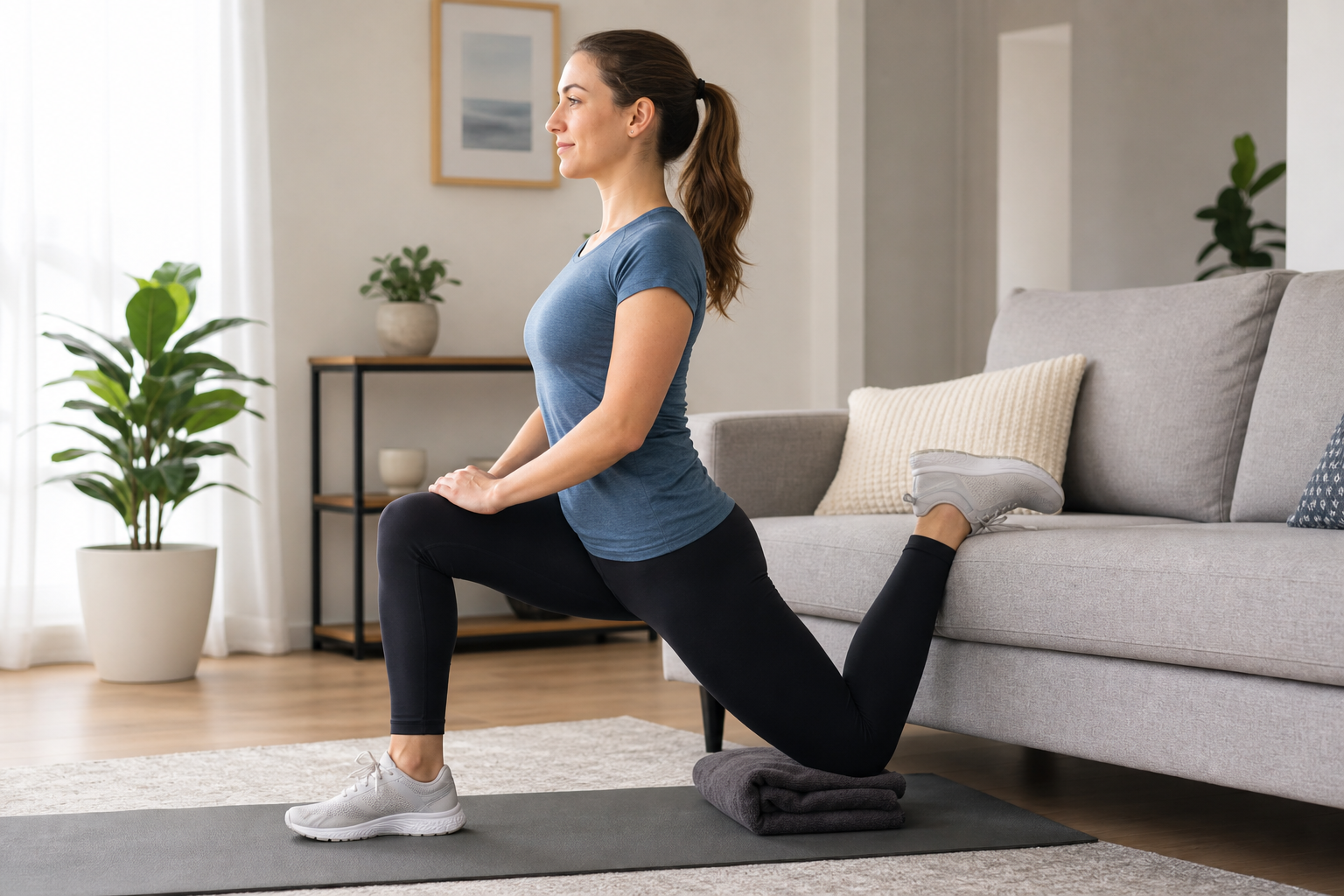
The couch stretch looks simple until you try it cold: one knee on the floor, one foot behind you, front of the hip suddenly yelling. The fix is not to force the shape. The fix is to make the setup easier, control your pelvis, and keep the hold short enough that you can repeat it tomorrow.
If your hips feel short after sitting, running, squats, or lunges, use this as a calm front-of-hip option. If your knee, lower back, or front hip complains, downshift immediately to the easier version.
What is the couch stretch?
The couch stretch is a kneeling hip flexor and quad stretch where the back foot rests against a couch, wall, or bench while the front foot stays planted. It targets the front of the back hip and thigh, but it should feel like mild tension rather than a deep backbend or knee test.
Couch stretch is a supported front-of-hip stretch, not a flexibility contest. The useful version keeps the lower back quiet, the knee padded, and the breath normal.
How do you do the couch stretch safely?
Set up the couch stretch in a range you can leave easily. Start with more support than you think you need: knee padding, a low foot position, hands on a wall or chair, and a short hold. The first win is a clean position, not the deepest stretch.
- Put a folded towel or cushion on the floor near a couch or wall.
- Place one knee on the cushion and bring that foot up behind you.
- Plant the other foot in front so you are in a half-kneeling stance.
- Hold a chair, wall, or couch for balance if needed.
- Gently tuck the pelvis so the lower back does not arch hard.
- Lift the torso only as far as you can while breathing normally.
- Hold mild tension for 20 to 45 seconds.
- Come out slowly, walk for a few seconds, then switch sides.
From Wiggle
Recommended moves
What should beginners change first?
Beginners should make the couch stretch easier before making it deeper. If the back foot is high, the knee is under-padded, or the torso is forced upright too soon, the body often compensates through the lower back or knee.
Use this decision table:
| If this happens | Change this first | Use this instead if needed | | --- | --- | --- | | Knee feels pressured | Add more padding and move away from the wall | Hip flexor stretches | | Lower back arches hard | Gently tuck the pelvis and lower the torso | Standing hip flexor stretch | | Front hip pinches | Shorten the stance and reduce the hold | Hip mobility test | | Balance is distracting | Hold a chair, couch, or wall | Half-kneeling hip flexor stretch | | Stretch feels too intense | Move the back knee farther from the couch | Hip mobility exercises for beginners |
The simplest rule: if you cannot breathe normally, you are too deep. Come out, reset, and make the next round smaller.
What are the benefits of the couch stretch?
The couch stretch can help the front of the hips and thighs feel less restricted, especially after sitting-heavy days or lower-body training. Its biggest benefit is specificity: it gives you a clear front-of-hip position that you can compare from side to side.
It may be useful when:
- Standing tall after sitting feels stiff.
- Lunges or squats make the front of the hip feel short.
- Quad stretching alone misses the front-of-hip feeling.
- Your hip routine needs one controlled hip flexor hold.
- You want a clear follow-up after tight hip flexors symptoms.
Stretching guidance from Mayo Clinic emphasizes avoiding pain and using controlled technique. The same applies here. Do not chase a dramatic shape if a smaller hip flexor stretch gives you a cleaner result.
Why does the couch stretch hurt my knee or lower back?
The couch stretch often hurts when the position is too aggressive for today's range. Knee pressure usually comes from poor padding, a forced back-foot angle, or too much load through the kneeling leg. Lower-back discomfort often comes from arching the spine instead of opening the front hip.
Try this fast troubleshooting checklist:
- Add a thick cushion under the knee.
- Move the back knee farther from the couch or wall.
- Keep the back foot lower if possible.
- Lean slightly forward instead of forcing a vertical torso.
- Tuck the pelvis gently before shifting.
- Hold 20 seconds instead of 60.
- Stop if symptoms feel sharp, radiating, numb, weak, or worrying.
If this still feels wrong, skip it. Use best hip flexor stretches to pick a gentler version. A stretch you can repeat calmly beats an impressive position you dread.
How long should you hold the couch stretch?
Hold the couch stretch for 20 to 45 seconds per side at first. If both sides feel calm, do a second round. If the position makes you brace, hold your breath, or feel knee or back pressure, shorten the hold or use an easier variation.
A useful beginner routine takes about six minutes:
| Minute | Move | Cue | | --- | --- | --- | | 0:00-1:00 | Easy walk or marching | Warm the hips before kneeling | | 1:00-2:30 | Half-kneeling hip flexor stretch | Keep the first round easy | | 2:30-4:00 | Couch stretch | 20-45 seconds each side | | 4:00-5:00 | Seated figure-four | Balance the front hip with outer-hip work | | 5:00-6:00 | Easy walk | Let the new range turn into movement |
For general activity habits, the U.S. physical activity guidelines emphasize regular movement across the week. Treat stretching as one small piece of that pattern, not the whole plan.
How does Wiggle make this easier to repeat?
Wiggle helps by removing the annoying parts of the couch stretch: remembering the order, timing each side, deciding when to switch, and choosing the next move. That matters because the couch stretch works best as a repeated habit, not a once-a-month punishment for sitting.
Build a simple Wiggle session:
- 60 seconds warm-up walking.
- 30 seconds supported hip flexor stretch each side.
- 20 to 45 seconds couch stretch each side.
- 45 seconds seated figure-four each side.
- 60 seconds easy walk.
If the couch stretch feels too intense today, use the stretching app for tight hips guide to build a gentler hip routine first. If your goal is squat depth, use hip mobility for squats after this position feels controlled.
Sources
Why we keep it gentle
These guides are written for everyday stiffness and habit-building. They are grounded in mainstream guidance on flexibility, movement, and when to seek medical help.
- Stretching: Focus on flexibilityMayo Clinic
- Physical Activity Guidelines for AmericansU.S. Department of Health and Human Services
- Exercise and physical activityNational Institute on Aging
FAQ
Questions people ask
What is the couch stretch good for?
The couch stretch is mainly used for front-of-hip and quad stiffness, especially after long sitting, running, squats, or lunges. It works best when the pelvis stays controlled and the hold feels mild, not forced.
How do I do the couch stretch as a beginner?
Start with the back knee on a cushion, the back foot against a couch or wall, and the front foot planted. Keep the torso tall, gently tuck the pelvis, and hold only mild tension for 20 to 45 seconds per side.
Why does the couch stretch hurt my knee or lower back?
Knee or lower-back discomfort usually means the setup is too aggressive, the knee needs more padding, the back foot is too high, or the lower back is arching to fake range. Use an easier hip flexor stretch instead.
How long should I hold the couch stretch?
Most beginners should start with 20 to 45 seconds per side. If the position stays calm, repeat for a second round. Longer holds are not better if your knee, hip, or lower back starts guarding.
Can Wiggle help with the couch stretch?
Yes. Wiggle can turn the couch stretch into a timed hip routine with a warm-up, side switches, easier alternatives, and follow-up movements so you are not guessing what to do next.