Wiggle guide
Morning Stretches for Tight Hips: A Gentle 7-Minute Reset
Morning stretches for tight hips after sleep or long sitting. Use this gentle 7-minute routine with easy options and clear stop signs.
morning stretches for tight hips
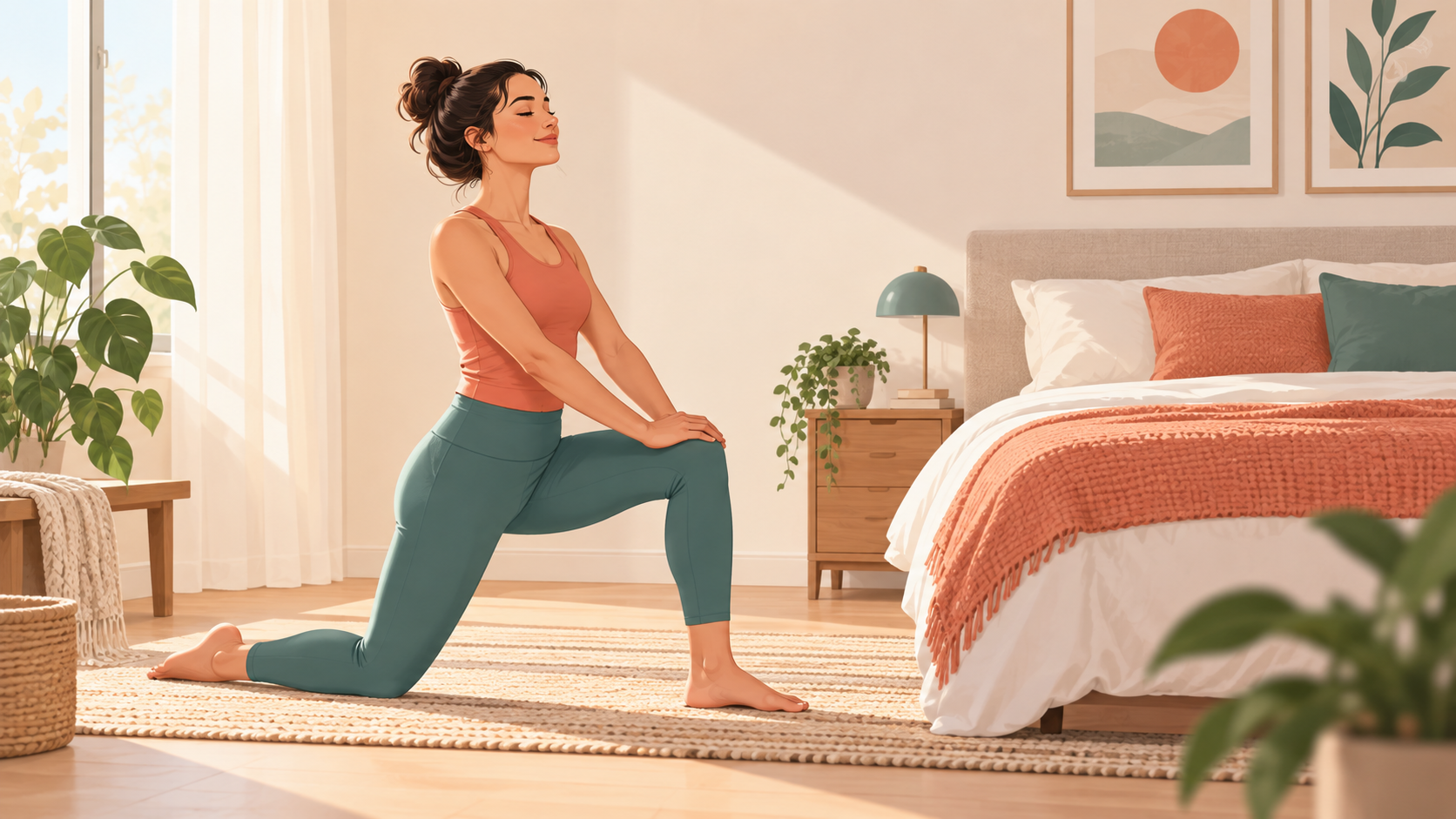
Tight hips can make the first ordinary movements of the day feel absurdly difficult. Getting out of bed, putting on socks, or taking the first flight of stairs suddenly feels like your body needs a loading screen.
Morning stretches for tight hips should create an easier first step, not test how flexible you are. Use the seven-minute sequence below, keep every movement comfortable, and follow one simple rule: a broad, mild stretch can be okay; sharp pain, pinching, numbness, or spreading symptoms mean stop.
If you have only two minutes, do pelvic tilts, a supported hip flexor stretch, and a short walk. That small version removes the usual excuse that a routine needs a mat, workout clothes, or half an hour.
What are morning stretches for tight hips?
Morning stretches for tight hips are low-intensity movements that take the hips from sleep to normal daily motion. A useful routine combines small pelvic movement, gentle hip rotation, front-of-hip stretching, glute stretching, and an easy standing hinge rather than forcing one dramatic pose.
“Tight hips” is a description, not a diagnosis. You might notice stiffness after sleeping in one position, sitting for much of the previous day, training, or changing your usual activity. The goal here is simply to explore comfortable movement and feel more prepared to walk, bend, and climb stairs.
For a deeper explanation of the front of the hip, see hip flexor stretches. If sitting is the obvious trigger, use stretches for tight hips after sitting. If you want a whole-body start instead, try the morning mobility routine.
What is the best seven-minute morning routine for tight hips?
The best routine is the one you can perform without pain and repeat tomorrow: start lying down, add rotation, move to a supported kneeling stretch, then finish standing. Use 30 to 45 seconds per movement and treat the first round as a check-in rather than a flexibility challenge.
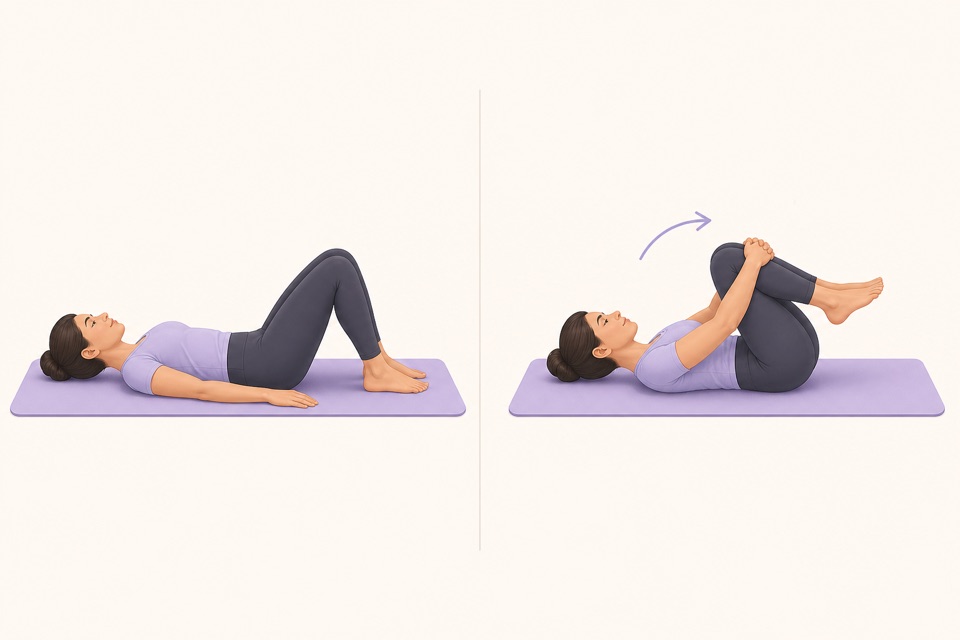
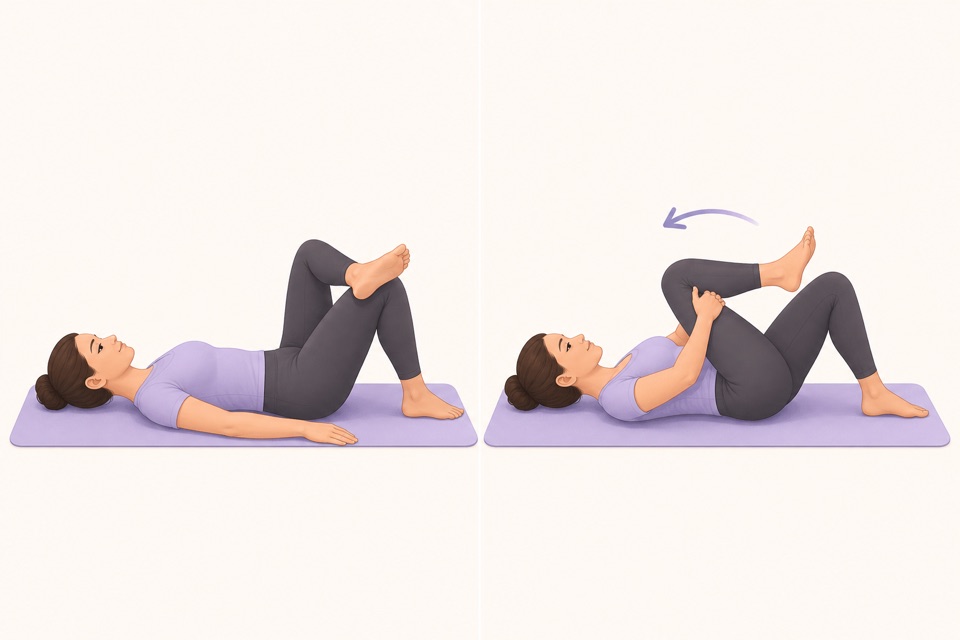
| Move | Time | Main purpose | Easier option | | --- | ---: | --- | --- | | Pelvic tilts with slow breathing | 45 sec | Introduce small pelvis and low-back motion | Make the tilt barely visible | | Single knee to chest | 60 sec | Explore comfortable hip flexion | Hold behind the thigh | | Windshield wipers | 60 sec | Add gentle hip rotation | Keep feet wider and use a smaller range | | Supported half-kneeling stretch | 90 sec | Open the front of each hip | Use a cushion and hold the bed | | Supported figure four | 90 sec | Stretch the outer hip and glutes | Do it seated on the bed | | Supported hip hinge | 60 sec | Rehearse bending with control | Keep hands on a dresser | | Easy walk | 60 sec | Transition into normal movement | Walk beside a wall |
Move slowly enough that you could stop at any point. Mayo Clinic's flexibility guidance recommends smooth movement without bouncing and distinguishes tension from pain. That is exactly the standard to use here: easy range, normal breathing, no forcing.
From Wiggle
Recommended moves
How do you stretch tight hip flexors without arching your back?
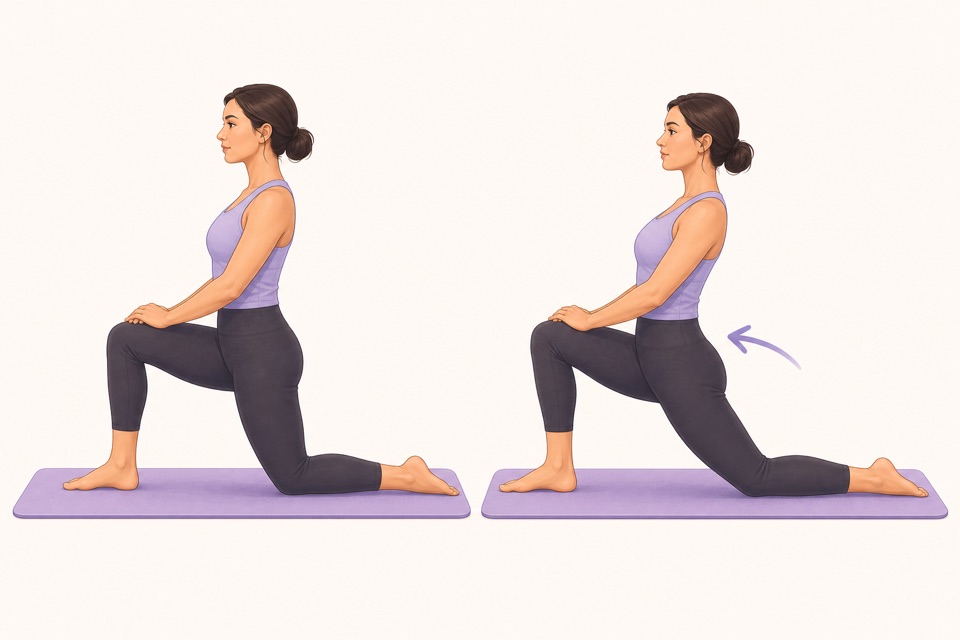
Use a short half-kneeling stance, lightly tuck your pelvis, and shift forward only until you feel a mild stretch across the front of the rear hip. Keep your ribs stacked over your pelvis. If your low back arches or the hip pinches, reduce the range.
Try this setup:
- Kneel on a folded towel with one foot in front.
- Hold the bed, wall, or a sturdy chair for support.
- Imagine bringing your belt buckle slightly toward your ribs.
- Squeeze the glute on the kneeling side gently.
- Shift forward a few centimetres without leaning backward.
- Breathe for 20 to 30 seconds, then switch sides.
More movement is not automatically more useful. If kneeling is uncomfortable, stand in a short split stance and use the same small pelvic tuck. If you mainly feel the position in your knee or low back, choose the standing version.
Which hip stretch should you choose first?
Choose by where you feel ordinary stiffness, not by which pose looks most advanced. Front-of-hip tightness often responds best to a supported split stance; outer-hip stiffness may prefer a figure four; general grogginess usually needs small rotation and walking before a longer hold.
| What you notice | Start with | Skip for now | | --- | --- | --- | | Front of hip feels shortened after sitting | Supported hip flexor stretch | Deep lunge | | Outer hip or glute feels stiff | Seated figure four | Pulling the knee hard | | Both hips feel generally rusty | Windshield wipers and walking | Long static holds immediately | | Balance feels uncertain | Bed-based movements | Unsupported standing poses | | Hip feels pinchy or painful | Tiny pain-free motion or rest | Pushing through the pinch |
For more outer-hip options, use glute stretches for tight hips. If rotation is the specific limitation, compare hip internal rotation stretches with hip external rotation stretches.
Why do hips feel tight after sleeping?
Hips may feel tight after sleep because you have spent hours moving very little, especially after a sitting-heavy or training-heavy day. Sleep position and changes in usual activity can also affect how the first movements feel. A short warm-up often makes more sense than jumping straight into end-range stretching.
MedlinePlus describes physical activity as an ongoing health habit, while U.S. activity guidelines emphasize regular movement across the week. The practical takeaway is not that one stretch fixes a hip. It is that a short morning routine works best as one repeatable piece of a generally active day.
Do not use morning stiffness to self-diagnose a “short” muscle or a particular condition. If the sensation is new, severe, persistent, worsening, injury-related, or paired with weakness, numbness, swelling, fever, or trouble bearing weight, get qualified medical advice.
Should morning hip stretches be dynamic or static?
Start with gentle dynamic movements, then use brief comfortable holds once the area feels warmer. Pelvic tilts and windshield wipers work well first; a 20- to 30-second supported hip flexor or figure-four hold can follow. Save aggressive or long end-range work for another session.
Use dynamic movement if you are about to walk, commute, or begin a normal day. If you are preparing for a demanding workout, use a sport-specific warm-up rather than treating this gentle routine as the entire warm-up. The morning stretches for runners guide explains that distinction for running.
How do you make a morning hip routine stick?
Make the routine shorter than your resistance to starting it. Keep the same movement order for a week, attach it to an existing cue, and let the two-minute version count. Consistency beats collecting increasingly complicated hip stretches that you never perform.
Use this checklist:
- Start before messages or email when possible.
- Keep a folded towel beside the bed.
- Use the same five movements for seven mornings.
- Set a timer instead of counting repetitions.
- Choose a supported variation by default.
- Stop while the routine still feels easy to repeat.
- Note whether walking feels easier afterward; do not grade flexibility.
Wiggle handles the annoying parts: choosing a sequence, timing it, prompting side changes, and remembering what comes next. Open one saved hip routine and follow it for seven mornings. If it helps, keep it. If it irritates symptoms, stop and get appropriate guidance rather than trying to stretch harder.
Sources
Why we keep it gentle
These guides are written for everyday stiffness and habit-building. They are grounded in mainstream guidance on flexibility, movement, and when to seek medical help.
- Stretching: Focus on flexibilityMayo Clinic
- Exercise and physical fitnessMedlinePlus
- Physical Activity Guidelines for AmericansU.S. Department of Health and Human Services
FAQ
Questions people ask
What are the best morning stretches for tight hips?
A gentle sequence of pelvic tilts, knee-to-chest movements, a supported hip flexor stretch, figure-four stretch, and an easy hip hinge works well for everyday morning tightness. Start with small movements, stay out of pain, and use support instead of chasing a deep stretch.
Why do my hips feel tight when I wake up?
Hips can feel tight after several hours in one sleep position, a sitting-heavy day, hard training, or simply moving less than usual. The feeling does not identify one specific cause. New, severe, persistent, injury-related, or worsening symptoms should be assessed by a qualified health professional.
How long should a morning hip routine take?
Five to seven minutes is enough for a useful first routine. Spend about 30 to 45 seconds on each movement and repeat the sequence only if it leaves you feeling easier, not more irritated. A two-minute version still counts on rushed mornings.
Should I stretch tight hips before or after getting out of bed?
Begin in bed if you feel very stiff or unsteady, then progress to supported standing movements. If you already feel steady, start on a mat or beside a wall. The safest starting position is the one that lets you move slowly and comfortably.
When should I stop stretching my hips?
Stop if you feel sharp pain, pinching in the front of the hip, numbness, weakness, dizziness, or symptoms that spread down the leg. Seek professional guidance for severe, persistent, injury-related, or otherwise worrying symptoms.