Wiggle guide
Morning Stretches for Runners: A Gentle 7-Minute Reset
Morning stretches for runners with stiff calves, ankles, hips, and back, plus a clear guide to what belongs before an actual run.
morning stretches for runners

Your alarm goes off, your calves feel short, your ankles feel wooden, and the run on your plan suddenly looks harder than it did last night. The tempting fix is to pull harder on everything. That is usually the wrong first move.
Morning stretches for runners should make the transition from sleep to movement easier. This seven-minute routine starts small, covers the areas runners often notice first, and avoids turning sleepy stiffness into an aggressive flexibility test.
Fast decision rule: if your run is later, do this gentle reset now and warm up again before running. If your run starts immediately, keep the first few moves brief and continue into the dynamic warm-up below. Pain, swelling, or an altered stride is not a cue to stretch harder.
What are the best morning stretches for runners?
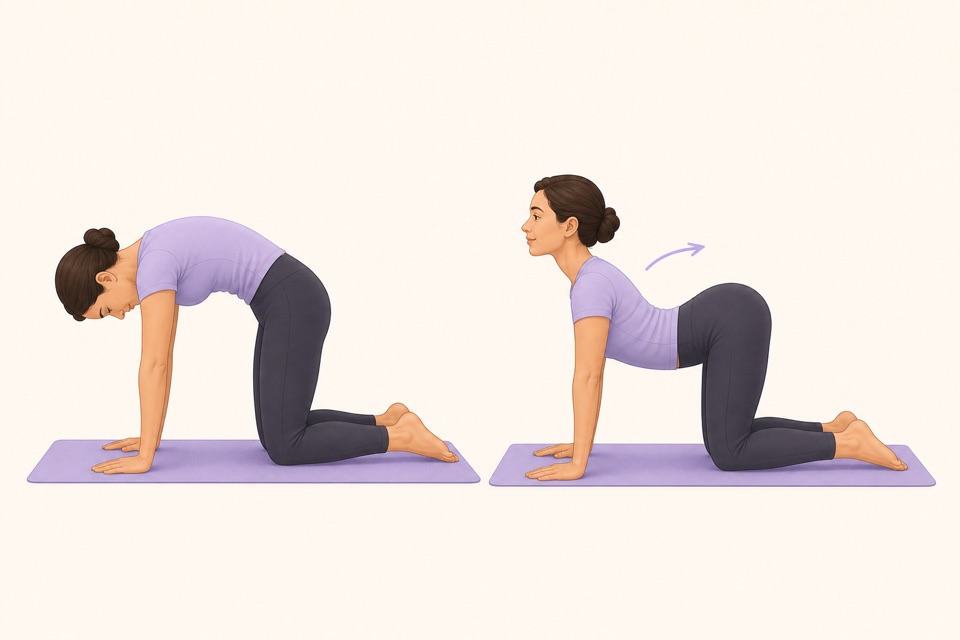
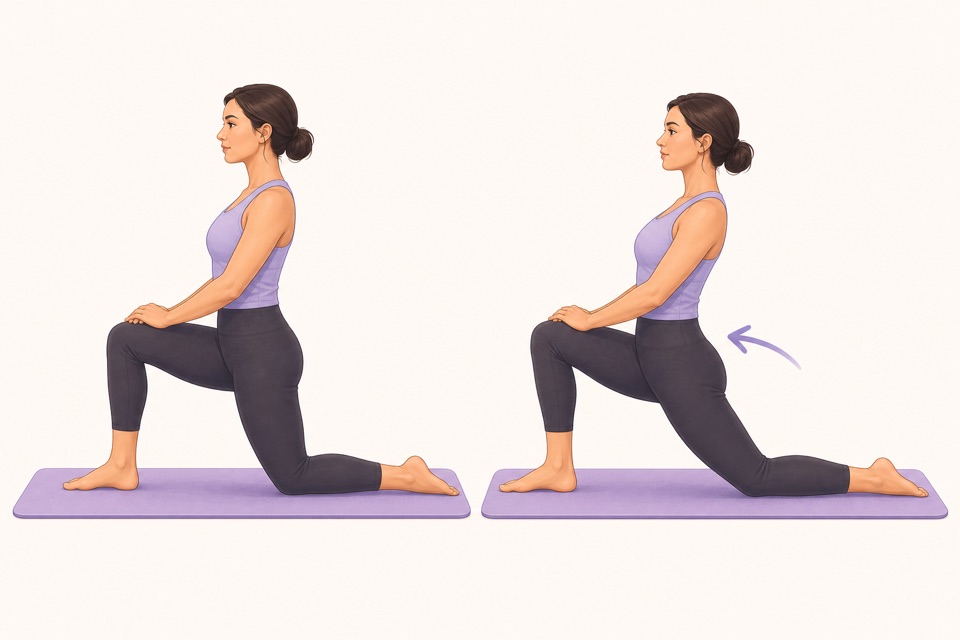
The best morning stretches for runners gently move the ankles, calves, hips, spine, and shoulders before finishing with whole-body motion. Use ankle circles, calf raises, cat-cow, a supported hip shift, upper-back rotations, hip hinges, and marching. Comfortable movement matters more than reaching a deep position.
Morning stretches for runners are a short wake-up mobility sequence, not a complete pre-run warm-up or an injury treatment. Their job is to reduce the friction between lying still and moving normally, especially when the actual run may happen hours later.
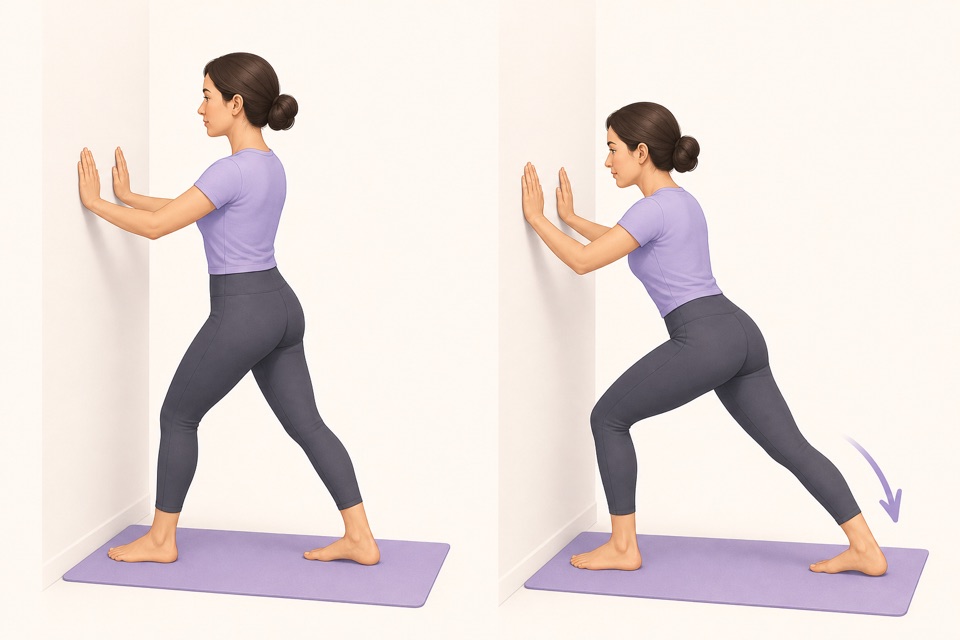
| Move | Time | Runner-focused purpose | Easier option | | --- | ---: | --- | --- | | Breathing and ankle circles | 45 sec | Starts with small ankle motion | Move one ankle at a time | | Calf raises | 45 sec | Moves ankles and lower legs under light load | Hold a wall | | Cat-cow | 60 sec | Adds gentle spine and pelvis motion | Do seated cat-cow | | Half-kneeling hip shift | 90 sec | Moves the front of each hip | Use a standing split stance | | Open-book rotation | 90 sec | Moves the upper back and ribs | Rotate while seated | | Supported hip hinges | 60 sec | Rehearses hip-led bending | Keep hands on a chair | | Easy march | 60 sec | Connects isolated motion to walking | Alternate heel taps |
From Wiggle
Recommended moves
Should runners stretch immediately after waking up?
Yes, if the movements are gentle and you feel steady—but start smaller than you think. Move the ankles, breathe, and use an easy range before asking for deeper hip or spine motion. A body that has just left the bed does not need to prove flexibility.
Use these checks:
- You can breathe normally through every movement.
- The sensation stays mild rather than sharp or electric.
- Each repetition feels the same or easier, not progressively worse.
- You can stand and walk normally afterward.
- You stop before a stretch becomes a contest.
Mayo Clinic's general stretching guidance emphasizes smooth movement, no bouncing, and tension rather than pain. If you are not running today and want a broader whole-body option, use the morning mobility routine. For a shorter fallback, use the 5-minute morning stretch.
Is a morning mobility routine the same as a pre-run warm-up?
No. A wake-up mobility routine helps you transition into the day; a pre-run warm-up prepares you for the pace and demands of the run that follows. If several hours separate stretching and running, the morning routine does not replace warming up again at the door.
| Situation | Do this | Avoid this mistake | | --- | --- | --- | | Run starts in 5 minutes | Brief mobility, then dynamic warm-up | Long passive holds followed by an instant fast start | | Run starts after work | Gentle morning reset; warm up again later | Treating a 7 a.m. stretch as a 6 p.m. warm-up | | Recovery day | Full gentle routine | Turning mobility into a hard workout | | Pain changes your stride | Stop and assess | Stretching harder to force the run |
This distinction saves time: choose the routine based on what happens next, not simply the time on the clock.
What dynamic stretches should I do before a morning run?
Immediately before running, use dynamic movements that gradually resemble the activity ahead: easy marching, ankle rocks, controlled leg swings, shallow squats, and a progressive walk or jog. Start calmly, then build range and pace instead of beginning the run cold.
Try this three-minute bridge:
- March and swing the arms for 45 seconds.
- Rock forward over each ankle for 30 seconds.
- Do controlled front-to-back leg swings for 30 seconds per side.
- Do eight easy squats or sit-to-stands.
- Walk briskly, then ease into the first running minutes.
Your planned pace matters. An easy jog needs less preparation than hills, intervals, or a race. The runner stretching routine explains how the calmer post-run sequence differs, while the stretching app for runners helps you separate warm-up, cooldown, and recovery-day sessions.
Why do my calves and hips feel tight in the morning?
Morning tightness can reflect hours spent relatively still, yesterday's training load, normal muscle soreness, or simply the first movements of the day. The feeling alone does not reveal a diagnosis. Use gentle movement as a check-in, and pay attention to whether symptoms settle, persist, or change your stride.
Do not use stretching to negotiate with warning signs. MedlinePlus lists pain, swelling, and difficulty moving among common running-injury symptoms; new or worsening symptoms deserve rest and appropriate assessment. A routine can support a habit, but it cannot tell you what an injury is.
How do I make a runner mobility routine automatic?
Attach the routine to something already fixed: putting on running socks, starting coffee, or checking the weather. Save one seven-minute sequence and one two-minute fallback. Repeating the same useful routine removes more friction than collecting new stretches every morning.
- Keep a wall or chair available for support.
- Leave the mat where the routine starts.
- Use the same order for seven mornings.
- Let ankle circles, calf raises, and marching count on rushed days.
- Warm up again immediately before any later run.
Wiggle removes the timer and sequence decisions. Open a guided runner-friendly routine, follow the next movement, and finish without turning your morning into another planning session.
When should runners skip stretching and get advice?
Skip the routine when movement produces sharp pain, dizziness, numbness, weakness, marked swelling, instability, or symptoms that alter normal walking or running. New, severe, persistent, or injury-related symptoms should be assessed by a qualified healthcare professional.
This guide is general movement education, not diagnosis or treatment. If a clinician or physiotherapist has given you a specific plan, follow that plan over a general article.
For stiffness that appears at the other end of the run, use the gentle lower back stretches after running cooldown instead of repeating this morning warm-up.
Sources
Why we keep it gentle
These guides are written for everyday stiffness and habit-building. They are grounded in mainstream guidance on flexibility, movement, and when to seek medical help.
- Stretching: Focus on flexibilityMayo Clinic
- Physical Activity Guidelines for AmericansU.S. Department of Health and Human Services
- Running injuriesMedlinePlus
FAQ
Questions people ask
What are the best morning stretches for runners?
The best morning stretches for runners gently move the ankles, calves, hips, upper back, and shoulders: ankle circles, calf raises, cat-cow, a half-kneeling hip shift, open-book rotations, and an easy march. Keep this wake-up routine comfortable; use a separate dynamic warm-up immediately before running.
Should runners stretch as soon as they wake up?
Runners can use gentle mobility soon after waking, but should begin with small movements rather than deep holds. Start with breathing, ankle circles, and easy spine or hip motion. If you plan to run later, warm up again immediately before the run.
Should I do static or dynamic stretches before a morning run?
Immediately before running, favor dynamic movements such as marching, ankle rocks, leg swings, and easy squats, followed by a gradual walk or jog. Save longer relaxed holds for after the run or a separate mobility session unless a qualified professional has given you different instructions.
How long should a runner's morning stretch routine take?
Five to eight minutes is enough for a practical wake-up mobility routine. If your run starts right away, spend another few minutes on a progressive dynamic warm-up so your first running step is not the first demanding movement of the day.
When should a runner stop stretching?
Stop if you feel sharp pain, dizziness, numbness, weakness, swelling, instability, or symptoms that worsen as you move. New, severe, persistent, or injury-related symptoms deserve assessment from a qualified healthcare professional rather than a harder stretching routine.