Wiggle guide
Morning Shoulder Stretches: A Gentle 6-Minute Reset
Try these morning shoulder stretches for waking stiffness: a gentle 6-minute routine with wall support, form cues, and clear stop signs.
morning shoulder stretches

You wake up, reach overhead, and one shoulder seems determined to stay near your ear. Pulling harder is rarely the best first move. The faster path is one minute of easy motion followed by a few supported stretches that open the shoulders, chest, and upper back without turning breakfast time into a workout.
These morning shoulder stretches take six minutes. Use this rule: move first, stretch second, and keep every sensation mild enough that you can breathe normally. You should finish feeling easier to move—not sore, pinched, or tested.
What are the best morning shoulder stretches?
The best morning shoulder stretches progress from small active movements to comfortable holds: arm swings, shoulder circles, wall slides, a cross-body stretch, a doorway chest stretch, and a supported upper-back reach. Together they move the shoulder blades, the back of the shoulder, the chest, and the upper back while giving you easy ways to reduce the range.
A morning shoulder stretch is a gentle movement or position used after waking to ease ordinary stiffness around the shoulders and upper body. It should create mild tension or smooth motion, never sharp pain, pinching, weakness, numbness, or tingling.
| Move | Time | Best cue | Easier option | | --- | ---: | --- | --- | | Walk + arm swings | 60 sec | Let the arms hang loosely | March seated | | Backward shoulder circles | 45 sec | Start with small circles | Move one shoulder at a time | | Wall slides | 45 sec | Keep the shoulders away from ears | Slide only halfway | | Cross-body stretch | 60 sec | Support above the elbow | Use less pressure | | Doorway chest stretch | 60 sec | Step forward gently | Keep the elbow below shoulder height | | Supported upper-back reach | 60 sec | Sit hips back and breathe | Put hands higher on the wall | | Relaxed finish | 30 sec | Shake out the arms | Stay seated |
From Wiggle
Recommended moves
How do I do this 6-minute morning shoulder routine?
Begin with walking and small circles, then use the wall to control your range. Hold the cross-body and doorway positions for about 20 to 30 seconds per side. Keep effort around 3 out of 10 and reduce any movement that makes you shrug, brace, or hold your breath.
- Walk and swing: Walk or march easily while the arms swing naturally. Do not force the arms behind you.
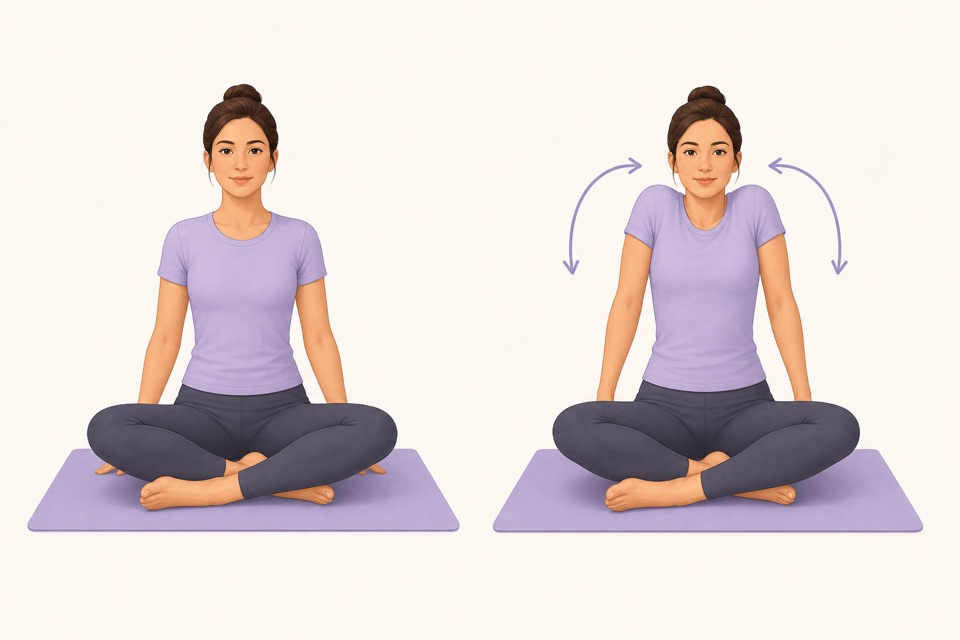
- Circle backward: Draw slow circles with both shoulders. Make them slightly larger only if the movement stays smooth.
- Slide at the wall: Stand with forearms on a wall and slide upward without pushing into pain or lifting the shoulders toward the ears.
- Reach across: Bring one arm across the chest and support it above the elbow. Keep the stretching shoulder down. Switch sides.
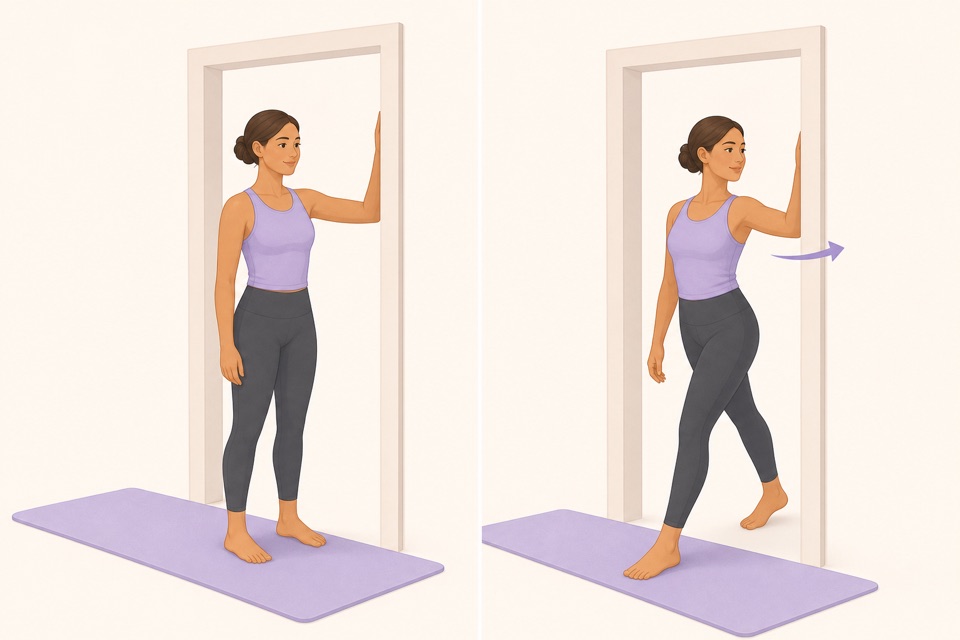
- Open the chest: Place a forearm at a doorway with the elbow below shoulder height. Step forward until the front of the chest feels a mild stretch. Switch sides.
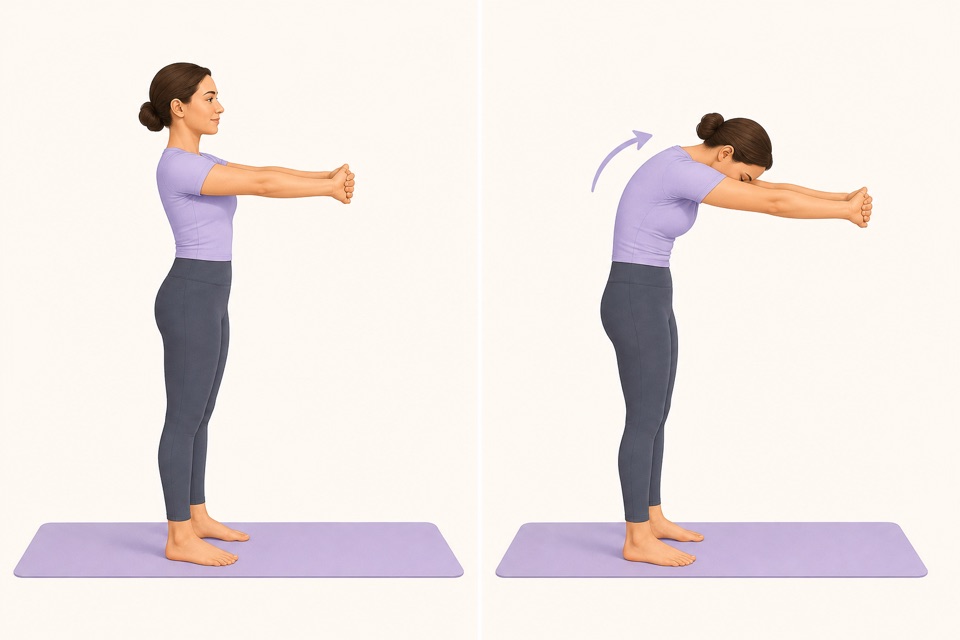
- Reach the upper back: Put both hands on a wall, soften the knees, and sit the hips back while lengthening through the arms. Return slowly, then finish with relaxed arm swings.
For a broader wake-up sequence, use the 5-minute morning stretch. If stiffness is mainly in your neck, start with morning neck stretches and keep the shoulder work smaller.
Why do my shoulders feel tight after sleeping?
Shoulders can feel tight after hours in one position, especially if an arm stayed overhead, you slept directly on one shoulder, or the pillow left the neck and shoulder awkwardly supported. Yesterday's screen time, carrying, or training can also show up the next morning. Tightness alone cannot tell you which structure is responsible.
Use the response to gentle movement as a decision guide:
| What you notice | What to do | | --- | --- | | Both shoulders feel mildly stiff | Use the full gentle routine | | One side feels tighter but moves comfortably | Use the same easy range on both sides | | The front or top of the shoulder pinches | Reduce the range or skip that move | | Raising an arm causes sharp pain | Stop testing it and seek appropriate advice | | Numbness, tingling, or weakness appears | Stop and arrange medical assessment | | Chest pain or trouble breathing occurs | Seek urgent medical help |
Changing your sleep position or pillow may be worth discussing when the same pattern returns every morning, but a stretching routine cannot diagnose the reason.
Should I use dynamic or static shoulder stretches in the morning?
Use easy dynamic movement first, then brief static stretches if they feel comfortable. Dynamic movements—such as arm swings, circles, and wall slides—move through a controlled range. Static stretches settle into one position, such as the cross-body or doorway stretch.
The American Heart Association recommends gradually raising activity during a warm-up. If you plan to lift, swim, throw, or play a racquet sport, this quiet routine is only the opening step. Continue with movements that progressively resemble the activity rather than relying on long static holds alone.
What mistakes make morning shoulder stretches feel worse?
The most common failure is chasing a bigger range before the shoulder is ready to move. Large circles, hard doorway leans, aggressive pulling across the chest, and forcing both arms overhead can turn a calm reset into irritation. Smaller, smoother motion is the better morning default.
- Keep the shoulder down instead of shrugging toward the ear.
- Support the arm above the elbow rather than pulling on the joint.
- Keep the doorway elbow below shoulder height if the front of the shoulder feels crowded.
- Let the ribs stay relaxed during wall slides.
- Never bounce or push through pinching.
- Judge success by easier everyday movement, not how far the arm travels.
Mayo Clinic's general guidance recommends smooth stretching without bouncing and aiming for tension rather than pain. The shoulder stretches at desk guide can help later in the day when screen posture brings the stiffness back.
How can I make morning shoulder stretches a habit?
Keep the sequence in the same order for a week and attach it to a cue you already have: opening the curtains, starting the kettle, or waiting for coffee. On rushed mornings, use the two-minute version—walk, circle, and do one supported wall reach. Removing the daily decision makes the routine easier to repeat.
Wiggle supplies the timer and movement order so you can start without searching for another routine. Download Wiggle, choose a short upper-body session, and let the first six minutes of the day do one clear job.
When should I stop stretching my shoulders?
Stop for sharp or worsening pain, pinching that does not ease with a smaller range, numbness, tingling, weakness, dizziness, swelling, deformity, or symptoms that spread down an arm. Seek urgent medical help for chest pain, trouble breathing, major injury, or sudden weakness. Persistent pain, night pain, or repeated loss of movement deserves assessment from a qualified healthcare professional.
This guide is general movement education, not a diagnosis or personalized treatment plan. Follow your clinician's advice when it differs from a general routine.
Sources
Why we keep it gentle
These guides are written for everyday stiffness and habit-building. They are grounded in mainstream guidance on flexibility, movement, and when to seek medical help.
- Stretching: Focus on flexibilityMayo Clinic
- Warm Up, Cool DownAmerican Heart Association
- Shoulder injuries and disordersMedlinePlus
FAQ
Questions people ask
What are the best morning shoulder stretches?
Start with easy shoulder circles, then use a wall slide, cross-body shoulder stretch, doorway chest stretch, and supported upper-back reach. Move for a minute before holding any position, keep the range comfortable, and finish by letting the arms swing naturally while you walk.
Why are my shoulders tight when I wake up?
Shoulders may feel tight after staying in one sleep position, using a pillow that leaves the neck or shoulder unsupported, or carrying tension from the previous day. Morning tightness does not identify a specific cause. Change position, begin with gentle movement, and seek professional advice for persistent, severe, or worsening symptoms.
Can I stretch my shoulders as soon as I wake up?
Gentle shoulder movement is usually a better starting point than a deep stretch immediately after waking. Sit or stand steadily, make small circles, and gradually increase the range. Stop for sharp pain, weakness, numbness, tingling, dizziness, chest pain, or symptoms that spread down an arm.
How long should a morning shoulder routine take?
Five to six minutes is enough for a simple morning shoulder routine. Spend the first minute moving, use comfortable stretches for about 20 to 30 seconds per side, and finish with relaxed walking or arm swings. A short routine repeated consistently is more practical than forcing a long session.
Should I do shoulder circles or static stretches first?
Do shoulder circles and other easy active movements first. Once the shoulders feel warmer, add short static holds such as a cross-body stretch or doorway chest stretch. If you are preparing for exercise, continue into a progressive activity-specific warm-up rather than treating static stretching as the whole warm-up.