Wiggle guide
Lower Back Mobility Exercises: A Gentle 7-Minute Routine
Five controlled movements for an easier-feeling lower back, with a quick mobility check and clear stop signs.
lower back mobility exercises

A stiff lower back can make the first bend, turn, or step after sitting feel rusty. The tempting fix is to pull harder. A better first move is a short sequence that helps you explore comfortable motion without treating flexibility like a contest.
Use this rule before you start: ordinary stiffness may ease as you move; sharp, spreading, or worsening pain means stop. If the routine feels comfortable, five movements take about seven minutes. Wiggle can guide the timing so you can focus on moving slowly instead of counting every second.
What are lower back mobility exercises?
Lower back mobility exercises are controlled movements that take your spine, pelvis, and nearby hips through a comfortable range. They are not deep stretches and they are not strength tests. The goal is to make everyday bending and turning feel smoother while keeping the motion calm, deliberate, and symptom-free.
Mobility and flexibility are related but different. Flexibility is the range available to a joint or muscle; mobility is your ability to use a range with control. That is why a good back mobility routine includes pelvic movement, rotation, breathing, and hip motion rather than one long forward fold.
Before doing the full routine, try this 30-second check:
- Stand tall with your feet comfortable.
- Slowly tilt your pelvis forward and back twice.
- Turn your chest a small amount to each side.
- Take three easy steps.
If those movements feel merely stiff, stay in that easy range. If they cause sharp pain, weakness, numbness, or symptoms that travel down a leg, skip the routine and get qualified medical guidance.
Which five exercises improve lower back mobility?
The most useful beginner sequence combines small pelvic tilts, spinal flexion and extension, gentle rotation, and hip opening. Try pelvic tilts, cat cow, knee rolls, open books, and a supported hip flexor stretch. Use a range that lets you breathe normally; more movement is not automatically better movement.
From Wiggle
Recommended moves
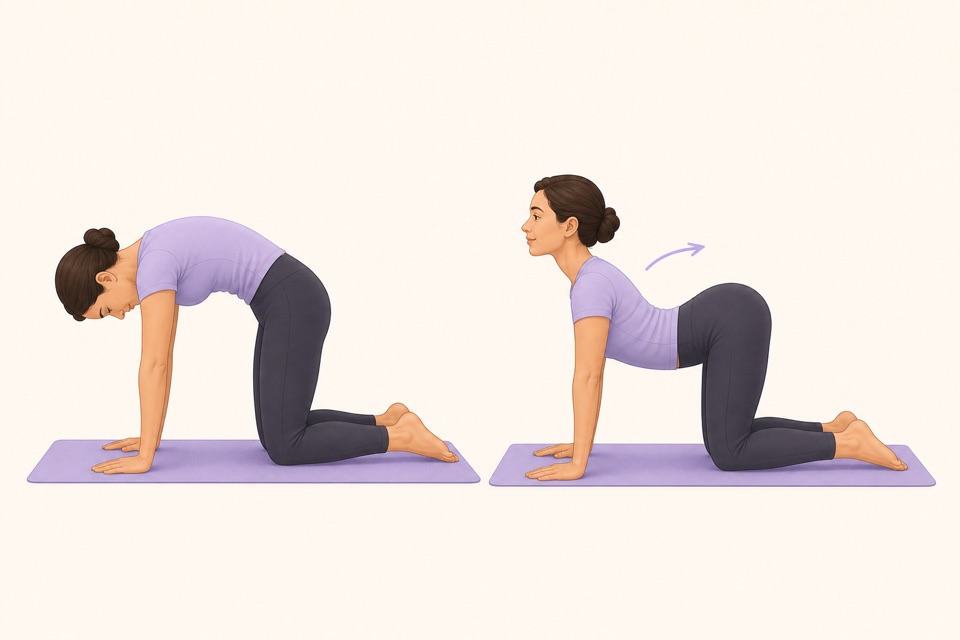
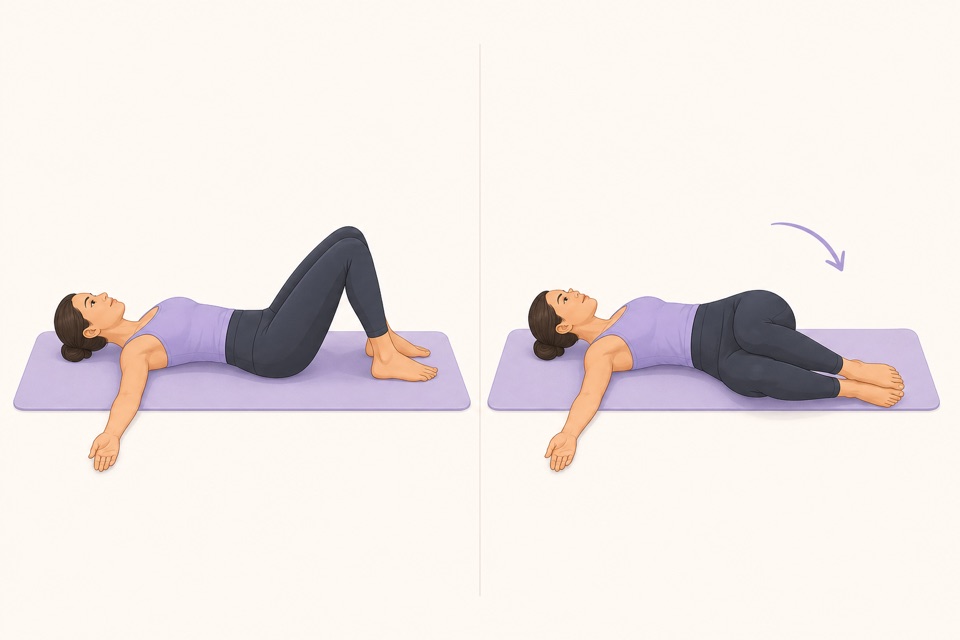
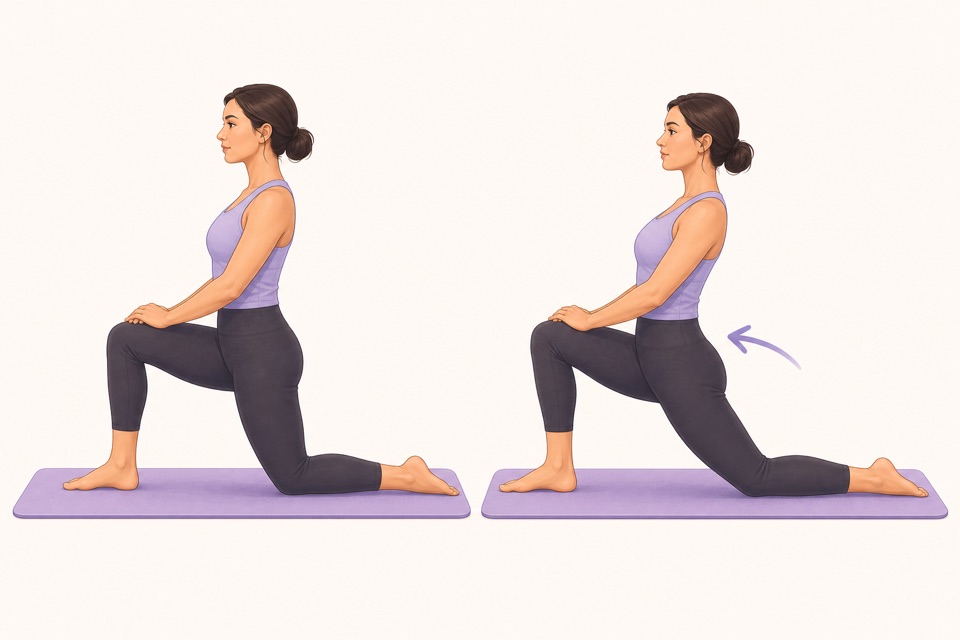
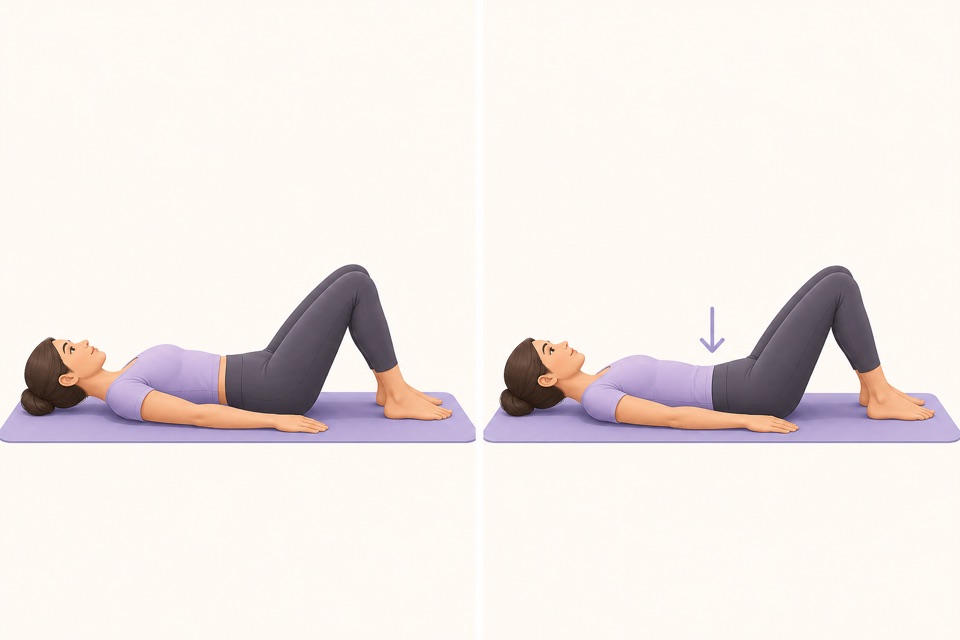
1. Pelvic tilts
Lie on your back with knees bent, or stand with your back near a wall. Gently tip the pelvis so the lower back flattens slightly, then release. Make the motion small enough that your glutes and ribs stay relaxed. Do eight slow repetitions.
2. Cat cow
Start on hands and knees. Slowly round your back as you exhale, then let your chest move forward as you inhale. Do not drop aggressively into the low back. Use six to eight repetitions, moving one part of the spine at a time.
3. Knee rolls
Lie on your back with knees bent and feet down. Keep both knees together and let them drift a small distance to one side, return to centre, then switch. Your shoulders stay heavy. Do six repetitions per side.
4. Open-book rotations
Lie on your side with knees comfortably bent and arms reaching forward. Sweep the top arm open as your chest turns, then return. Follow the hand with your eyes and stop before the movement becomes a strain. Do five repetitions per side. If getting to the floor is awkward, use the seated spinal twist as a smaller upright option.
5. Supported hip flexor stretch
Use a split stance while holding a chair or wall. Slightly tuck the pelvis and shift forward until the front of the rear hip feels mild tension. Keep your ribs over your pelvis instead of arching the back. Hold for 30 seconds per side. For more hip-specific options, see the hip flexor stretches guide.
What is the best seven-minute lower back mobility routine?
The best routine is the one you can repeat without needing recovery from it. Start with one minute of walking, spend about one minute on each movement, and finish with another short walk. If you feel better after three movements, you do not need to force all five.
| Time | Movement | What to notice | | --- | --- | --- | | 0:00-1:00 | Easy walk | Does stiffness begin to settle? | | 1:00-2:00 | Pelvic tilts | Can the pelvis move without bracing? | | 2:00-3:00 | Cat cow | Can the spine round and extend gently? | | 3:00-4:00 | Knee rolls | Is rotation similar on both sides? | | 4:00-5:00 | Open books | Can the chest turn without forcing the low back? | | 5:00-6:00 | Hip flexor stretch | Can you keep ribs stacked over the pelvis? | | 6:00-7:00 | Easy walk | Does normal movement feel smoother? |
Use the table as a decision tool, not a pass/fail test. A smaller pain-free range is more useful than matching a picture. If floor work does not suit you, the standing lower-back routine offers supported alternatives.
Should you do mobility or strengthening for a stiff lower back?
Use mobility when the immediate goal is comfortable motion; use strengthening when the goal is gradually building capacity. Many people benefit from both, but they solve different problems. A seven-minute mobility reset can help you move now, while strength work is progressed over weeks rather than squeezed into the same session.
| Your goal | Better starting point | Example | | --- | --- | --- | | Feel less rusty after sitting | Mobility | Pelvic tilts and cat cow | | Regain comfortable rotation | Mobility | Knee rolls and open books | | Build trunk and hip capacity | Strengthening | Bird dog and glute bridge | | Prepare for a demanding workout | Specific warm-up | Movements similar to that workout |
When this routine feels easy and predictable, move to the beginner lower back strengthening exercises guide. Keep the sessions separate at first if combining them makes it harder to tell which movement helped or irritated you.
If stiffness shows up specifically after training, use the post-workout lower back cooldown instead. It starts with walking and changes the sequence for tired muscles.
How often should you do lower back mobility exercises?
You can use a short mobility routine most days if it stays comfortable during the session and afterwards. Frequency matters less than your response: repeat movements that leave you feeling the same or better, and reduce the range, repetitions, or frequency if symptoms become more irritable.
An easy weekly approach is:
- Use the full seven-minute routine three or four days a week.
- On busy days, do one minute of walking plus pelvic tilts and cat cow.
- After prolonged sitting, use the specific lower back reset after sitting.
- Pair mobility with normal walking and appropriately progressed strength work.
- Recheck after two weeks: everyday movement should feel at least as easy, not increasingly sensitive.
The U.S. physical activity guidelines encourage adults to move more and sit less, while also building toward regular aerobic and muscle-strengthening activity. A mobility break is useful, but it does not replace the broader benefits of walking, strength, and other activity you can do safely.
When should you avoid a lower back mobility routine?
Skip online mobility exercises when symptoms are severe, new after an injury, rapidly worsening, or accompanied by warning signs. Back pain has many possible causes, and a generic routine cannot diagnose yours. A clinician can assess persistent symptoms and adapt movement to your history.
Stop and seek prompt medical advice if you notice pain travelling down a leg, new numbness or weakness, fever, unexplained illness, or pain that does not settle. Seek urgent care for loss of bladder or bowel control, numbness around the groin or saddle area, major trauma, or other alarming symptoms.
For ordinary stiffness, keep these guardrails:
- Start with walking and the smallest comfortable range.
- Never bounce or push through sharp pain.
- Breathe normally instead of bracing hard.
- Use a chair or wall when balance is uncertain.
- Stop when movement becomes worse rather than better.
How can you make lower back mobility easier to repeat?
Remove decisions. Save one short sequence, choose a consistent trigger such as after your first work block, and let a timer move you forward. Wiggle turns the routine into a guided session so you do not have to remember the order or watch the clock.
If the stiffness feels concentrated in the long muscles beside your spine, this gentle erector spinae stretch routine offers supported rounding and side-bending options. Choose that targeted routine or this broader mobility session rather than stacking both.
Start with seven minutes today. If that feels good, repeat it on three non-consecutive days this week. The win is not touching the floor or making an impressive shape; it is making comfortable movement easy enough to practise again.
Sources
Why we keep it gentle
These guides are written for everyday stiffness and habit-building. They are grounded in mainstream guidance on flexibility, movement, and when to seek medical help.
- Back painMedlinePlus
- Stretching: Focus on flexibilityMayo Clinic
- Physical Activity Guidelines for AmericansU.S. Department of Health and Human Services
- Back painNHS
FAQ
Questions people ask
What are the best lower back mobility exercises?
A useful beginner sequence is pelvic tilts, cat cow, knee rolls, open book rotations, and a supported hip flexor stretch. Move slowly through a comfortable range and stop any exercise that causes sharp, spreading, or worsening symptoms.
How often should I do lower back mobility exercises?
A short five-to-eight-minute routine can be repeated most days if it feels comfortable. Consistency matters more than forcing a large range. If you are sore after a session, make the next one shorter and gentler.
Is lower back mobility the same as flexibility?
No. Flexibility describes available length or range, while mobility is your ability to move through a range with control. Lower back mobility work therefore combines gentle motion with breathing and control instead of chasing the deepest stretch.
Should I stretch my lower back if it feels stiff?
Gentle movement may feel useful for ordinary stiffness, but more stretching is not always better. Begin with walking and small controlled motions. Avoid forcing a bend or twist, and seek professional guidance for severe, persistent, injury-related, or radiating pain.
When should I stop lower back mobility exercises?
Stop if pain becomes sharp, worsens, travels down a leg, or comes with numbness, weakness, fever, loss of bladder or bowel control, or other worrying symptoms. Urgent symptoms need prompt medical care rather than an online routine.