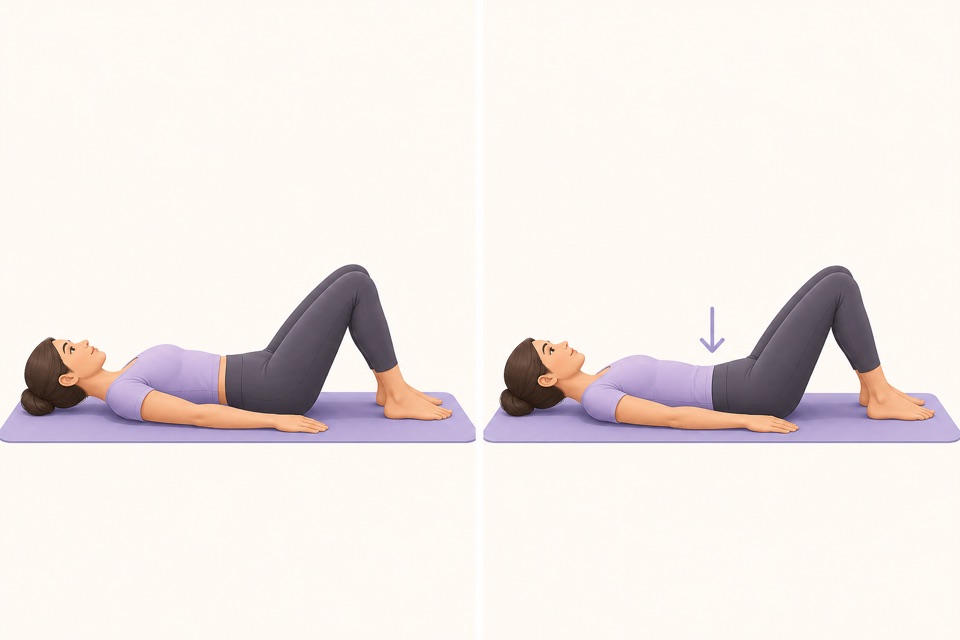
Wiggle guide
Lower Back Stretches After Housework: A Gentle 6-Minute Reset
A gentle standing reset for mild lower back and hip stiffness after cleaning.
lower back stretches after housework
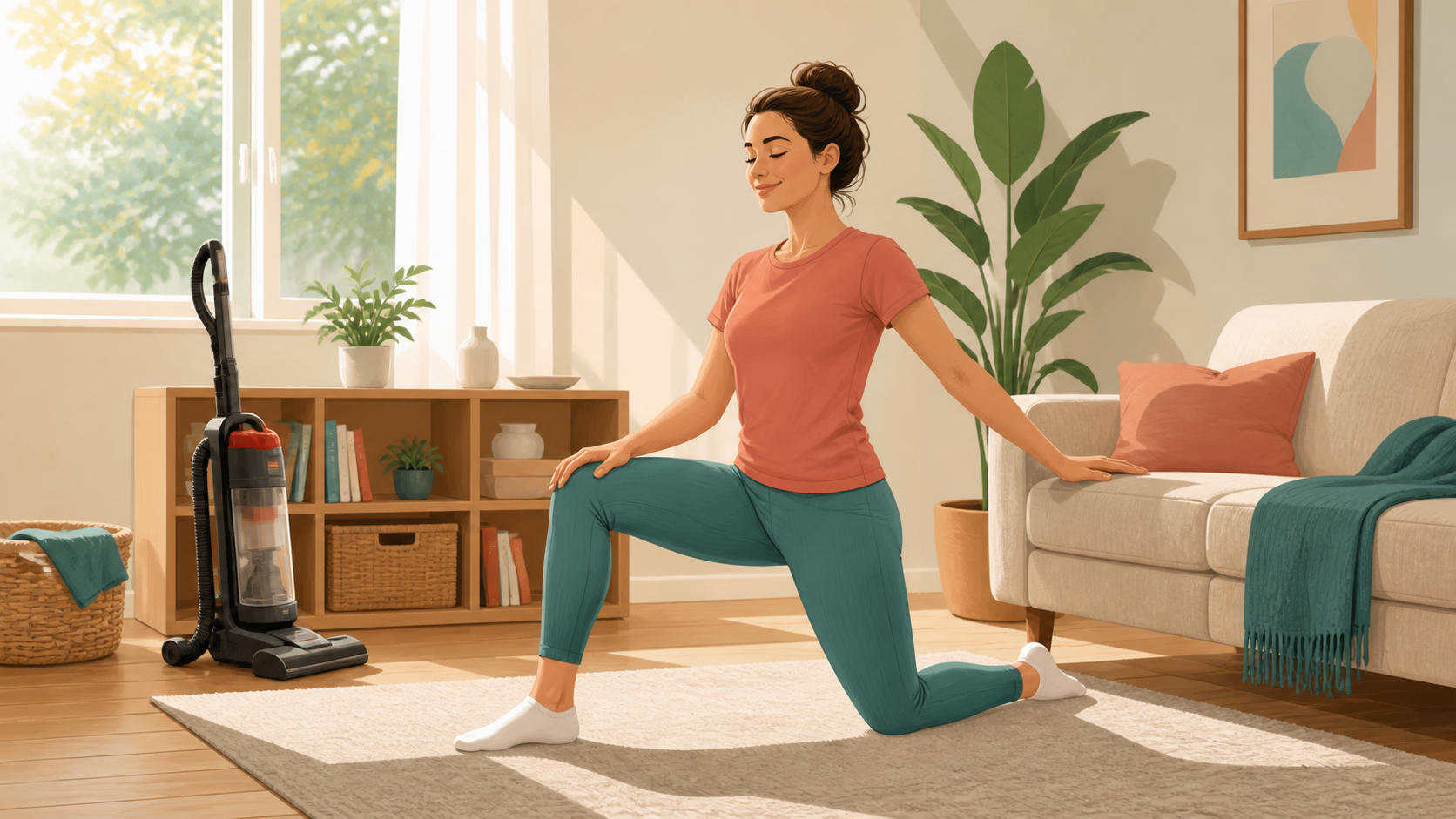
The floors are clean, the laundry is moved, and your lower back has filed a complaint. The tempting move is a hard toe-touch beside the vacuum. A better first move is simpler: put the tools down, walk for 60 to 90 seconds, then use the standing six-minute reset below.
Use this decision rule: mild, familiar stiffness can get a gentle walk-and-stretch trial. After a fall or sudden pull—or with severe or worsening pain, numbness, weakness, fever, loss of bladder or bowel control, or symptoms running down a leg—skip the routine and seek qualified medical guidance.
What are lower back stretches after housework?
Lower back stretches after housework are gentle standing movements used after bending, reaching, lifting, and pushing to restore comfortable motion through the hips, legs, and trunk. They suit ordinary, familiar stiffness after chores; they do not diagnose an injury or treat unexplained back pain.
A post-cleaning back reset is a short sequence of walking, small pelvic movements, supported hip stretches, and calm breathing. It should feel easier than a workout and leave you comfortable enough to move normally—not test how far you can bend.
| What you notice | Best first move | Avoid | | --- | --- | --- | | Mild stiffness when getting out | Walk for 60–90 seconds | Dropping into a deep toe-touch | | Tightness at the front of the hips | Supported hip flexor stretch | Arching the lower back | | Glutes feel cramped | Standing figure-four with support | Forcing the knee downward | | Sudden pain after lifting or a fall | Get assessed | Stretching to “test” the injury | | Numbness, weakness, or spreading pain | Seek prompt medical guidance | Continuing the trip without help |
If sitting is the main trigger in daily life too, use lower back stretches after sitting. For a more general beginner session, start with easy lower back stretches.
What is the best 6-minute routine after cleaning?
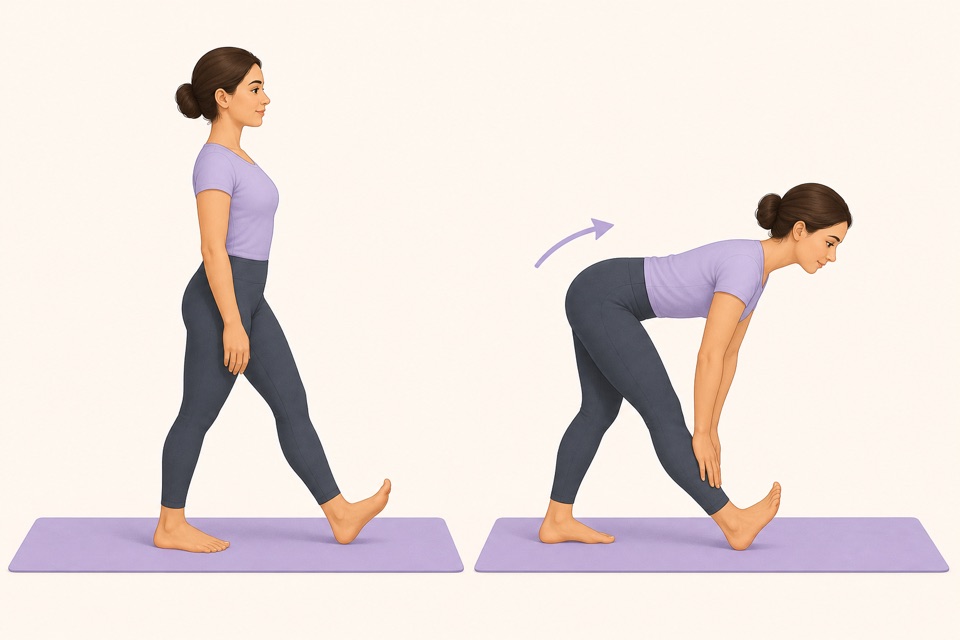
The best short routine starts with walking and stays upright: pelvic tilts, a supported hip flexor stretch, a standing figure-four, and a shallow hamstring hinge. Walking first gives your body a gradual change from sitting and helps you judge whether gentle movement feels appropriate.
- Walk for 90 seconds. Let your stride become comfortable; do not force tall posture.
- Standing pelvic tilts for 45 seconds. Make a small tuck-and-release motion with soft knees.
- Supported hip flexor stretch for 30 seconds per side. Step one foot back and gently tuck the pelvis.
- Standing figure-four for 30 seconds per side. Hold a counter or sturdy chair and sit back only slightly.
- Shallow hamstring hinge for 30 seconds per side. Put one heel forward and hinge from the hips.
- Walk for one final minute. Reassess before returning to chores.
From Wiggle
Recommended moves
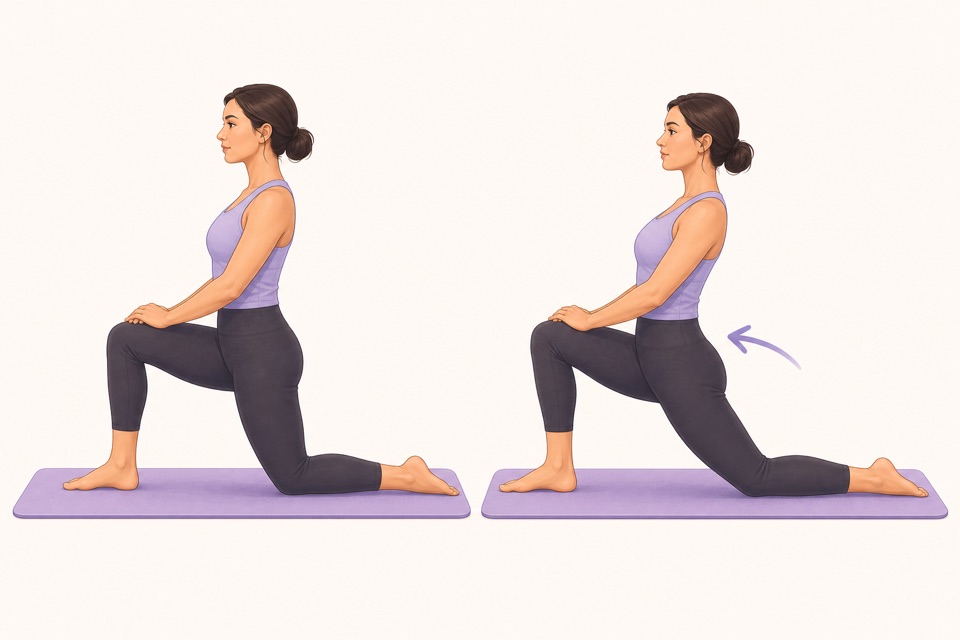
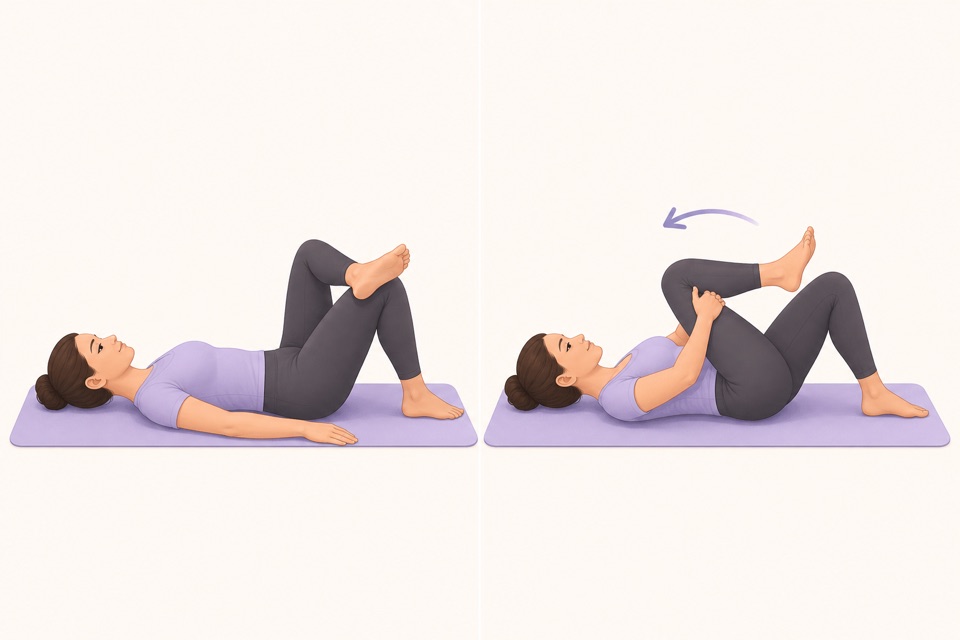
Mayo Clinic recommends smooth stretching without bouncing and advises against stretching into pain. That is the standard here: mild tension, normal breathing, and no heroic range.
Why can housework make your lower back and hips feel stiff?
Housework can combine repeated bending, reaching, pushing, lifting, twisting, and long static positions. Vacuuming one-handed, carrying laundry away from the body, or cleaning a low surface can add to fatigue. The sensation is real, but stiffness by itself cannot tell you which tissue is responsible.
Common failure modes include twisting while carrying a basket, reaching instead of moving the feet, cleaning an entire floor in one position, and waiting until every room is finished before taking a break. MedlinePlus notes that back pain can have many causes, so persistent, recurrent, or worrying symptoms deserve individual assessment.
How do you modify the routine without getting on the floor?
Use a wall, kitchen counter, or sturdy chair for light balance support and keep the routine standing. Clear away wet floors, cords, buckets, and cleaning tools before you begin. A modification works when it reduces effort without turning the movement into a balance test.
- Let the counter support balance; do not pull hard against it.
- Shorten the stance in the hip flexor stretch.
- Keep the figure-four shallow or replace it with easy marching.
- Dry wet flooring and move the vacuum cord out of the way.
If vacuuming and mopping feel like a workout, compare this with the post-workout lower back cooldown.
How can you reduce stiffness during the next round of chores?
Change the job before trying to change your flexibility. Bring work closer, use a longer handle when practical, move your feet before turning, and split heavy loads. A one-minute walking break whenever you change rooms is easier to remember than a perfect schedule.
- Switch hands during light repetitive tasks when it is safe.
- Keep the vacuum or mop close instead of reaching far ahead.
- Carry two lighter laundry loads instead of one awkward basket.
- Turn with the feet rather than twisting while holding a load.
- Alternate low, high, pushing, and walking tasks.
How can Wiggle make post-cleaning movement easier to repeat?
Wiggle removes the decision-making after chores: save a short standing hips-and-back routine, follow the timers, and move on without inventing a workout. The job is not to become more flexible beside the vacuum. It is to make a gentle movement break easy enough to repeat.
Use the Wiggle app to build a guided post-cleaning reset. On lighter days, lower back mobility exercises can give you a broader routine.
Sources
Why we keep it gentle
These guides are written for everyday stiffness and habit-building. They are grounded in mainstream guidance on flexibility, movement, and when to seek medical help.
- Stretching: Focus on flexibilityMayo Clinic
- Back painMedlinePlus
- Physical Activity Guidelines for AmericansU.S. Department of Health and Human Services
- Back pain at work: Preventing pain and injuryMayo Clinic
FAQ
Questions people ask
What are the best lower back stretches after housework?
Walk for one or two minutes first, then try gentle pelvic tilts, a supported hip flexor stretch, a standing figure-four stretch, and a shallow hamstring hinge. Use mild tension only and stop if pain is sharp, spreading, or worsening.
Should I stretch immediately after cleaning?
For familiar stiffness, put down the tools and walk before stretching. If you fell, felt a sudden pull, or have severe pain, numbness, weakness, loss of bladder or bowel control, or symptoms traveling down a leg, skip the routine and seek qualified medical guidance.
Why does my lower back feel stiff after housework?
Cleaning can combine prolonged bending, reaching, pushing, lifting, and twisting. Repeating one task or staying in one position can add to fatigue. Stiffness alone does not identify a cause, so use this routine for ordinary mild stiffness rather than self-diagnosis.
How can I reduce back stiffness while cleaning?
Change tasks and positions regularly, bring work closer, move your feet before turning, split heavy loads, and take a short walking break between rooms instead of waiting until every chore is finished.
Can I do these stretches without getting on the floor?
Yes. The entire routine is standing and needs only a wall, counter, or sturdy chair for light support. Keep the surface stable and the floor dry.