Wiggle guide
Stretches After a Long Drive: A 7-Minute Rest-Stop Reset
A gentle post-drive routine for stiff hips, calves, glutes, upper back, and lower-back tension after hours in the car.
stretches after long drive
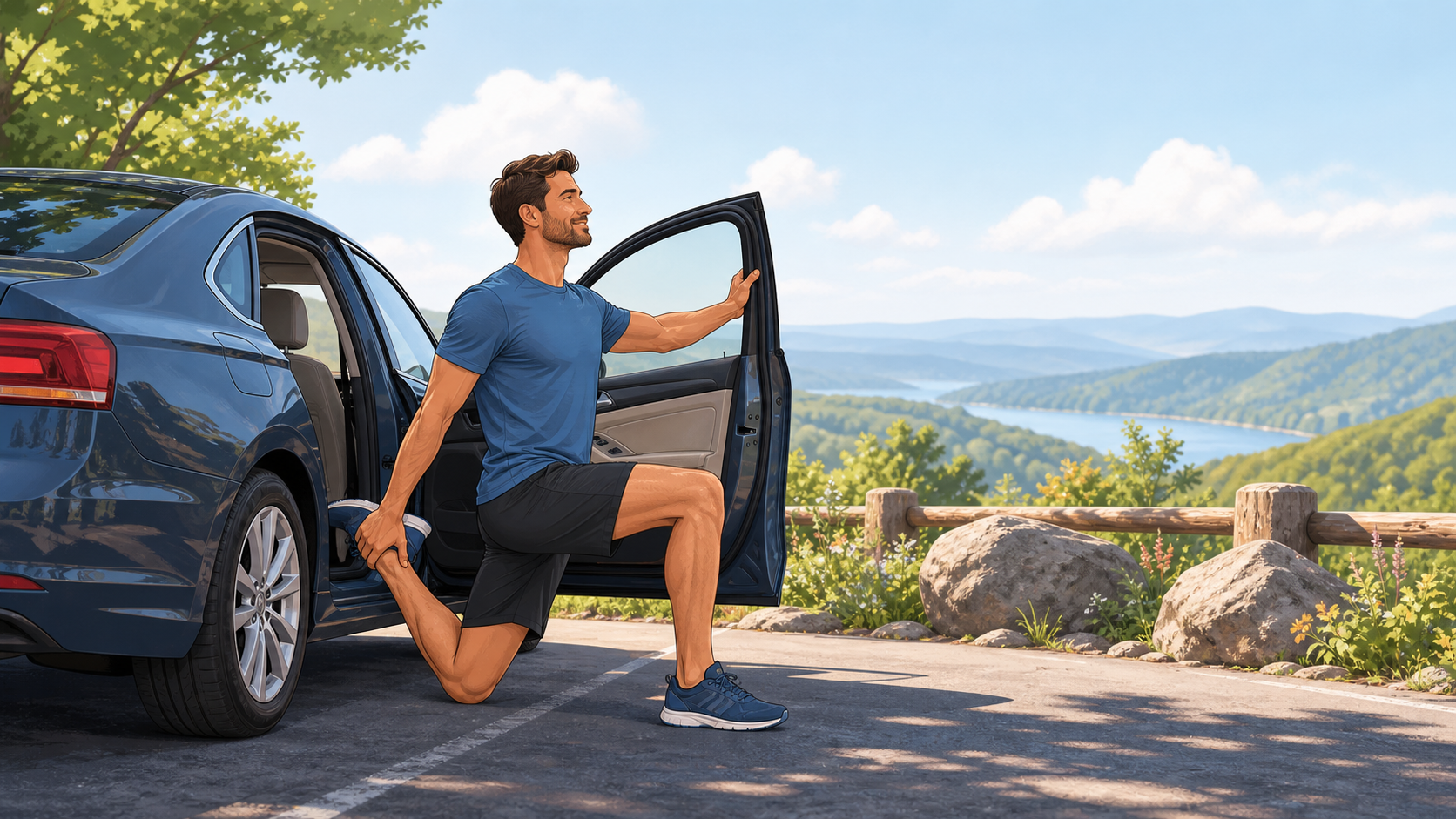
The worst part of a long drive is not always the drive. It is the first few steps after you park: hips feel short, calves feel heavy, your lower back feels compressed, and you are too tired to design a routine from scratch.
Use a tiny reset instead. Wiggle can time the moves, show the next stretch, and keep the whole thing short enough to do at a rest stop, hotel room, driveway, or office parking lot.
What should you do first after a long drive?
Walk slowly for one minute before stretching. After a long drive, your body has been folded into the same seated shape for a while, so the first job is not a deep stretch. It is a gentle position change that wakes up the hips, legs, and back.
Stretches after a long drive are short, gentle movements used after car travel to ease everyday stiffness from prolonged sitting. They are not a treatment plan for new, severe, radiating, injury-related, or persistent pain.
Use this fast decision rule:
- If walking feels good, continue with the seven-minute reset.
- If walking makes symptoms worse, skip the routine.
- If pain travels down the leg, feels sharp, or worries you, get personal medical guidance.
What is the best seven-minute stretch routine after driving?
The best post-drive routine starts broad and stays mild: walk, open the front of the hips, lengthen the back of the legs, loosen the calves, then add glutes and upper back. You should finish feeling less stuck, not like you tested your flexibility.
Try this sequence:
- Walk slowly for one minute.
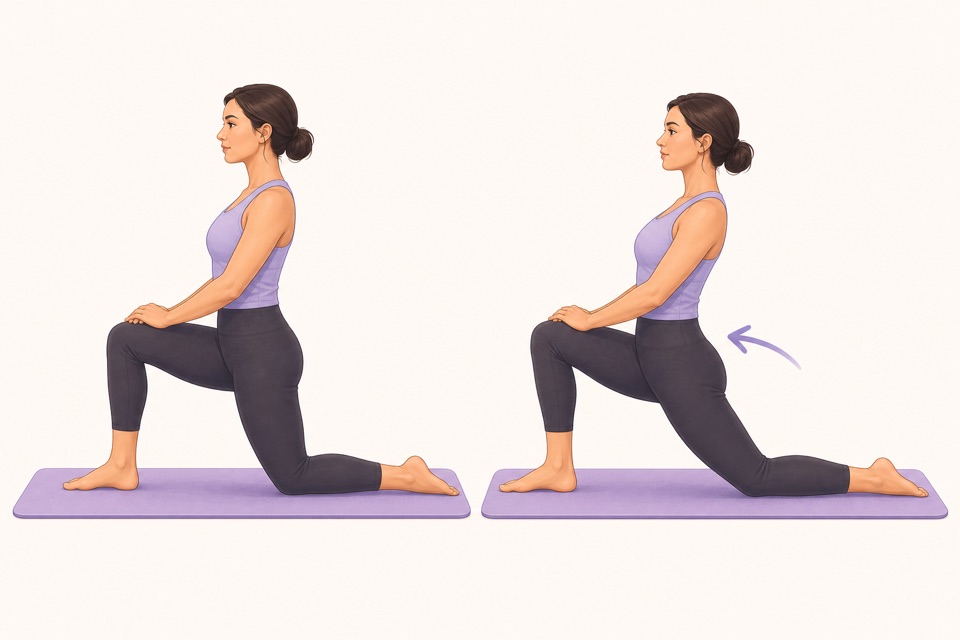
- Supported standing hip flexor stretch for 45 seconds per side.
- Supported standing hamstring stretch for 45 seconds per side.
- Wall or curb calf stretch for 30 seconds per side.
- Standing figure-four stretch with one hand on the car, wall, or rail for 30 seconds per side.
- Car-door or doorway chest opener for 45 seconds.
- Shoulder circles and another short walk for one minute.
From Wiggle
Recommended moves
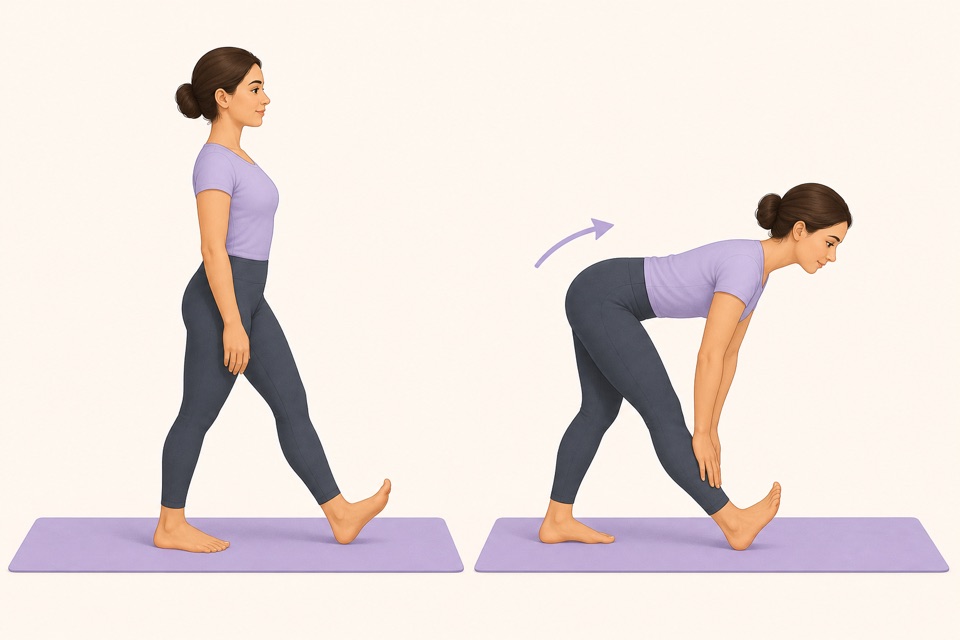
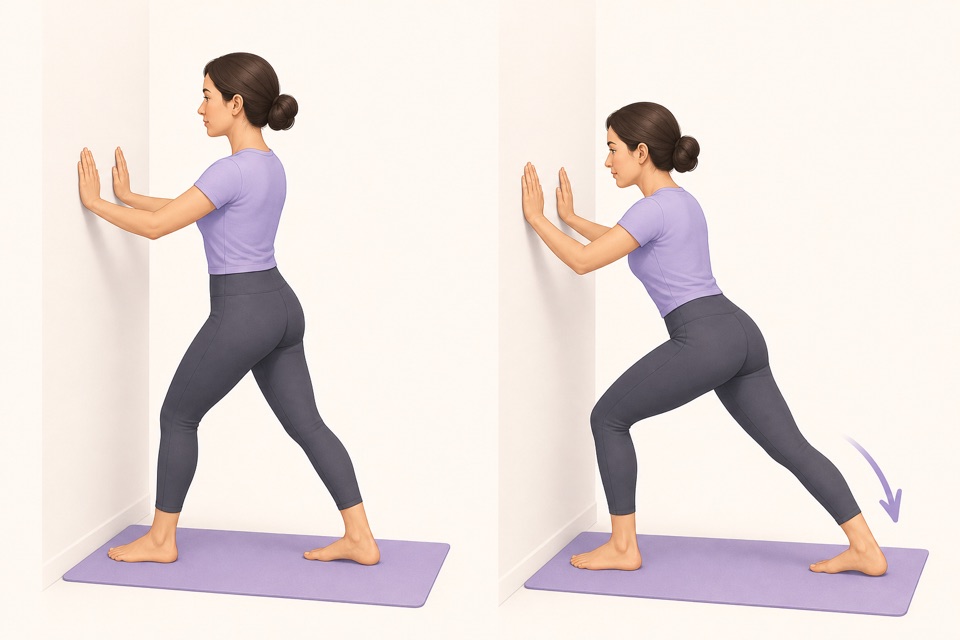
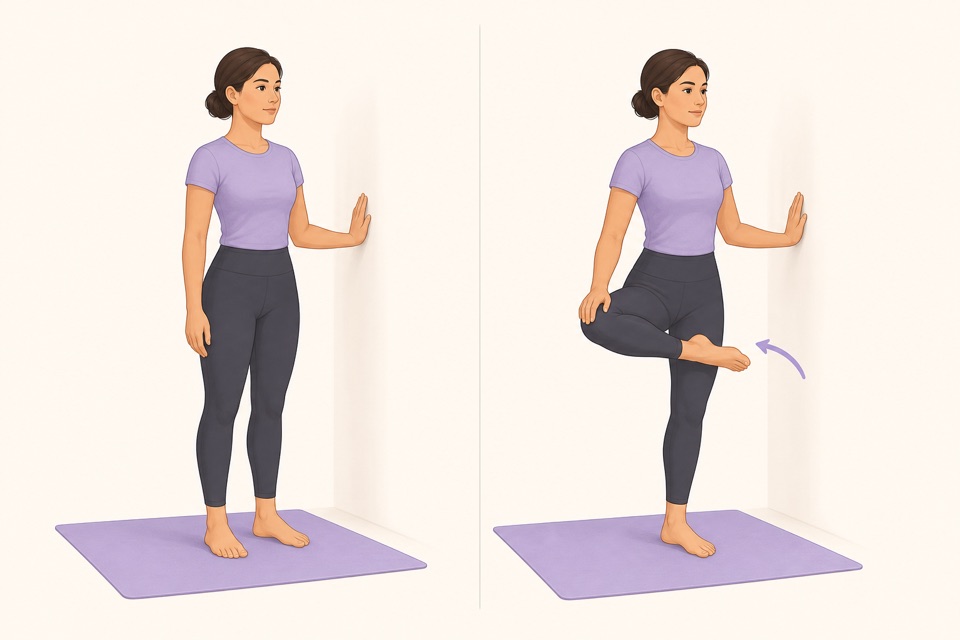
Which stretches should you choose at a rest stop?
Choose standing stretches that use support and do not require lying on the ground. A car door, wall, bench, rail, or curb is enough. The goal is to make the reset realistic when you are wearing travel clothes, tired, and short on patience.
| If you feel this after driving | Try first | Make it easier | | --- | --- | --- | | Front of hips feel tight | Supported hip flexor stretch | Shorten the stance and keep ribs stacked | | Lower back feels compressed | Slow walk plus pelvic tilts | Keep hands on hips or a wall | | Hamstrings feel stiff | Supported hamstring stretch | Bend the standing knee slightly | | Calves feel heavy | Wall or curb calf stretch | Step closer to the wall | | Glutes feel stuck | Standing figure-four | Hold the car door or rail | | Upper back feels rounded | Chest opener and shoulder circles | Keep elbows lower than shoulders |
If your stiffness feels almost identical to a long desk day, use the more specific lower back stretches after sitting routine. If the lower legs are the loudest part, add calf stretches before you sit again.
How do you keep post-drive stretches safe?
Keep every stretch at mild tension. Do not bounce, chase pain, or force a deep forward fold because you feel stiff. Long drives already make the body feel cranky; the reset should feel like a transition, not a challenge.
Use this checklist:
- Park somewhere safe before you move.
- Walk before stretching.
- Use the car, wall, or rail for balance.
- Keep breathing normal.
- Skip any move that causes sharp pain, numbness, dizziness, weakness, or symptoms that travel down the leg.
- Repeat the routine later only if the first pass made you feel better.
For a broader travel-friendly lower-back sequence, use easy lower back stretches. If hips are the main limiter after the drive, use hip flexor stretches or glute stretches as your next pass.
How often should you take movement breaks on a long drive?
Use movement breaks before stiffness becomes the whole story. There is no perfect stretch schedule for every driver, but a short walk and a few standing movements during stops is easier to repeat than waiting until the end of a five-hour drive. If you feel sleepy, prioritize safe rest over stretching.
The National Highway Traffic Safety Administration warns that drowsy driving is dangerous, so do not treat stretching as a fix for fatigue. Pull over safely, rest, switch drivers if possible, and use movement only as a comfort reset once you are parked.
If your driving day ends at a desk, pair this with stretches for sitting all day. If you want a timed habit instead of a list, Wiggle can turn the routine into a saved seven-minute post-drive reset.
How can Wiggle make post-drive stretching easier?
Wiggle removes the tiny decisions that make travel stretching annoying: what to do, how long to hold it, what comes next, and when to stop. Open a short guided routine, follow the timer, and let the app keep the reset gentle.
That is the whole win. Not a heroic workout after a long drive. Just a repeatable reset that gets you out of the car and back into your body.
Sources
Why we keep it gentle
These guides are written for everyday stiffness and habit-building. They are grounded in mainstream guidance on flexibility, movement, and when to seek medical help.
- Stretching: Focus on flexibilityMayo Clinic
- Back painMedlinePlus
- Physical Activity Guidelines for AmericansU.S. Department of Health and Human Services
- Drowsy DrivingNational Highway Traffic Safety Administration
FAQ
Questions people ask
What are the best stretches after a long drive?
Start with a one-minute walk, then do gentle hip flexor, hamstring, calf, glute, and upper-back movements. Keep the routine short and mild so your body can transition from sitting to standing without forcing range.
Should I stretch as soon as I get out of the car?
Walk slowly first. After hours of sitting, a short walk helps your hips, legs, and back change position before you ask them to stretch.
How long should a post-drive stretch routine take?
Five to eight minutes is enough for a first reset. Use a short routine at the rest stop, hotel, or driveway, then repeat later only if the first pass felt good.
Which muscles get tight after driving?
Long driving can leave the hip flexors, hamstrings, calves, glutes, chest, and upper back feeling stiff because the body stays folded and still for a long time.
When should I skip post-drive stretches?
Skip stretching and get personal medical guidance if pain is new, severe, injury-related, persistent, travels down the leg, or comes with numbness, weakness, dizziness, fever, or symptoms that worry you.
For offline timers and hotel-room options on the same trip, use the stretching app for travel guide.