Wiggle guide
Frog Stretch: Beginner Form, Benefits, and Easier Options
Learn how to do the frog stretch safely, what it targets, how long to hold it, and which easier hip stretches to use if it feels too intense.
frog stretch
The frog stretch looks simple until you try it. Then the floor feels far away, the knees complain, or the inner thighs tense up before you have moved an inch. Copying the deepest version usually makes the position less useful, not more.
Use a better rule: warm up, add padding, begin narrow, and stop at mild tension. If you cannot breathe normally or come out smoothly, the stretch is too deep. A supported 20-second version can give you the hip-opening benefit without turning the pose into an endurance test.
What is the frog stretch?
The frog stretch is a floor-based hip mobility position that targets the adductors along the inner thighs. You start on hands and knees, widen the knees, turn the lower legs outward, and shift the hips back slightly. The useful range is the one that feels controlled and pain-free.
The frog stretch is an inner-thigh stretch, not a test of how wide your knees can go. Its yoga counterpart is often called frog pose or Mandukasana, but a general mobility routine can use a smaller, supported version without chasing the full pose.
The position can be useful when your hips feel stiff after long periods of sitting or when inner-thigh tension limits comfortable side-to-side movement. It does not diagnose the reason your hips feel tight, and it is not required for good hip mobility.
If you are unsure which hip direction feels restricted, take the gentle hip mobility test first. If the floor position already sounds too demanding, begin with hip mobility exercises for beginners.
How do beginners do the frog stretch?
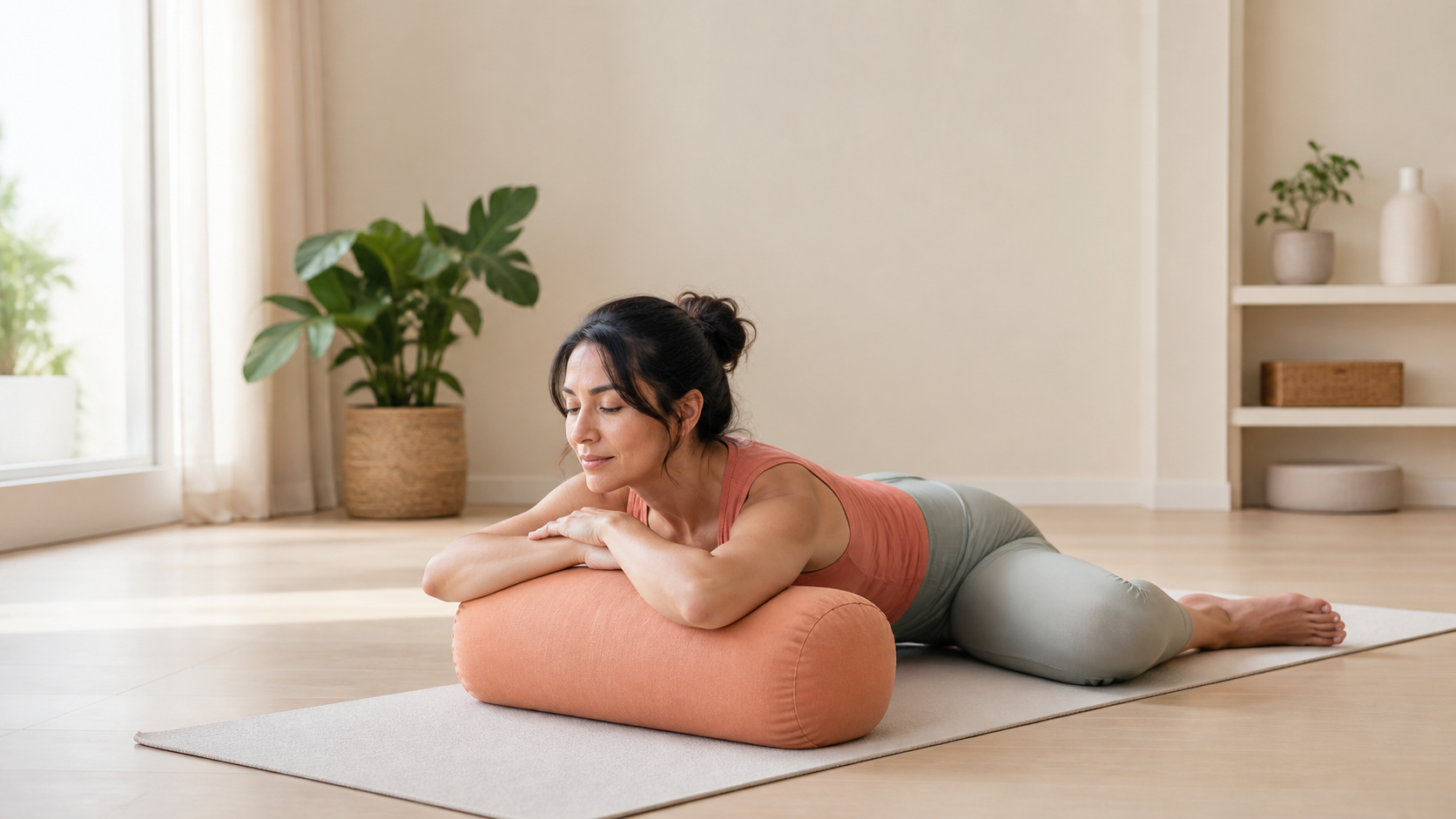
Beginners should warm up first, pad both knees, and start with the knees only slightly wider than the hips. Keep the lower legs comfortable, support the upper body on hands or a bolster, and shift back only until mild inner-thigh tension appears.
Follow this setup:
- Walk or march gently for one to two minutes.
- Fold the mat or place a blanket beneath both knees.
- Begin on hands and knees with a neutral, comfortable back.
- Slide each knee outward a small amount.
- Let the lower legs angle outward without forcing the feet flat.
- Stay on your hands, or lower your forearms onto a bolster.
- Shift the hips back a few centimetres.
- Hold for 15 to 30 seconds while breathing normally.
- Shift forward, bring one knee in at a time, and stand up slowly.
Do not bounce, push the knees wider with your hands, or force your hips toward the floor. Mayo Clinic's general stretching guidance recommends smooth movement, even breathing, and avoiding pain. Those principles matter more than matching a photo.
From Wiggle
Recommended moves
What muscles does the frog stretch target?
The frog stretch mainly targets the hip adductors, the group of muscles along the inner thighs that help bring the legs toward the body's midline and support hip control. You may also notice tension around the groin and hips, but the sensation should stay mild and steady.
Where you feel the stretch gives you a practical decision rule:
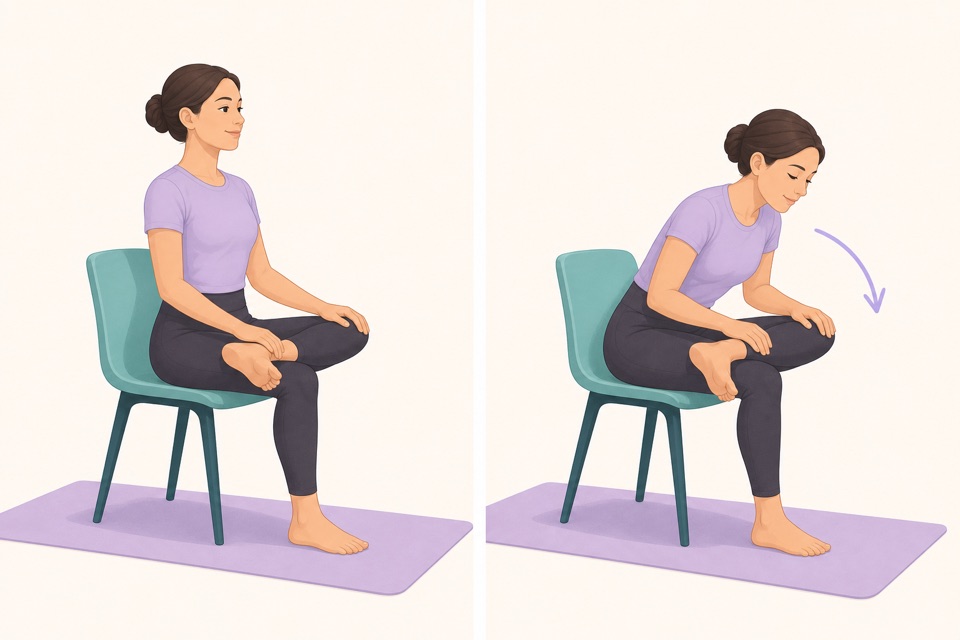
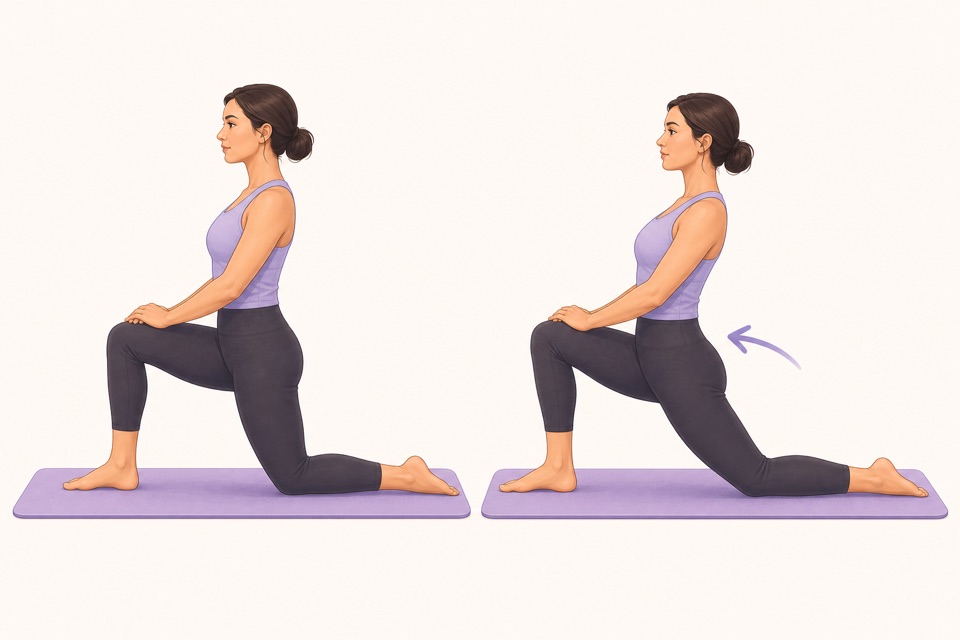
| What you feel | What to change | Better next option | | --- | --- | --- | | Mild inner-thigh tension | Stay and breathe | Continue for 15–30 seconds | | Front-of-hip pinching | Narrow the knees and shift forward | Try hip flexor stretches | | Knee pressure | Add padding and bring feet closer | Use a seated butterfly stretch | | Lower-back strain | Support the chest and reduce the shift | Try adductor stretches | | Sharp groin pain | Stop and come out slowly | Skip the pose and seek guidance if it persists |
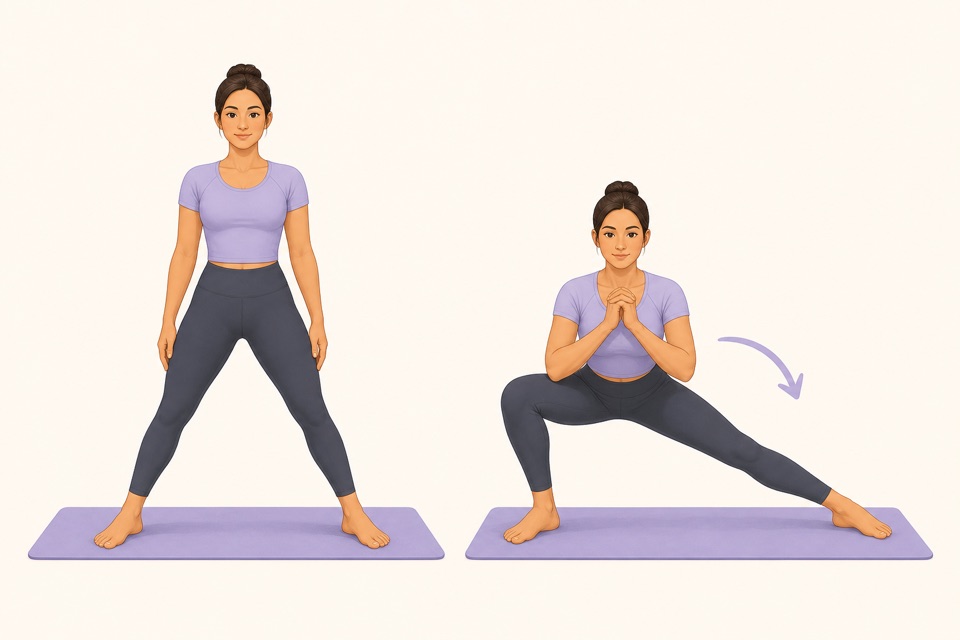
The frog stretch is only one way to work the inner thighs. A supported side lunge lets you control the load while standing. A butterfly stretch keeps the legs in front of you. Neither is an inferior version; the best choice is the one you can repeat without bracing or pain.
What are the benefits of the frog stretch?
The practical benefit of the frog stretch is exposure to a wide-knee hip position with controlled inner-thigh tension. Used gently, it can add movement variety to a sitting-heavy day and complement routines for hip rotation, squatting, or side-to-side movement.
It may help you:
- Notice whether one side feels different without forcing symmetry.
- Practice a wider hip position gradually.
- Add an adductor-focused stretch to a balanced hip routine.
- Replace random deep stretching with a clear, timed progression.
- Learn which modification lets you breathe and relax.
Do not treat the position as a cure for hip pain or assume a deeper frog automatically creates better mobility. Flexibility changes are usually built through consistent, tolerable practice. General physical activity and varied movement matter more than any single pose.
For a broader routine that includes rotation and front-of-hip movement, use these hip mobility stretches. If your real goal is a more comfortable squat, the hip mobility for squats guide gives the stretch a clearer job.
How long should you hold the frog stretch?
Start with 15 to 30 seconds for one or two rounds. If you can breathe normally, keep the muscles relaxed, and exit without discomfort, you can gradually work toward 30 to 45 seconds. There is no prize for staying longer once your form becomes tense.
Try this gentle five-minute sequence:
| Step | Time | Purpose | | --- | ---: | --- | | Easy walk or march | 60 sec | Warm up before stretching | | Side-to-side weight shifts | 45 sec | Introduce lateral hip movement | | Supported frog stretch | 20 sec | Find a mild starting range | | Rest on hands and knees | 20 sec | Let tension settle | | Supported frog stretch | 20 sec | Repeat only if the first hold felt calm | | Seated butterfly stretch | 40 sec | Use an easier inner-thigh position | | Kneeling hip flexor stretch | 30 sec per side | Balance the front of the hips | | Easy walk | 55 sec | Finish with comfortable movement |
Use the American Heart Association's simple principle: warm up gradually before more demanding movement and cool down instead of stopping abruptly. Even for a short stretch session, a minute of walking makes the transition into and out of the floor position feel less abrupt.
Why does the frog stretch hurt?
The frog stretch may hurt when the knees are too wide, the hips are pushed too far back, the knees lack padding, or the position asks for more hip range than you have comfortably available. Pain is a reason to change or stop the stretch, not proof that it is working.
Make it easier in this order:
- Bring the knees closer together.
- Keep the feet closer instead of forming a sharp right angle.
- Stay on your hands rather than lowering to your forearms.
- Put a bolster under your chest.
- Reduce the backward hip shift.
- Hold for 10 to 15 seconds.
- Switch to butterfly or side-lunge adductor stretches.
Stop for sharp or worsening pain, numbness, tingling, weakness, joint instability, significant swelling, symptoms after an injury, or discomfort that persists after you stop. If you have an existing hip, groin, or knee condition, ask a qualified clinician whether this position fits your situation.
How can Wiggle make the frog stretch easier to repeat?
Wiggle can turn the frog stretch into a short guided routine with a warm-up, a modest timer, easier alternatives, and balanced follow-up movements. That removes the guesswork that often leads people to hold one intense pose for too long.
Choose the frog stretch when mild inner-thigh tension is the clear target. Choose a guided stretches for tight hips routine when stiffness feels more general. Choose glute stretches when the outer hip is the main area, or return to adductor stretches when you want more supported options.
The easiest path is not to master the deepest pose. It is to build a five-minute routine you can repeat without dreading it. Start on the Wiggle download page, choose a gentle hip session, and use the supported frog only when it feels like the right tool that day.
Sources
Why we keep it gentle
These guides are written for everyday stiffness and habit-building. They are grounded in mainstream guidance on flexibility, movement, and when to seek medical help.
- Stretching: Focus on flexibilityMayo Clinic
- Warm Up, Cool DownAmerican Heart Association
- Exercise and Physical FitnessMedlinePlus
FAQ
Questions people ask
What is the frog stretch?
The frog stretch is a floor-based inner-thigh and hip mobility position. You begin on hands and knees, slide the knees apart, turn the lower legs outward, and shift the hips back only as far as mild tension allows. It should not create sharp groin, hip, or knee pain.
What muscles does the frog stretch target?
The frog stretch mainly targets the hip adductors along the inner thighs. Depending on your position, you may also feel the groin and nearby hip tissues working. Keep the spine neutral and the movement small so the stretch stays at the inner thighs instead of becoming a forced backbend.
How long should you hold the frog stretch?
Beginners can start with 15 to 30 seconds for one or two rounds. Use normal breathing and come out slowly. A shorter supported hold that feels calm is more useful than a long hold that causes pinching, guarding, numbness, or soreness afterward.
Why does the frog stretch hurt my hips or knees?
The full frog position may ask for more hip or knee range than is comfortable today. Narrow the knees, place padding underneath them, keep the feet closer together, or switch to a butterfly or supported side-lunge stretch. Stop if discomfort is sharp, worsening, or linked to an injury.
Can Wiggle guide a beginner frog stretch routine?
Yes. Wiggle can place the frog stretch inside a short guided hip routine with a warm-up, timers, easier adductor movements, and balanced follow-up stretches. That makes it easier to use the position gently instead of holding it too deeply or too long.