Wiggle guide
Hip Mobility for Cyclists: A Gentle 7-Minute Reset
Try a 7-minute hip mobility routine for cyclists, with clear before-versus-after ride guidance, easy modifications, and stop signs.
hip mobility for cyclists
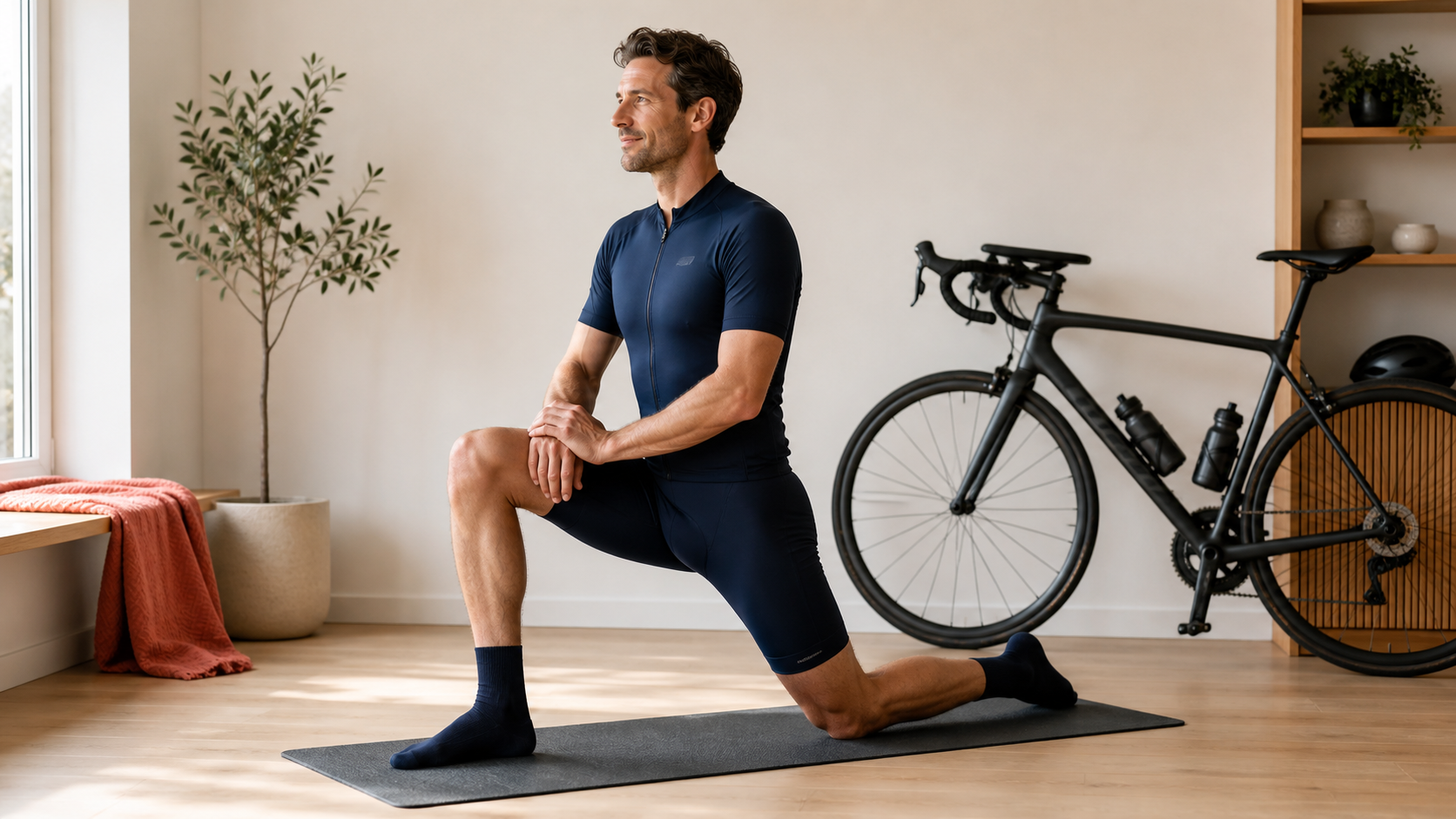
You get off the bike, stand upright, and your first few steps feel like your hips are still shaped around the saddle. The common reaction is to pull harder on the front of the hip. That is rarely the best first move: cycling repeats hip flexion, but your post-ride reset should restore movement gradually rather than chase the deepest possible stretch.
Use this fast rule: before a ride, move dynamically; after a ride, walk first and then use gentle holds. The routine below takes seven minutes, covers motion and control, and is easy enough to repeat after an ordinary training ride.
What is hip mobility for cyclists?
Hip mobility for cyclists is the ability to move the hip comfortably beyond the repeated bent position used while pedaling. Useful cyclist mobility includes extension, rotation, and side-to-side control—not just a long hip flexor stretch—and should support normal walking, riding, and strength work without forcing painful range.
Cycling hip mobility is controlled movement that gives your hips variety around a sport built on repetition. It is not a test of how far you can push a pose, and it cannot correct every source of discomfort by itself.
If you are unsure which direction feels limited, start with the gentle hip mobility test. Treat the result as a clue for choosing movements, not as a diagnosis.
Should cyclists stretch before or after a ride?
Use dynamic movement before cycling and relaxed stretching after cycling. Before a ride, walking, marching, and small leg swings raise your temperature without asking cold muscles to hold an end position. Afterward, pedal easily, walk briefly, then use mild static holds if they feel helpful.
| Timing | Best starting choices | Skip | | --- | --- | --- | | Before a ride | Walk, march, small leg swings, easy bodyweight squats | Long intense holds or forcing range | | Immediately after | Easy spin, dismount, walk for 1–2 minutes | Dropping straight into the deepest lunge | | Later that day | Hip flexor hold, seated rotations, glute bridge | Treating pain as tightness to push through | | Rest day | Broader mobility plus appropriate strength work | Repeating only the one tightest-feeling stretch |
Mayo Clinic recommends warming up before stretching, moving smoothly without bouncing, and avoiding pain. Those basics matter more than whether a pose looks impressive.
What is the best 7-minute hip mobility routine for cyclists?
The best short cyclist routine changes position gradually: walk, add a dynamic movement, open the front of the hip gently, explore rotation, and finish with a small amount of glute control. Keep the sensation mild and leave the session feeling readier to move—not tired or sore.
| Movement | Time | Why it is here | | --- | ---: | --- | | Easy walk or march | 60 sec | Leave the riding position gradually | | Supported leg swings | 60 sec | Explore comfortable forward-back motion | | Supported hip flexor stretch | 60 sec | Add gentle hip extension | | Seated hip rotations | 90 sec | Explore internal and external rotation | | Glute bridges | 90 sec | Control hip extension without a deep stretch | | Easy walk and reassess | 60 sec | Check whether normal steps feel easier |
From Wiggle
Recommended moves
How do you perform the cyclist hip routine?
Make every repetition smaller than your maximum range. Use a wall, chair, or bike rack for support, keep breathing normally, and stop before your body compensates by arching the lower back or twisting the pelvis.
- Walk or march: Let your stride length grow naturally for one minute.
- Supported leg swings: Hold a stable support and swing one leg forward and back through a small, smooth range. Do not kick for height.
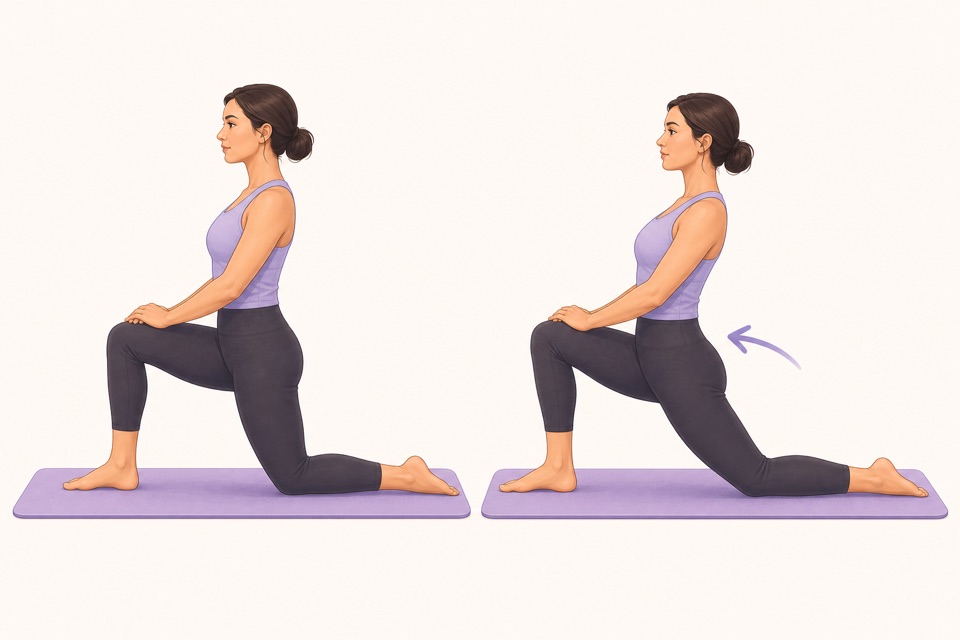
- Supported hip flexor stretch: Use a short split stance or kneel on padding. Gently tuck the pelvis, then shift only until the front hip feels mild tension. Use the focused hip flexor stretches guide if you need easier setup options.
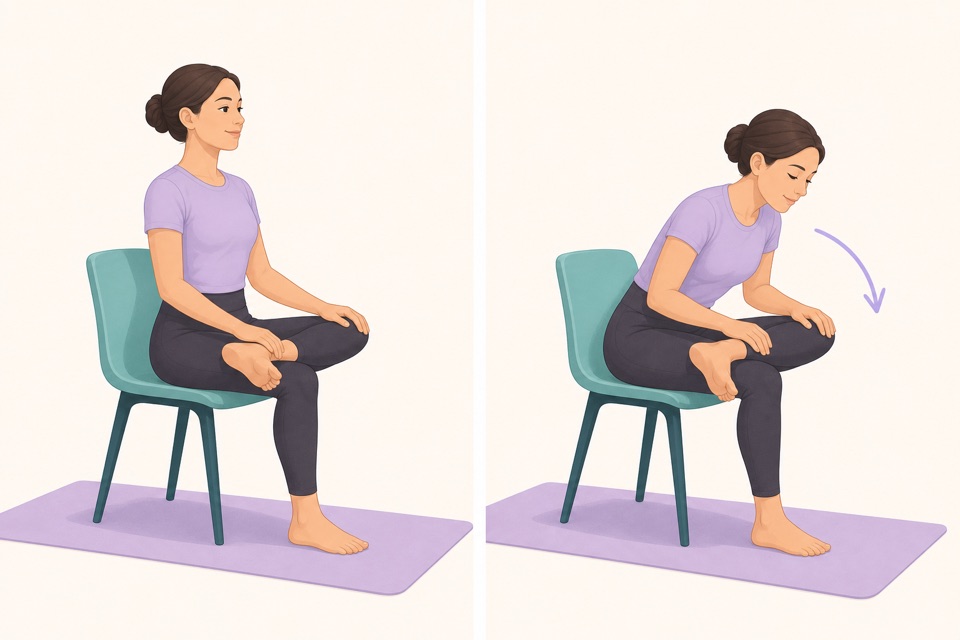
- Seated hip rotations: Sit tall on a chair. Move one knee inward and outward without twisting your trunk or pushing the knee by hand.
- Glute bridges: Lie down with knees bent and feet grounded. Lift only as high as you can without over-arching the back, pause, and lower slowly.
- Reassess: Walk for one minute. Judge the routine by easier everyday movement, not by stretch depth.
Why do hips feel tight after cycling?
Hips can feel tight after cycling because pedaling repeats a narrow range while the trunk and pelvis stay relatively steady. Ride duration, recent training load, bike setup, strength, previous injury, and long periods of sitting away from the bike can all influence the sensation. One tight feeling does not prove one muscle is shortened.
Use the pattern to choose your next step:
- Only after long rides: shorten the first mobility session and review how quickly training volume increased.
- Mostly at the front of the hip: try the supported hip flexor position without arching your back.
- Mostly when crossing a leg or turning: explore the hip internal rotation and hip external rotation guides.
- One-sided and linked to the bike: consider a qualified bike-fit assessment rather than stretching harder.
- Persistent or worsening: pause the self-experiment and seek professional guidance.
Do cyclists need strength as well as mobility?
Yes. Mobility helps you access a range; strength helps you control it. Cyclists can combine gentle mobility with suitable exercises for the glutes, trunk, and legs instead of relying on passive stretching alone. Federal activity guidance recommends both aerobic and muscle-strengthening activity for adults.
Keep the plan simple: perform this short reset after two or three rides per week, and include appropriate strength work on days that fit your training. More is not automatically better. The useful dose is the one you can recover from and repeat.
When should you stop hip mobility work?
Stop if a movement causes sharp or worsening pain, numbness, tingling, weakness, catching, locking, giving way, or symptoms that travel down the leg. Seek qualified care for symptoms after a crash, major swelling or loss of motion, persistent pain, or discomfort that changes your walking or riding.
If you have had hip surgery, have a diagnosed joint condition, or are returning after an injury, follow your clinician's or physiotherapist's plan instead of a general online routine.
How can Wiggle make post-ride mobility easier to repeat?
Wiggle gives the routine a timer, side changes, and a clear finish, so your cooldown does not turn into ten minutes of searching for exercises beside the bike. Start with this seven-minute sequence, save the movements that feel useful, and keep the effort gentle enough to repeat after your next ride.
For days when several areas feel stiff, use the broader hip mobility stretches routine. Then download Wiggle and build a post-ride sequence that starts as quickly as your recovery spin ends.
Sources
Why we keep it gentle
These guides are written for everyday stiffness and habit-building. They are grounded in mainstream guidance on flexibility, movement, and when to seek medical help.
- Stretching: Focus on flexibilityMayo Clinic
- Physical Activity Guidelines for AmericansU.S. Department of Health and Human Services
- Exercise and Physical FitnessMedlinePlus
FAQ
Questions people ask
What hip mobility exercises are best for cyclists?
Cyclists usually benefit from movements that gently take the hips out of the repeated flexed riding position: an easy walk, standing leg swings, a supported hip flexor stretch, seated hip rotations, and a glute bridge. The best routine is comfortable, controlled, and short enough to repeat after rides.
Should cyclists stretch before or after riding?
Before riding, favor a brief dynamic warm-up such as walking, marching, and small controlled leg swings. Save longer, relaxed static holds for after the ride or a separate mobility session, when the muscles are warm and you do not need to produce force immediately.
How long should a cyclist hip mobility routine take?
Six to eight minutes is enough for a practical routine. Use about two minutes to warm up, four to five minutes for controlled hip movements, and one minute to walk and reassess. Consistency matters more than turning one session into an intense flexibility workout.
Why do cyclists get tight hips?
Cycling keeps the hips bent and repeats a relatively narrow movement pattern for long periods. Training load, bike position, time spent sitting away from the bike, limited strength, and too little movement variety can all contribute to a feeling of hip tightness. Tightness alone does not identify one specific cause.
When should a cyclist stop stretching a hip?
Stop for sharp or worsening pain, numbness, tingling, weakness, catching, locking, giving way, or pain that travels down the leg. Seek qualified medical or physiotherapy guidance for symptoms after a crash, persistent pain, major loss of motion, swelling, or symptoms that change how you walk or ride.