Wiggle guide
Hip Mobility for Golfers: A Gentle 7-Minute Warm-Up
Try a 7-minute hip mobility warm-up for golfers, with five controlled movements, a pre-round checklist, easy options, and clear stop signs.
hip mobility for golfers

The first swing should not be the first time your hips move beyond the car-seat position. A hard, rushed stretch on the first tee can feel productive, but it does not prepare you to rotate with control. The easier path raises your temperature, explores comfortable hip motion, and rehearses the turn gradually.
Use this fast rule: walk first, rotate second, swing last. This seven-minute routine needs only a club for balance and finishes with practice turns rather than exhausting your legs before the round.
What is hip mobility for golfers?
Hip mobility for golfers is the comfortable, controlled motion used while walking, setting up to the ball, and turning through a swing. It includes rotation, side-to-side movement, and hip extension—not merely touching your toes or forcing one deep stretch.
Golf hip mobility is usable range you can control during a turn. It is not a promise of more distance, and tightness alone does not prove that one muscle or joint is causing a swing problem.
For a neutral baseline, use the gentle hip mobility test. Treat the result as a movement check, not a diagnosis or a reason to push one side harder.
Should golfers stretch before a round?
Yes, but begin with dynamic movement. Before golf, walking, hip circles, shallow lateral lunges, and slow practice turns prepare you without long end-range holds. Use relaxed static stretching after the round or in a separate mobility session if it feels comfortable.
| When | Useful choice | Avoid | | --- | --- | --- | | Arriving | Brisk walk and easy marching | Going from the car directly to full swings | | Before swinging | Hip circles, shallow lunges, slow turns | Bouncing or forcing painful range | | During a slow round | Brief walks and gentle standing movement | Cranking into the tight side | | After the round | Easy walk and mild relaxed holds | Treating sharp pain as tightness |
Mayo Clinic advises warming up before stretching, moving smoothly without bouncing, and avoiding pain. Those rules matter more than chasing the biggest possible turn.
What is the best 7-minute hip mobility routine for golfers?
The best short golf routine moves from general to specific: walk, circle the hips, explore rotation, add gentle side-to-side control, then rehearse the turn. Keep the effort low enough that your legs feel ready rather than fatigued.
| Movement | Time | Purpose | | --- | ---: | --- | | Easy walk | 2 min | Raise temperature and loosen your stride | | Supported hip circles | 1 min | Explore comfortable hip motion | | Standing hip rotations | 1 min | Practice rotation without swing speed | | Shallow lateral lunges | 1 min | Add controlled side-to-side motion | | Slow crossed-arm turns | 1 min | Rehearse a golf-specific turn | | Half-speed practice swings | 1 min | Build toward the task gradually |
From Wiggle
Recommended moves
How do you perform the pre-round hip routine?
Use a stable support, breathe normally, and stay inside your maximum range. Your pelvis and trunk should move smoothly; pinching, sharp pain, or a need to force the motion means the range is too large.
- Walk: Walk easily for two minutes, letting stride length grow naturally.
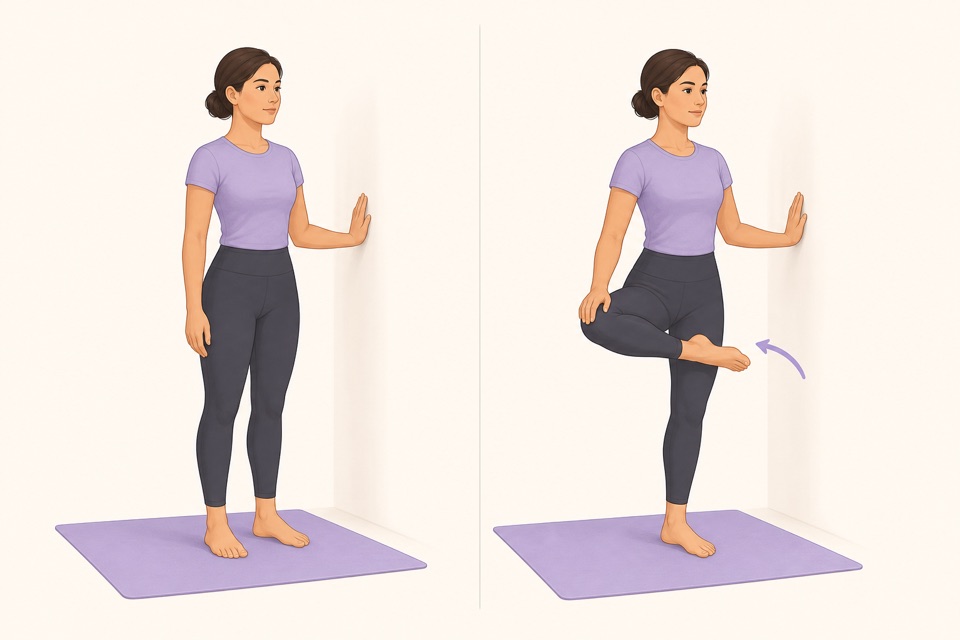
- Circle the hips: Hold a club planted vertically or a stable support. Lift one knee slightly and draw six small circles each way. Switch sides.
- Rotate with control: Stand tall. Keep the movement small as one knee and hip turn gently inward, then outward. Complete six per side without twisting at the knee.
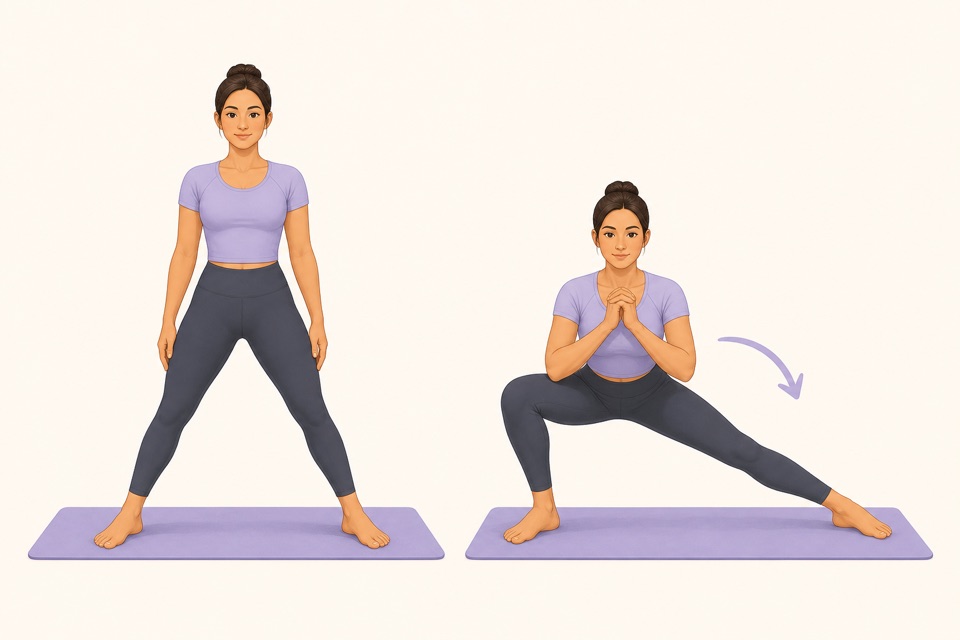
- Lunge sideways: Step to one side and bend that knee slightly while the other leg stays long. Keep the foot and knee pointing in the same direction. Alternate for six repetitions.
- Practice the turn: Cross your arms over your chest and make six slow, balanced turns. Let the range emerge rather than wrenching the pelvis still.
- Add the club: Begin with half-speed practice swings and build only if movement remains comfortable.
Why can a golfer's hips feel tight?
Hips may feel tight because of sitting, a sudden increase in rounds or practice, limited movement variety, fatigue, strength, previous injury, or an unfamiliar swing change. The sensation does not identify one exact cause, so use a gentle response before assuming you need a deeper stretch.
- Stiff after the drive: walk before choosing a stretch.
- Restricted when turning: use smaller standing rotations and slow turns.
- Front-of-hip tension: try the hip flexor stretches guide after the round.
- One side feels different: explore hip internal rotation stretches without forcing symmetry.
- Pain changes your walk or swing: stop self-testing and seek qualified guidance.
Do golfers need strength as well as flexibility?
Yes. Flexibility describes available range, while strength and coordination help control movement. A rounded plan includes appropriate lower-body and trunk strengthening alongside mobility and golf practice instead of relying on passive stretching alone.
Federal physical activity guidance recommends muscle-strengthening activity as part of an adult activity plan. Keep pre-round work light; place demanding strength sessions where they fit your recovery and training schedule.
When should you stop hip mobility work?
Stop for sharp or worsening pain, catching, locking, giving way, numbness, tingling, weakness, or symptoms traveling down the leg. Seek qualified care after a fall, with major swelling or loss of motion, or when discomfort persists or changes how you walk or swing.
If you have had hip surgery, have a diagnosed joint condition, or are returning after an injury, follow your clinician's or physiotherapist's plan instead of a general routine.
For a timed standing sequence that also covers the ankles, upper back, shoulders, and gradual practice swings, use the six-minute golf stretching app routine.
How can Wiggle make a golf warm-up easier to repeat?
Wiggle gives each movement a timer and clear finish, so your warm-up does not become another decision at the range. Build this sequence once, keep the movements that feel useful, and start it before reaching for the longest club.
On non-golf days, use the broader hip mobility stretches routine. Then download Wiggle and save a pre-round routine for your next tee time.
Sources
Why we keep it gentle
These guides are written for everyday stiffness and habit-building. They are grounded in mainstream guidance on flexibility, movement, and when to seek medical help.
- Stretching: Focus on flexibilityMayo Clinic
- Physical Activity Guidelines for AmericansU.S. Department of Health and Human Services
- Exercise and Physical FitnessMedlinePlus
FAQ
Questions people ask
What are the best hip mobility exercises for golfers?
Useful pre-round choices include an easy walk, supported hip circles, controlled standing hip rotations, small lateral lunges, and slow practice turns. They prepare the hips for rotation without tiring the legs. Keep every movement comfortable and use a golf club or rail for balance.
Should golfers stretch before playing?
Golfers should warm up before playing, but dynamic movement is a better first choice than long, intense static holds. Walk, move the hips through a comfortable range, and rehearse the swing gradually. Save relaxed static stretches for after the round or a separate session.
How long should a golf hip warm-up take?
Five to eight minutes is practical for most recreational golfers. Spend two minutes walking, about four minutes on controlled hip movements, and one minute building from half-speed practice turns to comfortable swings. A repeatable short warm-up is more useful than an exhausting mobility workout.
Why is hip rotation important in golf?
The golf swing asks the pelvis and trunk to turn while the feet remain grounded. Comfortable hip rotation helps distribute that movement through the body. Every swing is individual, however, and limited motion or pain should not be treated by forcing a deeper turn.
When should a golfer stop a hip mobility exercise?
Stop for sharp or worsening pain, catching, locking, giving way, numbness, tingling, weakness, or pain traveling down the leg. Seek qualified care after a fall, with major swelling or loss of motion, or when pain persists or changes how you walk or swing.