Wiggle guide
Golf Stretching App: A 6-Minute Pre-Round Routine
Choose a golf stretching app and use this six-minute dynamic warm-up for hips, shoulders, upper back, ankles, and easier first swings.
golf stretching app

The first swing of the day should not be the first time your hips, upper back, and shoulders have moved after the drive to the course. But a long flexibility session is not the answer either. It takes time, is easy to skip, and can leave the warm-up feeling like another workout.
Use this fast rule: move dynamically before golf; save longer relaxed holds for after the round. A useful golf stretching app should start a standing, six-minute routine in a few taps and guide the timing while you focus on moving smoothly.
What is a golf stretching app?
A golf stretching app is a guided timer and routine planner for pre-round mobility, post-round cooldowns, and between-round movement. The useful ones separate active warm-ups from slower flexibility work and cover the hips, upper back, shoulders, and ankles without promising to fix pain or transform a swing.
A golf stretching app is a consistency tool: it remembers the sequence, times each movement, and removes decisions when you arrive at the course. It is not a replacement for coaching, strength training, or medical care.
If hip rotation is the main limitation, start with the specific hip mobility for golfers guide. For a broader comparison of routines and app features, see the stretching app for athletes.
What should you do before golf versus after golf?
Before golf, choose controlled dynamic mobility and gradually faster practice swings. After golf, easy walking and comfortable static holds may fit better. A golf app should label these sessions clearly because a relaxing cooldown and a performance warm-up solve different jobs.
| When | Best choice | What to avoid | | --- | --- | --- | | Before the first tee | Walking, hip circles, trunk rotations, shoulder movement, easy swings | Starting cold with deep forced holds | | At the turn | Brief walking and a few comfortable rotations | Trying a new intense mobility drill | | After the round | Easy movement and mild hip, chest, or calf holds | Treating pain as productive | | On a non-golf day | A longer full-body mobility or flexibility routine | Chasing someone else's range |
The American Heart Association recommends increasing activity gradually during a warm-up and bringing it down gradually during a cooldown. For golf, that means building from walking to controlled rotations to easy practice swings—not opening with the fastest swing you can make.
What is the best six-minute app-guided golf warm-up?
The best six-minute golf warm-up begins with walking, moves through the ankles, hips, upper back, and shoulders, then finishes with progressively faster practice swings. Keep every movement controlled and pain-free. You should finish feeling more ready, not stretched to your limit.
- Minute 1 — walk: carry or roll your bag at an easy pace and let your body warm naturally.
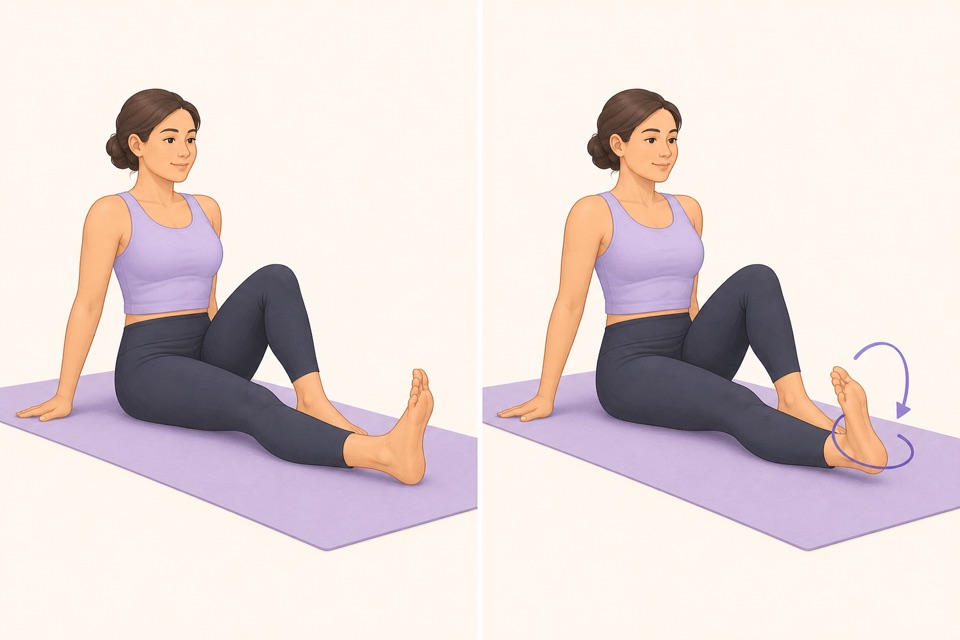
- Minute 2 — ankles and hips: use gentle ankle circles, heel raises, and small hip circles with support if needed.
- Minute 3 — hip turns: take a golf stance and rotate the pelvis slowly without forcing the knees.
- Minute 4 — upper-back rotations: cross your arms over your chest and make comfortable turns in both directions.
- Minute 5 — shoulders: add relaxed arm circles and controlled shoulder-blade movement.
- Minute 6 — practice swings: begin at roughly half speed, then increase gradually if everything feels comfortable.
From Wiggle
Recommended moves
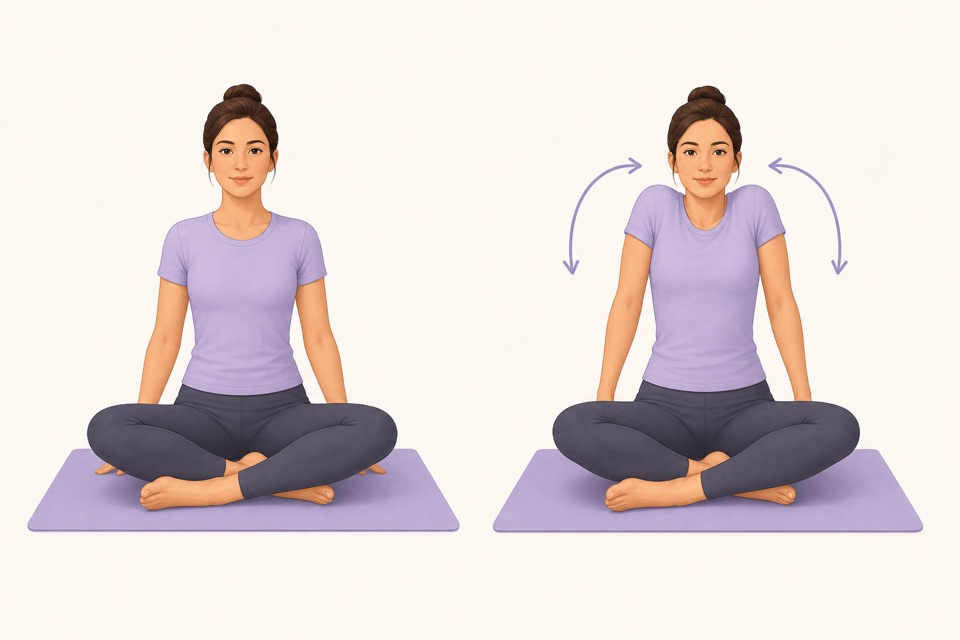
If one of those exercise images is unavailable in your routine, the movement category matters more than the exact name: ankles, hips, upper back, shoulders, then swing rehearsal.
Which app features matter most for golfers?
Golfers benefit most from a standing-only option, short timers, side-switch prompts, routine previews, offline access, and separate warm-up and cooldown labels. These features reduce setup time at a busy range and prevent an unexpected floor exercise from appearing beside the first tee.
Use this checklist before paying for an app:
- Can you choose a five-to-eight-minute routine?
- Is there a standing-only filter for the course?
- Can you preview every movement before starting?
- Does the timer make side changes obvious?
- Are pre-round and post-round sessions separated?
- Can you save the same reliable routine for next weekend?
- Does the app provide easier substitutions and clear stop guidance?
A stretching app with a timer is especially useful when you tend to rush one side. If travel to the course involves a long drive, pair the warm-up with these stretches after a long drive.
Why do golf warm-ups fail?
Golf warm-ups usually fail because they are too long, require floor space, begin too intensely, or do not connect mobility to the swing. The fix is a saved standing routine that takes less time than a small bucket of balls and always ends with gradual swing rehearsal.
| Failure mode | Fast fix | | --- | --- | | You skip it when the tee time is close | Save a six-minute default | | The routine asks you to lie on the ground | Choose standing-only movements | | You feel tired before playing | Reduce range and repetitions | | The first fast swing still feels abrupt | Add three to five gradual practice swings | | A movement causes pain | Stop; do not use the timer as pressure to continue |
Mayo Clinic advises stretching smoothly, avoiding bouncing, and not aiming for pain. If you have sharp or worsening pain, numbness, tingling, weakness, substantial swelling, or symptoms after an acute injury, stop and seek appropriate professional guidance.
How can Wiggle make a golf routine easier to repeat?
Wiggle can turn a list of golf mobility ideas into one short guided sequence with visible timing. Save a standing pre-round routine, use the same order every round, and keep the goal simple: arrive at the first tee feeling prepared without spending energy on planning.
Open the Wiggle download page, choose a six-minute standing routine for the hips, upper back, shoulders, and ankles, then finish with a few easy swings. On non-golf days, use a broader mobility and flexibility app routine instead of forcing a longer warm-up at the course.
Sources
Why we keep it gentle
These guides are written for everyday stiffness and habit-building. They are grounded in mainstream guidance on flexibility, movement, and when to seek medical help.
- Warm Up, Cool DownAmerican Heart Association
- Stretching: Focus on flexibilityMayo Clinic
- Physical Activity Guidelines for AmericansU.S. Department of Health and Human Services
FAQ
Questions people ask
What should a golf stretching app include?
A golf stretching app should separate a dynamic pre-round warm-up from a calmer post-round cooldown. Look for short routines, visible timers, standing options, side-to-side prompts, and movements for the hips, upper back, shoulders, and ankles. It should help you feel ready without tiring you before the first tee.
Should golfers stretch before a round?
Golfers can use controlled dynamic movements before a round, especially after driving or sitting. Begin with easy walking, then add hip circles, trunk rotations, shoulder movements, and slow practice swings. Save longer relaxed holds for after the round or a separate flexibility session.
How long should a golf warm-up take?
A practical golf warm-up can take five to eight minutes. Spend the first minute walking, use three to four minutes for controlled mobility, then finish with easy practice swings that gradually approach your normal speed. The goal is to feel prepared, not fatigued.
Can a stretching app fix golf back pain?
No. A stretching app can guide gentle movement, but it cannot diagnose or treat back pain. Stop if movement causes sharp or worsening pain, numbness, tingling, weakness, or pain after an acute injury. Persistent or concerning symptoms need assessment from a qualified healthcare professional.
Can I use Wiggle before and after golf?
Yes. Use a short standing routine with controlled mobility before golf, then choose a gentler hip, shoulder, or full-body routine after the round. Keep the pre-round session active and comfortable; use slower holds only when you no longer need to swing at full speed.