Wiggle guide
How to Sleep With Lower Back Pain: Positions and a Gentle Reset
How to sleep with lower back pain using side, back, and pillow-supported positions, plus a gentle 5-minute wind-down for mild stiffness.
how to sleep with lower back pain
The hard part is not knowing that sleep matters. The hard part is lying down tired, feeling your lower back complain, and then changing positions ten times because nothing feels obviously right.
Use this as a fast decision guide for mild lower-back stiffness at night. Pick the position that feels most supported, add one pillow adjustment, and use a short Wiggle wind-down only if gentle movement makes the night easier. If your pain is new, severe, spreading, injury-related, or worrying, skip the routine and get personal medical guidance.
What is the best way to sleep with lower back pain?
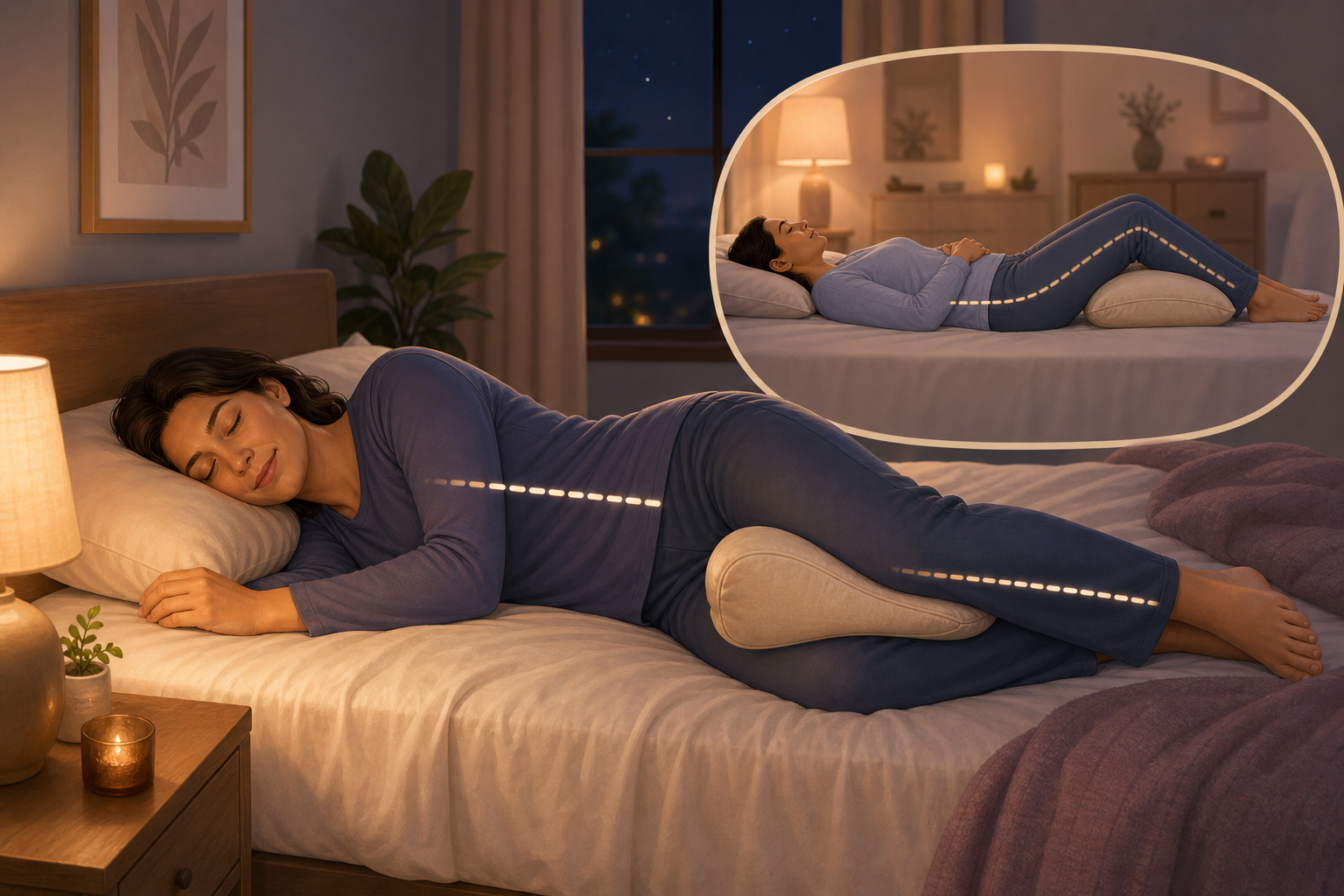
The best way to sleep with lower back pain is the position that feels supported and lets your body relax. For many people, that means side sleeping with a pillow between the knees or back sleeping with support under the knees. Do not chase perfect posture if the position makes you brace.
A sleep position for lower back pain is a supported lying position that reduces twisting, pressure, or bracing enough for you to rest. It is not a treatment plan, and it should not be used to push through pain that needs medical attention.
Use this quick rule:
| If this is your night | Try this first | Why it may help | | --- | --- | --- | | Side sleeping feels best | Pillow between knees | Keeps hips from pulling the lower back into a twist | | Back sleeping feels best | Pillow or rolled towel under knees | Softens the arch and can reduce pressure | | Both sides feel uneven | Switch to the less painful side | Starts with comfort instead of symmetry | | Every position feels irritating | Skip stretching and seek guidance if symptoms persist | Pain that blocks rest may need personal care | | You only have energy for one change | Add one pillow, then stop experimenting | Too many changes can make bedtime more stressful |
Mayo Clinic and MedlinePlus both describe pillow support as a simple way to make side or back sleeping more comfortable for back pain. Treat that as a setup tool, not a guarantee.
Which sleeping position should you try first?
Try the position that already feels least painful, then make it slightly more supported. If side sleeping is comfortable, place a pillow between your knees. If back sleeping is comfortable, place a pillow or rolled towel under your knees. Change one variable at a time.
Here is the plain version:
- Side sleeper: bend the knees slightly and place a pillow between them.
- Back sleeper: support the knees with a pillow or rolled towel.
- Stomach sleeper: consider shifting toward side sleeping if your lower back feels compressed.
- Mixed sleeper: start in the calmest position and let normal movement happen.
The mistake is trying to force a textbook position while your body is asking for comfort. Start with the position that lowers effort. Then use a small support cue.
If your stiffness is strongest after waking, save morning stretches for back pain for the next day instead of doing more at night.
Should you stretch before bed for lower back pain?
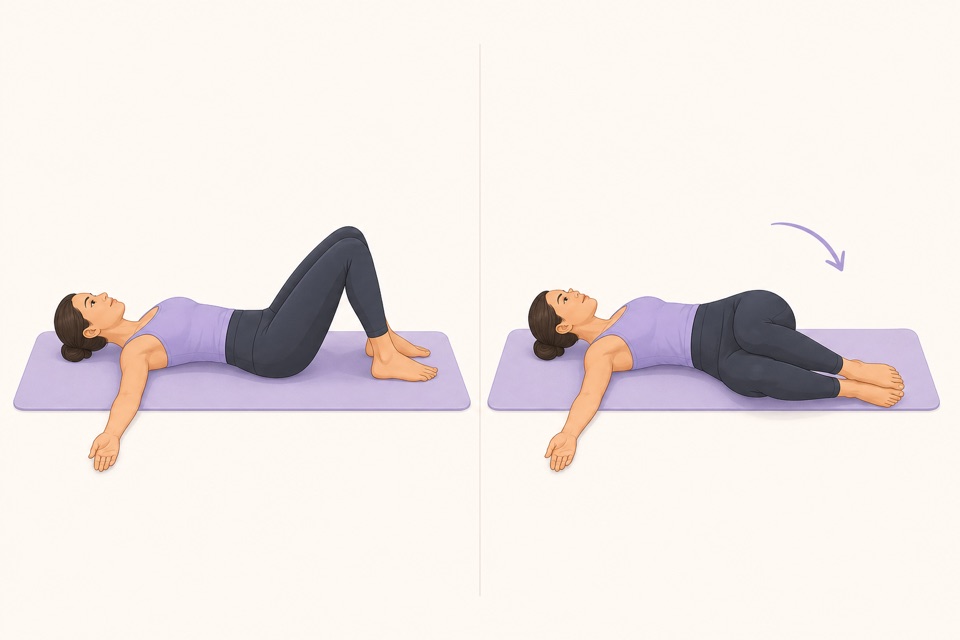
Stretch before bed only if gentle movement feels calming and does not increase symptoms. Night is not the time for deep flexibility work. Use mild breathing, small rotations, and supported hip movement so the routine feels like a wind-down, not a workout.
Try this 5-minute reset for ordinary stiffness:
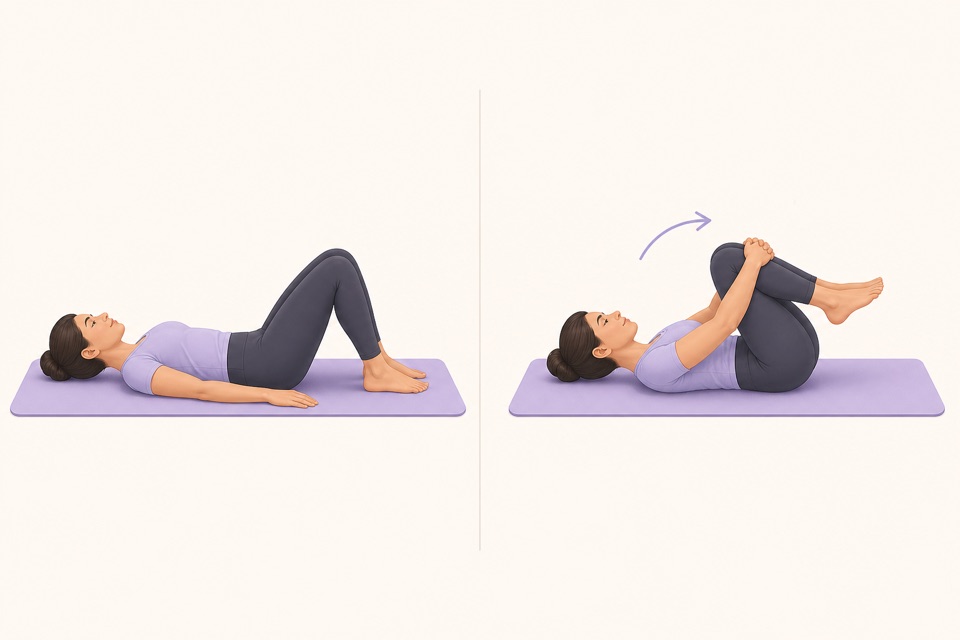
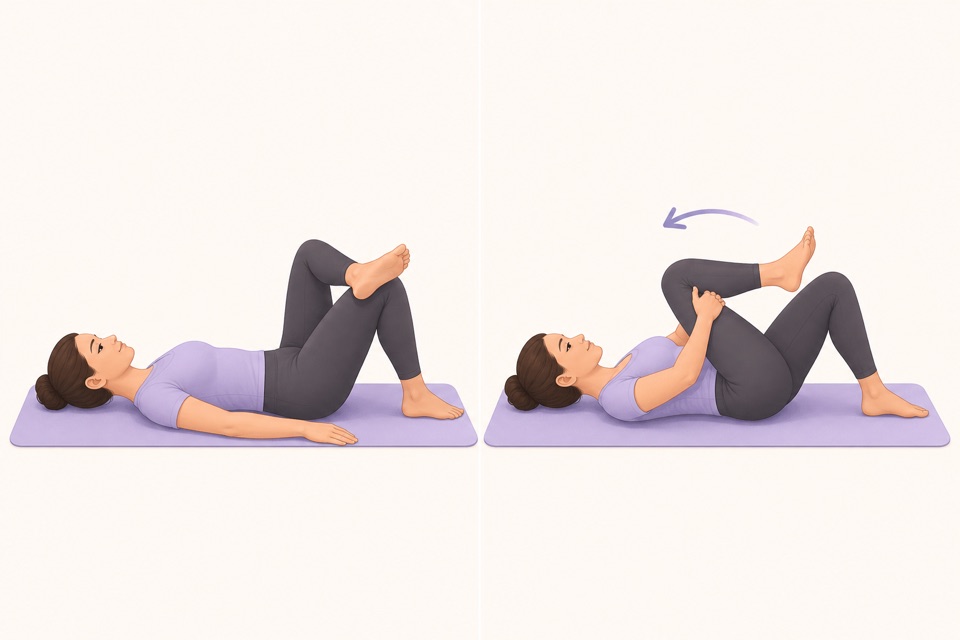
| Move | Time | Keep it gentle by | | --- | ---: | --- | | Breathing with knees bent | 45 sec | Let the lower back settle without forcing it flat | | Lower trunk rotations | 75 sec | Move the knees only a few inches side to side | | Knees-to-chest, one side at a time | 90 sec | Use hands behind the thigh if that feels easier | | Figure-four stretch | 90 sec | Keep the crossed leg farther away if the hip is tight | | Quiet breathing | 60 sec | End before the routine becomes stimulating |
If you want a full in-bed version, use lower back pain stretches in bed. If bedtime stiffness is more full-body than back-specific, use good stretches before bed.
If you want a more focused floor-or-bed routine before sleep, use lower back stretches before bed and keep the first session under seven minutes.
From Wiggle
Recommended moves
Why does lower back pain feel worse at night?
Lower back pain can feel worse at night because there are fewer distractions, less movement, and more pressure from one position. Daytime sitting, stress, a mattress that does not support you well, or an irritated back can all make lying down feel harder.
Do not over-read one bad night. A useful response is simple:
- Choose the least painful position.
- Add one pillow support.
- Do two minutes of breathing before changing positions again.
- Use a short routine only if movement feels better.
- Track whether the same pattern repeats for several nights.
If the pattern keeps repeating, especially with pain that travels, numbness, weakness, fever, unexplained weight loss, bladder or bowel changes, recent injury, or symptoms that worry you, get medical guidance. A stretching app should not be your plan for that.
How can Wiggle make bedtime easier?
Wiggle helps when the real barrier is decision fatigue. You do not need to search for a new video, remember the order, or guess how long to hold each move. Save one calm back-friendly routine and repeat it on nights when mild stiffness shows up.
The easiest setup:
- Save a 5-minute bedtime routine.
- Put lower trunk rotation, knees-to-chest, and figure-four near the front.
- Keep intensity at 3 out of 10 or lower.
- Stop before you feel warmed up.
- Repeat for a week before changing the routine.
For a broader habit, pair this with stretching app for lower back or stretching app for sleep. The goal is not to do more. The goal is to remove enough friction that the gentle version actually happens.
Sources
Why we keep it gentle
These guides are written for everyday stiffness and habit-building. They are grounded in mainstream guidance on flexibility, movement, and when to seek medical help.
- Sleeping positions that reduce back painMayo Clinic
- Taking care of your back at homeMedlinePlus
- Back painMedlinePlus
- Stretching: Focus on flexibilityMayo Clinic
FAQ
Questions people ask
What is the best way to sleep with lower back pain?
The best way to sleep with lower back pain is usually the position that keeps your spine supported and lets you relax: side sleeping with a pillow between the knees, back sleeping with support under the knees, or a slightly curled side position. Choose comfort over perfect posture.
Is side sleeping better for lower back pain?
Side sleeping can feel better for many people when the knees are slightly bent and a pillow sits between the legs. The pillow helps reduce twisting through the hips and lower back, but the right position is still personal.
Should I stretch before bed if my lower back hurts?
Use only gentle movement before bed, and skip stretching if pain is sharp, spreading, injury-related, or getting worse. Mild breathing, lower trunk rotations, knees-to-chest, and supported hip stretches are better than intense flexibility work at night.
Why does lower back pain feel worse at night?
Lower back pain can feel worse at night because you are still, tired, and more aware of discomfort. Mattress support, pillow setup, stress, daytime sitting, and some medical issues can also change how your back feels when lying down.
When should I get help for lower back pain that affects sleep?
Get professional guidance if back pain is new, severe, persistent, follows an injury, travels down the leg, causes numbness or weakness, or comes with symptoms that worry you. This guide is for mild everyday stiffness only.