Wiggle guide
Good Stretches Before Bed: A Calm 8-Minute Wind-Down
Good stretches before bed should be gentle, predictable, and easy to repeat. Use this 8-minute routine for hips, back, shoulders, and sleep-friendly breathing.
good stretches before bed
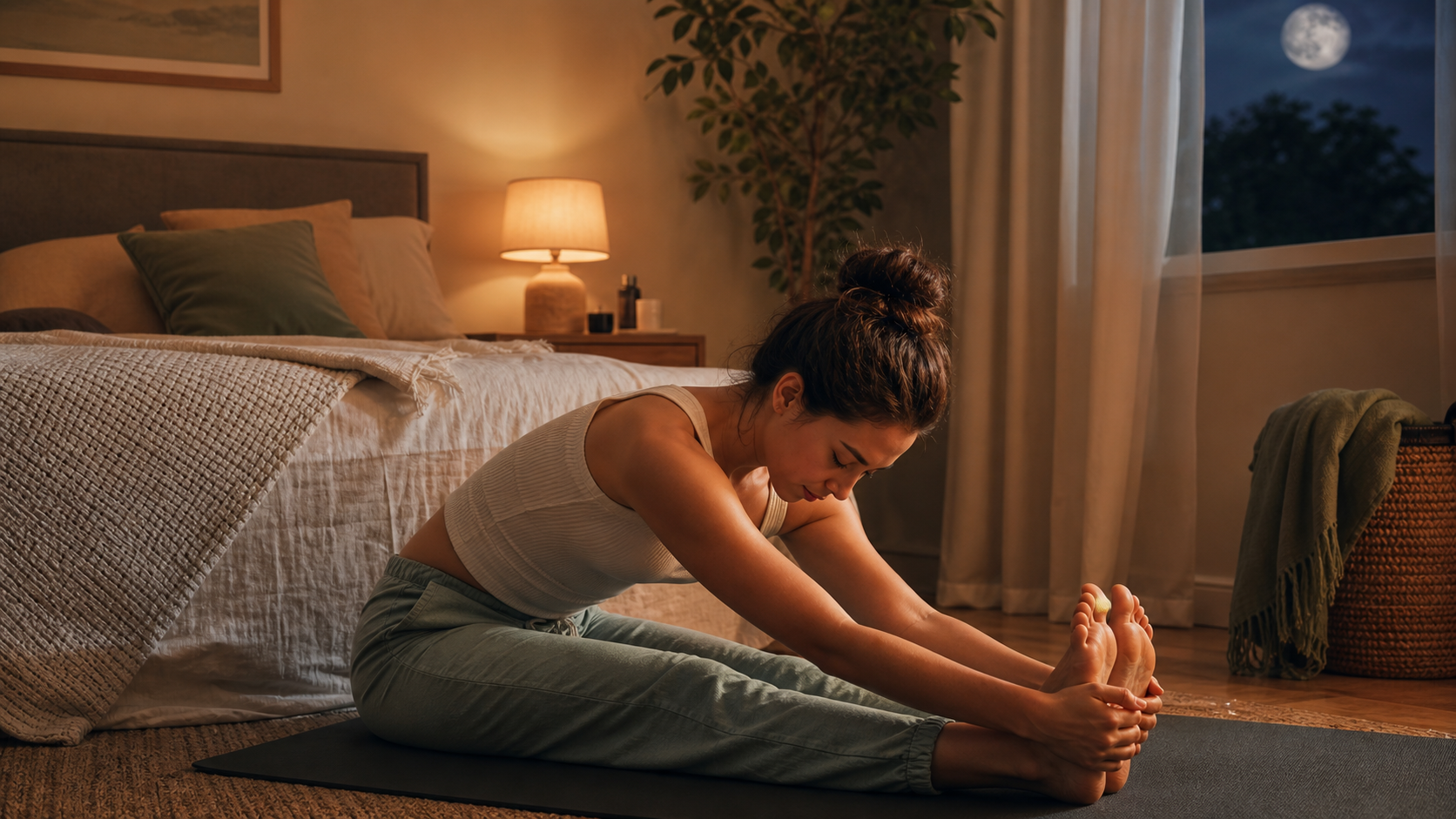
The problem with most bedtime stretch advice is that it asks for too much when you have the least energy. You are tired, the day is noisy in your head, and one complicated routine is enough friction to skip the whole thing.
Use these good stretches before bed when you want a softer landing: hips, back, shoulders, and breathing, without treating bedtime like a workout. The goal is not maximum flexibility. The goal is a short sequence you can repeat even when motivation is gone.
What are good stretches before bed?
Good stretches before bed are gentle, predictable movements that help your body shift from work mode into rest mode. They should feel calm enough that your breathing stays easy and your effort stays low.
Good does not mean impressive. For nighttime, the best stretch is usually the one that asks for less range, less setup, and fewer decisions. If a move makes you brace, hold your breath, or chase a deeper position, it is not the right bedtime move tonight.
The 8-minute before-bed routine
Use this as a default routine for ordinary evening stiffness. Keep every stretch at mild tension and move slowly enough that the routine feels like winding down, not warming up.
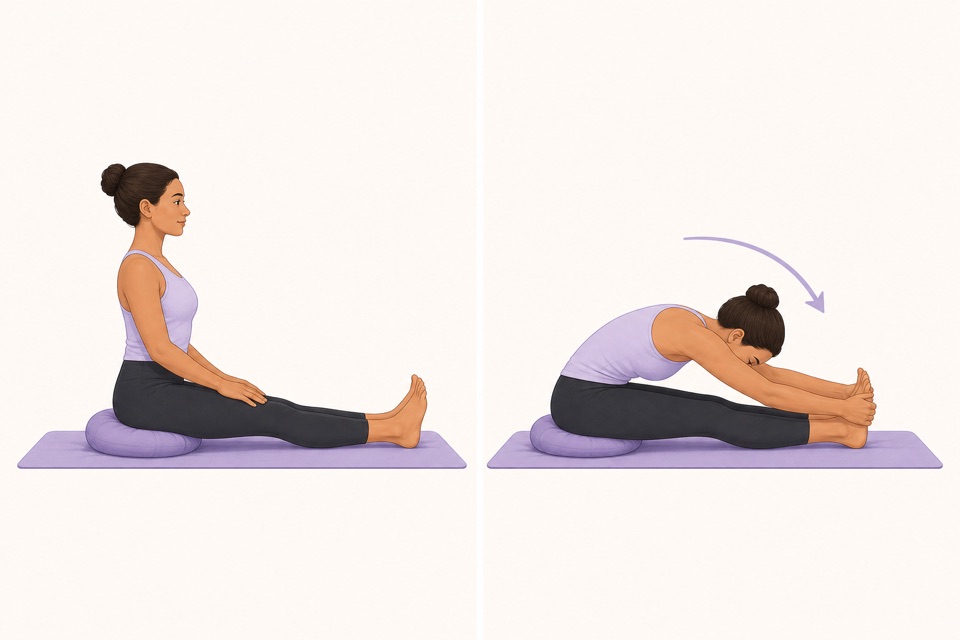
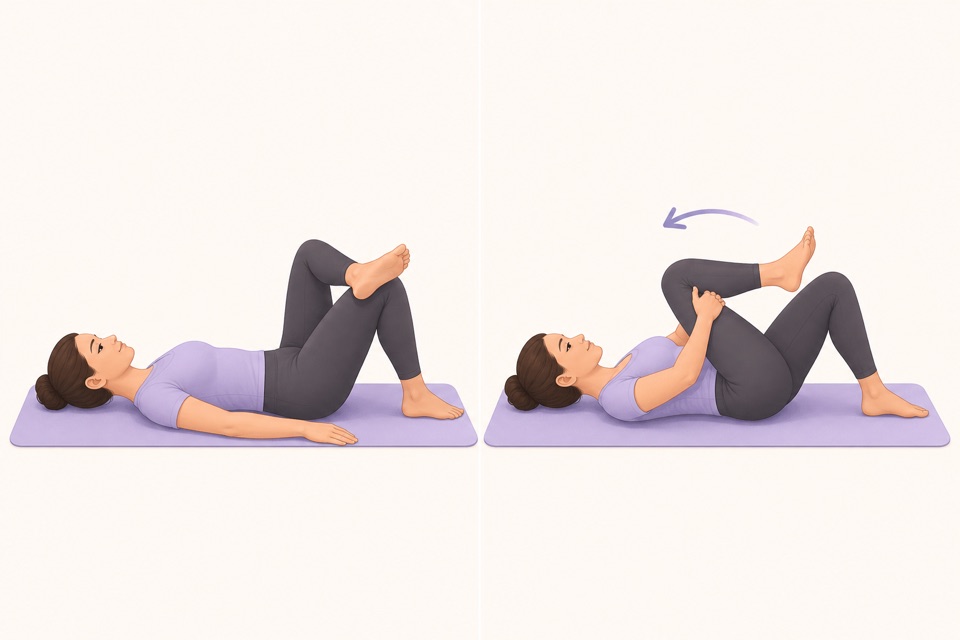
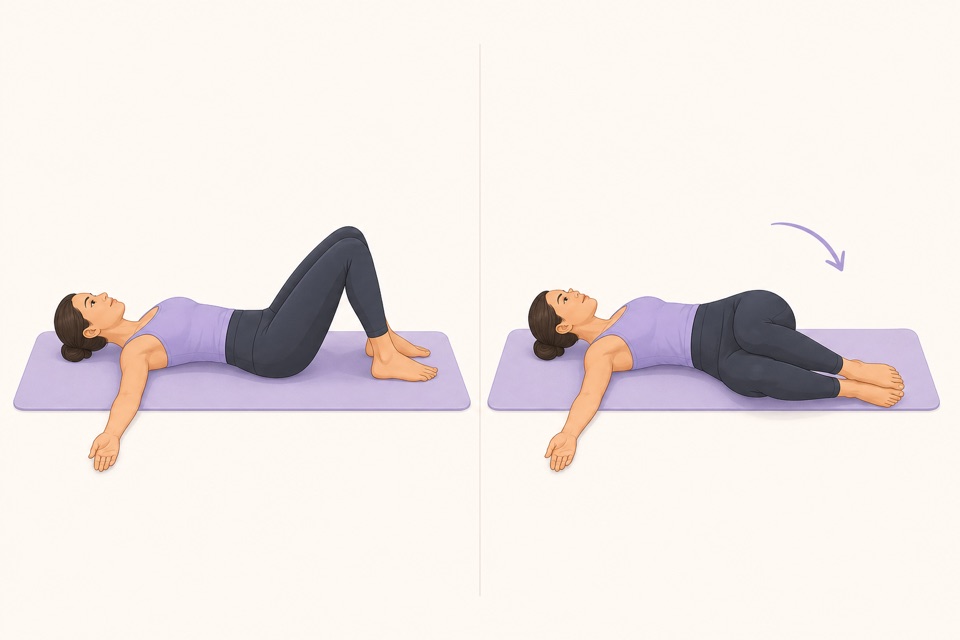
| Move | Time | Why it belongs at night | Make it easier | | --- | ---: | --- | --- | | Slow breathing | 45 sec | Creates a clear start cue | Sit against pillows | | Shoulder rolls | 60 sec | Releases the upper-body workday | Move one shoulder at a time | | Gentle neck turns | 45 sec | Unloads screen posture | Keep the range small | | Seated forward fold | 75 sec | Eases the back and hamstrings | Bend knees and support elbows | | Figure-four hip stretch | 2 min | Targets glutes and outer hips | Keep the crossed leg farther away | | Lower trunk rotation | 90 sec | Adds low-effort spinal motion | Move knees only halfway | | Supine spinal twist | 90 sec | Finishes with a slower floor position | Use a pillow under the knees | | Quiet breathing | 75 sec | Gives the routine a clean ending | Lie on your side if better |
If you only have three minutes, do shoulder rolls, figure-four, lower trunk rotations, and quiet breathing. A tiny routine that happens is better than a perfect routine you postpone.
If your goal is specifically a calmer sleep cue, use stretches for better sleep as the simpler decision guide before choosing a longer routine.
If you are deciding whether the routine is worth doing at all, start with stretching before bed benefits and keep the expectations practical.
If your legs are the part that feels loud at night, use leg stretches before bed as the narrower version of this routine.
If your lower back is the reason you keep changing positions, start with how to sleep with lower back pain before adding more stretches.
If the problem is mostly screen neck or high shoulders, use neck stretches before bed as the smaller five-minute version.
From Wiggle
Recommended moves
Should you stretch on the floor or in bed?
Choose the floor when you want space, steadiness, and a clear ritual. Choose the bed when the floor is enough friction to make you skip. The routine is only useful if it survives your real bedtime.
Use this decision table:
| Tonight's situation | Better choice | Why | | --- | --- | --- | | You still have some energy | Mat or carpet | More room for hips and twists | | You are already under the covers | In bed | Starting matters more than perfect form | | Your back dislikes soft surfaces | Floor | More support and less sinking | | You want the easiest possible version | Bed | Lower setup cost | | A stretch feels unstable | Smaller range or skip it | Bedtime is not the moment to force it |
For a fully in-bed version, use bedtime stretches in bed. For a broader sequence with a mat, use bedtime stretches.
How do you keep stretches before bed sleep-friendly?
Sleep-friendly stretching stays boring in the best way. Keep the same order, lower the intensity, dim bright inputs, and stop before the routine turns into a second workout.
Try this checklist:
- Pick one saved routine before you are tired.
- Keep it under eight minutes for the first week.
- Avoid chasing deeper range at night.
- Breathe normally through every stretch.
- Use dim light and minimal phone interaction.
- End with the same final breathing cue.
- Skip moves that make you feel more awake.
CDC sleep guidance emphasizes consistent sleep timing and sleep-friendly habits around bedtime. That does not mean stretching magically fixes sleep. It means a gentle, repeatable routine can become one useful cue among the rest of your evening habits.
What should you avoid before bed?
Avoid intense holds, bouncing, aggressive hamstring work, painful twists, and any routine that feels like training. General stretching guidance from Mayo Clinic also warns against forcing range or bouncing through a stretch.
Here is the simple rule: if the stretch makes you negotiate with your body, downshift. Make the range smaller, support yourself with pillows, switch to breathing, or stop for the night.
Use this article for mild everyday stiffness, not pain treatment. Stop if you feel sharp pain, dizziness, numbness, weakness, radiating symptoms, chest symptoms, or anything that worries you. Ask a qualified professional about new, severe, persistent, injury-related, or medical-condition-related symptoms.
How can Wiggle make the routine easier?
Wiggle reduces the annoying part of bedtime stretching: deciding what to do, timing each move, remembering the order, and wondering whether a short version counts. Open a sleep wind-down routine, follow the next move, and finish before the routine becomes a project.
The specific next step is simple: save one 5 to 8 minute Wiggle routine for this week. Repeat it at the same point in your evening before trying new stretches.
If you want a broader evening habit, pair this with the night stretching routine or use Wiggle as a stretching app for sleep.
If you want the lower-effort version for nights when your brain is already done, use relaxing stretches before bed.
If long holds feel like too much at night, try somatic stretches before bed, which use smaller movements and attention to effort instead of chasing range.
Sources
Why we keep it gentle
These guides are written for everyday stiffness and habit-building. They are grounded in mainstream guidance on flexibility, movement, and when to seek medical help.
- Stretching: Focus on flexibilityMayo Clinic
- Physical Activity Guidelines for AmericansU.S. Department of Health and Human Services
- About SleepCDC
- Back painMedlinePlus
FAQ
Questions people ask
What are good stretches before bed?
Good stretches before bed are low-intensity movements that relax the neck, shoulders, back, hips, and legs without raising your effort level. Choose slow breathing, gentle folds, figure-four stretches, trunk rotations, and easy twists instead of deep flexibility work.
How long should I stretch before bed?
Start with 5 to 8 minutes. That is long enough to repeat a few useful moves without turning bedtime into another project. If you are already exhausted, do three minutes and let that count.
Should stretches before bed feel intense?
No. Before bed, aim for mild tension that lets you breathe normally. If a stretch feels sharp, forceful, tingly, dizzying, or emotionally irritating, make it smaller or skip it.
Are stretches before bed better on a mat or in bed?
Use a mat if you want more space and a clearer routine. Use the bed if getting down to the floor adds too much friction. The best option is the one you can repeat calmly.
How can Wiggle help with bedtime stretching?
Wiggle makes bedtime stretching easier by giving you a short guided routine, a timer, and a clear ending. You do not have to search for a new video or decide what move comes next when you are already tired.