Wiggle guide
Neck Stretches Before Bed: A Gentle 5-Minute Reset
Neck stretches before bed for screen-heavy days, tense shoulders, and calmer sleep prep, with a gentle 5-minute routine and clear stop signs.
neck stretches before bed
The annoying part of bedtime neck tightness is the timing. You finally lie down, then your shoulders feel high, your jaw feels busy, and every pillow position starts a negotiation.
Use neck stretches before bed as a small reset, not a full flexibility session. The win is a calmer five minutes: less decision-making, lower effort, and a routine soft enough that it does not wake you up.
What are neck stretches before bed?
Neck stretches before bed are gentle, low-effort movements for mild neck and shoulder stiffness done as part of a sleep wind-down routine. They should feel easy enough that you can breathe normally, keep your jaw relaxed, and stop without feeling like you started a workout.
They are not a fix for every kind of neck pain. Think of them as a quiet transition after screen-heavy days, long sitting, or general tension. If symptoms feel sharp, spreading, neurological, injury-related, or unusual, skip the routine and get proper guidance.
Which neck stretches should you do before sleep?
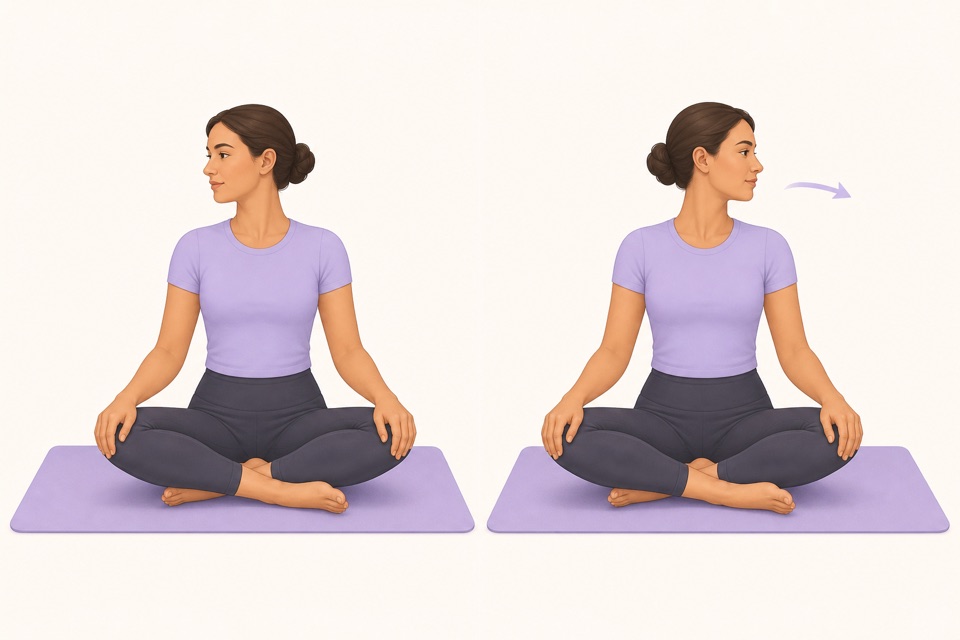
The best bedtime neck stretches are controlled and boring in the right way. Choose small neck turns, chin nods, shoulder rolls, a mild upper-trap stretch, and a chest opener. Avoid fast neck circles, bouncing, forced range, or anything that makes you brace.
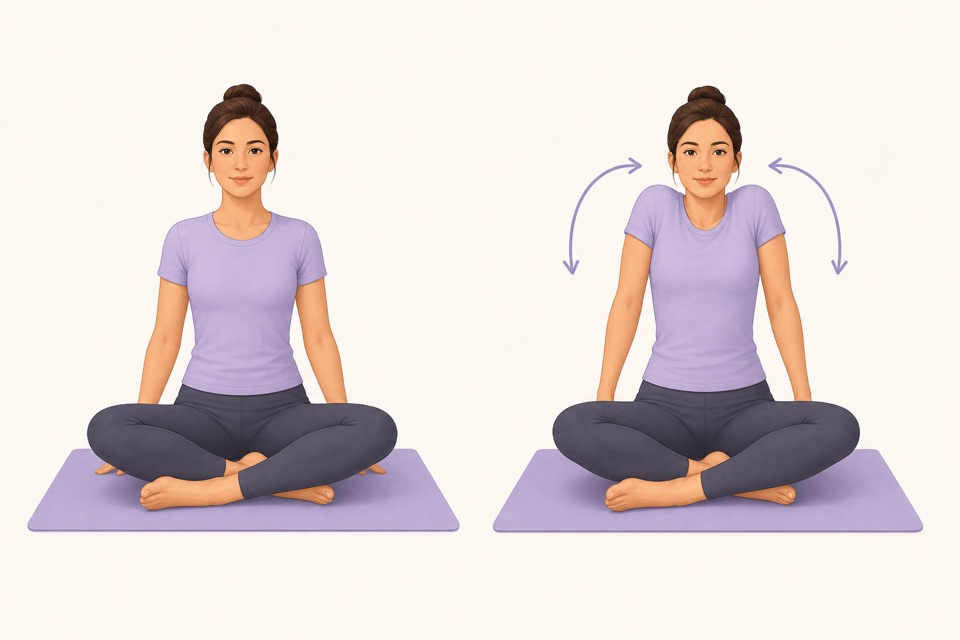
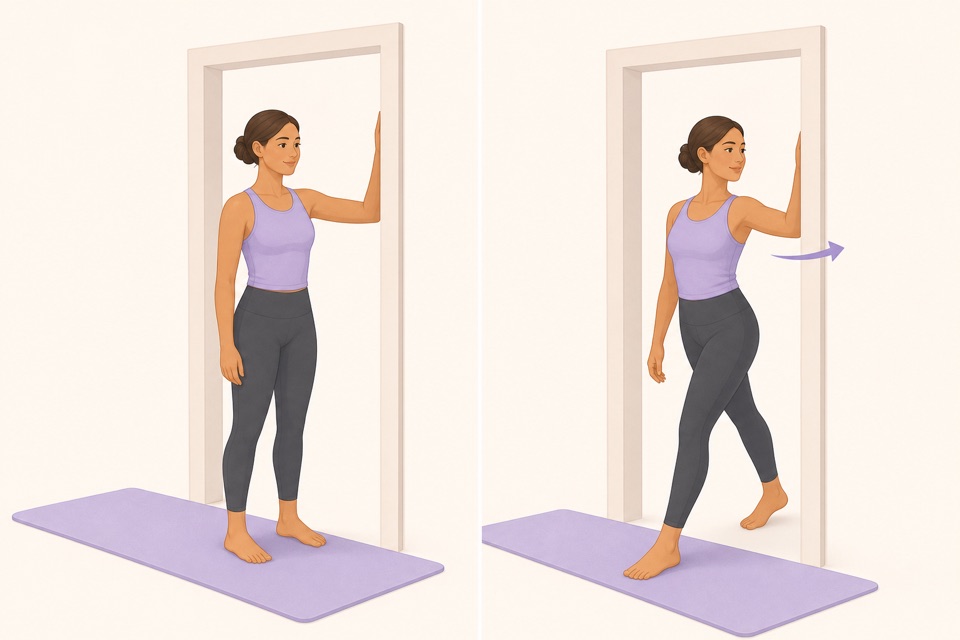
| Move | Time | Best for | Keep it sleep-friendly | | --- | --- | --- | --- | | Slow neck turns | 45 seconds | Screen stiffness | Move only through easy range | | Small chin nods | 45 seconds | Jaw and front-neck tension | Keep the motion tiny | | Shoulder rolls | 45 seconds | High shoulders | Roll backward slowly | | Upper-trap stretch | 30 seconds per side | Side-neck tightness | Let the hand rest gently | | Chest opener | 60 seconds | Rounded posture | Keep ribs relaxed |
If you already use Wiggle for a night stretching routine, put this neck reset at the front and keep the rest of the session short.
How do you do a 5-minute bedtime neck routine?
Sit on the edge of the bed, sit against pillows, or lie down if that feels steadier. The setup should be so easy that you can start while tired. Keep every movement at a mild effort level and stop before you chase a deeper stretch.
- Sit or lie in a position where your shoulders can relax.
- Turn your head slowly right and left for 45 seconds.
- Do small chin nods for 45 seconds, like a tiny yes.
- Roll your shoulders backward for 45 seconds.
- Hold a mild upper-trap stretch for 30 seconds per side.
- Add a doorway, wall, or bed-edge chest opener for 60 seconds.
- Finish with three slow breaths and let that count.
From Wiggle
Recommended moves
Why does your neck feel tight at bedtime?
Bedtime neck tightness often shows up after a day of small posture choices: laptop work, phone scrolling, driving, stress, or holding the shoulders high without noticing. By night, the body is not asking for intensity. It is usually asking for fewer inputs and an easier position.
That is why the first rule is to reduce friction. Dim the room, keep the phone interaction minimal, use a saved routine, and make the sequence predictable. CDC sleep guidance emphasizes consistent sleep habits, and a gentle wind-down can support that rhythm without pretending stretching is a cure for sleep problems.
When should you skip neck stretches before bed?
Skip the routine if movement causes sharp pain, dizziness, numbness, tingling, weakness, spreading symptoms, strong headache, fever, or anything that feels unusual for you. Also be cautious after a fall, collision, new injury, surgery, or if a clinician has given you movement restrictions.
Mayo Clinic's stretching guidance is simple but useful here: do not bounce, do not force pain, and keep stretching controlled. MedlinePlus also treats neck pain as a topic that can need medical evaluation depending on symptoms and cause. For bedtime, mild and repeatable beats intense every time.
How can Wiggle make the routine easier?
Wiggle removes the part that usually kills bedtime stretching: choosing moves, timing both sides, and wondering whether three minutes is enough. Open one short wind-down, follow the timer, and stop before the routine becomes another project.
If the tightness is mostly in your legs, use leg stretches before bed. If you want a broader sequence, start with good stretches before bed. If your lower back is affecting your sleeping position, read how to sleep with lower back pain before adding more movement.
When the tension is centered below the neck, use this dedicated shoulder stretches before bed routine instead of forcing extra neck range.
Sources
Why we keep it gentle
These guides are written for everyday stiffness and habit-building. They are grounded in mainstream guidance on flexibility, movement, and when to seek medical help.
- Stretching: Focus on flexibilityMayo Clinic
- Neck painMedlinePlus
- About SleepCDC
- Physical Activity and SleepSleep Foundation
FAQ
Questions people ask
Are neck stretches before bed a good idea?
Gentle neck stretches before bed can be useful when your neck feels mildly tight from screens, stress, or long sitting. Keep them slow and easy, and stop if a movement causes pain, numbness, tingling, dizziness, weakness, or symptoms that feel unusual.
How long should neck stretches before bed take?
Start with 3 to 5 minutes. That is enough time for slow neck turns, shoulder circles, an upper-trap stretch, and a few calm breaths without turning bedtime into another task.
What neck stretches are best before sleep?
Use low-effort moves: neck turns, chin nods, shoulder rolls, a gentle upper-trap stretch, and a doorway chest stretch if rounded shoulders are part of the problem. Avoid aggressive neck circles or forcing the end range.
Should I stretch my neck if it hurts at night?
Use caution. Mild stiffness may respond to gentle movement, but pain that is sharp, spreading, injury-related, persistent, or paired with numbness, weakness, headache, fever, dizziness, or other worrying symptoms should be discussed with a qualified clinician.
How can Wiggle help with neck stretches before bed?
Wiggle keeps the routine short, timed, and predictable. Instead of searching for a video when you are already tired, you can open a calm wind-down session and follow one gentle move at a time.