Wiggle guide
Stretching After Dinner: A Gentle 5-Minute Reset
Stretching after dinner can stay simple: use this gentle 5-minute upright routine, learn when to wait, and avoid moves that feel uncomfortable on a full stomach.
stretching after dinner
Dinner is over, your body feels folded from the day, and the sofa is making a strong closing argument. You want to move without turning a full stomach into a regrettable experiment.
Use the easiest rule first: if you can breathe and move comfortably, keep the routine upright and gentle; if you feel very full, wait. Five quiet minutes is enough. This is a reset, not a workout and not a digestive treatment.
Is it okay to stretch after dinner?
Gentle stretching after dinner is usually okay when you feel comfortable. Choose upright, supported movements; keep the range mild; and postpone deep folds, forceful twists, or anything that compresses your abdomen. Stop if movement brings on reflux, nausea, pain, dizziness, or unusual symptoms.
Stretching after dinner is a short, low-intensity movement break done after an evening meal. Its practical job is to ease the transition out of sitting and into the rest of your evening—not to burn off dinner, force flexibility, or fix digestion.
Mayo Clinic's general stretching guidance is a useful baseline: move smoothly, avoid bouncing, and do not stretch into pain. After a meal, comfort adds another filter. A movement can be gentle in theory and still be the wrong choice when you feel full.
If you want a routine immediately before sleep instead, use the night stretching routine. For the evidence and limits around bedtime movement, read stretching before bed benefits.
How long should you wait to stretch after eating?
There is no single wait time that fits every meal and every person. For gentle movement, use symptoms and comfort rather than a stopwatch. You may feel ready soon after a light meal, while a large or rich dinner may make bending, twisting, or lying down uncomfortable for longer.
Use this quick decision table:
| How you feel | Best next move | Skip for now | | --- | --- | --- | | Comfortable and not overly full | Easy walk, shoulder rolls, calf stretch | Hard training or end-range holds | | Full but otherwise fine | Wait, stay upright, try slow breathing | Folds, twists, floor positions | | Reflux or nausea | Stop and let symptoms settle | Abdominal compression and lying flat | | Sharp pain, dizziness, or unusual symptoms | Stop and seek appropriate advice | Continuing to “test” the feeling |
NIDDK guidance for reflux includes avoiding lying down for two to three hours after eating when nighttime symptoms are a problem. That does not create a mandatory stretching timer, but it is a good reason to keep an after-dinner routine upright if reflux affects you.
What is the best 5-minute stretching routine after dinner?
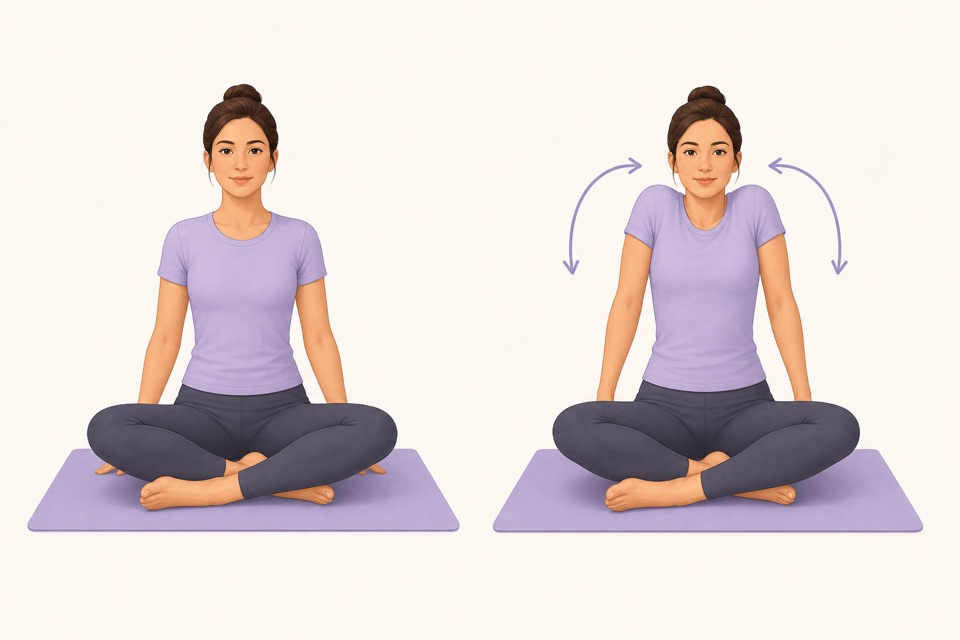
The best after-dinner routine is short, upright, and deliberately unambitious. Start with a minute of easy walking, then move the shoulders, sides, calves, and ankles without squeezing the abdomen. Every move should allow normal breathing and an easy exit.
| Move | Time | Simple cue | | --- | ---: | --- | | Easy walk around the room | 60 sec | Keep a conversational pace | | Shoulder rolls | 45 sec | Make slow, smooth circles | | Supported standing side reach | 60 sec | Reach up more than over | | Wall calf stretch | 90 sec | Keep the back heel comfortable | | Seated ankle circles | 45 sec | Use a small, controlled circle | | Quiet upright breathing | 60 sec | Let the exhale soften naturally |
From Wiggle
Recommended moves
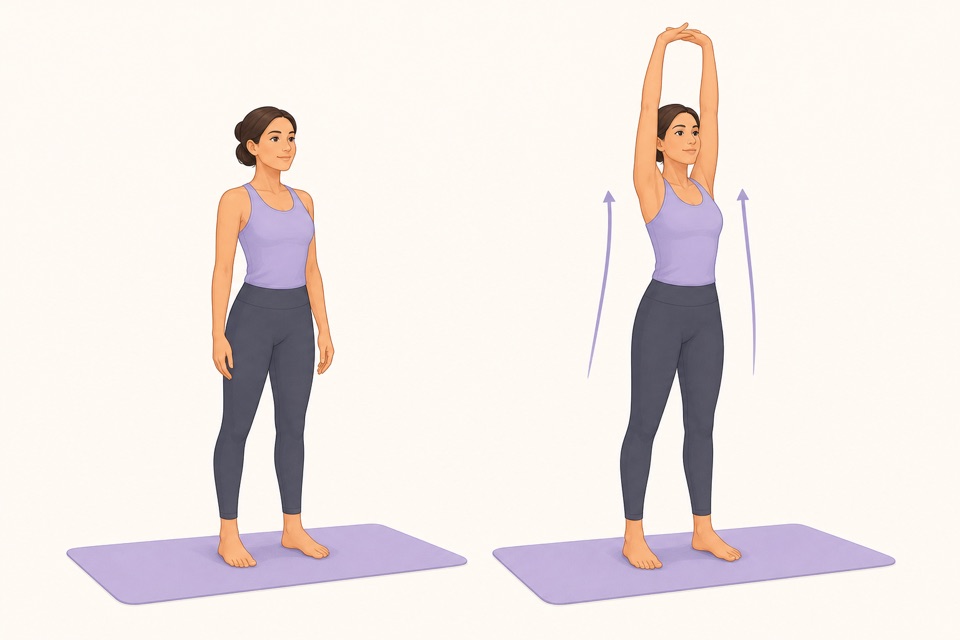
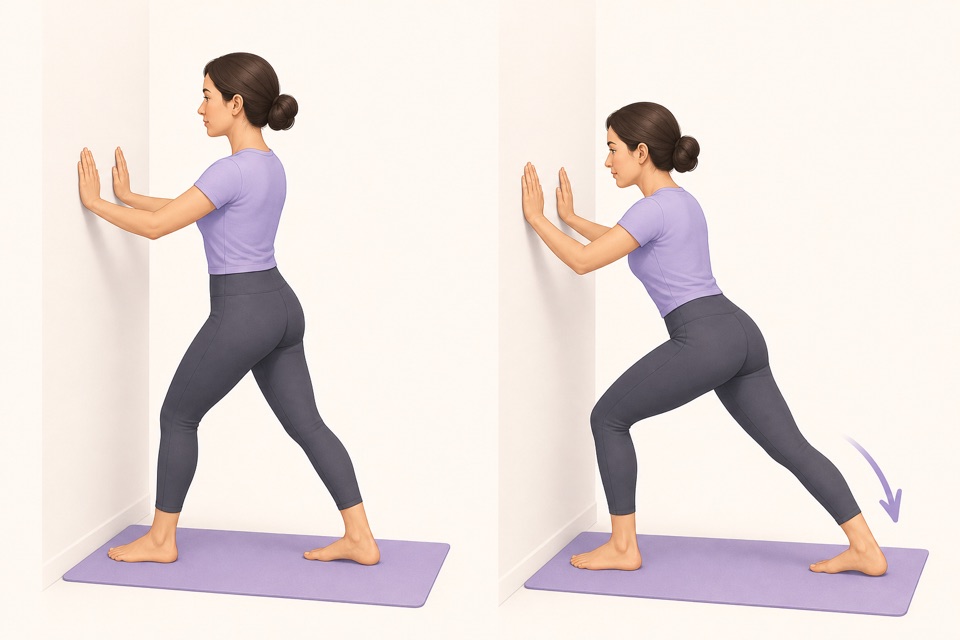
No wall? Hold a chair for the calf stretch. Side reach uncomfortable? Replace it with relaxed arm raises. Too full for any of it? Take the win by waiting. The lowest-effort version that feels good is the correct version.
Which stretches should you avoid after a large meal?
Avoid movements that sharply compress the abdomen, demand hard bracing, or put you flat when that feels uncomfortable. Deep forward folds, forceful twists, intense core work, inversions, bouncing, and maximum-range holds can all wait until you no longer feel full.
This is not a blacklist for every body. It is a comfort-first filter:
- Skip deep seated or standing folds when they press into your stomach.
- Skip strong twists that make you brace or hold your breath.
- Stay upright if lying down aggravates reflux.
- Avoid bouncing or chasing a flexibility milestone.
- Stop if symptoms increase rather than settle.
If the meal is long behind you and you are ready for a fuller wind-down, good stretches before bed gives you an eight-minute whole-body sequence.
Can stretching after dinner improve digestion or sleep?
Do not promise either outcome. Gentle after-dinner movement can feel pleasant and can become a useful evening cue, but stretching is not a treatment for digestive symptoms or insomnia. Judge the routine by whether it feels comfortable and helps you transition out of the day.
CDC guidance encourages adults to move more and sit less, and small bouts of activity can contribute to an active day. That supports the humble case for a short movement break. It does not prove that a particular stretch digests food or guarantees sleep.
For a sleep-specific sequence, use stretches for better sleep. If you frequently experience reflux, abdominal pain, nausea, bloating, or other persistent digestive symptoms, speak with a qualified healthcare professional rather than trying to stretch through them.
How do you make an after-dinner stretch habit stick?
Attach the routine to the end of dinner, not to a fragile burst of motivation. Put one five-minute sequence in the same place each evening, keep it gentle enough for ordinary clothes, and remove any move that creates friction or discomfort.
Try this seven-day rule:
- Start after clearing your plate or kitchen counter.
- Use the same five-minute order every night.
- Stay upright and keep the intensity mild.
- Skip without guilt when you feel too full or unwell.
- After seven days, keep only the moves you actually repeated.
Wiggle makes that loop easier by handling the timer and next move. Save the routine once, then let the app guide it without another evening search spiral.
Sources
Why we keep it gentle
These guides are written for everyday stiffness and habit-building. They are grounded in mainstream guidance on flexibility, movement, and when to seek medical help.
- Stretching: Focus on flexibilityMayo Clinic
- What You Can Do to Meet Physical Activity RecommendationsCDC
- Treatment for GER & GERDNational Institute of Diabetes and Digestive and Kidney Diseases
FAQ
Questions people ask
Is it okay to stretch after dinner?
Yes, gentle stretching after dinner is usually fine if you feel comfortable. Wait if you feel very full, avoid deep folds or strong twists, and choose upright or supported movements that let you breathe normally.
How long should I wait to stretch after eating?
There is no universal wait time for gentle movement. Let comfort decide: start with a short walk or upright stretches when you feel ready, and wait longer after a large meal or whenever bending and twisting feel uncomfortable.
What stretches are best after dinner?
Shoulder rolls, gentle neck turns, a supported side reach, an easy calf stretch, and relaxed breathing are low-friction choices. Keep the range mild and skip deep forward folds, forceful twists, or abdominal compression when you feel full.
Can stretching after dinner help digestion?
Do not treat stretching as a digestive remedy. Light movement may feel comfortable after a meal, but persistent reflux, pain, bloating, nausea, or other digestive symptoms deserve advice from a qualified healthcare professional.
Can Wiggle guide an after-dinner routine?
Yes. Wiggle can time a short, gentle sequence and remove the need to choose each move. Save one five-minute routine and repeat it after dinner only when it feels comfortable.