Wiggle guide
Somatic Stretches Before Bed: A Gentle 7-Minute Reset
Try five somatic stretches before bed with a gentle 7-minute routine for body awareness, less effort, and a calmer nightly wind-down.
somatic stretches before bed
Some bedtime routines feel like one last assignment: hold this pose, reach farther, complete ten moves, and somehow relax on command. If that makes you want to skip the whole thing, use a smaller target.
These somatic stretches before bed take about seven minutes. You will use slow, comfortable movements and notice what changes instead of chasing maximum range. The fast rule is simple: make each movement small enough that your jaw, breath, and shoulders can stay easy.
What are somatic stretches before bed?
Somatic stretches before bed are slow, attention-led movements that prioritize internal sensation over flexibility targets. In this routine, “somatic” means noticing pressure, effort, breathing, and side-to-side differences while you move through a comfortable range. It does not name one standardized medical treatment.
That distinction matters. A conventional stretch may ask, “How far can I hold this position?” A somatic movement asks, “Can I use less effort on the next repetition?” Neither approach needs to be mystical, and neither guarantees better sleep.
Use this style when you feel too wired for long holds, when ordinary good stretches before bed feel like too much, or when you want a repeatable transition between screen time and lights out.
What is the best way to start tonight?
Start with five quiet breaths and one minute of knee rocks. If that feels calming, continue through the seven-minute sequence. If it feels irritating, painful, or more activating, stop. The goal is not to finish every move; it is to find the smallest routine that makes bedtime easier to begin.
| If you feel... | Start with... | Keep it easy by... | | --- | --- | --- | | Mentally busy | Five slow breaths | Letting the exhale happen naturally | | Stiff through the low back | Pelvic tilts | Making the movement almost invisible | | Tight around the hips | Knee rocks | Moving only a few inches | | Heavy through the shoulders | Ceiling reaches | Lifting one arm at a time | | Too tired for the floor | In-bed heel slides | Using a stable part of the mattress |
If you mainly want a familiar sequence without the body-awareness focus, use the broader night stretching routine. If your only viable option is under the covers, try bedtime stretches in bed.
How do you do the 7-minute somatic bedtime routine?
Use a mat, carpet, or stable mattress. Complete each movement slowly, pause for one breath, and notice whether the next repetition can be smaller or smoother. Mild tension is enough; this is not flexibility training.
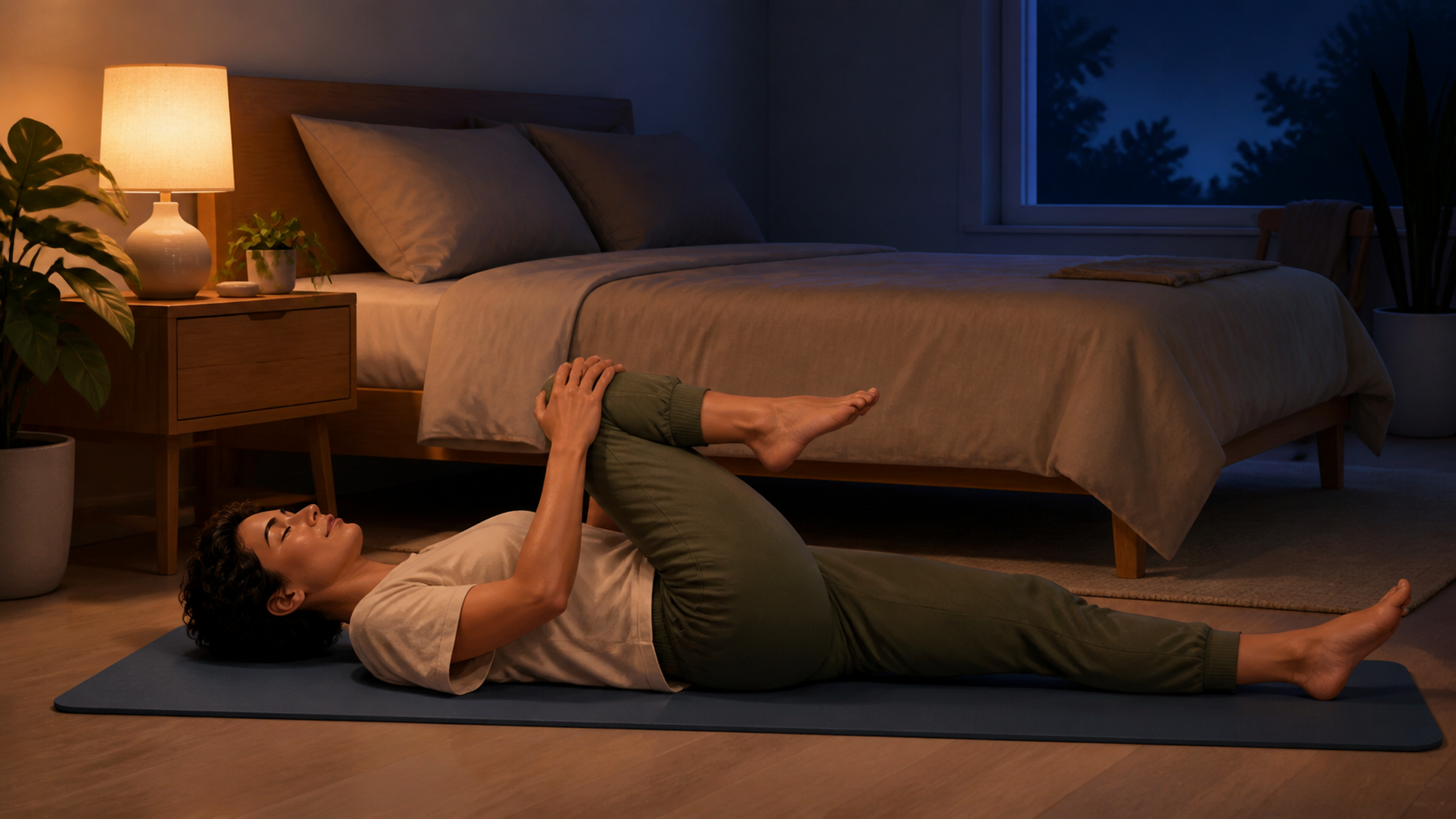
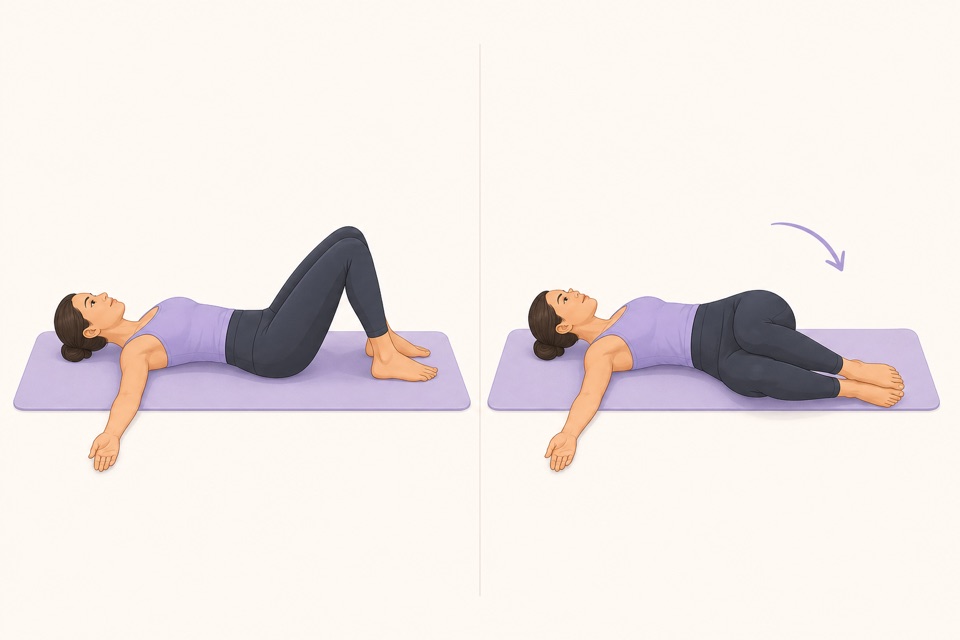
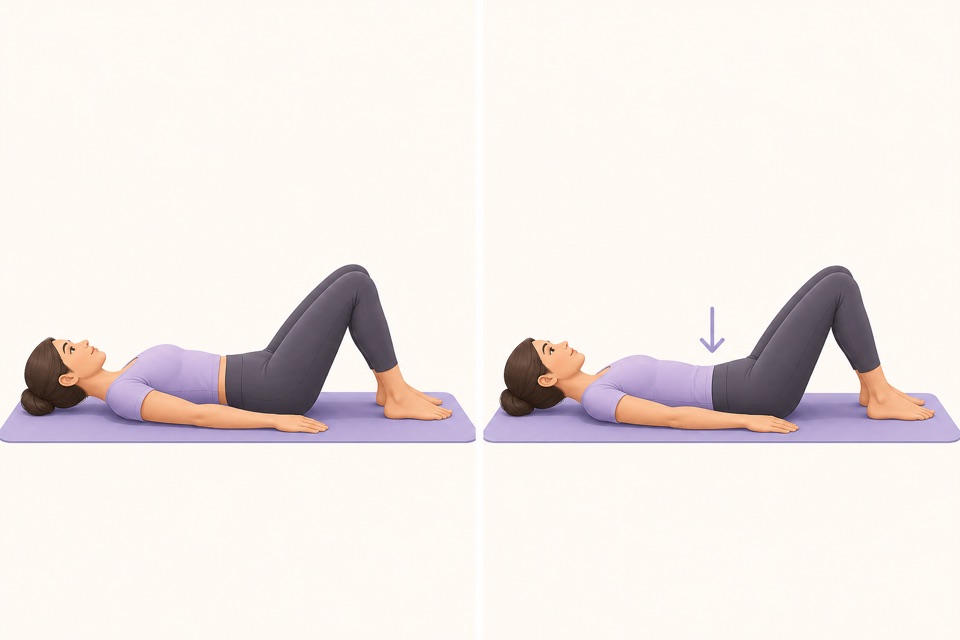
| Movement | Time | What to notice | Easier option | | --- | ---: | --- | --- | | Unforced breathing | 45 sec | Where your body contacts the surface | Place a pillow under your knees | | Pelvic tilts | 60 sec | Pressure changing under the lower back | Reduce the range | | Knee rocks | 90 sec | Whether one direction feels easier | Move one knee at a time | | Alternating heel slides | 90 sec | How much effort the leg uses | Slide only halfway | | Single knee-to-chest release | 90 sec | Differences between sides | Hold behind the thigh without pulling | | Ceiling reaches | 60 sec | Shoulder blade lifting and settling | Reach one arm at a time | | Quiet body scan | 75 sec | Jaw, shoulders, hands, and breath | Lie on your side if preferred |
For a pelvic tilt, gently tip the pelvis so the lower back changes contact with the surface, then return to neutral. Do not press hard. For knee rocks, keep both feet down and let the knees drift a small distance side to side. For heel slides, slowly lengthen one leg and bring it back without forcing the knee straight.
From Wiggle
Recommended moves
Why does moving slowly change the routine?
Moving slowly gives you time to notice bracing, breath-holding, and unnecessary effort. That feedback helps you choose a comfortable range instead of forcing a position. The immediate goal is awareness and relaxation, not correcting your nervous system, releasing stored trauma, or producing a guaranteed sleep response.
NCCIH describes slow breathing and progressive muscle relaxation as established relaxation techniques. A somatic movement routine can borrow the same practical idea—notice tension and reduce effort—without pretending that every online “somatic” claim has strong evidence behind it.
This is also why repetition beats novelty. Doing the same few movements at the same point in your evening creates a clearer cue than searching for a new routine every night. Wiggle can reduce that decision load with a saved, timed sequence.
Can somatic stretching help you sleep?
Somatic stretching may support a relaxing wind-down, but research does not show that this specific seven-minute routine treats insomnia. Relaxation techniques can be one part of healthy sleep habits, while persistent sleep problems deserve proper assessment rather than a longer stretch routine.
CDC sleep guidance recommends a consistent sleep schedule and reducing bright electronic light before bed. NCCIH notes that relaxation techniques are sometimes included in cognitive behavioral therapy for insomnia, while multicomponent CBT-I remains the most strongly recommended treatment for insomnia.
Treat movement as one cue, not the cure. Pair this routine with a regular bedtime, a dark and comfortable room, and less late-night stimulation. For a broader view of what stretching can and cannot do, read stretching before bed benefits.
When should you skip or modify these movements?
Skip any movement that causes sharp pain, numbness, tingling, weakness, dizziness, shortness of breath, radiating symptoms, or a sense that something is wrong. Make the range smaller if you brace or hold your breath. New, severe, persistent, injury-related, or medically complex symptoms need guidance from a qualified clinician.
Use this bedtime routine for mild everyday stiffness and relaxation—not diagnosis or treatment. Mayo Clinic’s general stretching guidance recommends smooth movement without bouncing and advises against stretching through pain.
If focusing inward increases anxiety, intrusive thoughts, or distress, stop the body scan and use a neutral external cue instead: quiet music, a dim room, or a familiar non-movement routine. NCCIH notes that relaxation practices can occasionally cause negative experiences for some people.
How do you make the habit easier with Wiggle?
Save one seven-minute Wiggle routine and repeat it for a week before adding more. A timer, clear exercise order, and definite ending remove the three decisions most likely to kill a bedtime habit: what to do, how long to hold it, and when you are finished.
Your next step tonight: open Wiggle, choose a gentle floor or in-bed routine, and set a seven-minute ceiling. If you are exhausted, do breathing, knee rocks, and heel slides for three minutes and let that count.
For an even softer option, use relaxing stretches before bed. If one body area is getting all your attention, choose shoulder stretches before bed or hip stretches before bed instead of forcing a full-body routine.
Sources
Why we keep it gentle
These guides are written for everyday stiffness and habit-building. They are grounded in mainstream guidance on flexibility, movement, and when to seek medical help.
- Stretching: Focus on flexibilityMayo Clinic
- Relaxation Techniques: What You Need To KnowNational Center for Complementary and Integrative Health
- Sleep Disorders and Complementary Health Approaches: Usefulness and SafetyNational Center for Complementary and Integrative Health
- About SleepCDC
FAQ
Questions people ask
What are somatic stretches before bed?
Somatic stretches before bed are slow, comfortable movements done with attention to how your body feels rather than how far you can stretch. A simple routine may combine breathing, gentle pelvic tilts, knee rocks, shoulder movements, and a knee-to-chest release.
Can somatic stretching help you sleep?
A calm movement routine can be a useful wind-down cue, but it is not a treatment or guaranteed sleep aid. Keep the movements gentle, repeat them consistently, and combine them with established sleep habits such as a regular schedule and less bright light before bed.
How long should a bedtime somatic routine take?
Five to eight minutes is enough for a practical bedtime routine. Move slowly, pause between repetitions, and stop while the routine still feels easy. A three-minute version is also worthwhile on low-energy nights.
Should somatic stretches feel intense?
No. Use a small, pain-free range and normal breathing. The goal is noticing and reducing unnecessary effort, not forcing flexibility. Stop if you feel sharp pain, numbness, tingling, weakness, dizziness, or symptoms that concern you.
Can I do somatic stretches in bed?
Yes, if the mattress feels stable and comfortable. A mat or carpet gives more support for pelvic tilts and knee rocks, while a bed removes setup friction. Choose the surface that lets you move gently without feeling unstable.