Wiggle guide
Stretching Before Bed Benefits: What It Can and Cannot Do
Stretching before bed benefits people most when it is short, gentle, and repeatable. Learn what it helps, what to avoid, and how to build a simple routine.
stretching before bed benefits

The annoying part of bedtime stretching is the promise inflation. One routine is supposed to fix stiffness, calm your mind, improve sleep, unlock flexibility, and make you a better person by tomorrow morning. That is too much pressure for seven minutes on a mat.
The real benefit is simpler and more useful: stretching before bed can make the end of the day easier to repeat. Less guessing, less stiffness negotiation, and a clear cue that says you are done performing for the day.
If you want to move earlier—while dinner still feels recent—the upright stretching after dinner routine is gentler on a full stomach than this floor-based bedtime sequence.
What are the benefits of stretching before bed?
Stretching before bed can help with mild everyday stiffness, reduce decision fatigue at night, and create a calm wind-down cue. The benefit comes from a routine that is easy to repeat, not from forcing deep flexibility work when you are already tired.
Stretching before bed is a short, low-intensity movement habit used before sleep to ease mild stiffness and signal the transition from active day to rest. It is not a sleep treatment, pain treatment, or flexibility test.
Use this as the fast decision rule: if the routine makes your body feel quieter, keep it. If it makes you brace, sweat, chase range, or scroll for the perfect sequence, it is too much for bedtime.
Is stretching before bed good for sleep?
Gentle stretching before bed can be good for a sleep routine when it stays calm, brief, and consistent. It may help some people downshift, but it cannot guarantee better sleep and should sit beside basic sleep habits, not replace them.
CDC sleep guidance emphasizes consistent sleep habits, including regular sleep and wake times. Stretching can support that rhythm because the same tiny routine becomes a cue: dim room, short timer, mild movement, done.
The Sleep Foundation notes that vigorous exercise close to bedtime can be disruptive for some people, while lighter movement such as stretching or yoga is often used as part of a wind-down. That is the line to respect. You are not trying to train at night. You are trying to make bedtime less chaotic.
If your goal is a complete move-by-move wind-down, start with these stretches for better sleep. If the broader evening sequence is what you want, use the night stretching routine.
Which benefits are realistic and which are overhyped?
The realistic benefits are small but meaningful: less stiffness, a calmer transition, fewer choices, and a repeatable habit. The overhyped claims are the ones that promise guaranteed sleep, instant pain relief, or major flexibility changes from a rushed bedtime routine.
| Claim | Reality | Better bedtime goal | | --- | --- | --- | | "Stretching before bed will make me sleep perfectly" | Too strong. Sleep has many inputs. | Build a consistent wind-down cue | | "I should push deeper because I have time at night" | Backwards. Bedtime favors lower intensity. | Use mild tension you can breathe through | | "A long routine is better" | Not if you skip it. | Start with 5 to 8 minutes | | "The app needs lots of variety" | Variety can create more decisions. | Repeat one routine for a week | | "Stretching should fix pain" | Pain needs context and sometimes care. | Use gentle movement only for familiar stiffness |
Mayo Clinic's stretching guidance is a good filter here: avoid bouncing, avoid pain, and keep the movement controlled. Those rules matter even more before bed because aggressive stretching can turn a calming habit into effort.
What 7-minute routine gives the most benefit with the least effort?
Use a routine that moves the common bedtime problem areas without making you think: neck, shoulders, back, hips, and legs. Keep each move mild enough that you could stop at any moment without feeling like you failed the plan.
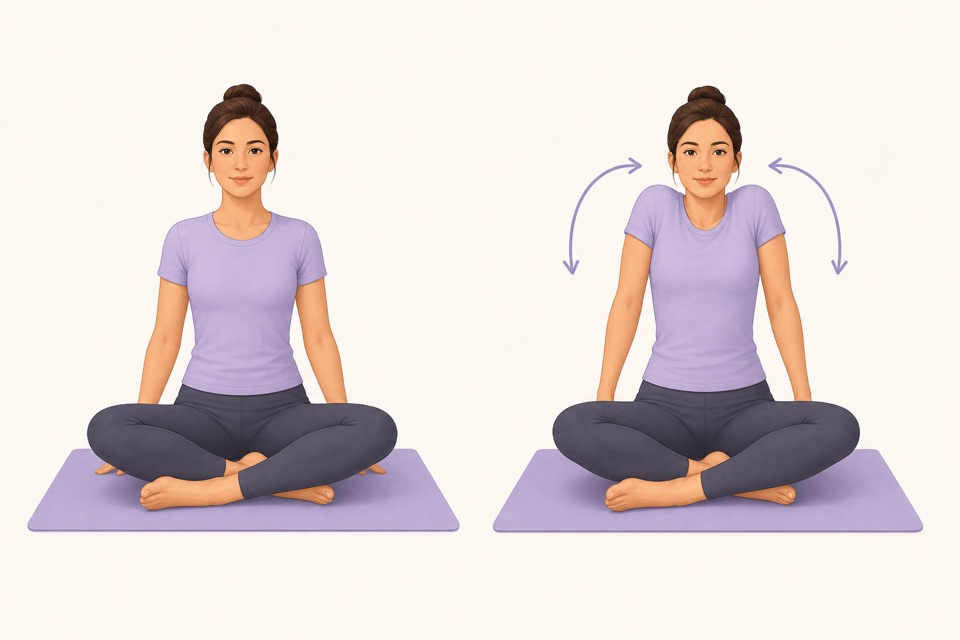
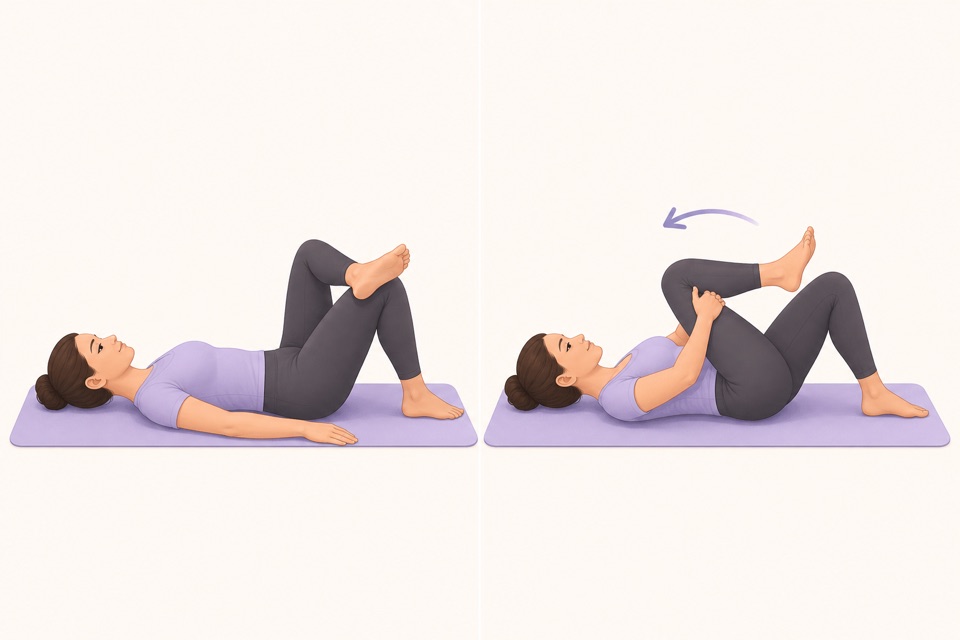
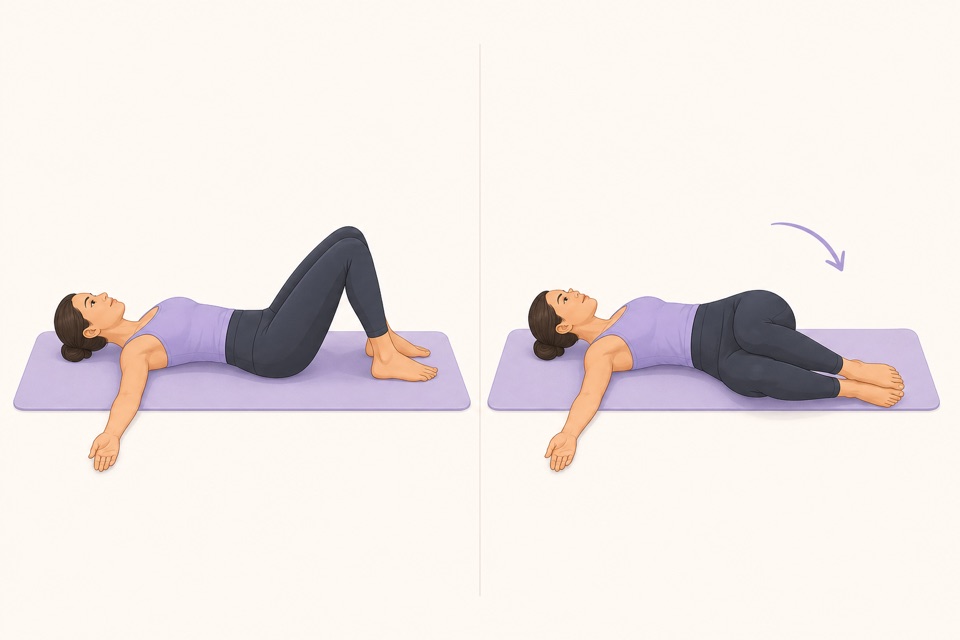
| Move | Time | Benefit | Keep it easy | | --- | ---: | --- | --- | | Five slow breaths | 45 sec | Creates a clear start cue | Sit against pillows if needed | | Shoulder rolls | 60 sec | Lets the upper body leave desk mode | Move slowly, not like a warm-up | | Gentle neck turns | 45 sec | Eases screen-posture tension | Look halfway, not to end range | | Bent-knee forward fold | 75 sec | Softens back and hamstring stiffness | Keep knees bent | | Figure-four stretch | 2 min | Targets hips and glutes after sitting | Move the ankle farther away | | Lower trunk rotations | 90 sec | Adds easy spinal movement | Rock only halfway | | Quiet breathing | 75 sec | Gives the session a clean ending | Stop here, even if you could do more |
If your hips are the loudest area at night, use hip stretches before bed. If your lower back is the main issue, the narrower lower back stretches before bed guide is a better fit.
From Wiggle
Recommended moves
Should you stretch before bed or earlier in the evening?
Stretch right before bed when the routine is tiny and calming. Stretch earlier in the evening if you want more range, more time, or anything that feels like training. The closer you are to sleep, the more boring the routine should become.
Use this checklist:
- Choose one routine before you are exhausted.
- Keep the full session under eight minutes.
- Use mild tension, not maximum range.
- Avoid bright scrolling once the routine starts.
- Repeat the same order for seven nights.
- Stop if a move makes you more alert or irritated.
- Save harder mobility work for daytime.
For a no-floor version, use bedtime stretches in bed. If your legs feel heavy or restless at night, use leg stretches before bed instead of turning a full-body routine into leg troubleshooting.
When should you skip stretching before bed?
Skip or stop bedtime stretching when it causes sharp pain, numbness, tingling, weakness, dizziness, radiating symptoms, strong cramping, or anything that feels unusual for you. Also get qualified guidance for new, severe, persistent, injury-related, or medical-condition-related symptoms.
This matters because bedtime is a bad time to argue with pain. If a stretch makes you brace, downshift. If downshifting does not help, stop. A useful wind-down routine should make the next five minutes simpler, not turn into a test.
How can Wiggle make the benefits easier to repeat?
Wiggle helps because the benefit of stretching before bed is mostly in the repeatable structure: same routine, same timer, same ending. The app removes the part that usually kills bedtime habits, which is deciding what to do after you are already tired.
Save one 5 to 8 minute bedtime routine in Wiggle and repeat it for a week. If it feels too long, cut it to three moves. If it feels too intense, make every range smaller. The win is not a heroic stretch. The win is a routine you actually do again tomorrow.
For a low-effort version built around body awareness rather than deep holds, use this somatic stretches before bed routine.
Sources
Why we keep it gentle
These guides are written for everyday stiffness and habit-building. They are grounded in mainstream guidance on flexibility, movement, and when to seek medical help.
- Stretching: Focus on flexibilityMayo Clinic
- About SleepCDC
- How Can Exercise Affect Sleep?Sleep Foundation
- Physical Activity Guidelines for AmericansU.S. Department of Health and Human Services
FAQ
Questions people ask
What are the benefits of stretching before bed?
Stretching before bed can reduce bedtime stiffness, lower the effort needed to settle down, and create a repeatable wind-down cue. It works best when the routine is short, gentle, and predictable rather than intense.
Is stretching before bed good for sleep?
Gentle stretching before bed can support a calmer bedtime routine for some people, but it does not guarantee better sleep or treat insomnia. Keep it low-intensity and pair it with consistent sleep habits.
How long should I stretch before bed?
Start with 5 to 8 minutes. That is enough time to move the neck, shoulders, back, hips, and legs without making bedtime feel like another workout.
What stretches should I avoid before bed?
Avoid bouncing, aggressive end-range holds, intense split training, deep twists, breath-holding, and anything that causes sharp pain, tingling, numbness, dizziness, weakness, or more alertness.
How can Wiggle help with stretching before bed?
Wiggle gives you a short guided routine, a timer, and a repeatable order, so bedtime stretching becomes one simple cue instead of another decision-heavy task.